This post may contain affiliate links. Please see my disclosure policy for details.
What Your Hydrangeas Actually Need Right Now
Contents
Look, hydrangeas aren’t drama queens, but they do need some love before and during winter. The good news? It’s not rocket science. The bad news? If you skip these steps, you might be staring at sad brown sticks come spring.
Water Like You Mean It (Before Everything Freezes)
Here’s what most people mess up: they stop watering too early.
Your hydrangeas need one final deep drink before the ground turns into concrete. I’m talking a thorough soaking, not some wimpy sprinkle.
Why this matters:
- Winter winds suck moisture out of plants faster than you’d think
- Hydrated roots = healthier plants that can actually survive the cold
- Dry soil in winter is a death sentence for these water-lovers
The timing trick: Water when it’s around 40°F or warmer outside. This gives the plant time to actually absorb the water before everything freezes solid.
If you live somewhere dry and cold, don’t just water once and forget about it. Check back monthly or every couple weeks. Stick your finger in the soil—if it’s bone dry, water again.
A quality soil moisture meter takes the guesswork out of this entirely.
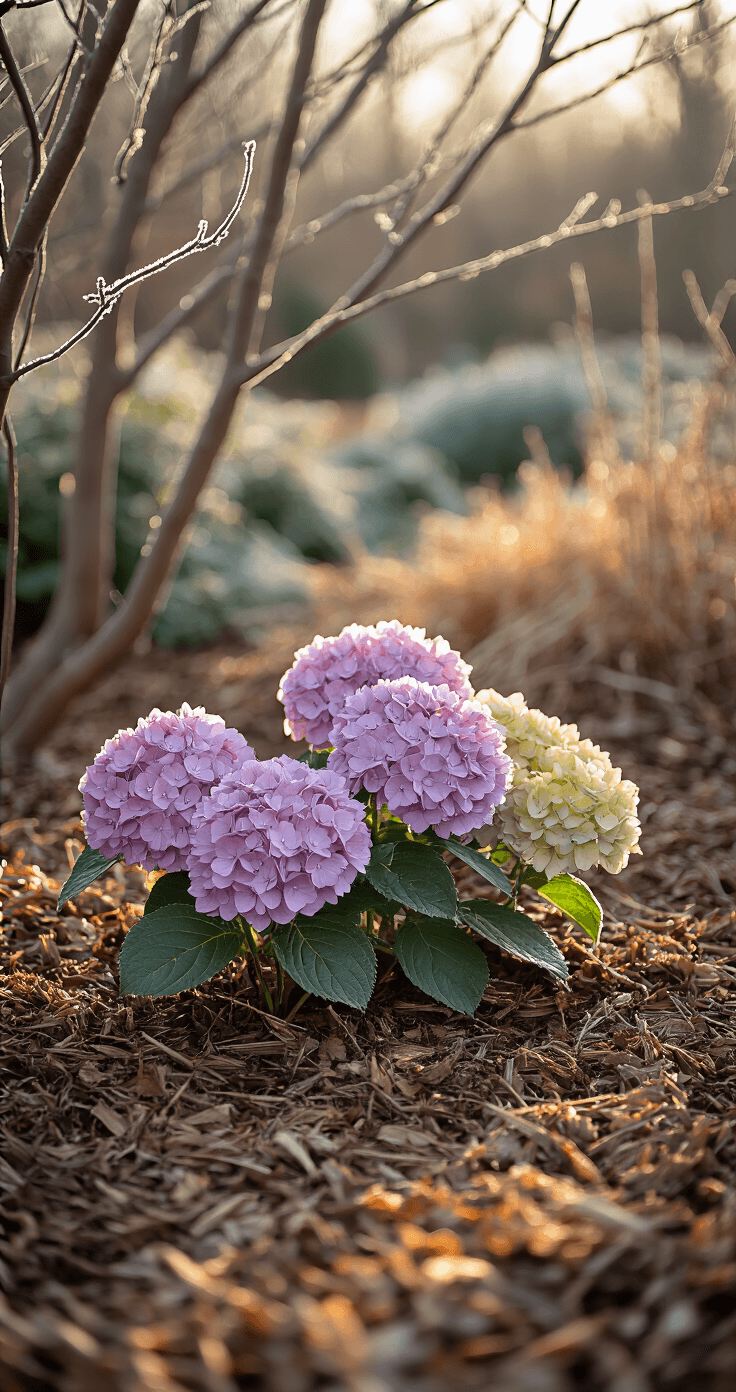
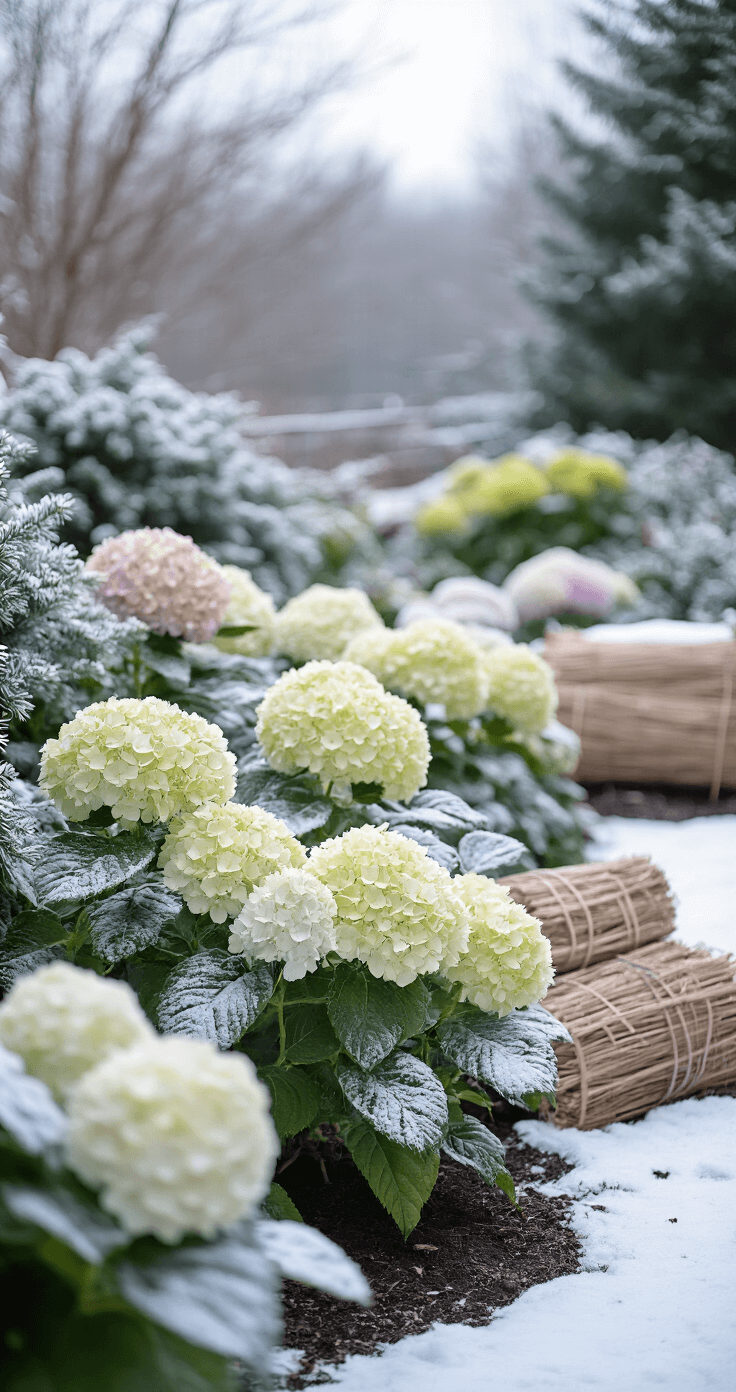
Mulch: Your Hydrangea’s Winter Blanket
After the ground freezes (not before—patience), pile on the mulch.
In mild climates: 3-4 inches
In cold zones: 6-8 inches
In “why do I live here” zones: Up to 12 inches
I use whatever I have on hand:
- Shredded bark
- Wood chips
- Fallen leaves (free!)
- Straw
- Marsh hay
They all work. Stop overthinking it.
Here’s my method: Before mulching, I spread a thin layer of compost or well-aged manure around the base. It breaks down slowly all winter and feeds the plant come spring. Then I pile the mulch on top like I’m tucking in a child on a snow day.
The magic of mulch:
- Insulates roots from temperature swings
- Keeps soil moisture from evaporating
- Protects the crown (the most vulnerable part)
- Makes your garden bed look intentional instead of neglected
Get yourself some premium hardwood mulch or use what nature already gave you.
Don’t Even Think About Pruning Right Now
I see people out there with pruning shears in winter and I want to scream.
Stop.
Those dead-looking flower heads you want to cut off? They’re actually protecting the plant from freezing. They’re also giving you something to look at besides brown sticks.
Prune before the first frost in fall, or wait until spring. Winter pruning invites disaster.
The only exception: branches that actually break under snow weight. Those you can remove because they’re already done for.
Wrapping: When Your Hydrangeas Need a Coat
Not all hydrangeas need wrapping. But bigleaf hydrangeas (the ones with those stunning blue or pink pom-pom flowers)? They’re divas that bloom on old wood, and they absolutely need protection in cold climates.
The basic wrap method:
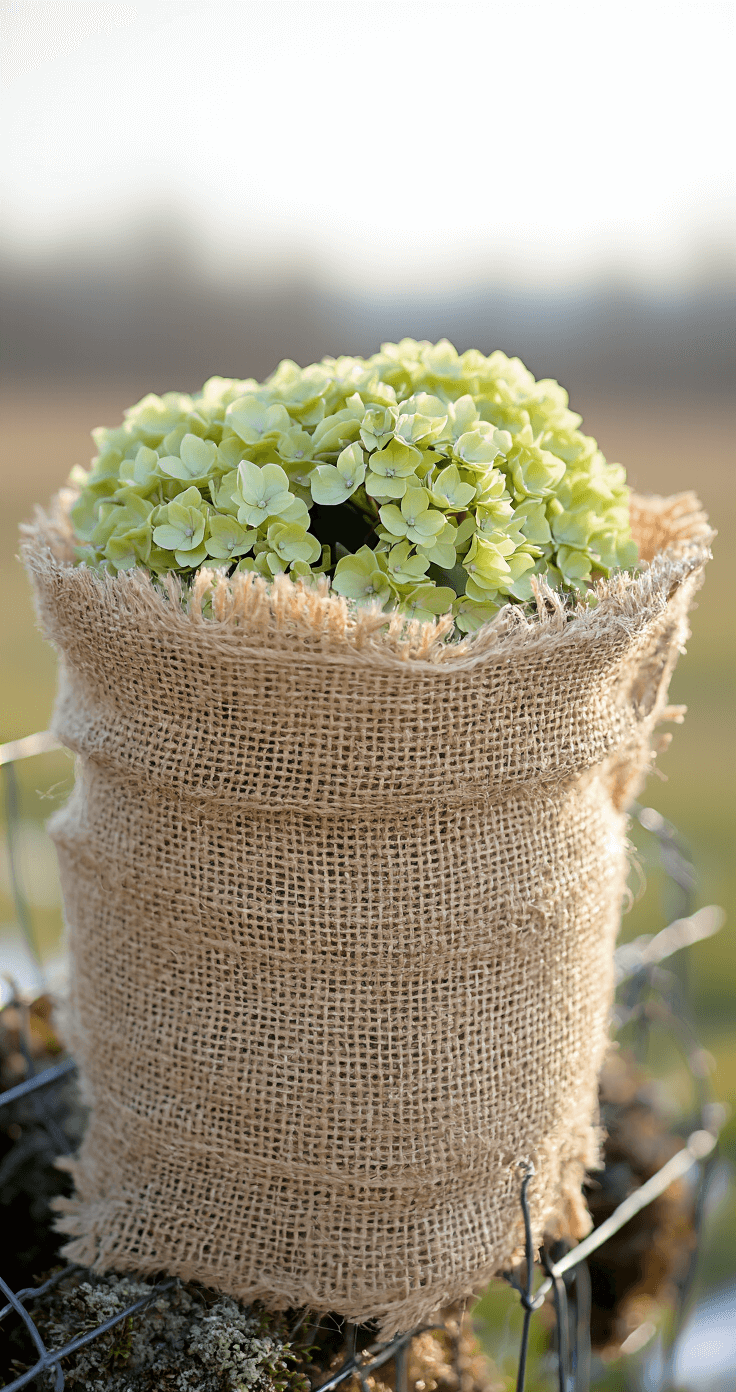
- Grab some burlap (not plastic—plants need to breathe)
- Wrap loosely around the plant
- Tie with twine
- Make sure air can still circulate
The “I’m serious about this plant” method:
- Build a cage around it with chicken wire
- Fill the cage with mulch or leaves
- Wrap the whole thing in burlap
The “mulch mountain” method:
- Literally cover most of the plant with mulch
- It looks ridiculous but it works
I keep frost protection fabric on hand because it’s reusable and easier than dealing with burlap that falls apart.
Remove all this stuff ONLY after the last frost passes in spring. I know you’ll be tempted to unwrap early when you see that first warm day. Don’t do it. That late frost will destroy everything.
Potted Hydrangeas Need Different Treatment
Container plants are more vulnerable because their roots don’t have the earth’s insulation.
Your options:
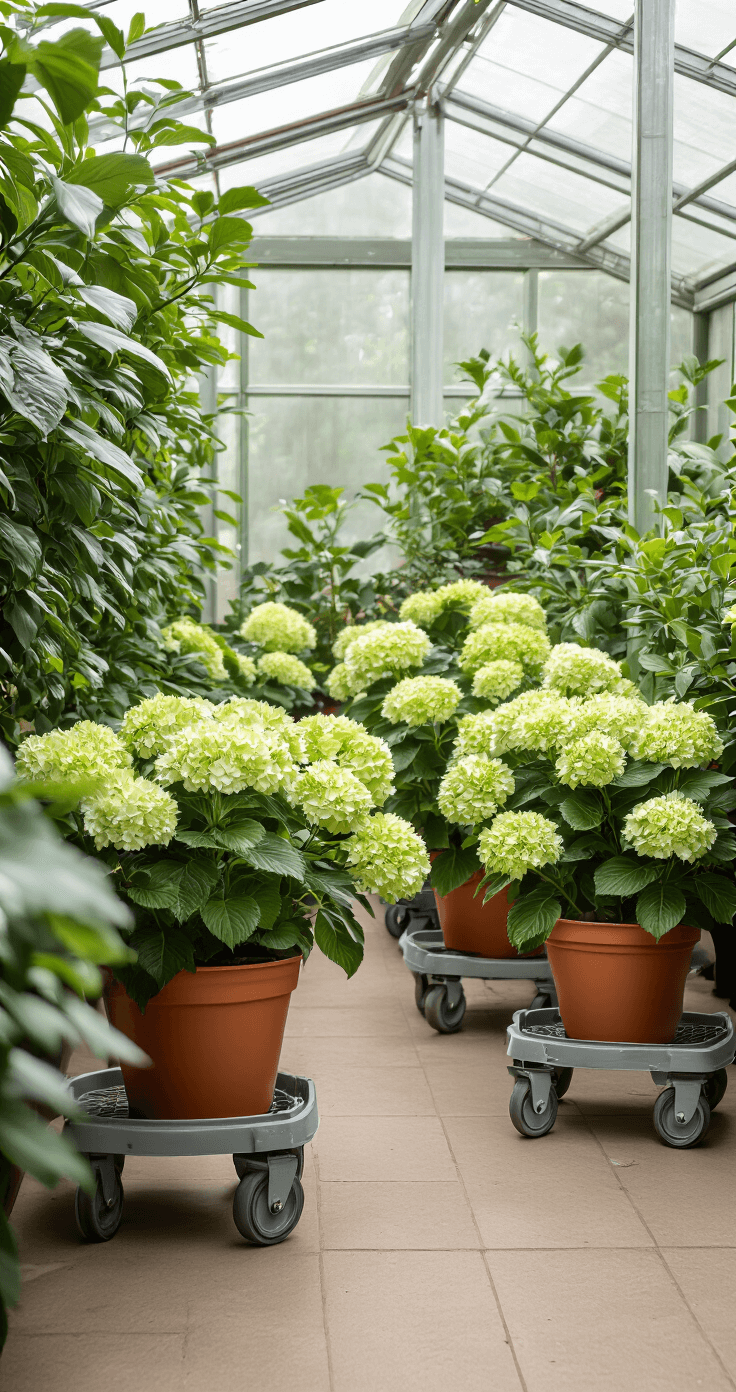
- Move pots to a garage or basement (where it stays cool but above freezing)
- Group them together in a sheltered spot against a south-facing wall
- Bury the pot in the ground (if you’re hardcore)
If you bring them inside to an unheated space, water about once a month. Just enough to keep roots from completely drying out.
Having plant caddies with wheels makes moving heavy pots infinitely easier on your back.
What to Actually Do During Winter
Unlike summer, you’re not out there every day fussing over these plants.
Your winter checklist:
- Check periodically for damage or extreme drying
- Brush heavy snow off gently (before branches snap)
- Water during warm spells if soil is dry
- Leave everything else alone
What NOT to do:
- Fertilize (this triggers new growth that will freeze and die)
- Overwater (root rot is real)
- Unwrap too early
- Panic every time you look at them
Snow is actually your friend here. It provides natural insulation and moisture. If you get regular snowfall, you might not need to water at all.
<img