
This post may contain affiliate links. Please see my disclosure policy for details.
Outdoor Hanging Bed Swings: Everything You Need to Know Before You Buy
Outdoor hanging bed swings are about to change how you think about your porch, patio, or backyard.
I remember the first time I saw one at my neighbor’s house. I thought it was just a fancy porch swing until she invited me to actually lie down on it. Game changer.
You know that feeling when you’re trying to relax on a regular porch swing but your back starts hurting after ten minutes? Or when you want to stretch out but there’s just not enough room? These swing beds solve all of that.
Why Everyone’s Obsessed With Swing Beds Right Now
Let me cut through the marketing fluff here.
These aren’t just oversized swings. They’re essentially floating daybeds that gently rock you into a state of pure bliss.
Think of it this way: someone took the best parts of a hammock, combined it with an actual bed, and made it sturdy enough that you don’t feel like you’re going to flip over every time you move.
The genius is in the design. You get the gentle swaying motion that calms your nervous system (science backs this up, by the way), plus the actual space and comfort to properly lounge, nap, or read for hours.
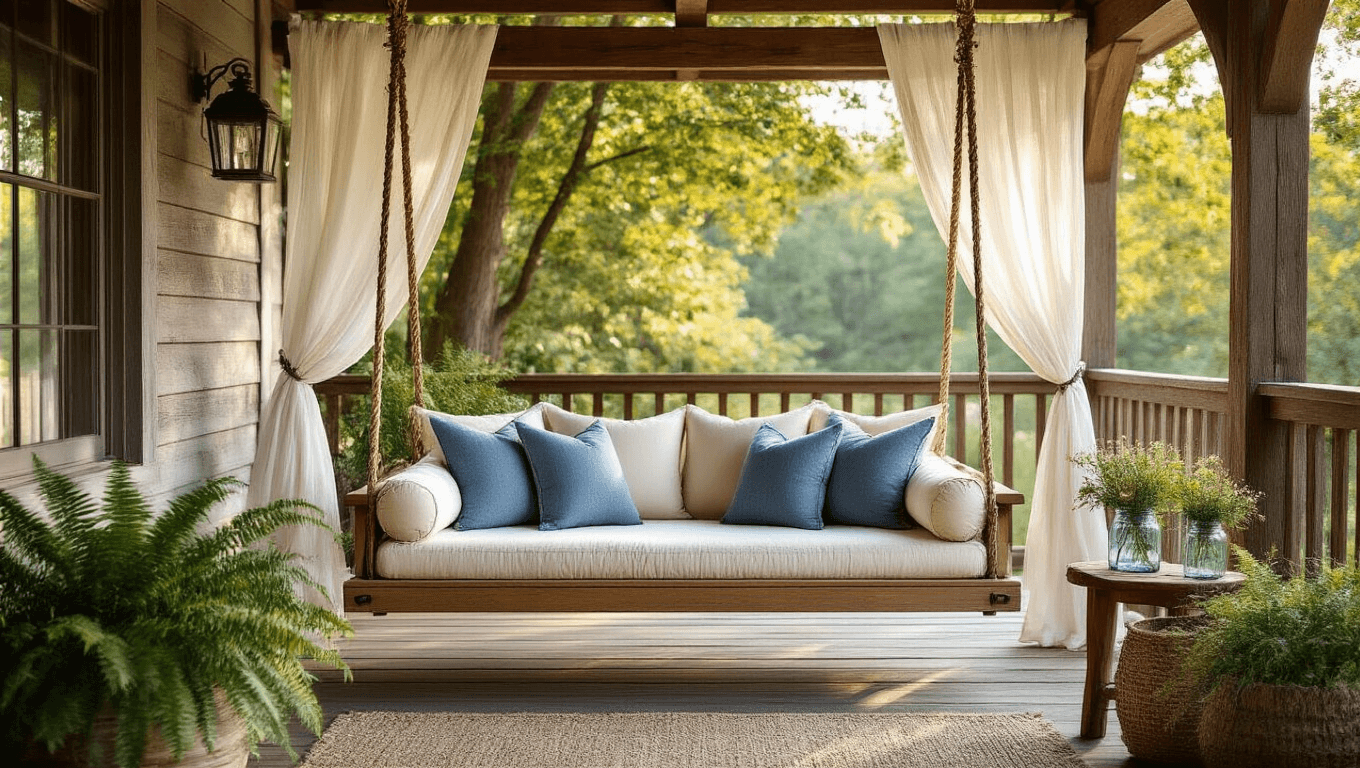
✎ Steal This Look
- Paint Color: Benjamin Moore Hale Navy HC-154
- Furniture: weathered teak hanging bed swing with rope suspension and built-in side bolsters
- Lighting: oversized woven rattan pendant with warm LED Edison bulb
- Materials: sun-bleached cedar, marine-grade rope, outdoor performance linen, powder-coated steel hardware
There’s something almost rebellious about claiming horizontal space outdoors, like you’re refusing to let your backyard stay purely functional.
What Makes These Things Actually Comfortable
Here’s what separates a good swing bed from an expensive disappointment:
Size matters – and I mean really matters. Most quality outdoor hanging bed swings accommodate a standard twin mattress. This means you can use your own mattress or add outdoor cushions that you already love.
The 3-in-1 convertible models are where things get interesting. I’ve tested a few of these, and the ones that actually work let you:
- Sit upright like a traditional swing
- Recline at an angle for reading
- Lay completely flat for napping
The cheap versions have clunky adjustment mechanisms that you’ll never actually use. The good ones have smooth transitions that take seconds.
Plush cushioning isn’t negotiable unless you enjoy feeling every wooden slat digging into your back. Look for thick, weather-resistant cushions that won’t turn into soggy sponges after the first rain.
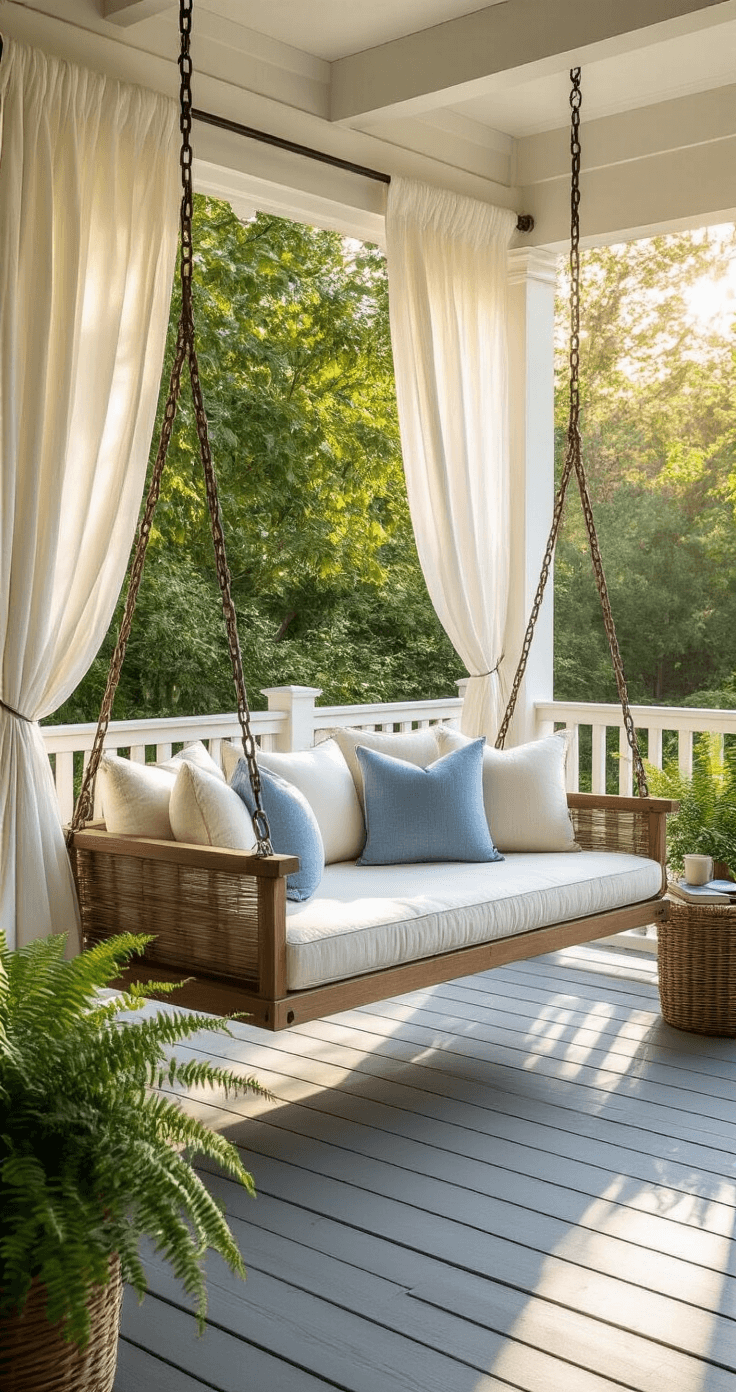
💡 Steal This Look
- Paint Color: Farrow & Ball Card Room Green F&B 79
- Furniture: weathered teak daybed frame with adjustable backrest and integrated side tables
- Lighting: oversized woven rattan pendant with warm LED Edison bulb
- Materials: solution-dyed acrylic performance fabric, marine-grade rope, kiln-dried hardwood frame with mortise-and-tenon joinery
I’ve napped through three thunderstorms in my own porch swing bed because the gentle motion lulls you deeper than any white noise machine—it’s the kind of comfort that makes you resent your indoor mattress.
Materials That Actually Last (And Ones That Don’t)
I’ve learned this the hard way.
Cedar and treated pine look gorgeous and smell amazing when they’re new. They’re naturally resistant to rot and insects. But here’s the catch: you need to maintain them with wood stain or sealant every year or two, or they’ll turn gray and weathered.
Some people love that weathered look. I personally think it looks like neglect, but that’s just me.
Acacia wood sits in the middle. It’s durable and naturally weather-resistant, but still needs occasional treatment.
Recycled poly composite is the material I’d choose if I never wanted to think about maintenance again. It looks like wood, feels like wood (sort of), but it’s basically indestructible. Won’t fade, rot, crack, or need any upkeep. The downside? It’s more expensive upfront and doesn’t have that authentic wood grain beauty.
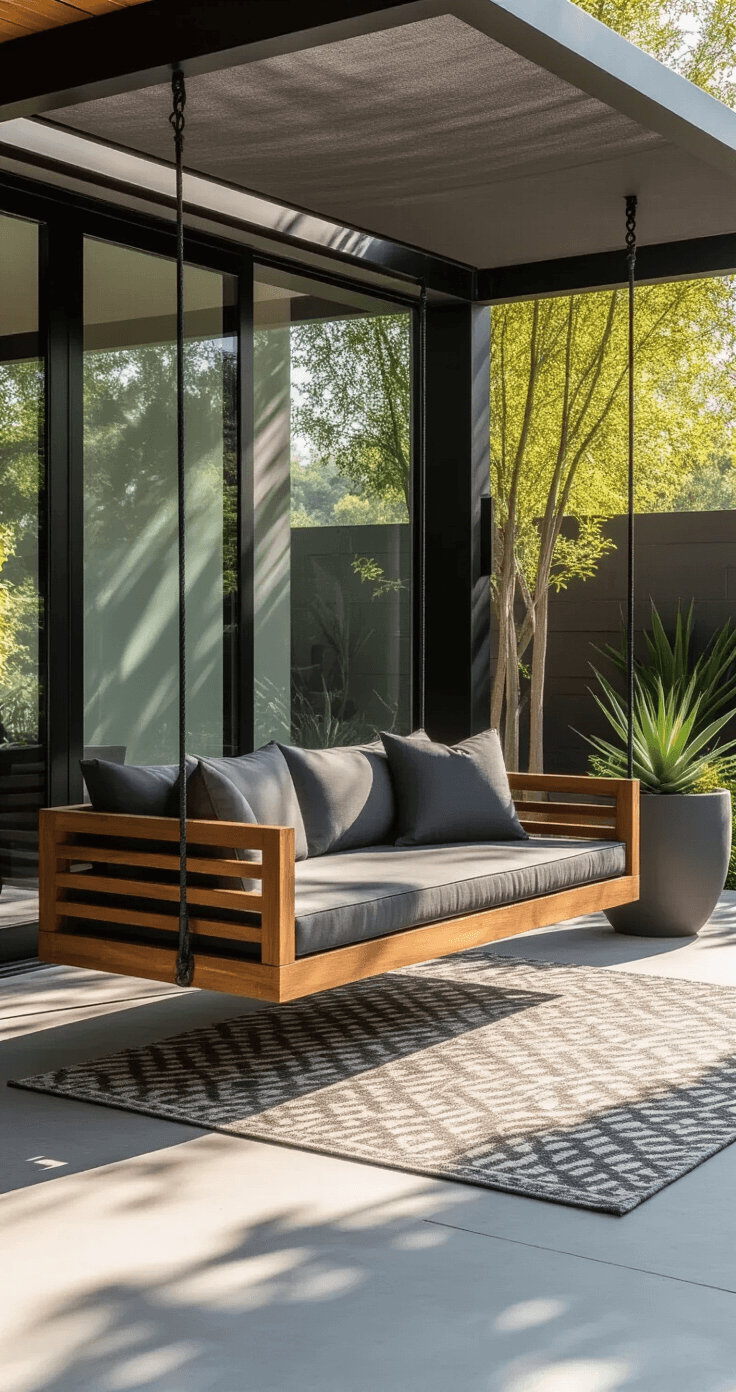
🖼 Steal This Look
- Paint Color: Behr Cedar Natural 330F-5
- Furniture: recycled poly composite hanging bed swing with marine-grade rope suspension
- Lighting: solar-powered LED string lights with weatherproof housing
- Materials: recycled poly composite slats, marine-grade stainless steel hardware, solution-dyed acrylic cushions, powder-coated aluminum frame
I installed a cedar swing on my own porch five years ago and still kick myself for letting that first winter pass without sealing it; now I spend every spring sanding gray patches while my neighbor’s poly composite swing looks identical to the day they hung it.
Save this article
Enter your email and we'll send it straight to your inbox.
What about weight capacity?
This is critical, people. Don’t be that person who ignores the weight limit.
Most decent swing beds support 350-500 pounds. The heavy-duty ones can handle 800 pounds.
Do the math: if you’re planning romantic evenings for two adults, or afternoon naps with your kids and the dog, you need to factor in everyone’s actual weight plus the cushions and pillows.
The Canopy Question Nobody Talks About
Here’s something I wish someone had told me before I bought my first swing bed.
A canopy isn’t just about shade.
Yes, UV protection matters if you don’t want to turn into leather. But the real benefit is weather protection for your cushions and the swing itself.
I learned this after leaving my cushions out during an unexpected afternoon thunderstorm. They took three days to dry and developed a lovely mildew smell.
Look for adjustable canopies with:
- UV protection fabric (at least UPF 50+)
- Water-resistant coating
- Adjustable angles so you can block sun from different directions
- Easy-remove fabric for washing or winter storage
Some models have retractable canopies, which sounds fancy but is actually super practical. You want shade at noon but open sky at sunset? Done.
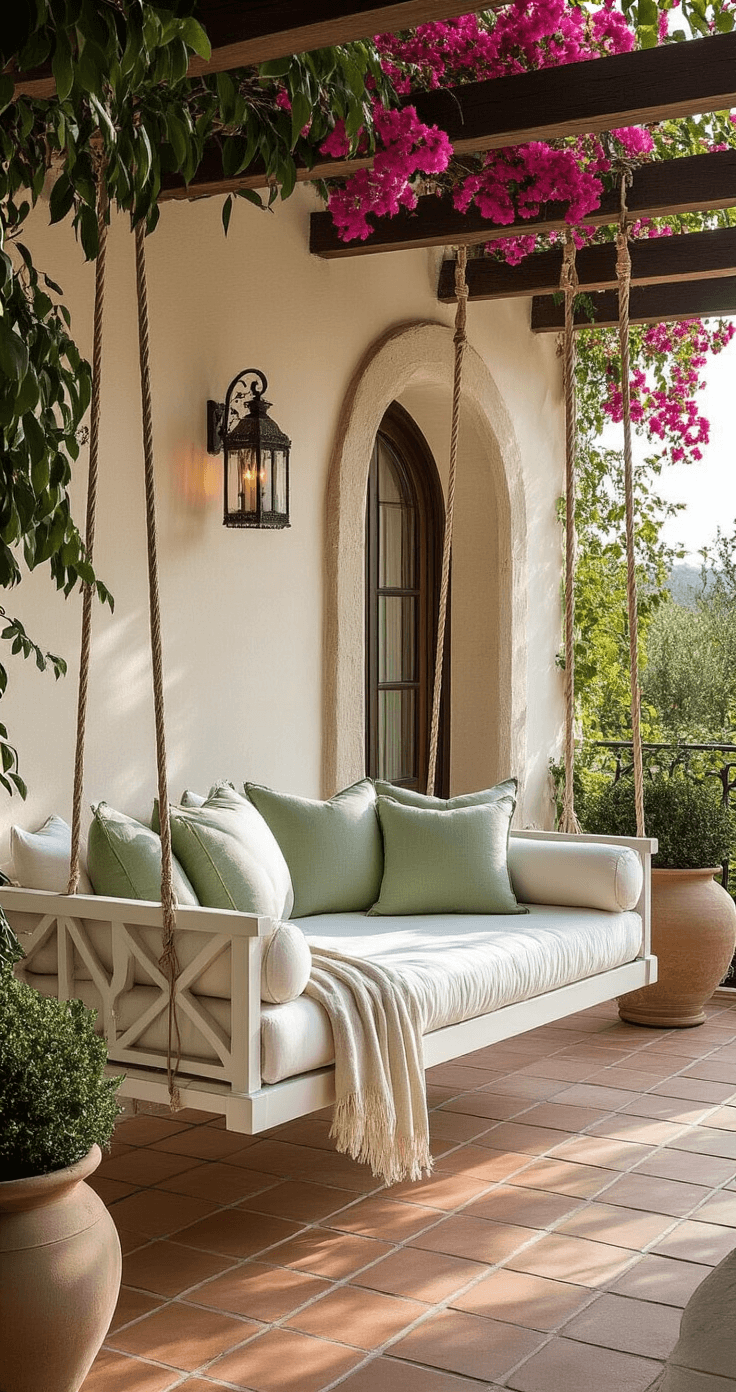
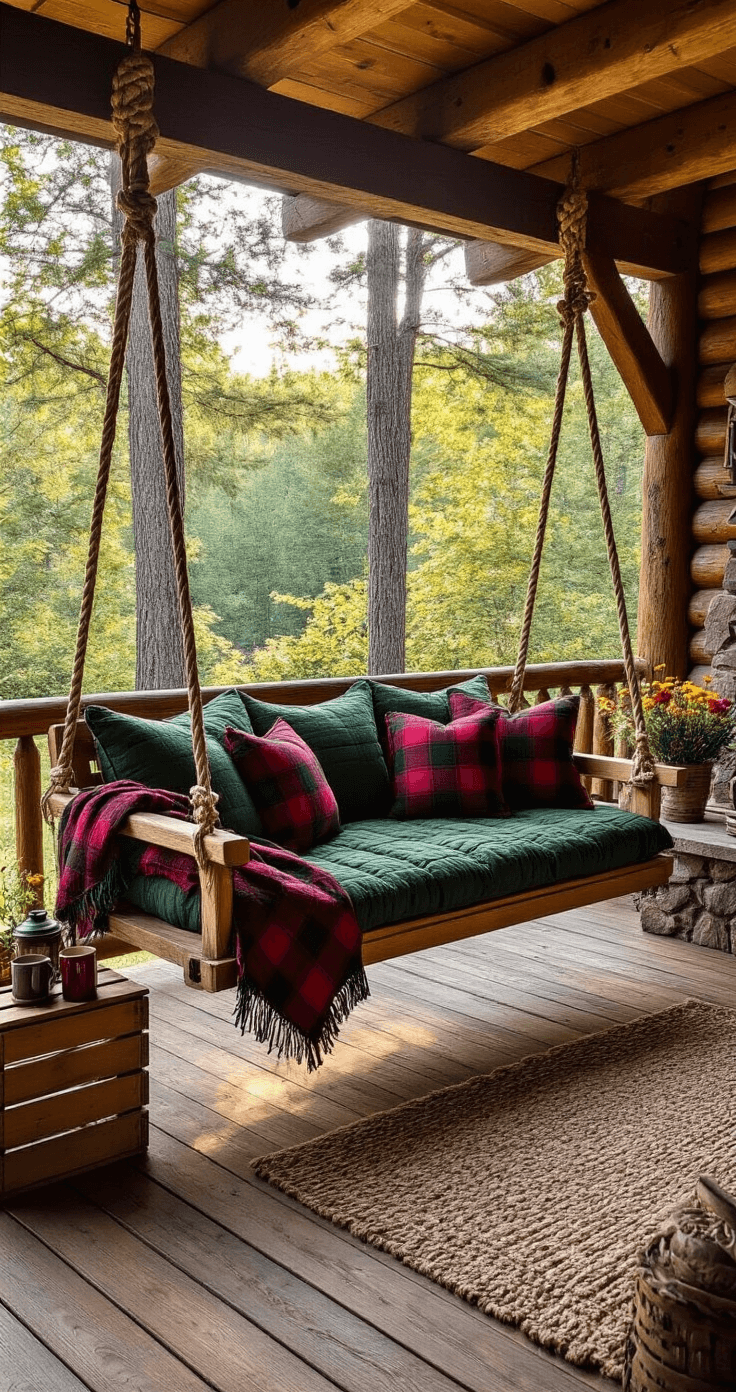
★ Steal This Look
- Paint Color: PPG Stonehenge Greige PPG1001-3
- Furniture: weathered teak daybed frame with rope suspension
- Lighting: outdoor-rated pendant with woven rattan shade
- Materials: solution-dyed acrylic canopy fabric, marine-grade stainless steel hardware, quick-dry foam cushions with Sunbrella covers
I’ve sat through too many ruined afternoons with soggy cushions to trust anything without a proper canopy system now—it’s the difference between a three-season investment and a decade of use.
Installation: Don’t Be a Hero
Listen to me carefully.
I don’t care how many IKEA shelves you’ve assembled or how good you are with a drill.
Get a professional to install this.
I know a guy who thought he could handle it himself. He eyeballed the ceiling joists, drilled in some heavy-duty hooks, and hung up his brand-new $1,200 swing bed.
Two weeks later, at 11 PM, the whole thing came crashing down while his wife was reading on it. She’s fine, but their marriage took longer to repair than the ceiling.
What Your Installation Actually Needs
Your installer needs to verify:
Structural capacity – Your ceiling joists or porch beams must support not just the swing’s weight, but dynamic loads from swinging motion. This typically means reinforcing with additional lumber or using multiple joists.
Proper clearance – You need:
- 6 inches minimum on each side (trust me, you’ll bump the walls otherwise)
- 24 inches front and back for full swing motion
- Nobody wants a swing that barely moves
The sweet spot height – Install the seat 18-24 inches from the floor. Too high and you’ll feel like you’re climbing into a tree fort. Too low and you’ll scrape your feet.
Level installation – An uneven swing will drive you absolutely crazy. You’ll constantly slide to one side.
<img src=”https://evyvehomes.com/wp-content/uploads/2026/03/4150contemporary-deck-swing-lake-view.png” alt=”A contemporary deck featuring a weather-resistant recycled poly composite swing bed in driftwood gray, with navy and white striped cushions, overlooking a serene lake. The scene includes I
Keep this one for later
We'll email you the link so you can come back to it.


[…] Think of it as a dedicated home for everything that clutters up your life outdoors. […]
[…] extension cords need to be rated for outdoor […]