

This post may contain affiliate links. Please see my disclosure policy for details.
Primitive Easter Decor: Your Complete Guide to Creating a Rustic Spring Haven
Primitive Easter decor transforms your home into a cozy farmhouse sanctuary where vintage charm meets springtime celebration.
I’ll admit it—I used to think Easter decorating meant plastic pastel everything and chocolate bunnies that my kids devoured before I even finished setting up. Then I discovered primitive decor, and honestly, it changed everything about how I welcome spring into my home.
What Exactly Is Primitive Easter Decor?
Listen, I’m going to skip the fancy design terminology here.
Primitive Easter decor is basically the opposite of those shiny, perfect-looking decorations you see in big box stores. It’s rustic, handcrafted-looking, and feels like something your great-grandmother might have displayed on her farmhouse mantel.
Here’s what makes it different:
- Weathered, aged finishes instead of glossy perfection
- Muted pastels rather than bright, artificial colors
- Natural materials like wood, burlap, and metal
- Handmade or handmade-looking pieces
- Vintage-inspired designs with character and charm
Think less “Instagram perfect” and more “found it in a barn and loved it immediately.”
Why I Fell Head Over Heels for This Style
Three Easters ago, I was standing in my living room surrounded by plastic eggs and mass-produced bunnies. Everything looked… fine. But fine doesn’t make your heart skip a beat, you know?
I stumbled across primitive wooden Easter signs at a local shop and bought one on impulse. That single piece completely changed the vibe of my space.
What I love most:
- It doesn’t scream “look at me” – It whispers instead, creating a calm atmosphere
- Nothing matches perfectly – And that’s the entire point
- It works year after year – No trendy colors that look dated next season
- My kids can’t destroy it – Because it already looks beautifully worn
The Essential Elements You Actually Need
Don’t overcomplicate this. You don’t need to buy everything at once or spend a fortune.
Start With Animal Figures
Bunnies, sheep, chicks, and ducks are your foundation.
What to look for:
- Carved or sculpted wooden animals with distressed paint
- Fabric bunnies with button eyes and simple stitching
- Metal silhouettes with rust or aged finishes
- Resin pieces that look like old chalkware
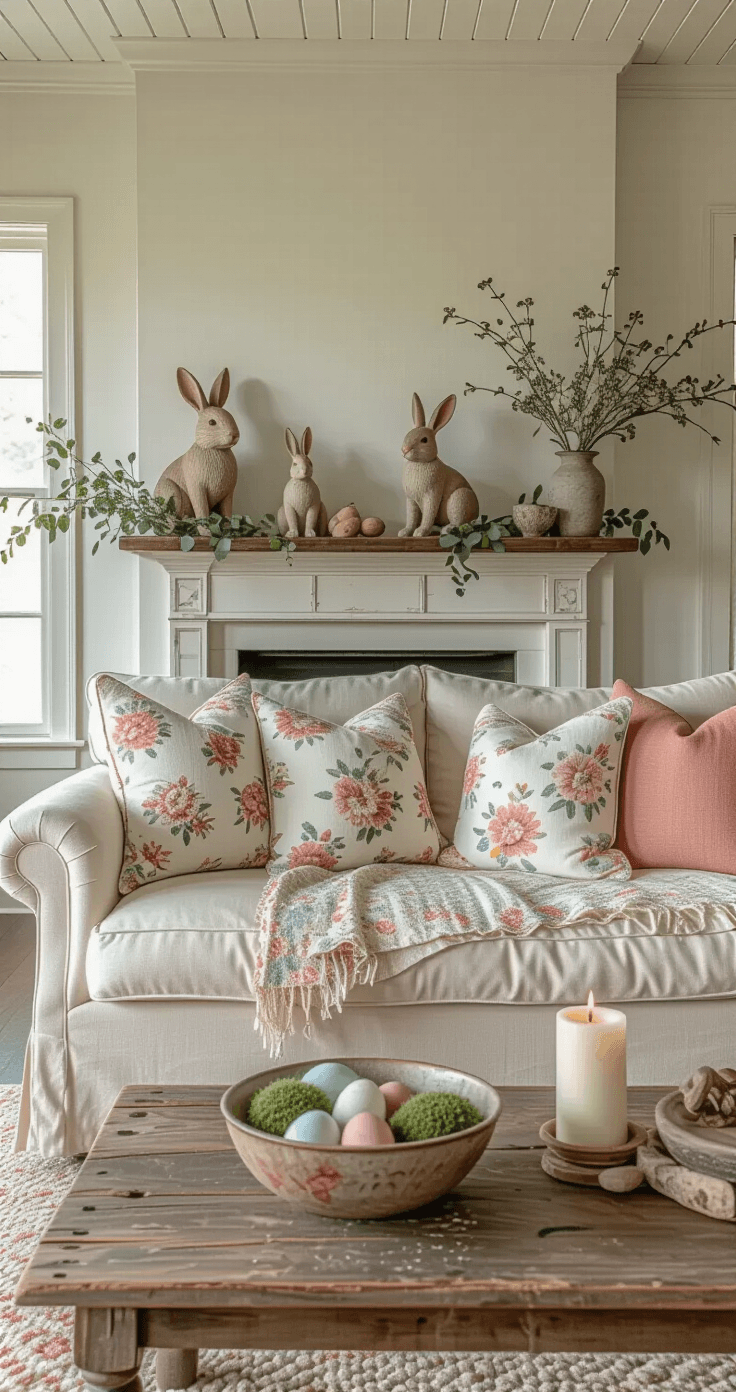
I started with three simple rustic bunny figurines on my dining table. That’s it. Nothing fancy, nothing overwhelming.
Bowl Fillers Are Your Secret Weapon
This is where I really had my “aha” moment.
Bowl fillers are exactly what they sound like—small decorative items you pile into bowls, baskets, or dough bowls.
Save this article
Enter your email and we'll send it straight to your inbox.
My favorite combinations:
- Fabric Easter eggs in faded florals mixed with jute twine
- Wooden eggs with chippy paint alongside dried botanicals
- Small bunny ornaments nestled in preserved moss
- Pastel-colored rag balls with rusty jingle bells
I keep a primitive dough bowl on my coffee table year-round and just switch out the fillers seasonally. Game changer for lazy decorators like me.
Don’t Sleep on Candles
Primitive Easter candles aren’t your typical spring fare.
Look for:
- LED timer tapers in cream or grubby ivory
- Pillar candles with simple spring motifs
- Beeswax candles in natural tones
- Battery-operated candles with silicone-dipped tops that look like dripped wax
I’m obsessed with primitive spring timer candles because they turn on automatically every evening. I literally set them once in March and forget about them until May.
Vintage-Style Signs and Wall Art
This is where you can inject personality without going overboard.
What works:
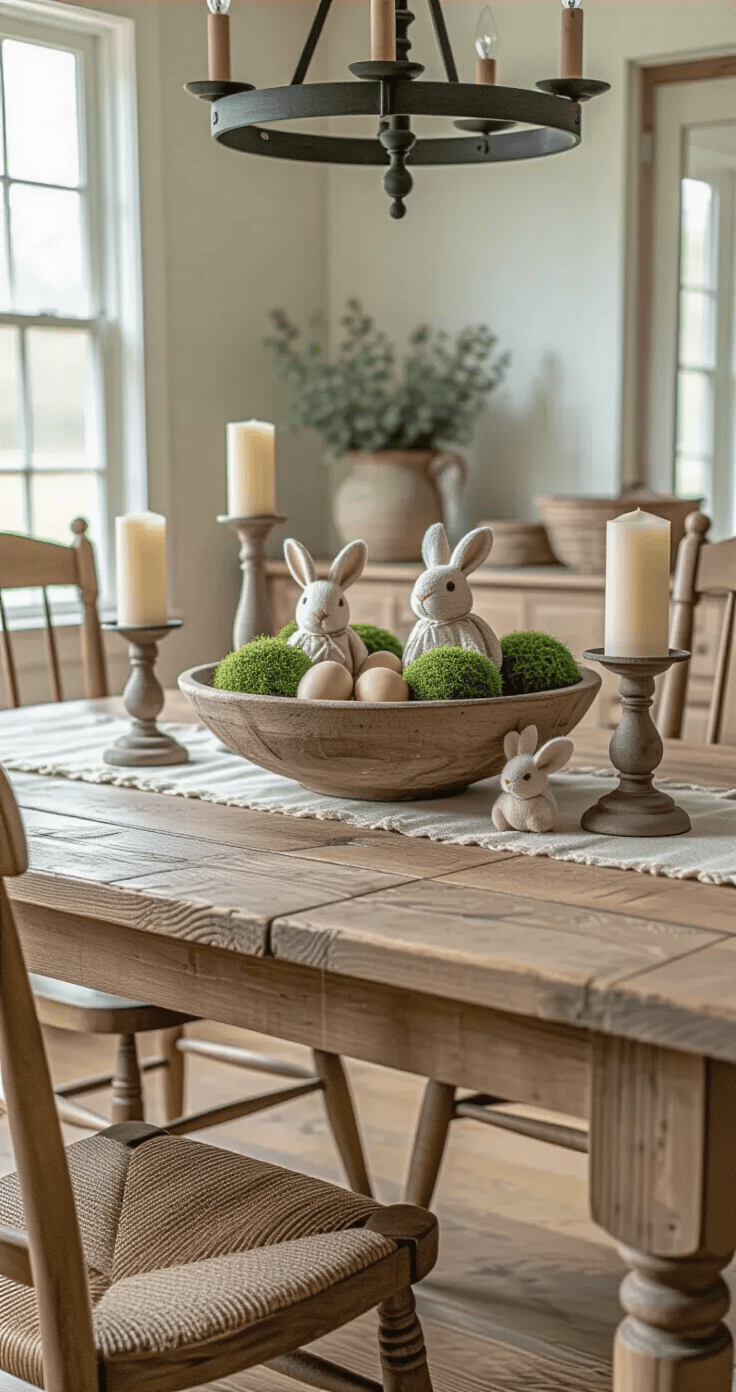
- Hand-painted wooden signs with Easter sayings in simple fonts
- Framed cross-stitch or embroidery pieces
- Metal signs with distressed finishes
- Repurposed cabinet doors or window frames with spring artwork
Skip anything too wordy or cutesy. The best primitive signs say more with fewer words.
My Room-by-Room Approach (Because Doing Everything at Once Is Madness)
Entryway: First Impressions Matter
I keep this space simple and welcoming.
My setup:
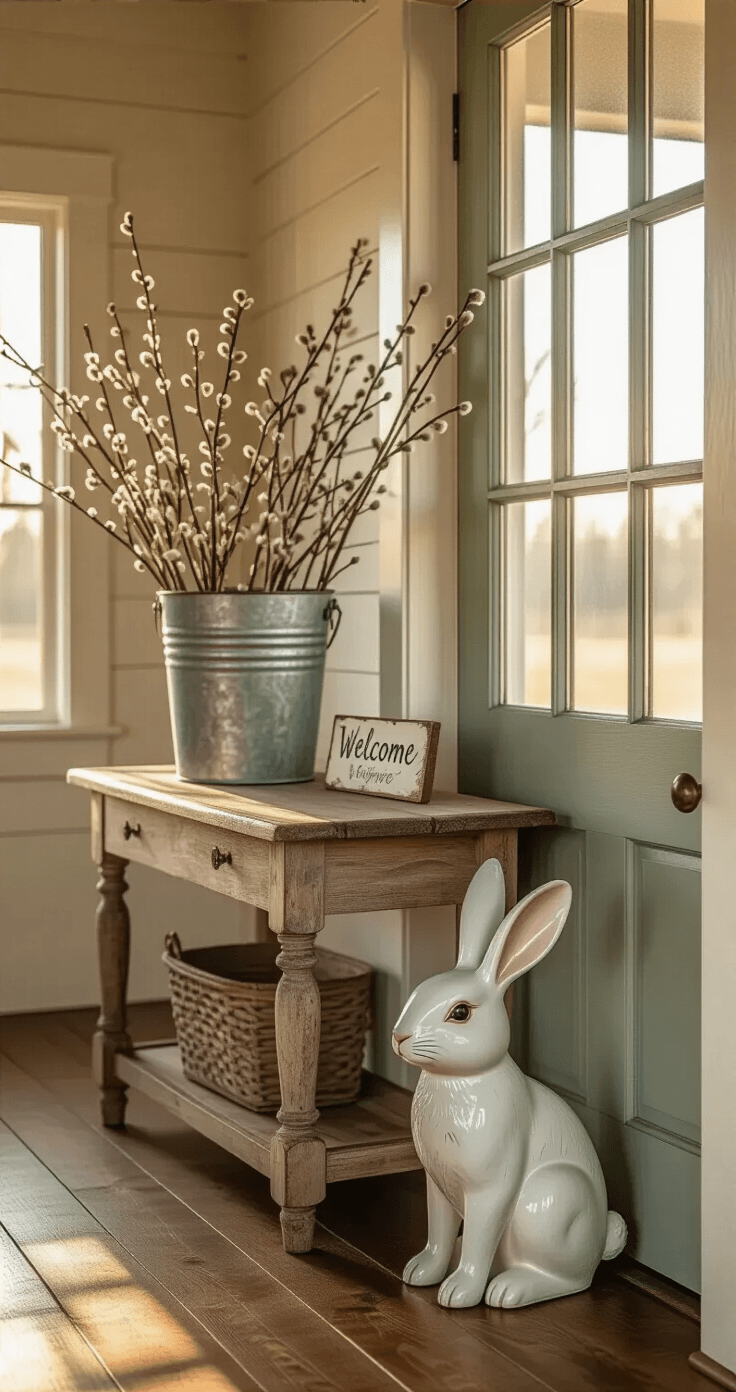
- A vintage metal bucket filled with pussy willows or forsythia branches
- One substantial bunny figure on the console table
- A small primitive welcome sign leaning against the wall
That’s it. Three elements, maximum five minutes to arrange.
Living Room: Where You Actually Live
This room gets the most attention because we spend the most time here.
What I do:
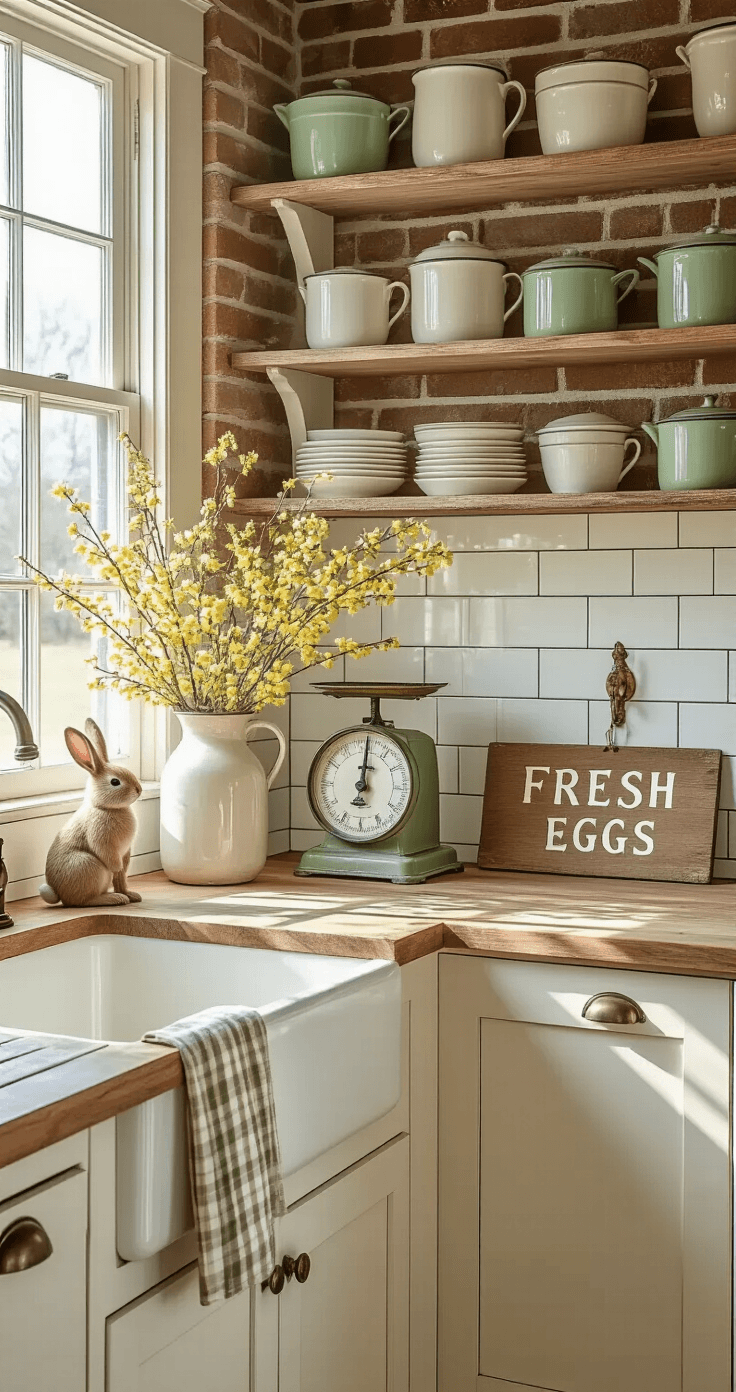
- Switch out throw pillow covers to muted spring florals or checks
- Add a basket of fabric eggs near the fireplace
- Place a few bunny figures on the mantel with greenery
- Drape a vintage quilt over the sofa back
The key is making it look like these things have always been there. Not like you spent three hours staging a magazine photo shoot.
<img
Keep this one for later
We'll email you the link so you can come back to it.


