

This post may contain affiliate links. Please see my disclosure policy for details.
Why Your Spring Porch Probably Looks Sad (And How to Fix It)
Contents
- Why Your Spring Porch Probably Looks Sad (And How to Fix It)
- The Colors That Actually Work (Not What Pinterest Tells You)
- Flowers: Real vs Fake (Let’s Settle This Once and For All)
- Building Your Layers (Like a Really Pretty Cake)
- The Wreath Situation (It’s More Important Than You Think)
- Furniture That Won’t Fall Apart When It Rains
- Lighting That Doesn’t Look Like a College Dorm Room
- The Greenery Game (Beyond Basic Plants)
- Creating a Focal Point (So People Know Where to Look)
Let me guess what’s happening at your front door right now.
Maybe you’ve got a wreath from last year that’s seen better days. Perhaps there’s a single sad planter that you water when you remember. Or worse, nothing at all except that welcome mat you bought in 2019.
Here’s what I’ve discovered after countless springs of trial and error: creating a stunning spring porch doesn’t require a designer’s budget or a green thumb. It just needs a plan.
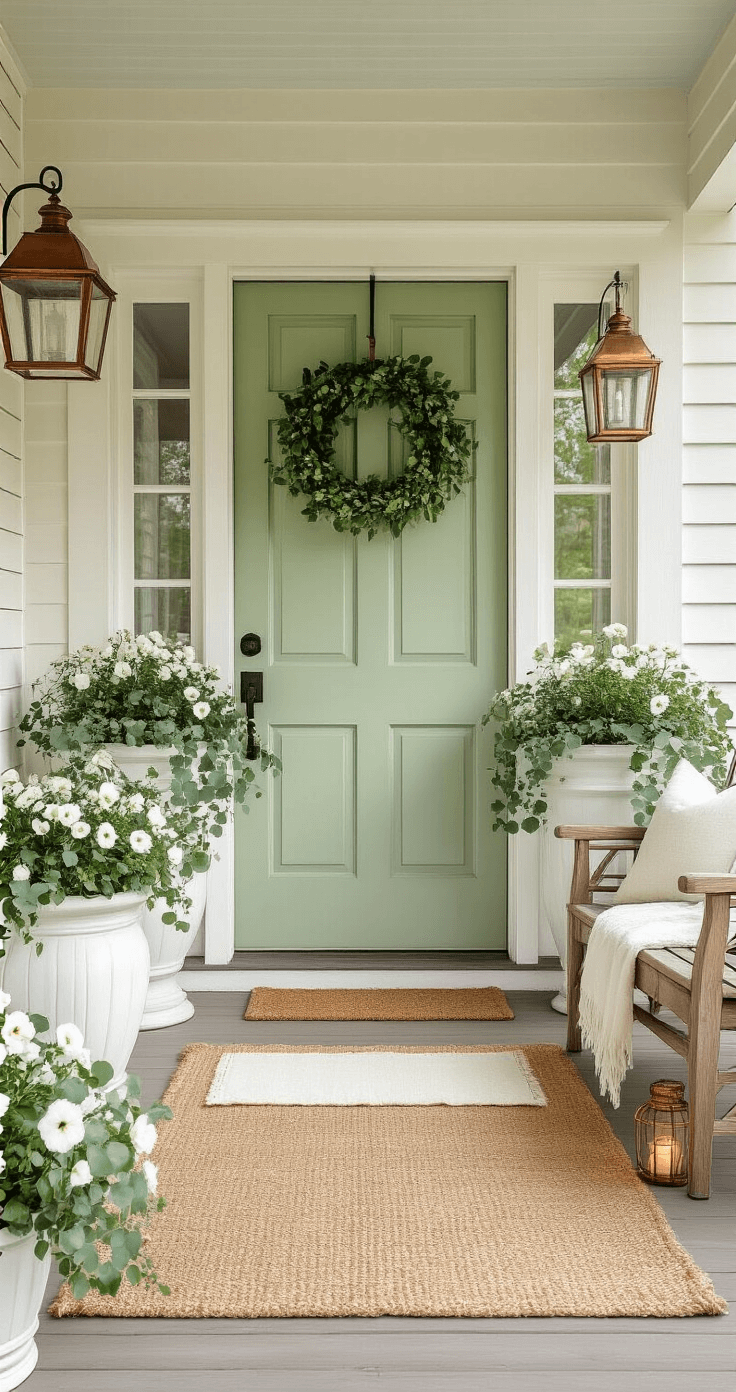
The Colors That Actually Work (Not What Pinterest Tells You)
Forget those overly complicated color wheels.
Spring porches thrive on three foolproof palettes:
The Classic Refresher: Green and white with strategic black accents creates that timeless farmhouse vibe without looking like you’re trying too hard.
The Coastal Escape: Blue and white makes everyone feel like they’ve stumbled onto a seaside cottage, even if you live in Kansas.
The Bold Statement: Neutral backgrounds with punches of pink, yellow, or coral show you’ve got personality without scaring the mailman.
I stick with the green and white combo at my place because it photographs beautifully and matches literally everything I already own.
Flowers: Real vs Fake (Let’s Settle This Once and For All)
This debate keeps people up at night.
Real flowers smell amazing and make you feel accomplished when they don’t immediately die. But faux spring flowers don’t judge you when you forget to water them for two weeks straight.
My personal setup:
- Real pansies and daffodils in large outdoor planters near the door where I see them daily
- Faux arrangements in hanging baskets I can’t reach without a ladder
- Mixed combinations in window boxes where real and fake create fullness without constant maintenance
The secret nobody tells you: mix them together and guests can’t tell which is which.
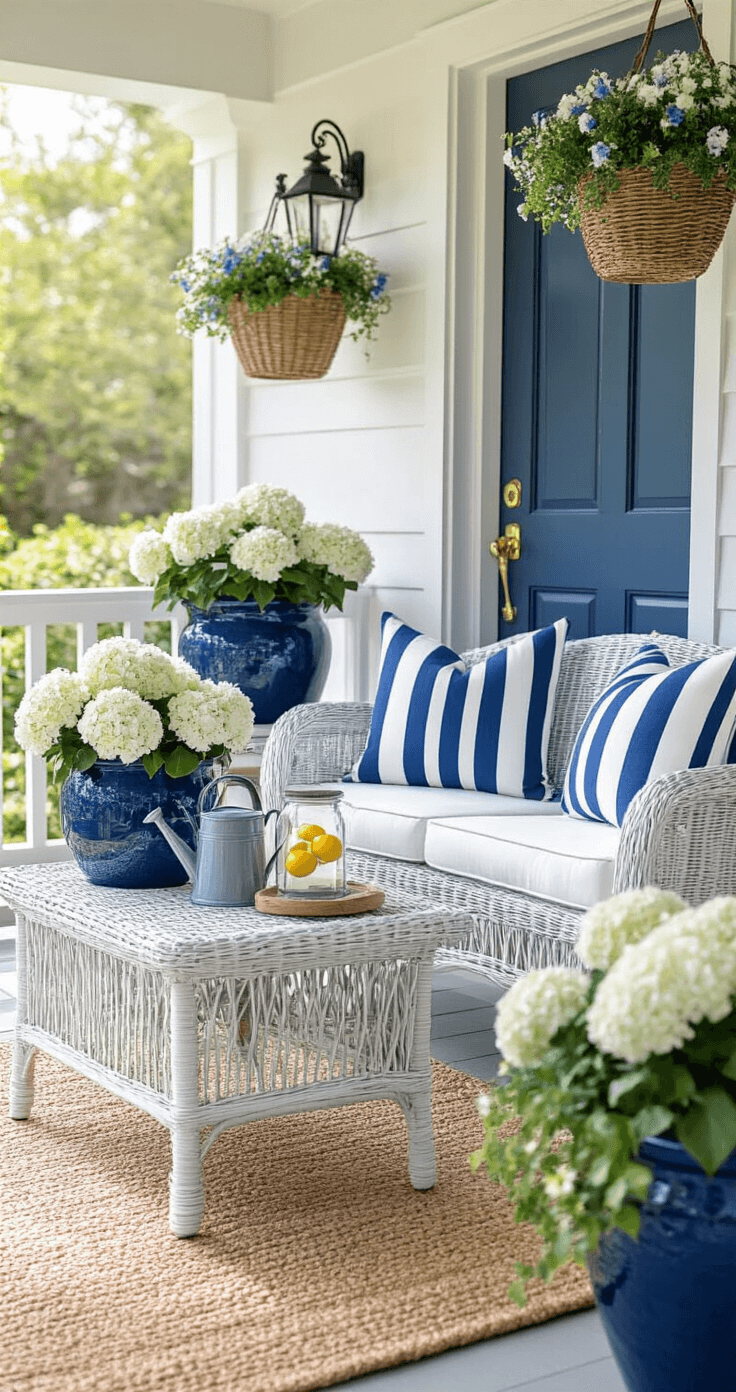
Building Your Layers (Like a Really Pretty Cake)
Spring porches need dimension or they look flat and boring.
Start from the ground up:
Layer One – The Foundation
Place a jute outdoor rug as your base layer, then add a welcome mat on top. This instantly makes your porch look intentional instead of accidental.
Layer Two – The Standing Elements
- Matching planters flanking your door (symmetry matters here)
- A small bench or bistro table if you’ve got room
- Potted topiaries for that “I have my life together” energy
Layer Three – The Eye-Level Drama
- A statement wreath that people can actually see from the street
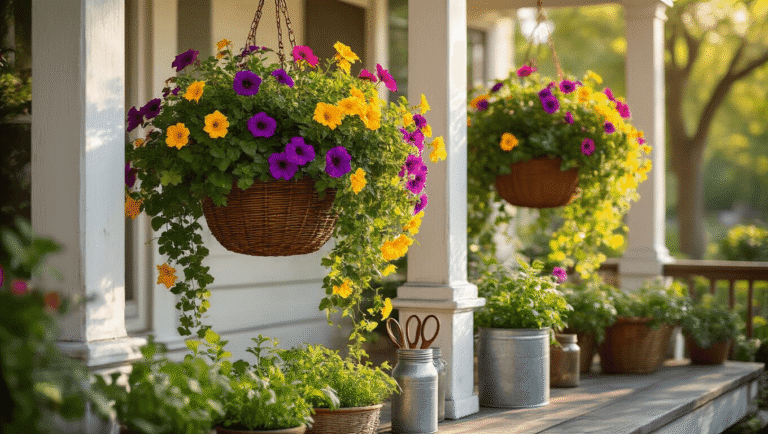
- Hanging baskets that don’t block your porch light
- Window boxes overflowing with coordinated blooms
Layer Four – The Details
- Decorative pillows on seating
- A vintage watering can filled with fresh stems
- Lanterns with battery-operated candles (because who actually lights real candles on their porch?)
The Wreath Situation (It’s More Important Than You Think)
Your wreath is doing heavy lifting.
It’s the first thing people notice and the last thing they remember when they leave.
I rotate through three different spring door wreaths depending on my mood:
- Tulip wreath for early spring when I’m feeling optimistic
- Mixed greenery when I want something that lasts
- Hydrangea arrangement when I’m feeling fancy
Pro move: Hang your wreath slightly higher than feels natural. It photographs better and draws the eye up, making your door look taller.
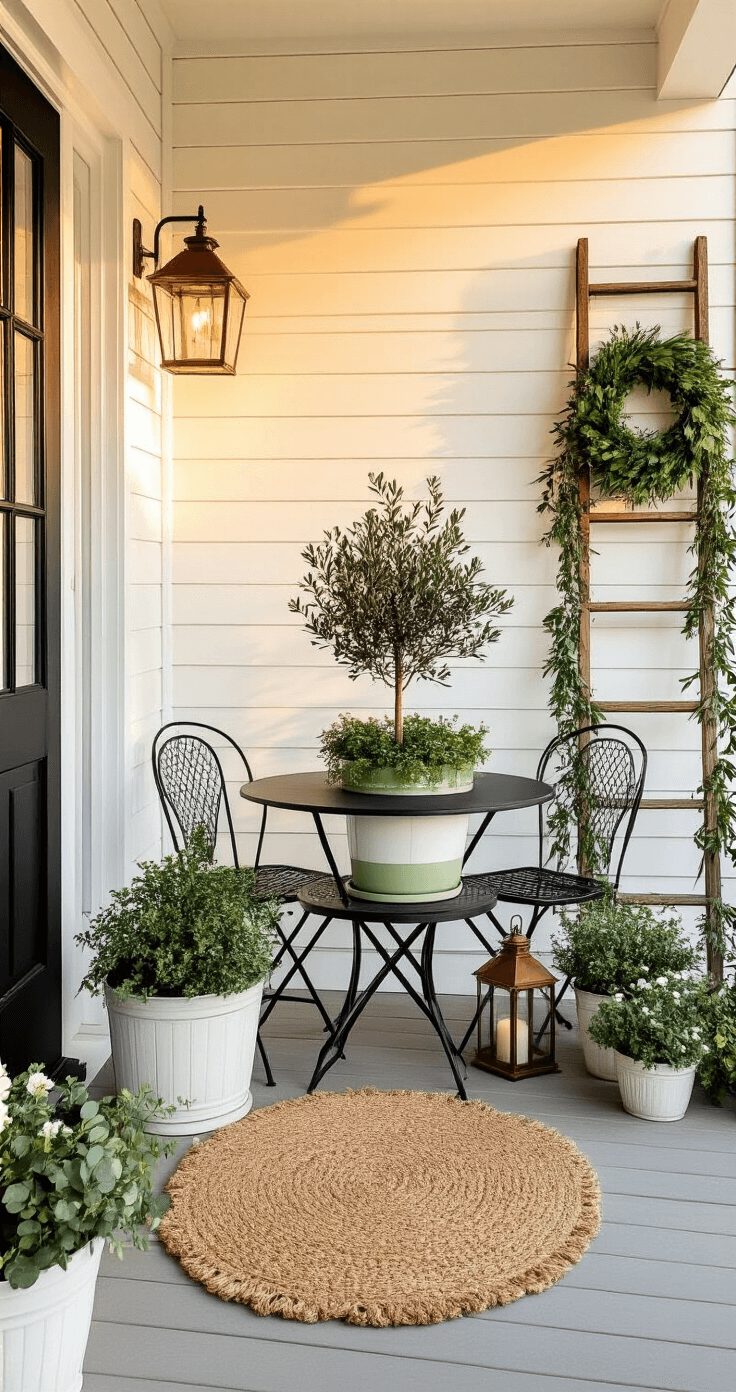
Furniture That Won’t Fall Apart When It Rains
Let’s talk about what actually survives spring weather.
That adorable white wicker chair from the big box store? Give it one rainstorm and it’ll look like it survived a natural disaster.
What actually holds up:
- Metal bistro sets that develop character as they age
- Teak or cedar benches that weather beautifully
- Resin wicker furniture that looks expensive but laughs at humidity
- Vintage finds that were already beat up when you bought them
I learned this lesson after ruining three “cute” chairs in two seasons. Now everything on my porch could survive an apocalypse and still look Instagram-ready.
Lighting That Doesn’t Look Like a College Dorm Room
Here’s where most people mess up their spring porch.
They either ignore lighting completely or go full Christmas mode with lights everywhere.
The sweet spot includes:
- Battery-operated lanterns placed at varying heights
- Solar path lights tucked into planters
- A single statement pendant or wall sconce by the door
- Subtle string lights woven through railings (not wrapped like you’re strangling them)
I keep a set of copper wire fairy lights in a glass jar filled with decorative moss. Costs almost nothing, looks like it came from an expensive boutique, and requires zero electrical work.
The Greenery Game (Beyond Basic Plants)
Flowers get all the attention, but greenery does the actual work.
Ferns draping from hanging baskets create movement. Eucalyptus garlands wrapped around porch posts smell incredible and photograph like a dream. Ivy trailing from window boxes softens hard edges.
My greenery formula:
- 60% foliage for texture and fullness
- 30% flowers for color pops
- 10% unexpected elements like decorative branches or ornamental grasses
This ratio keeps everything looking lush without becoming a jungle that swallows your front door.
Creating a Focal Point (So People Know Where to Look)
Random pretty things scattered everywhere just creates visual chaos.
You need an anchor.
Focal point options that actually work:


[…] your neighbors green with envy (while everything else turns […]