

This post may contain affiliate links. Please see my disclosure policy for details.
Why Your Toilet Deserves Better Than “Basic White”
Look, I get it. Nobody wakes up excited about toilet shopping. But here’s the thing – you use this fixture multiple times every single day. Your phone gets more attention and upgrades than your toilet, and that’s just wrong.
The bathroom industry has quietly revolutionized while most of us weren’t paying attention. We’re talking about toilets that literally clean themselves, save hundreds of gallons of water yearly, and offer comfort levels that make you wonder why you’ve been sitting on that builder-grade model for so long.
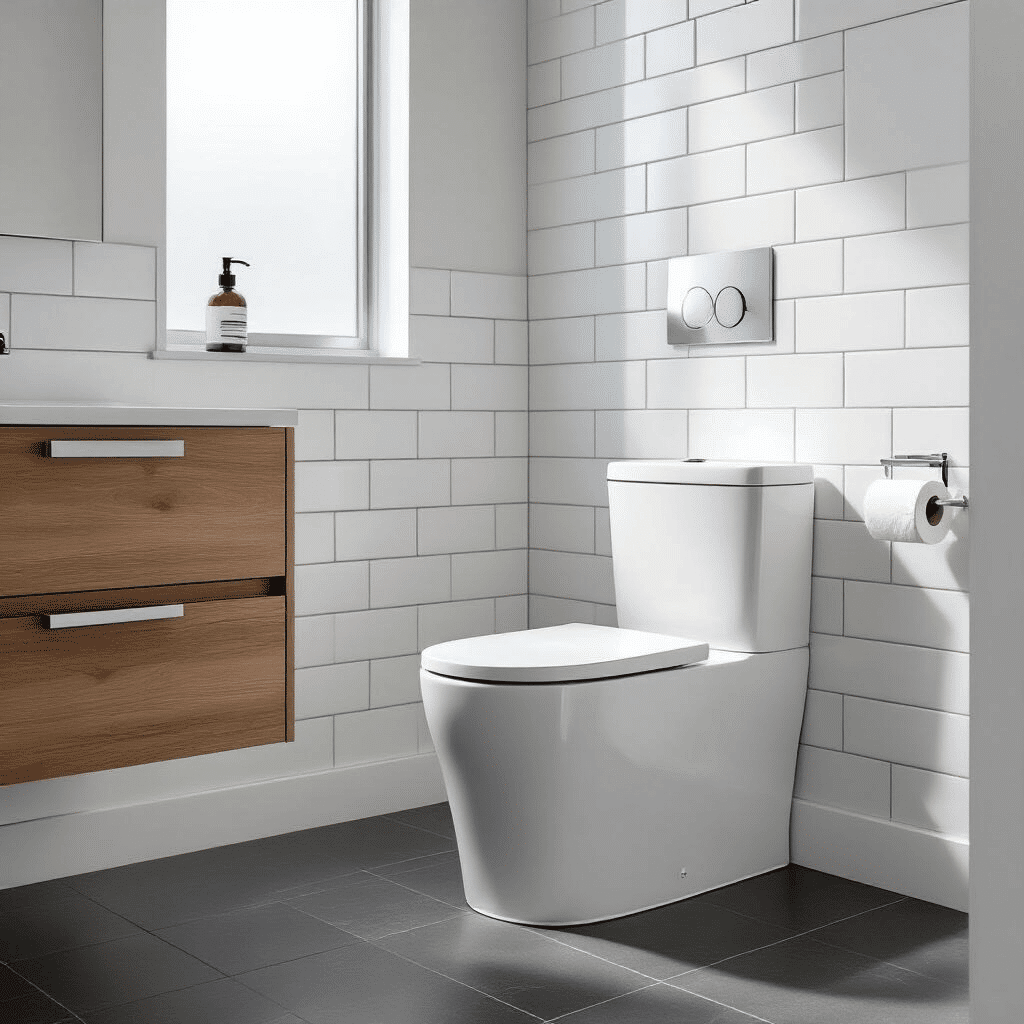
🎨 Steal This Look
- Paint Color: Sherwin-Williams Sea Salt SW 6204
- Furniture: floating vanity with integrated storage
- Lighting: flush-mount LED disk with warm dim technology
- Materials: matte black porcelain, brushed brass hardware, textured ceramic tile
This is the one room where every single guest will eventually find themselves alone with your design choices—make it a moment of quiet confidence rather than an afterthought you’d rather not claim.
Self-Cleaning Toilets: The Laziest (Best) Innovation Ever
I tested a self-cleaning toilet last year at a home show. My skeptical husband asked if it was “just a gimmick.” Three months after installation, he admitted he’d marry it if he could.
How They Actually Work:
- UV light technology zaps bacteria between uses
- Electrolyzed water creates natural cleaning agents
- Powerful flush systems combined with cleaning solutions do the scrubbing
- Some models like American Standard ActiClean offer “Quick Clean” (under 5 minutes) and “Deep Clean” (10+ minutes) cycles
The Real-World Benefits:
You’re not grabbing the toilet brush weekly. Stains don’t build up like they used to. That weird ring around the bowl? Gone.
My cleaning routine went from 20 minutes of aggressive scrubbing to occasionally wiping the exterior. That’s it.
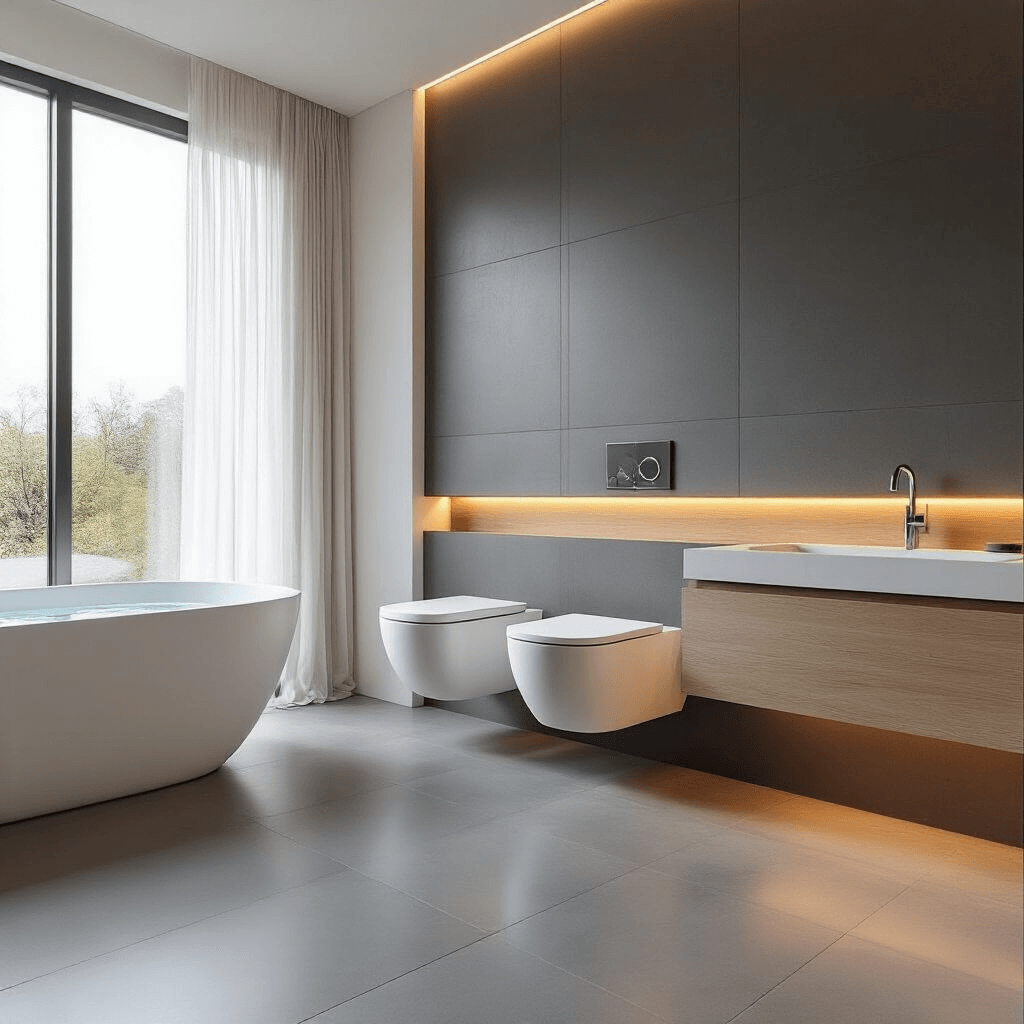
🌟 Steal This Look
- Paint Color: Benjamin Moore White Heron OC-57
- Furniture: floating walnut vanity with integrated storage, wall-mounted for easy floor cleaning access around the toilet zone
- Lighting: recessed waterproof LED downlights with dimmable warm-white output, positioned to eliminate shadows on the bowl for visual cleanliness checks
- Materials: large-format porcelain tile with epoxy grout, quartzite or solid surface countertop, brushed nickel or matte black hardware with antimicrobial finishes
There’s something quietly luxurious about walking into a bathroom that smells like nothing at all—no bleach, no floral cover-up, just clean air because the toilet handled itself hours ago.
One-Piece vs Two-Piece: The Design Showdown
Remember those old toilets with the visible gap between tank and bowl? That gap collected dust, grime, and things we won’t discuss.
One-piece toilets changed everything:
- Seamless design from base to tank
- No crevices for dirt accumulation
- Modern, sleek appearance
- Easier to wipe down in seconds
- Slightly more expensive upfront but worth every penny
I replaced my guest bathroom’s two-piece with a one-piece modern toilet last spring. Guests literally compliment my toilet now. Yes, my toilet gets compliments.
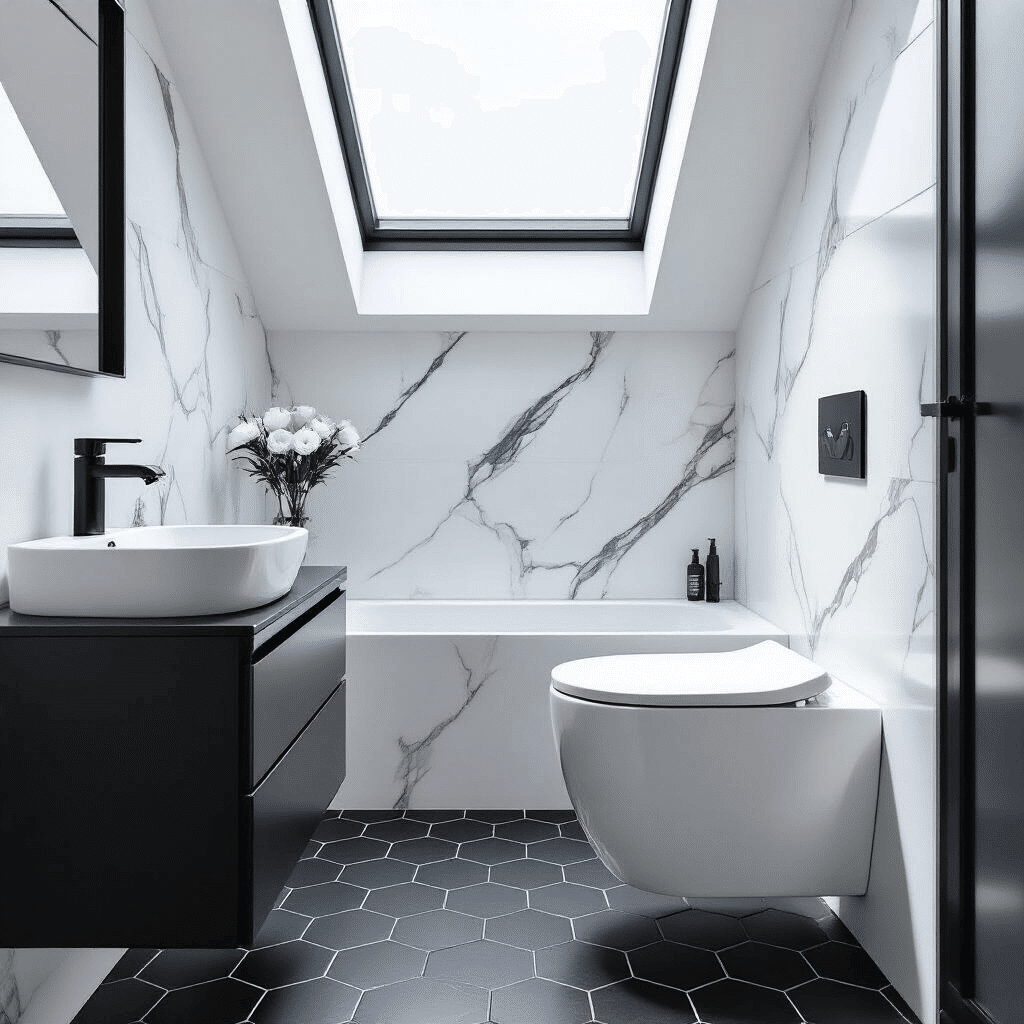
★ Steal This Look
- Paint Color: Farrow & Ball Strong White 2001
- Furniture: floating walnut vanity with integrated storage
- Lighting: minimalist matte black flush mount ceiling light with frosted glass diffuser
- Materials: large-format matte porcelain tile, brushed brass hardware, seamless quartz countertop
There’s something quietly satisfying about a toilet that demands so little of you—no scrubbing hidden channels, no wobbling tank bolts, just a smooth ceramic sculpture that happens to be functional.
Bidet Toilets: From “Weird European Thing” to Must-Have
I’ll say what everyone’s thinking. Bidets seemed strange and unnecessary until the 2020 toilet paper shortage. Suddenly, washing with water didn’t seem so foreign.
What changed in the market:
Bidet toilets went from luxury novelty items to bathroom essentials faster than you can say “smart home.” The technology combines toilet and bidet functions into one fixture, and honestly, there’s no going back once you’ve tried it.
What you actually get:
- Multiple spray patterns and pressure settings
- Heated seats (life-changing in winter)
- Self-cleaning nozzles
- Warm air dryers
- Deodorizers
- Night lights
Save this article
Enter your email and we'll send it straight to your inbox.
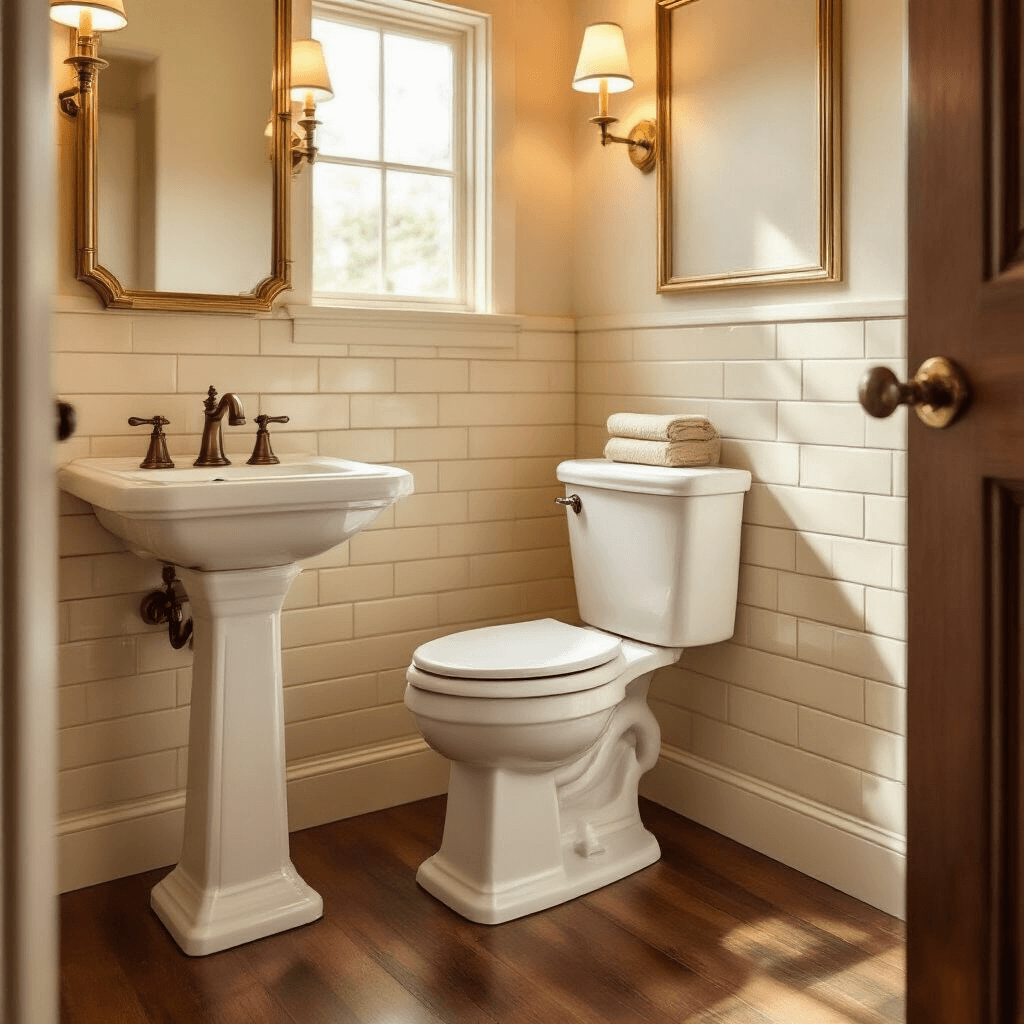
🏠 Steal This Look
- Paint Color: Behr Ultra Pure White PPU18-06
- Furniture: wall-mounted floating vanity with integrated storage
- Lighting: recessed waterproof LED downlights with dimmer
- Materials: porcelain tile with subtle texture, brushed nickel fixtures, frosted glass accents
Once you experience a heated seat on a February morning, you’ll understand why bidet owners become evangelical—the comfort factor transforms a functional space into something genuinely restorative.
Wall-Hung Toilets: Floating Into the Future
Wall-mounted toilets look like they’re defying gravity. The bowl mounts directly to the wall, with the tank hidden behind it.
Why I was terrified at first:
- Won’t it fall off?
- How does it hold weight?
- What about installation costs?
Why I’m now a believer:
The engineering is solid – these toilets mount to heavy-duty frames inside the wall that easily support weight. I’ve seen 300+ pound individuals use them without issues.
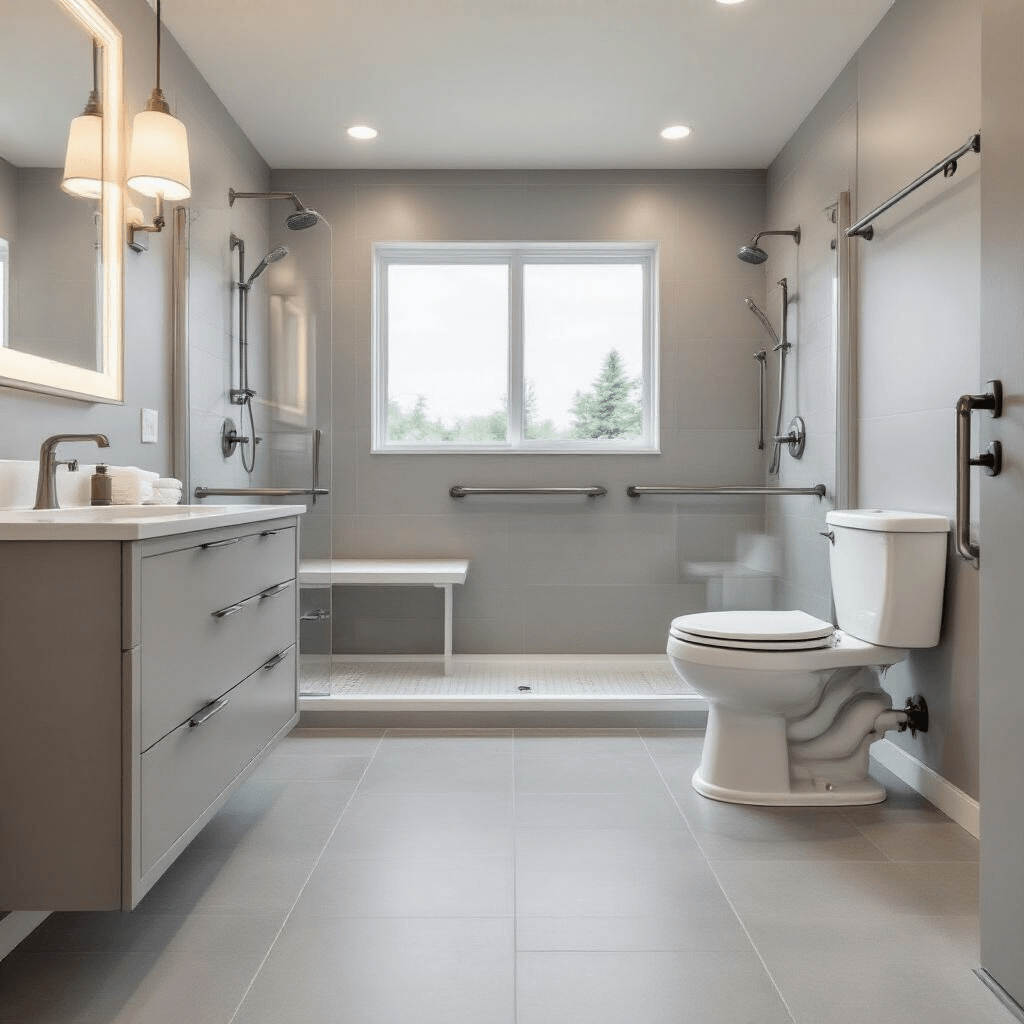
🏠 Steal This Look
- Paint Color: Valspar Soft Wool V117
- Furniture: floating vanity with integrated storage to echo the wall-hung toilet’s visual weightlessness
- Lighting: recessed LED downlights with warm 2700K temperature to eliminate shadows beneath the floating form
- Materials: large-format porcelain tile with minimal grout lines; brushed nickel or matte black flush plate
I used to brace myself against wall-hung toilets like they might betray me mid-use—now I actively seek them out for powder rooms where every square inch of visible floor matters.
Smart Toilets: Yes, Your Toilet Now Needs WiFi
App-controlled toilets sounded ridiculous when I first heard about them. Why does my toilet need an app?
Then I used one at a hotel in Seattle.
I programmed my preferred water temperature, pressure, and seat warmth. The toilet remembered my settings. When I approached, it automatically opened the lid. After use, it closed, flushed, and deodorized.
Smart features that actually matter:
- Customizable user profiles for different family members
- Automatic lid opening/closing (no more midnight seat debates)
- Self-diagnosis that alerts you to potential issues
- Scheduling for automatic cleaning cycles
- Water usage tracking
- Integration with other smart home systems
The privacy concern: Yes, I wondered if my toilet would get hacked. Realistically, most smart toilets don’t collect personal data beyond usage patterns for efficiency. But if you’re concerned, stick with non-connected options – plenty of other innovations don’t require WiFi.
Water-Saving Technology: Good for Planet, Great for Wallet
Old toilets used 3.5 to 7 gallons per flush. Modern low-flow models use 1.28 gallons or less.
Do the math:
Average person flushes 5 times daily. Old toilet: 17.5 gallons/day (at 3.5 gpf) New toilet: 6.4 gallons/day (at 1.28 gpf) Savings: 11.1 gallons daily per person
For a family of four, that’s over 16,000 gallons saved yearly.
But here’s what worried me:
Would lower water volume actually clean properly? Would I need multiple flushes, defeating the purpose?
The technology solution:
Modern toilets use:
- Rimless designs that distribute water more effectively
- Pressure-assisted flushing
- Larger trapways that prevent clogs
- Optimized bowl shapes that enhance water flow
Flush Mechanisms: More Options Than You’d Think
Gone are the days of one handle and one flush strength.
Your current options:
- Traditional lever – Classic and reliable, but uses full water volume every time
- Dual-flush buttons – One for liquid waste (
Keep this one for later
We'll email you the link so you can come back to it.


[…] toilets fuse the tank and bowl into a single, seamless unit. I installed my first one-piece toilet two […]