
This post may contain affiliate links. Please see my disclosure policy for details.
Get ready to fall completely in love with your kitchen! There’s something truly magical about wabi-sabi design—it celebrates imperfection, embraces natural beauty, and creates spaces that feel like a warm hug every time you walk in. If you’re dreaming of a kitchen that’s equal parts cozy and stunning, you’re in the right place! We’ve gathered 27 gorgeous wabi-sabi kitchen ideas that will inspire you to bring organic textures, soothing neutral tones, and handcrafted charm into your home. From beautiful stone sinks to dreamy Noguchi-inspired lighting, these ideas prove that simple, natural, and imperfect can be absolutely breathtaking. Let’s dive in!
1. Wabi Sabi Kitchen with IKEA Wood Cabinets and Natural Stone Counters
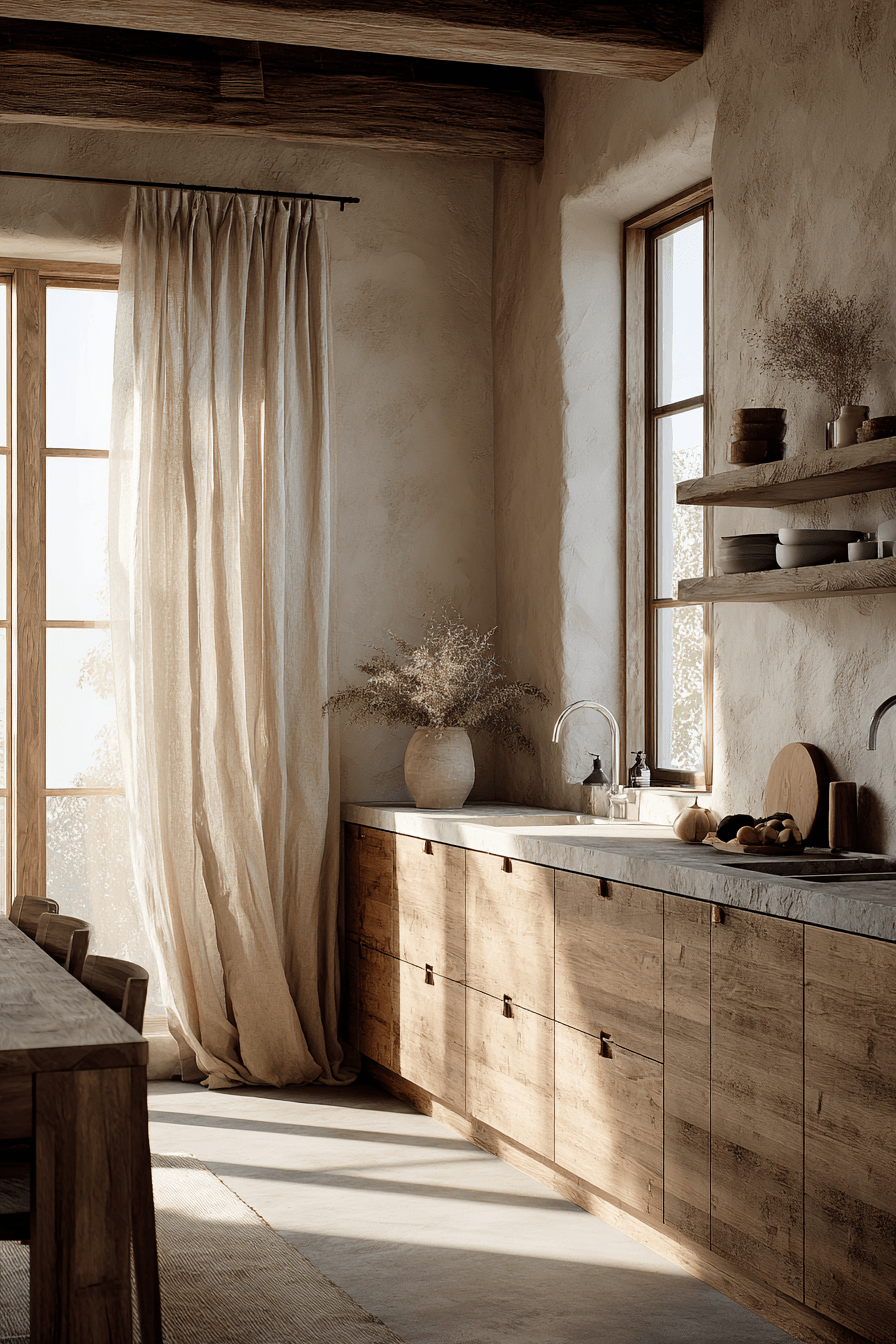
Create a calm and grounded kitchen by pairing natural wood cabinets with simple stone countertops. Systems like IKEA SEKTION cabinets can be customized with warm oak or wood-look fronts for an affordable wabi-sabi feel. Keep the styling minimal so the natural materials stand out. The result is a cozy kitchen that feels organic, peaceful, and effortlessly timeless.
★ Steal This Look
- Paint Color: Sherwin-Williams Natural Linen SW 9109
- Furniture: IKEA SEKTION base cabinets with custom oak or wood-look fronts, paired with a reclaimed wood dining table
- Lighting: recessed or hidden LED strips under open shelving to highlight natural materials without visual clutter
- Materials: hand-troweled lime plaster walls, honed marble or concrete countertops, natural oak cabinetry, exposed rough-hewn ceiling beams, woven jute flooring
This kitchen feels like a slow morning with coffee—it’s the kind of space that asks you to breathe deeper and cook with your hands.
👑 Get The Look
2. Cozy Wabi Sabi Kitchen Styling with Muji Ceramics
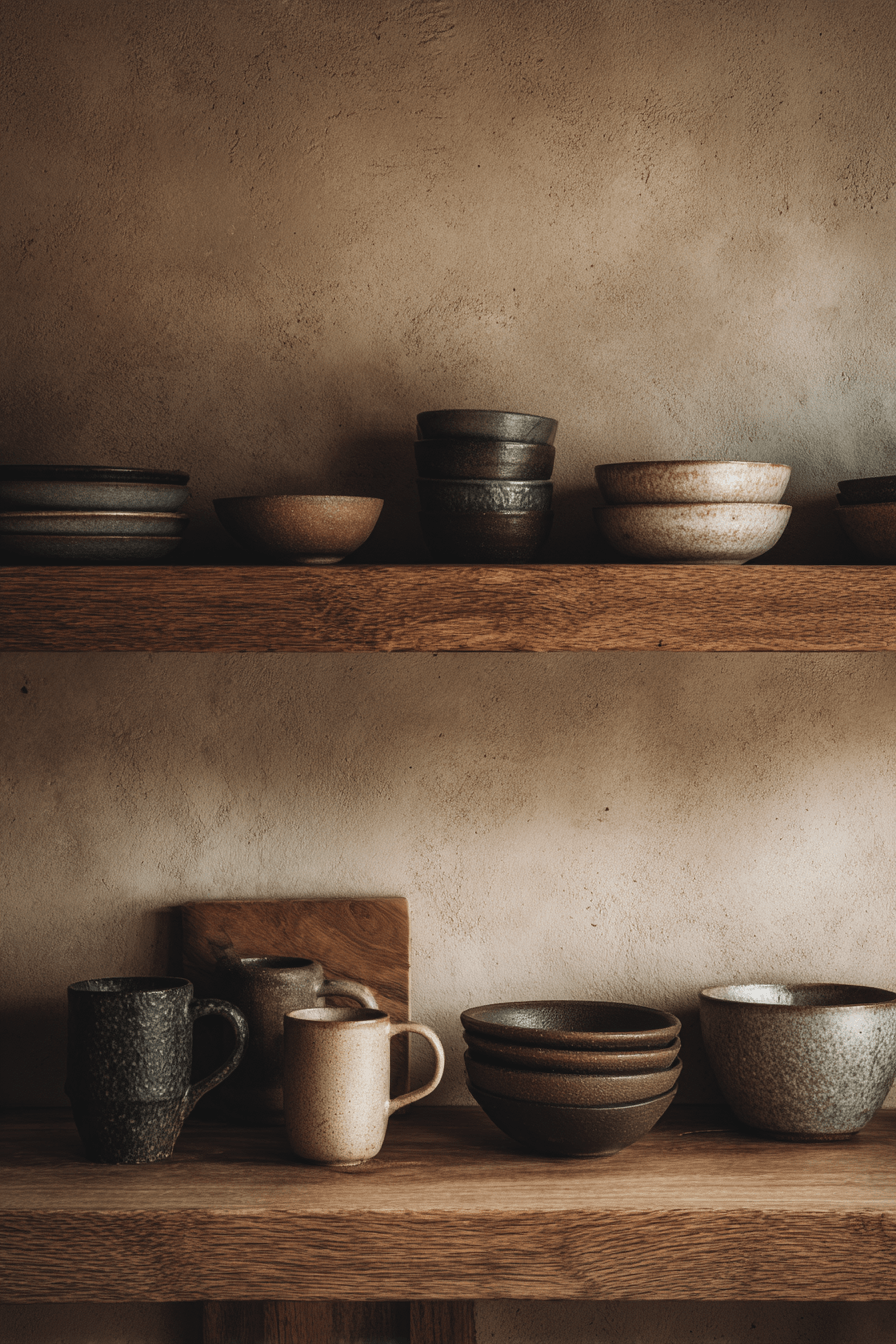
A wabi-sabi kitchen often highlights simple objects that feel handmade and meaningful. Muji ceramics are perfect for this style because of their soft shapes and earthy tones. Display a few bowls and mugs on open shelves to create a quiet, curated look. The overall atmosphere becomes warm, cozy, and beautifully understated.
💡 Steal This Look
- Paint Color: Benjamin Moore Adobe Beige 1128
- Furniture: thick floating shelves in natural oak or walnut with live edges
- Lighting: warm LED under-shelf strip lighting or a single pendant with rice paper shade
- Materials: rough lime plaster walls, raw wood grain, unglazed stoneware, speckled ceramic glazes
This kitchen corner feels like a quiet morning ritual waiting to happen, where every mug has a story.
3. Minimalist Wabi Sabi Kitchen Lighting Inspired by Noguchi Lamps
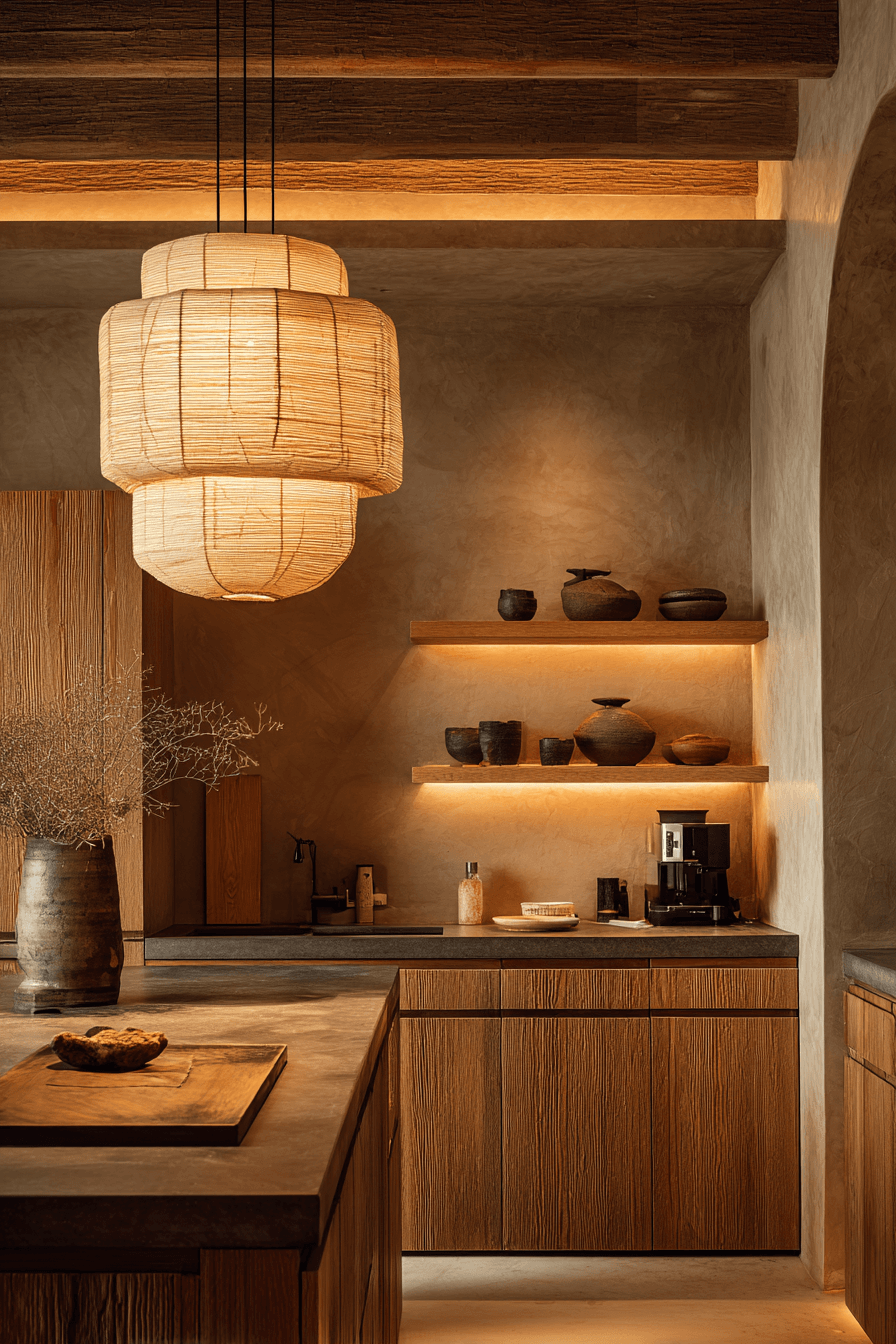
Lighting plays a big role in creating a calm wabi-sabi kitchen atmosphere. Sculptural paper lamps inspired by Noguchi add a soft glow that feels gentle and serene. Their organic shapes work beautifully with wood cabinets and neutral walls. The lighting creates a cozy space that feels calm and deeply inviting.
💡 Steal This Look
- Paint Color: Farrow & Ball Mouse’s Back 40
- Furniture: ribbed walnut kitchen island with dark stone waterfall countertop
- Lighting: tiered woven bamboo pendant light with three stacked cylindrical shades
- Materials: rough-sawn oak beams, fluted walnut cabinetry, honed black granite, handwoven natural fiber shades, unglazed dark ceramics
This kitchen feels like a quiet exhale at the end of a long day, where the weight of the dark stone grounds you and the paper light seems to breathe.
4. Warm Wabi Sabi Kitchens with Limewash Walls
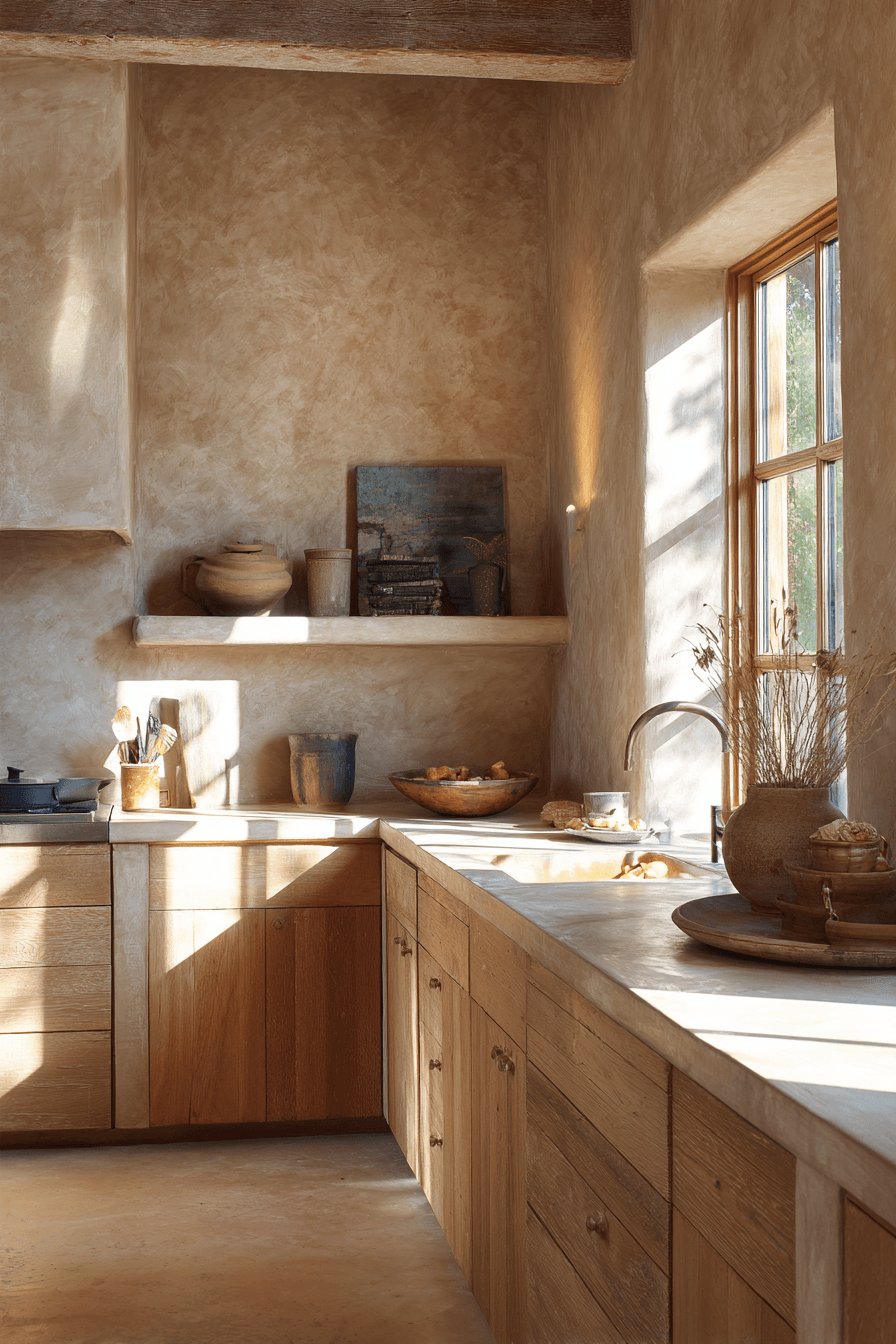
Limewash walls are a beautiful way to add subtle texture to a wabi-sabi kitchen. The soft, cloudy finish gives walls depth while still feeling natural and quiet. Brands like Portola Paints offer limewash colors that create a warm and earthy backdrop. This finish instantly makes the kitchen feel cozy and organic.
★ Steal This Look
- Paint Color: Behr Weathered Moss N350-3
- Furniture: light oak shaker-style base cabinets with dark bronze knobs
- Lighting: recessed wall niche uplighting with warm 2700K bulbs
- Materials: hand-troweled lime plaster walls, unfilled travertine countertops, raw oak ceiling beams, terracotta vessels
This kitchen feels like it grew here over decades—the limewash walls catch morning light differently every hour, making even Monday coffee feel like a slow ritual.
🔔 Get The Look
5. Rustic Stone Sinks for a Wabi Sabi Kitchen Look
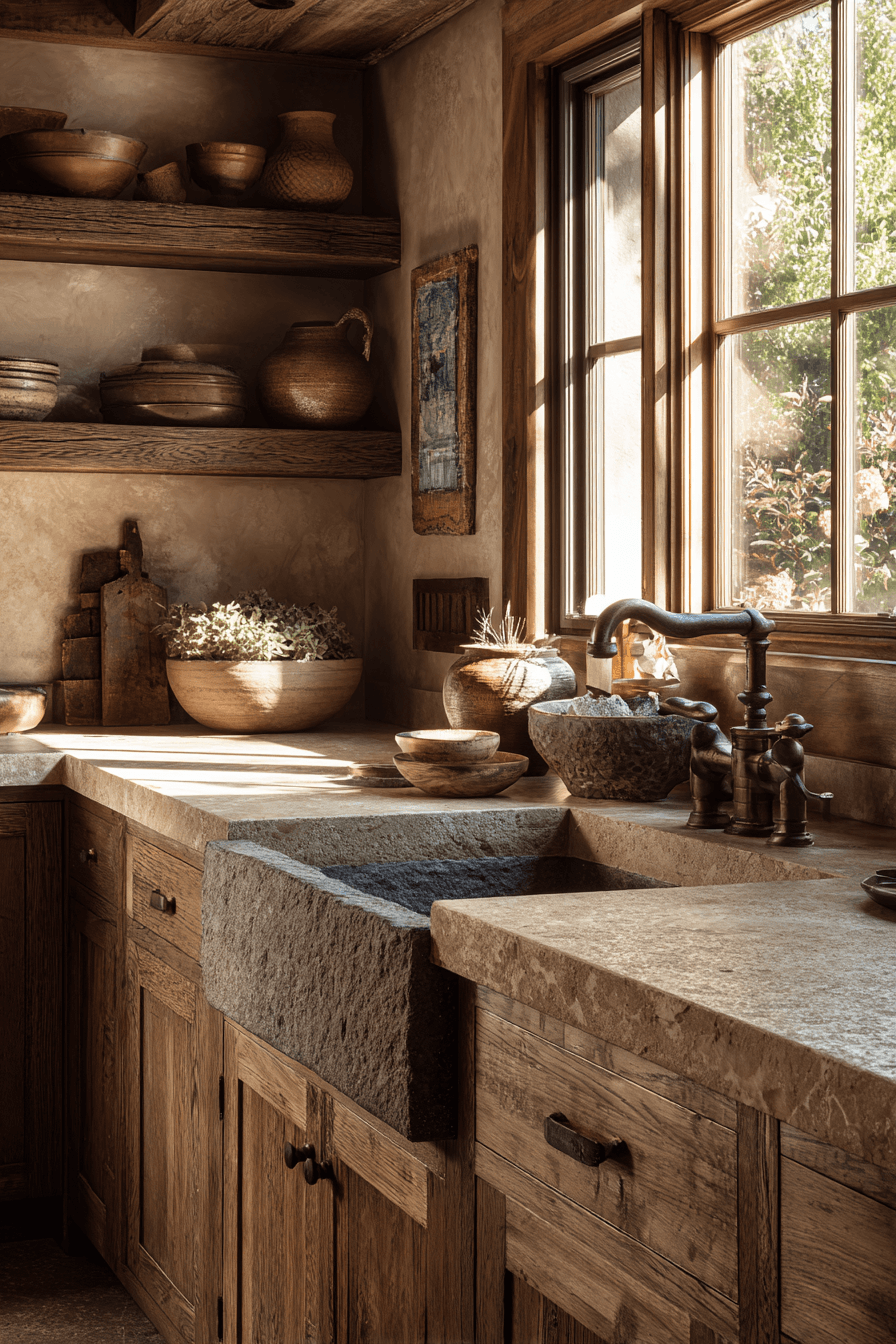
Stone sinks bring raw beauty and authenticity to a wabi-sabi kitchen. Materials like limestone or travertine add natural texture that feels timeless and imperfect. Many designers look to brands like Native Trails for handcrafted stone sinks. The kitchen ends up feeling grounded, rustic, and inviting.
🖼 Steal This Look
- Paint Color: Valspar Adobe Sand 3002-10C
- Furniture: weathered oak base cabinets with simple Shaker-style doors and iron pulls
- Lighting: vintage brass pendant with seeded glass shade
- Materials: rough-hewn limestone, hand-troweled plaster, reclaimed wood, unglazed terracotta
This kitchen feels like it has stories already baked into the walls—the kind of space where you slow down to knead bread by hand instead of rushing through morning coffee.
6. Open Wood Shelving Styled with Handmade Pottery
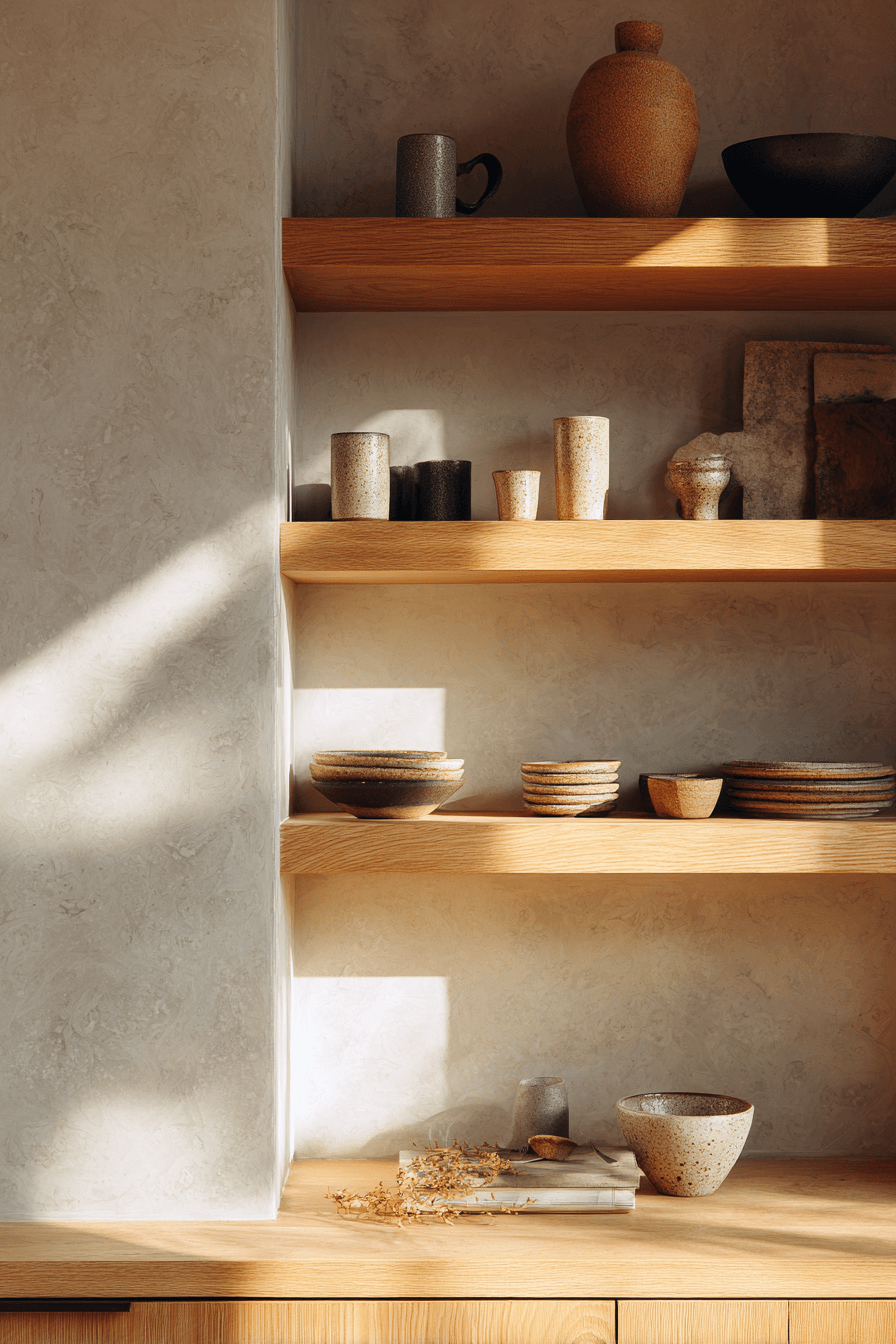
Open wooden shelves are perfect for displaying handmade pottery and everyday objects. Natural woods like oak or teak add warmth and character to the space. Pair them with ceramics from brands like Heath Ceramics for a thoughtful, artisan feel. The result is a kitchen that feels curated yet relaxed.
🖼 Steal This Look
- Paint Color: PPG Sandy Cove PPG1075-2
- Furniture: thick floating oak shelves with visible grain
- Lighting: recessed or hidden lighting to emphasize natural daylight shadows
- Materials: raw plaster walls, natural oak, speckled stoneware ceramics, dried botanicals
This is the kind of kitchen corner that slows your morning down—in the best way—urging you to reach for the imperfect mug that fits your hand just right.
7. Soft Neutral Wabi Sabi Kitchen Color Palettes
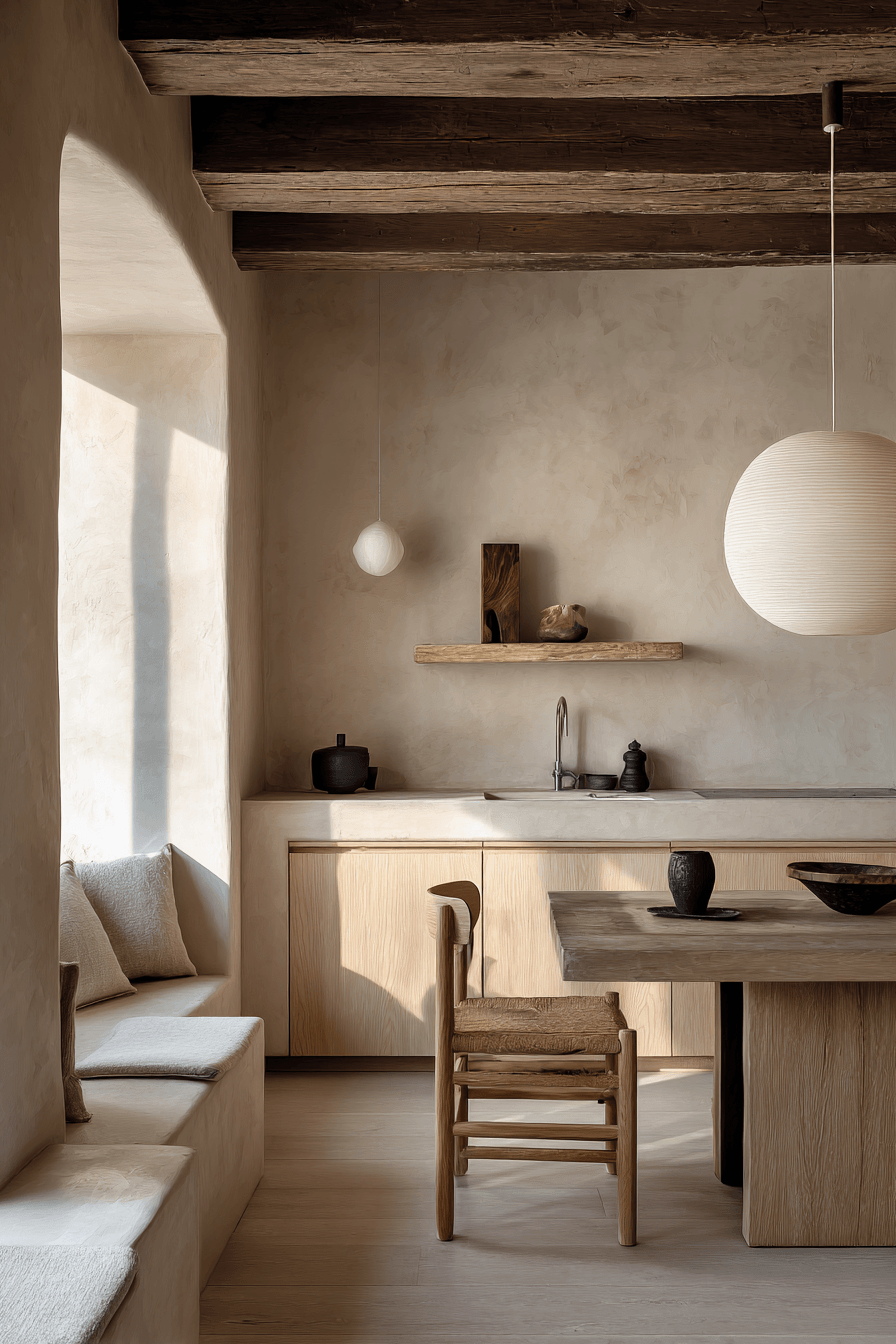
A soft neutral palette is essential for creating a peaceful wabi-sabi kitchen. Colors like sand, clay, warm white, and muted beige help the space feel calm and cozy. These tones allow natural materials like wood and stone to shine. The overall effect is soothing, warm, and beautifully simple.
🌟 Steal This Look
- Paint Color: Dunn-Edwards Muslin DE6211
- Furniture: light oak dining table with thick plank top and block legs, woven rush seat side chairs, built-in window banquette with linen cushions
- Lighting: oversized ribbed paper globe pendant over dining area, small spherical milk glass pendant over sink
- Materials: limewash plaster walls, weathered exposed ceiling beams, raw oak cabinetry, honed stone countertops, handwoven textiles
This is the kitchen you want to linger in with coffee at dawn—the kind of space that forgives smudges and celebrates the patina of daily life.
8. Natural Wood Kitchen Islands for a Wabi Sabi Aesthetic
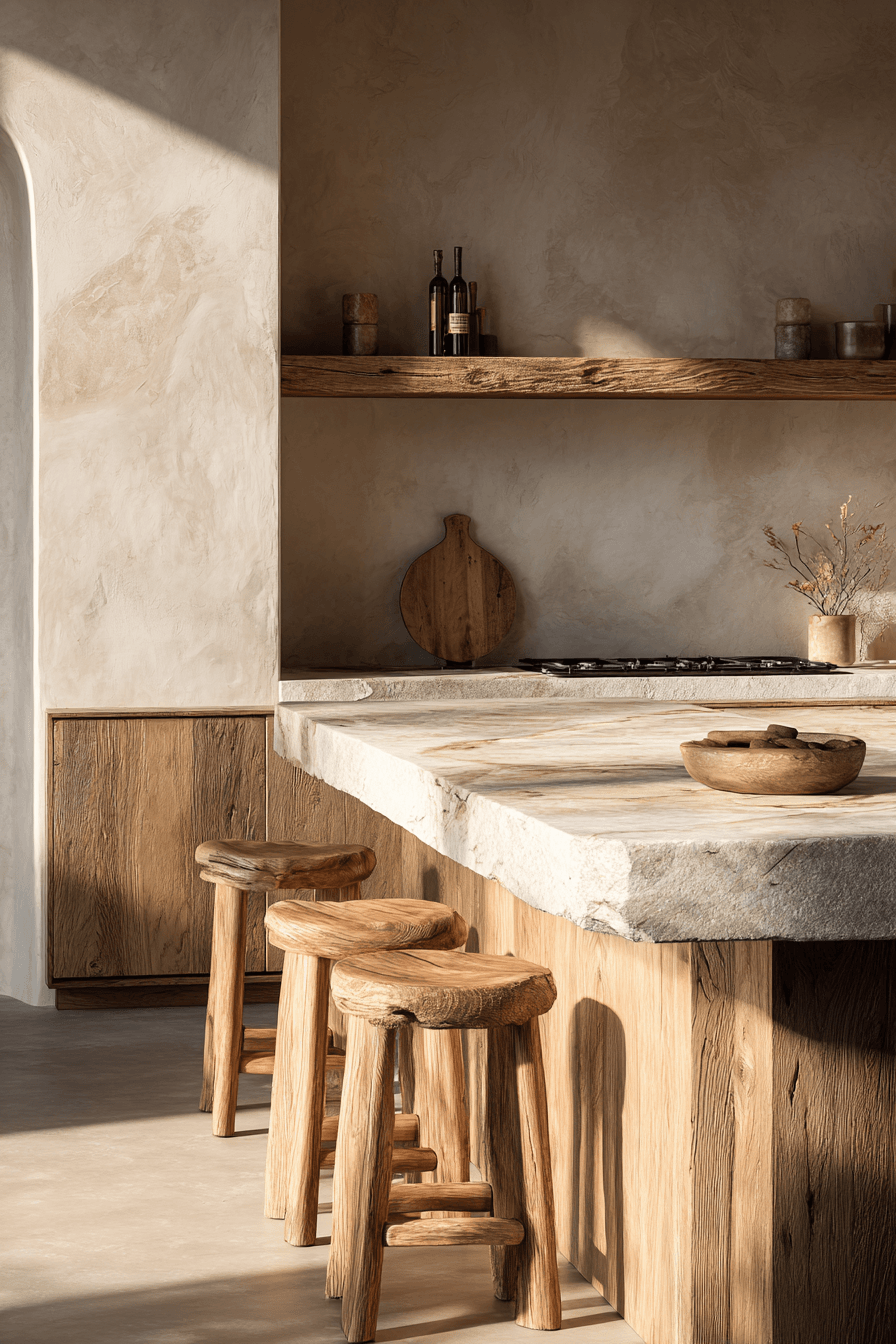
A natural wood island can become the heart of a wabi-sabi kitchen. Choose solid oak or reclaimed wood to bring warmth and texture into the room. The slightly imperfect grain and organic tones add character and authenticity. This creates a cozy focal point that feels welcoming and grounded.
★ Steal This Look
- Paint Color: Clare Paint Chalky 02
- Furniture: thick live-edge marble waterfall island with reclaimed oak base
- Lighting: recessed or hidden fixtures that let natural sunlight dominate
- Materials: hand-troweled lime plaster, raw travertine, reclaimed oak with visible grain, unglazed ceramics
There’s something deeply calming about a kitchen that doesn’t try too hard—these carved stools alone tell you this room was built for slow mornings, not show.
9. Japandi Wabi Sabi Kitchens Inspired by Muuto
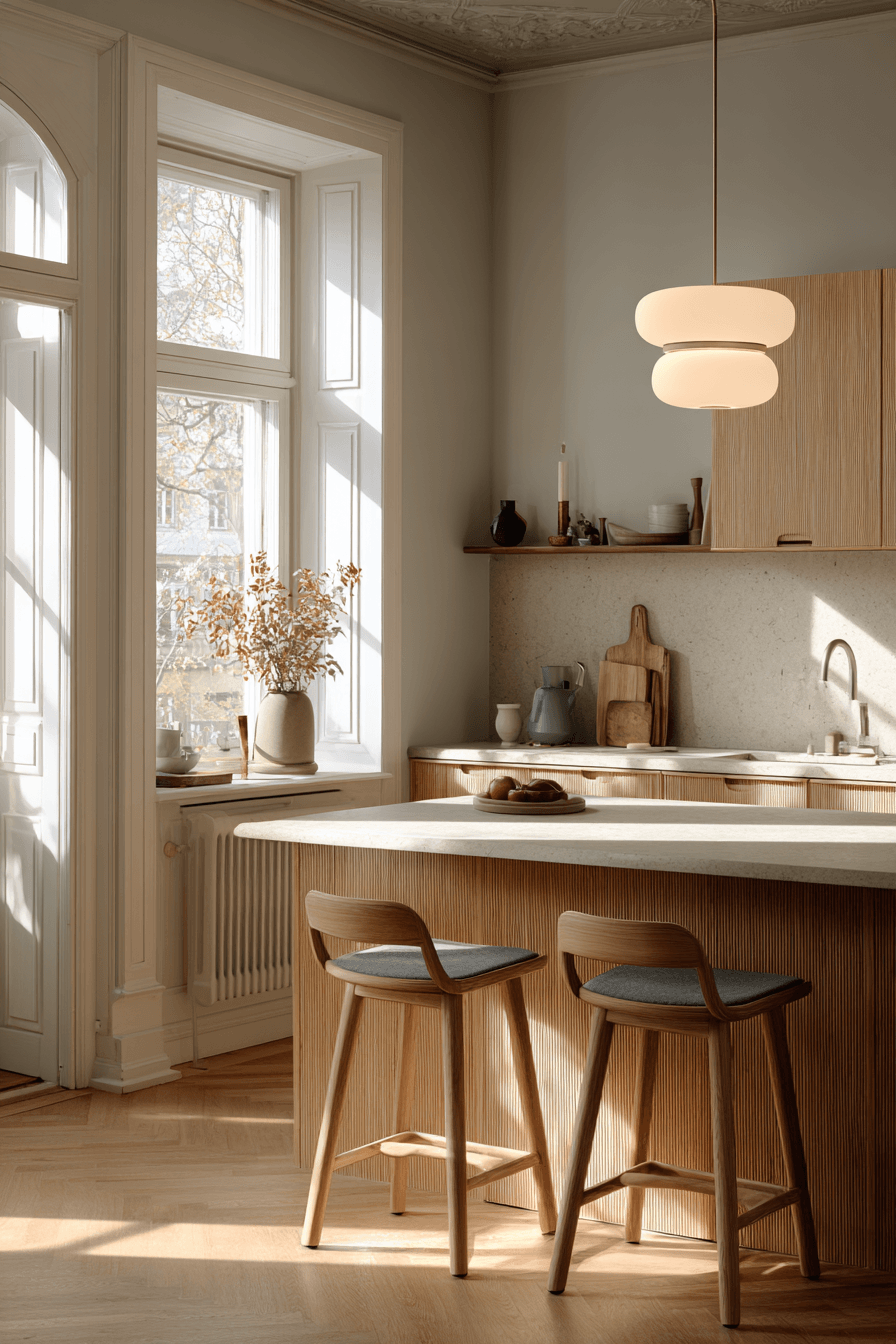
Japandi kitchens combine Scandinavian simplicity with Japanese calm. Brands like Muuto offer minimalist lighting and furniture that work perfectly in this style. Pair these elements with warm wood cabinetry and soft neutral tones. The result is a kitchen that feels balanced, modern, and cozy.
✎ Steal This Look
- Paint Color: Fine Paints of Europe Hollandlac Brilliant EC-30
- Furniture: fluted oak kitchen island with integrated stone countertop, curved-back oak bar stools with charcoal linen seats
- Lighting: stacked oval pendant with frosted white glass shades and brass hardware
- Materials: vertical fluted oak veneer, honed white stone, brushed brass, dried botanicals, unglazed ceramic
This kitchen feels like a deep breath at dawn, where morning light turns ordinary routines into small rituals worth savoring.
10. Organic Textures with Linen Kitchen Curtains
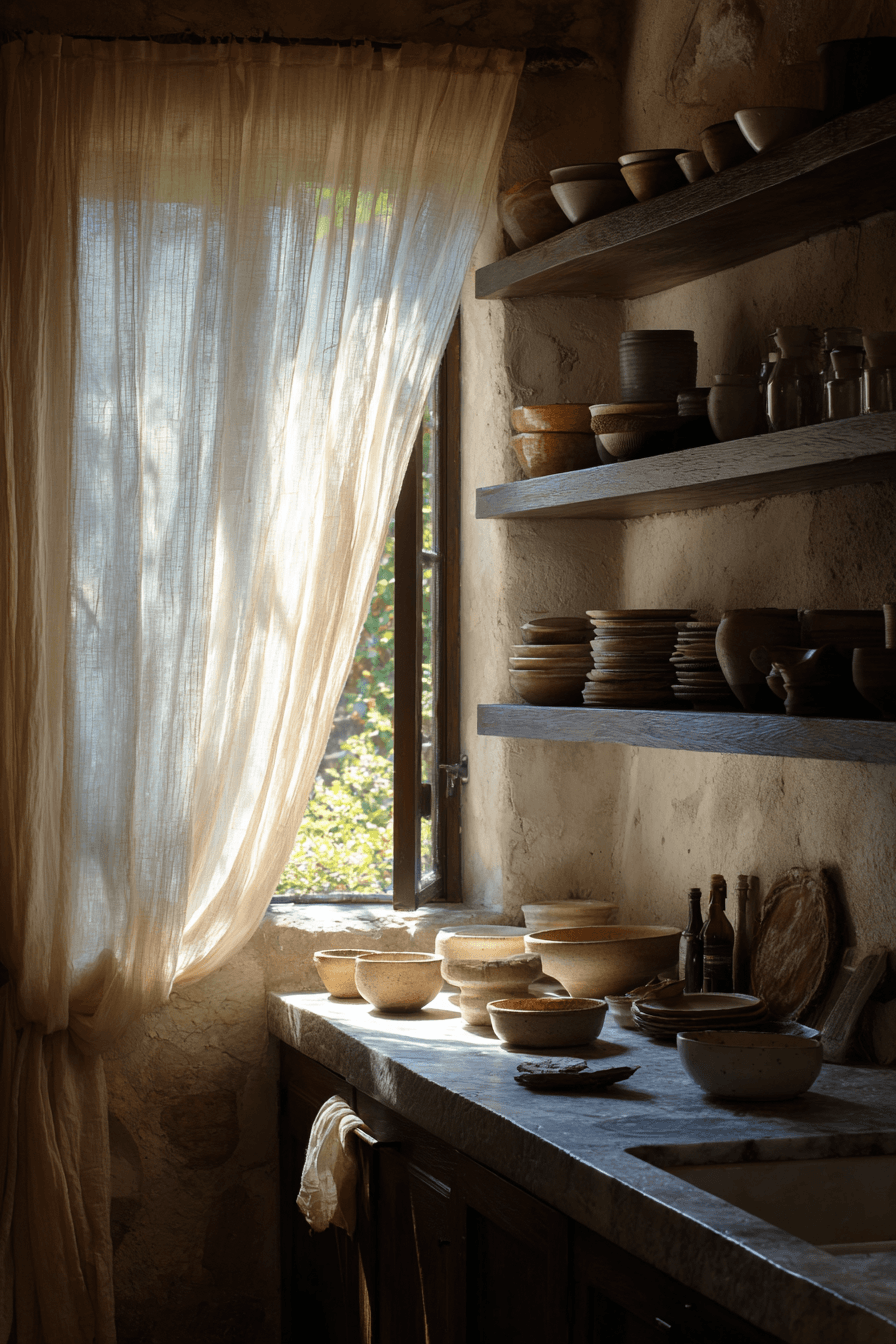
Linen curtains add a soft and relaxed texture to a wabi-sabi kitchen. Their slightly wrinkled appearance fits perfectly with the philosophy of embracing imperfection. Natural linen in warm beige or ivory helps soften hard kitchen surfaces. The space feels airy, cozy, and beautifully natural.
✎ Steal This Look
- Paint Color: Backdrop Harlow 0015
- Furniture: reclaimed wood open shelving with visible grain and knots
- Lighting: oversized handwoven rattan pendant over the kitchen island
- Materials: raw linen, unbleached cotton, weathered oak, handmade ceramic, exposed plaster
This is the kitchen that slows your morning down, where coffee tastes better because the light filters through rumpled linen and nothing demands your attention too sharply.
11. Earthy Wabi Sabi Kitchens with Clay Tile Backsplashes
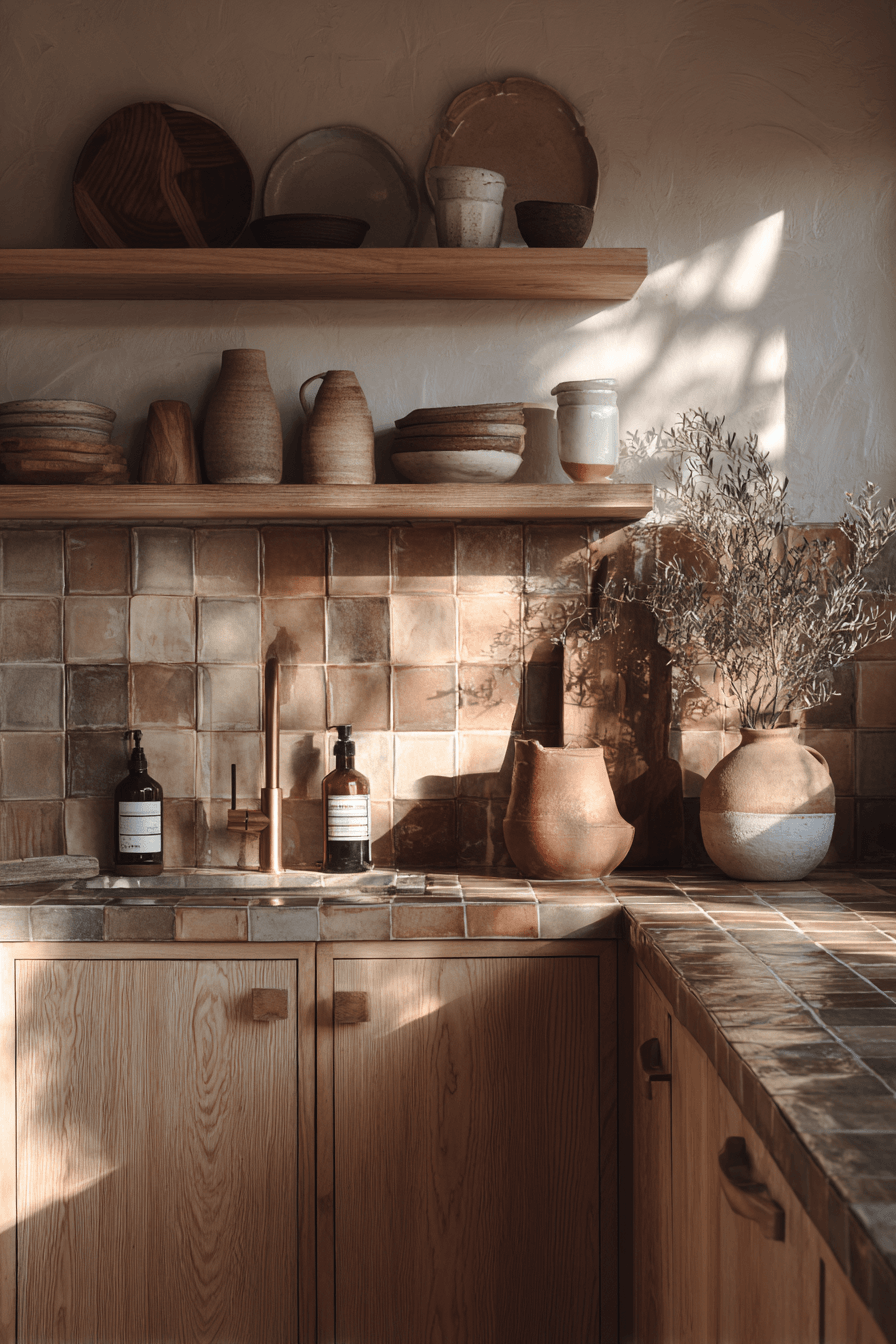
Clay tile backsplashes add subtle texture and earthy warmth to a wabi-sabi kitchen. Handmade tiles often have slight color variations that make the space feel organic. Companies like Zia Tile offer beautiful clay tiles that work perfectly in minimalist kitchens. The result feels warm, rustic, and inviting.
🌟 Steal This Look
- Paint Color: Sherwin-Williams Natural Linen SW 9109
- Furniture: floating white oak open shelving with live edge detail
- Lighting: no artificial fixture needed—maximize existing window with sheer linen shade for filtered daylight
- Materials: hand-glazed terracotta zellige tile, raw white oak cabinetry, unbleached linen, unglazed stoneware pottery
This kitchen feels like morning light in a Mediterranean farmhouse—unhurried, imperfect, and deeply human. It’s the kind of space that makes you want to slow down and actually notice your coffee cooling in your hands.
12. Minimalist Kitchen Decor with Aesop Inspired Bottles
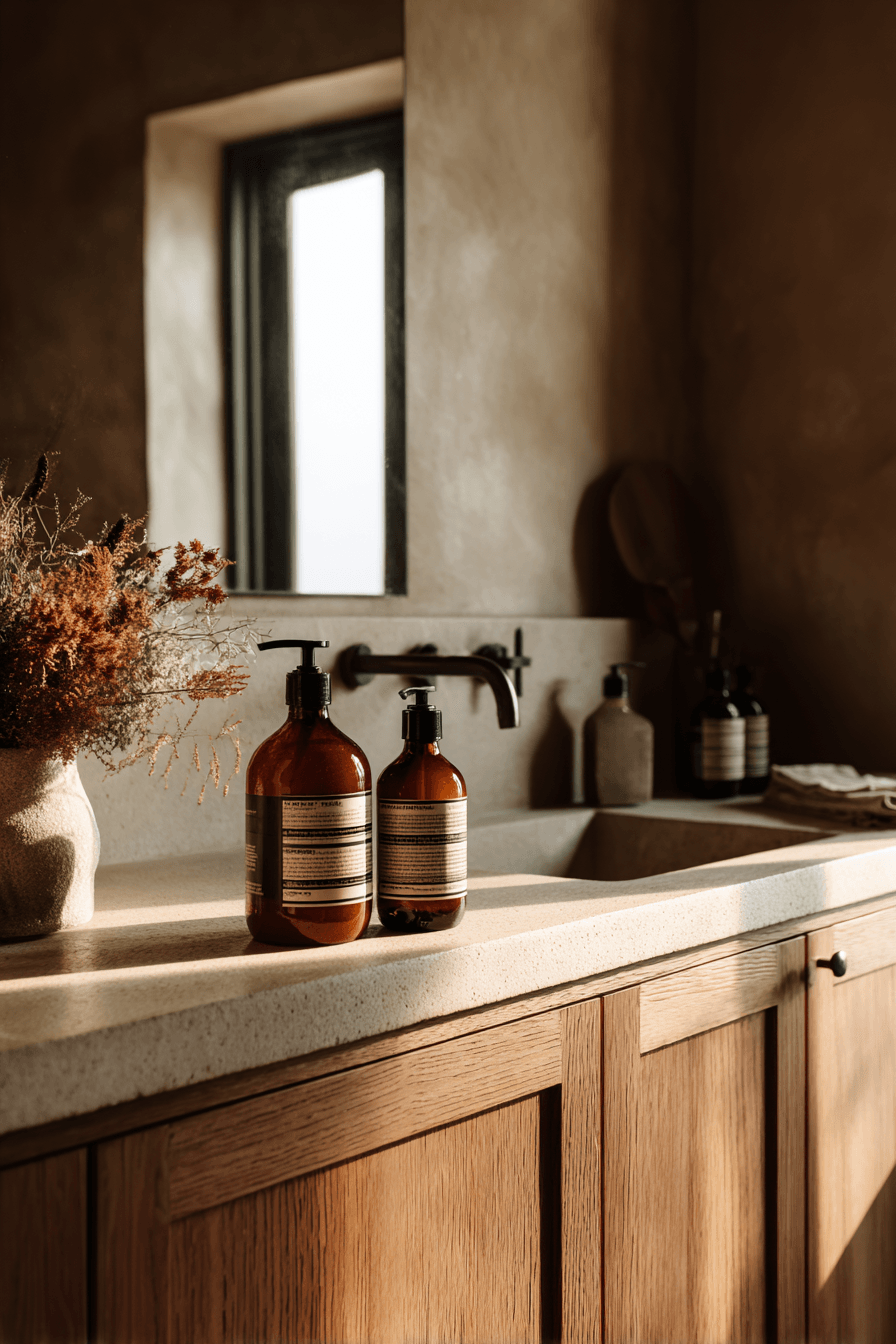
Minimalist decor helps keep a wabi-sabi kitchen calm and uncluttered. Amber soap bottles and simple containers inspired by Aesop bring a subtle luxury to everyday objects. These small details create a thoughtful and cohesive look. The kitchen ends up feeling cozy and quietly sophisticated.
🌟 Steal This Look
- Paint Color: Benjamin Moore Swiss Coffee OC-45
- Furniture: light oak shaker-style base cabinets with integrated finger pulls
- Lighting: narrow vertical black-framed casement window for natural light
- Materials: matte Venetian plaster walls, honed limestone or concrete countertop, dried grass arrangements in raw ceramic vessels
This is the kind of kitchen that slows your morning down—in the best way.
13. Concrete Countertops for a Raw Wabi Sabi Kitchen
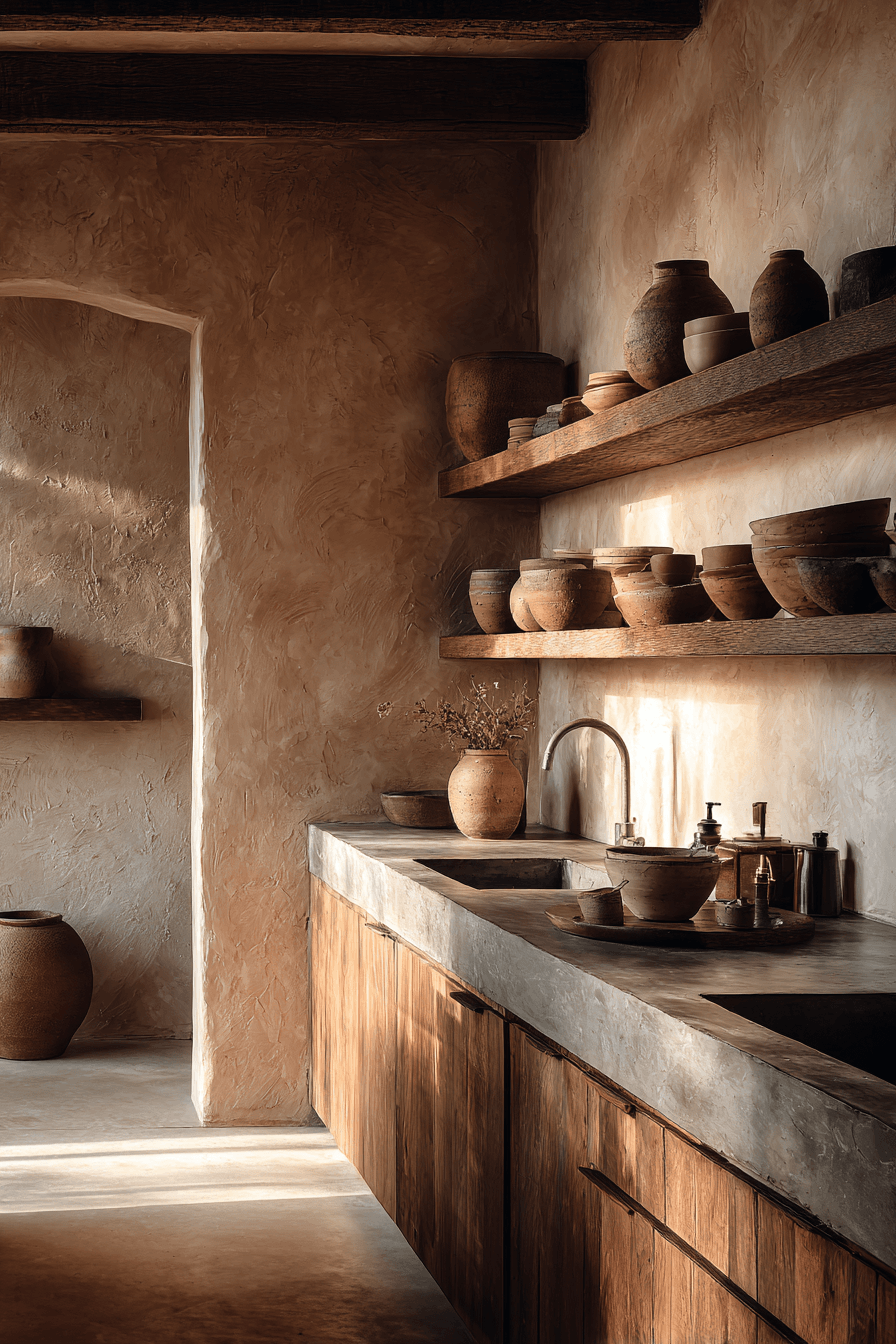
Concrete countertops give a kitchen a raw and beautifully imperfect surface. The subtle variations and soft texture fit perfectly within the wabi-sabi philosophy. Many designers work with brands like Concrete Collaborative for custom finishes. The result is a kitchen that feels modern yet earthy.
💡 Steal This Look
- Paint Color: Farrow & Ball Jitney No. 293
- Furniture: reclaimed wood base cabinets with vertical grain and simple integrated pulls
- Lighting: no visible fixture – rely on natural light through arched openings with exposed dark ceiling beams
- Materials: hand-troweled lime plaster walls, raw concrete countertops, weathered oak open shelving, unglazed terracotta pottery collection
This kitchen feels like it belongs to someone who traveled slowly through the Mediterranean, collecting pieces that carry stories—it’s less about cooking and more about inhabiting a space that honors time.
14. Vintage Wooden Kitchen Stools with Character
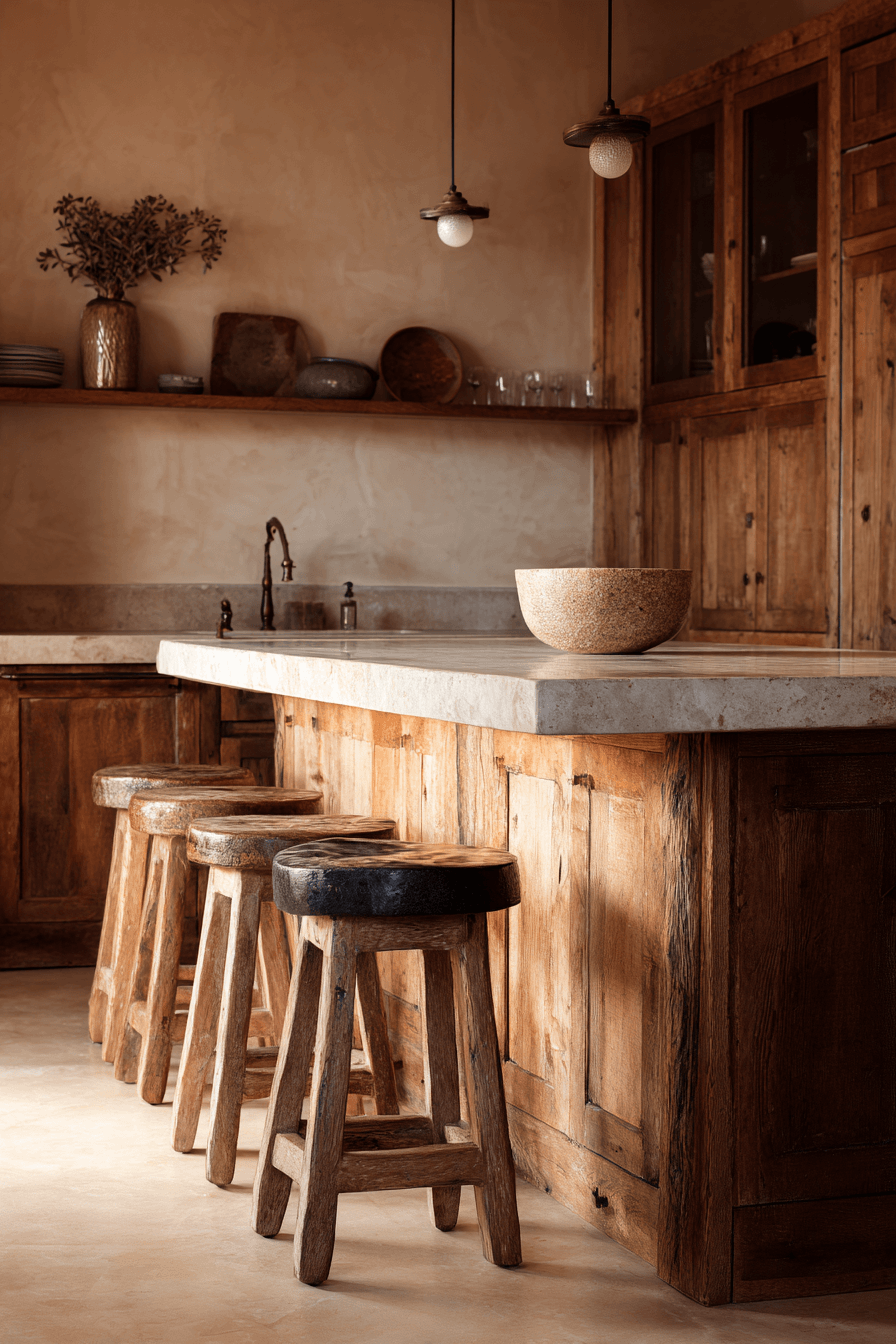
Vintage wooden stools add warmth and personality to a wabi-sabi kitchen. The worn textures and natural patina tell a story and create character. Pair them with a simple wooden island or stone counter. These pieces make the kitchen feel cozy and lived-in.
Save this article
Enter your email and we'll send it straight to your inbox.
🖼 Steal This Look
- Paint Color: Behr Adobe Sand N260-3
- Furniture: reclaimed wood kitchen island with light stone or concrete countertop
- Lighting: industrial pendant lights with dark metal shades and exposed globe bulbs
- Materials: weathered reclaimed wood, natural stone or concrete, textured ceramic, aged leather, hand-plastered walls
There’s something grounding about running your hand over wood that’s been softened by years of use—these stools invite you to slow down and actually sit with your morning coffee.
15. Stoneware Dinnerware Displays Inspired by Heath Ceramics
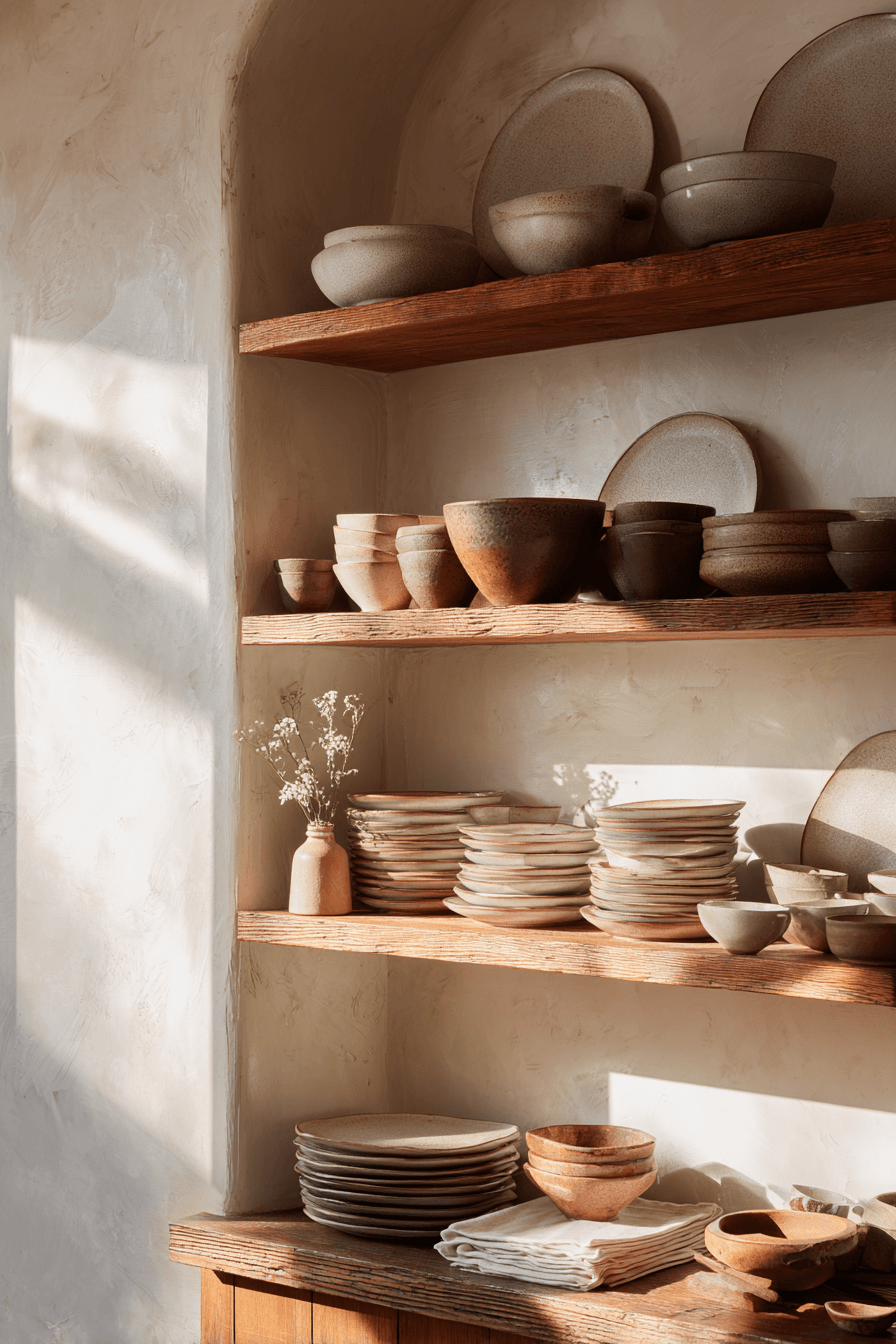
Displaying stoneware dinnerware can become a beautiful design feature. Collections from Heath Ceramics bring artisan craftsmanship and earthy colors to the kitchen. Arrange them on open shelves to create a calm visual rhythm. The space feels curated, warm, and inviting.
✎ Steal This Look
- Paint Color: Valspar Swiss Coffee 7002-16
- Furniture: reclaimed barn wood floating shelves with live edges
- Lighting: south-facing window with sheer linen curtains for filtered natural light
- Materials: lime plaster walls, raw oak shelving, unglazed stoneware, hand-thrown ceramics
This corner feels like Sunday morning slow—where your morning coffee tastes better just because of where you’re standing.
16. Warm Japandi Kitchens with Oak Cabinets
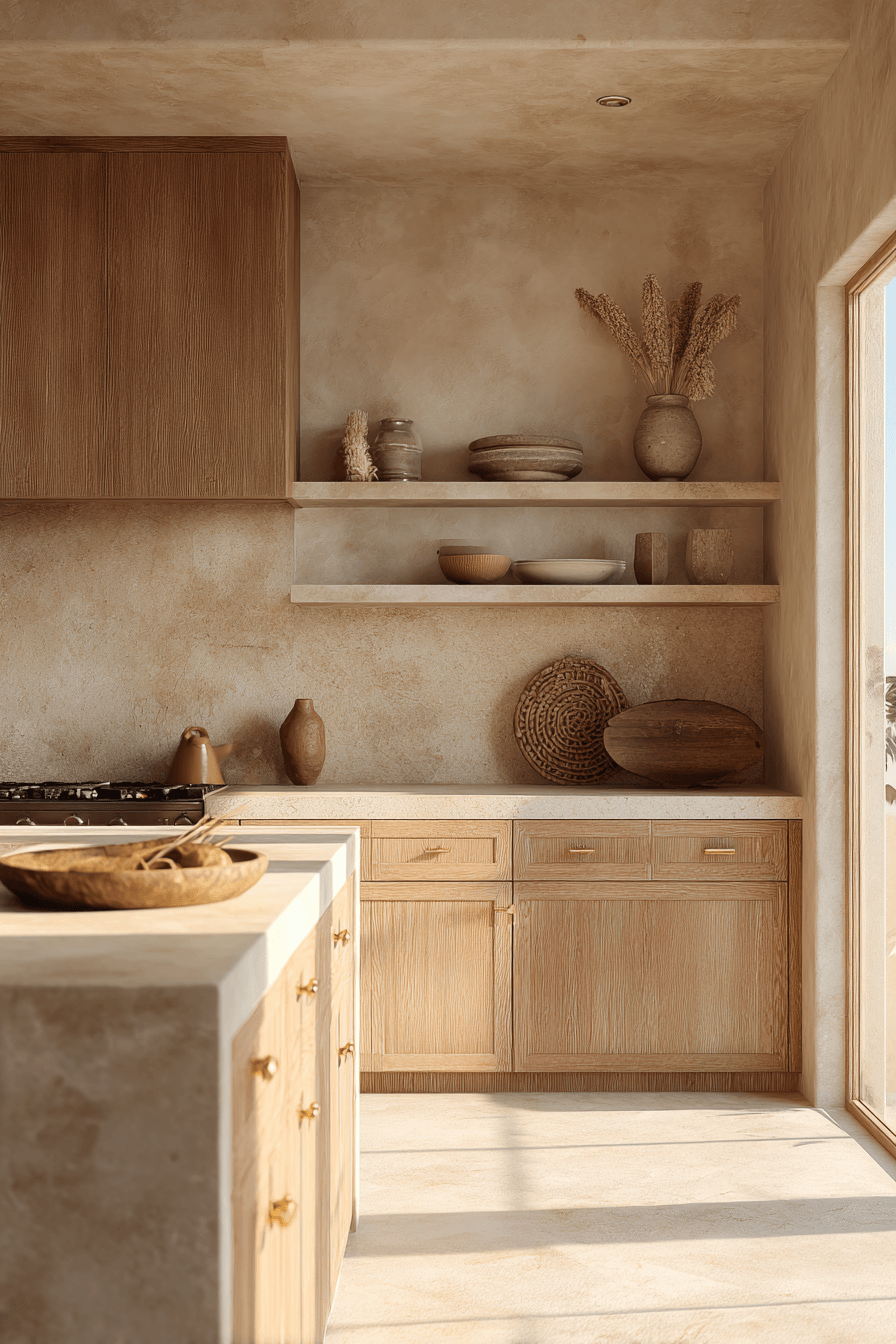
Oak cabinets are perfect for creating a warm Japandi-inspired kitchen. The soft grain and honey tones add natural beauty without feeling heavy. Pair them with minimalist hardware and stone surfaces. The result is a cozy space that feels balanced and serene.
🏠 Steal This Look
- Paint Color: PPG Stonehenge Greige PPG1024-5
- Furniture: Shaker-style oak base cabinets with recessed panel doors and brass mushroom knobs, paired with a limestone waterfall island
- Lighting: Recessed can lights with warm 2700K bulbs, no pendant lighting
- Materials: Lime-washed plaster walls, white oak with vertical grain, honed limestone countertops, hand-thrown ceramics, woven seagrass, dried pampas grass
This kitchen feels like a deep breath—it’s the kind of space that makes you want to slow down and actually enjoy making coffee instead of rushing through your morning.
17. Handmade Ceramic Pendant Lighting
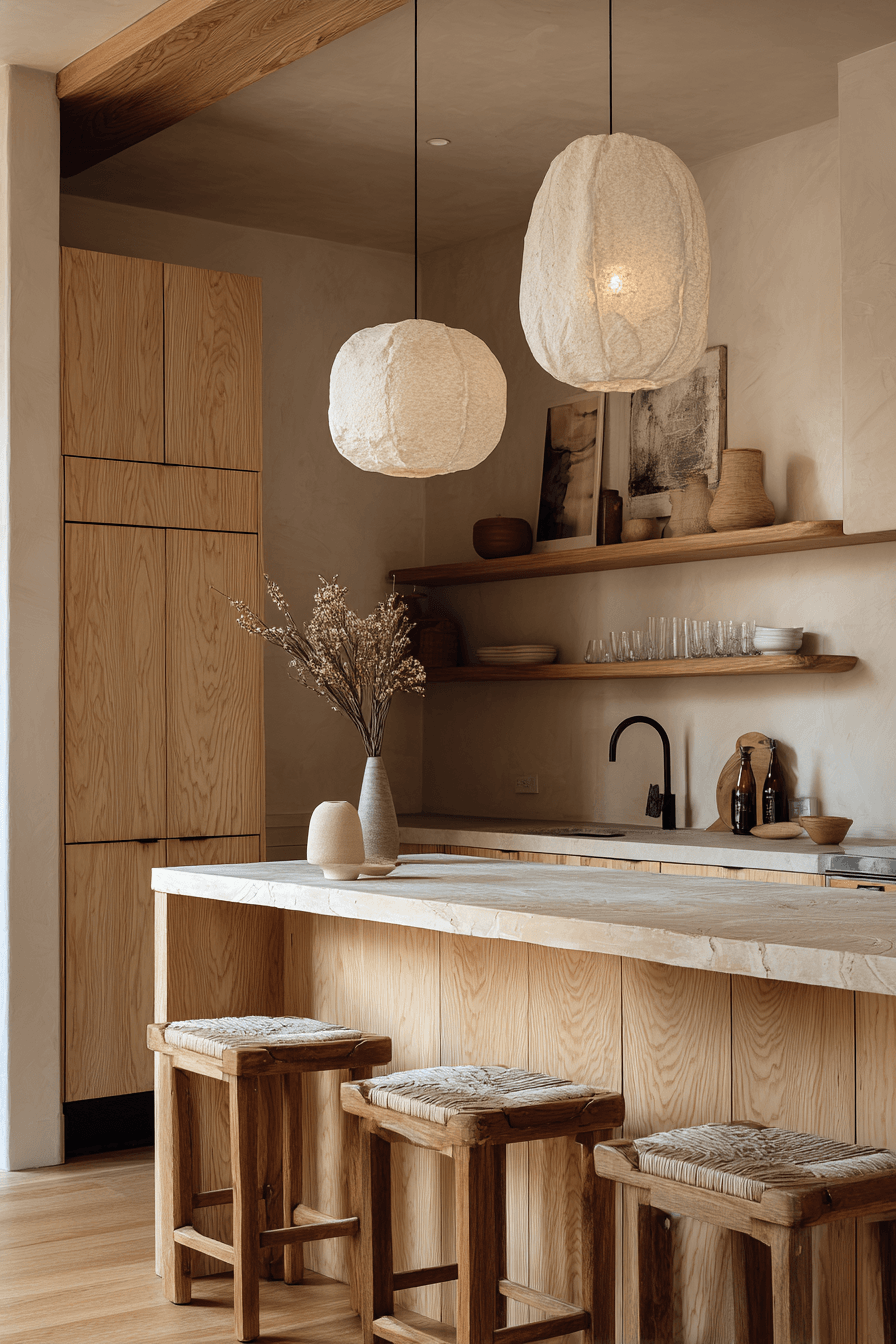
Handmade ceramic pendant lights add soft sculptural beauty to a kitchen. Their imperfect shapes and matte finishes feel authentic and organic. Brands like In Common With create lighting that feels both artistic and warm. These fixtures bring gentle character to the space.
✎ Steal This Look
- Paint Color: Dunn-Edwards Muslin DE6213
- Furniture: natural oak kitchen island with integrated stone waterfall edge and floor-to-ceiling paneled cabinetry
- Lighting: textured white organic cocoon-shaped pendant lights in varying sizes
- Materials: natural oak wood grain, hand-troweled plaster-like textures, woven rope seating, matte stone countertops
There’s something deeply calming about a kitchen that doesn’t try too hard—these hand-formed lights feel like they were discovered rather than installed, and that’s exactly the point.
18. A Calm Wabi Sabi Kitchen with Soft Beige and Sand Tones
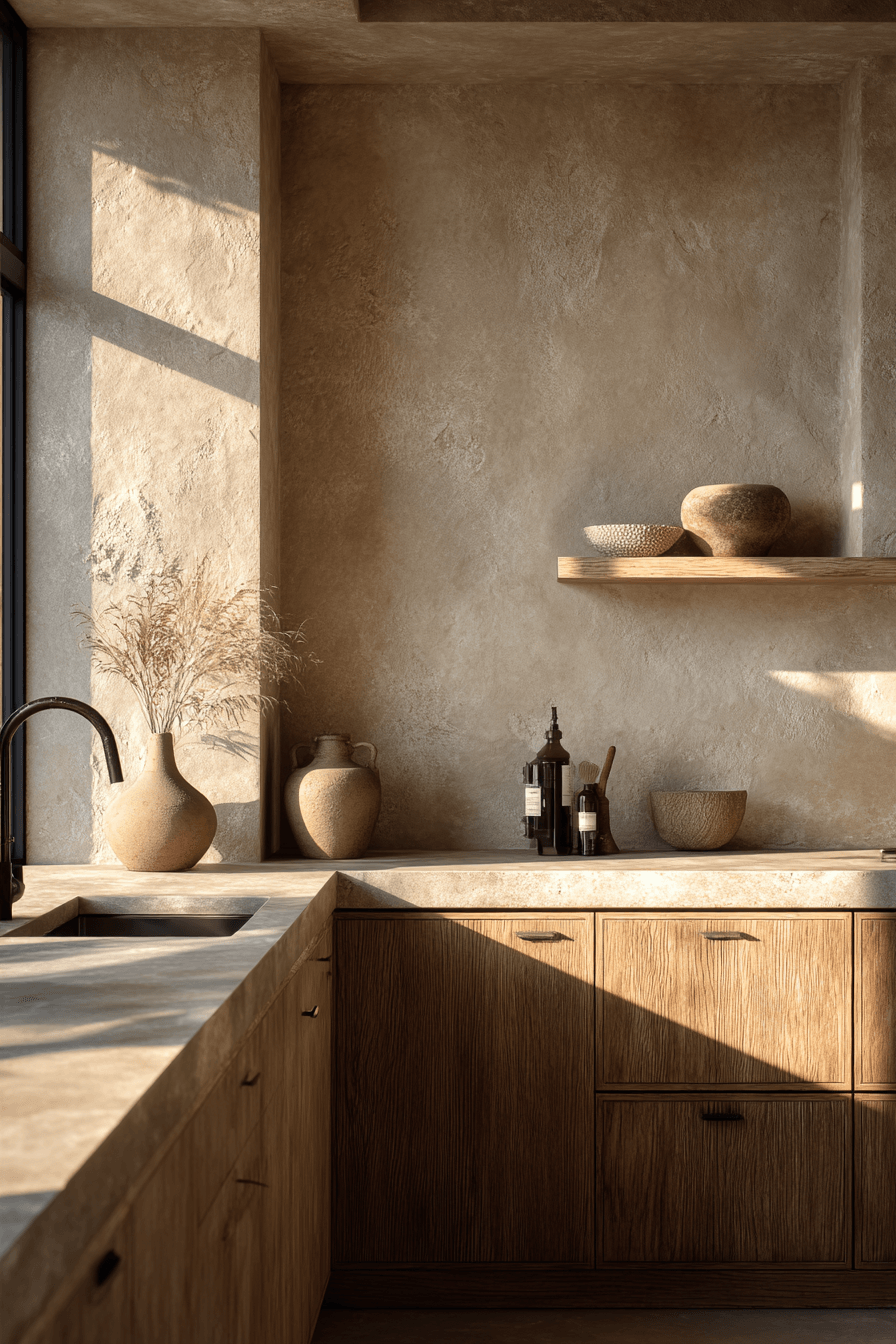
Soft beige and sand tones create an instantly calming kitchen atmosphere. These warm neutrals reflect light beautifully and feel peaceful to live with every day. When paired with wood and stone, the palette feels organic and cozy. The kitchen becomes a serene place to gather and cook.
🖼 Steal This Look
- Paint Color: Clare Paint Dirty Chai 05
- Furniture: slab-front walnut kitchen cabinets with integrated bronze pulls
- Lighting: recessed ceiling cove lighting for soft ambient glow
- Materials: textured lime plaster walls, honed stone countertops, hand-thrown ceramic vessels, dried botanicals
This kitchen feels like Sunday morning light made permanent—it’s the kind of space that forgives a little mess and actually looks better for it.
19. Open Pantry Shelves with Woven Baskets
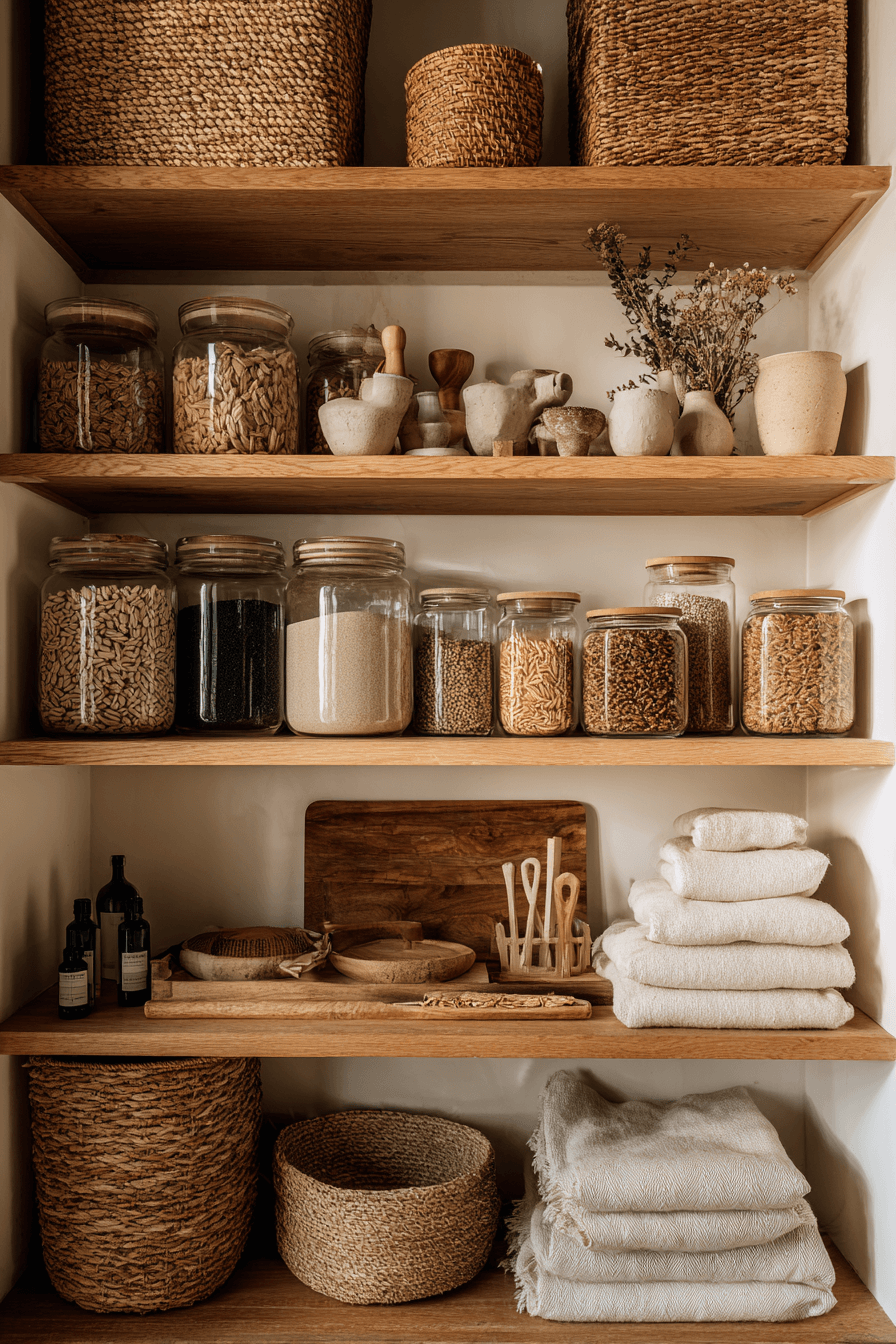
Open pantry shelving helps keep a wabi-sabi kitchen both practical and beautiful. Woven baskets made from natural fibers add texture and warmth. Brands like The Citizenry offer beautiful handcrafted baskets perfect for storage. The pantry ends up feeling organized yet relaxed.
🖼 Steal This Look
- Paint Color: Fine Paints of Europe Hollandlac Brilliant Warm Cream HL-15
- Furniture: floating oak pantry shelves with live edge detail, 10-12 inch depth for jar storage
- Lighting: warm LED strip lighting under each shelf, 2700K color temperature
- Materials: white oak shelving, seagrass and rattan woven baskets, clear glass jars with bamboo lids, unbleached cotton and linen textiles
This pantry feels like a Sunday morning—unhurried, honest, and quietly satisfying. There’s permission here to let everyday objects become beautiful simply through care and arrangement.
🌊 Get The Look
20. Natural Travertine Kitchens with Timeless Texture
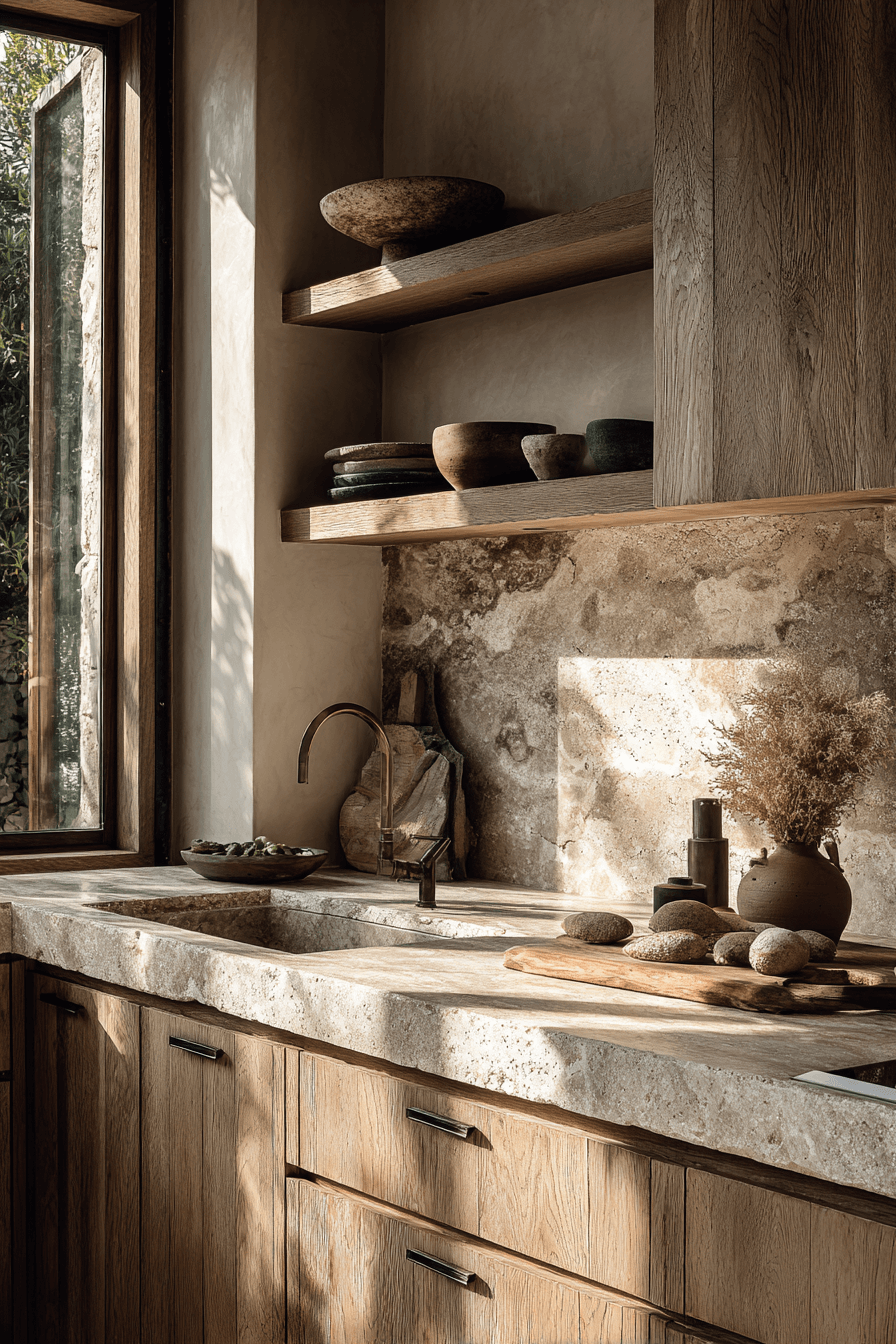
Travertine kitchens have a soft, timeless texture that works beautifully with wabi-sabi design. The natural stone has subtle color variation that feels organic and calming. Travertine countertops or backsplashes create a warm and earthy aesthetic. The space feels grounded and quietly elegant.
🌟 Steal This Look
- Paint Color: Backdrop Sandcastle 0010
- Furniture: natural oak floating shelves with live edge detail
- Lighting: recessed LED strip lighting under shelves
- Materials: honed travertine, limewashed plaster, aged bronze, hand-thrown ceramics
This kitchen feels like a slow Sunday morning—unguarded, honest, and quietly luxurious without trying to impress anyone.
21. Minimalist Faucets from VOLA for a Wabi Sabi Look
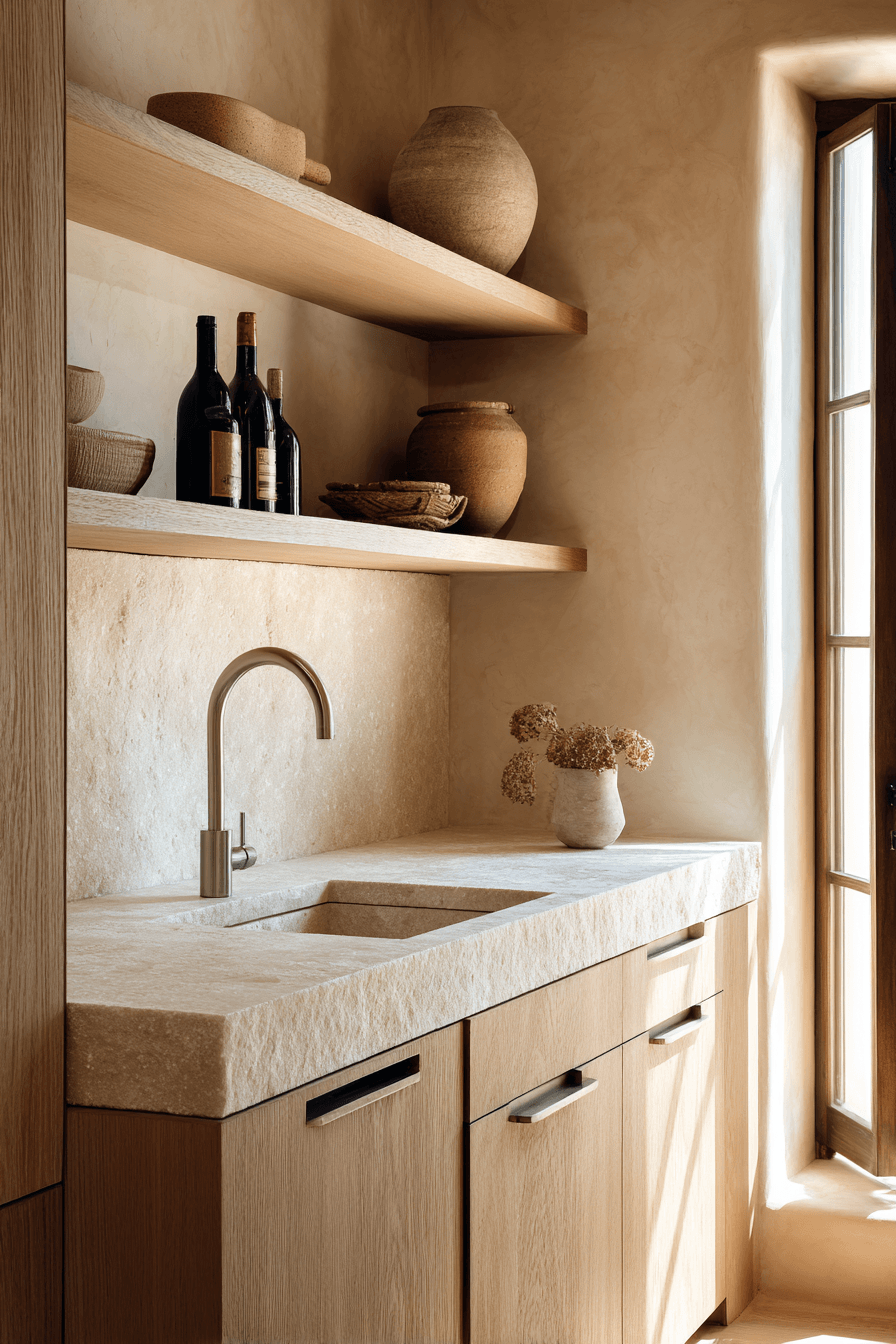
Minimalist faucets help keep a wabi-sabi kitchen uncluttered and refined. Brands like VOLA design sleek fixtures that feel modern yet timeless. Their simple shapes blend beautifully with stone and wood materials. The result is a kitchen that feels calm and sophisticated.
🖼 Steal This Look
- Paint Color: Sherwin-Williams Accessible Beige SW 7036
- Furniture: floating oak open shelving with live edge detail
- Lighting: natural window light with sheer linen Roman shade
- Materials: honed travertine countertop, white oak cabinetry, raw terracotta pottery, dried botanicals
This kitchen feels like someone actually cooks here and isn’t afraid of a little patina—there’s confidence in leaving the wine bottles out and letting the stone age.
22. Rustic Wooden Cutting Boards as Kitchen Decor
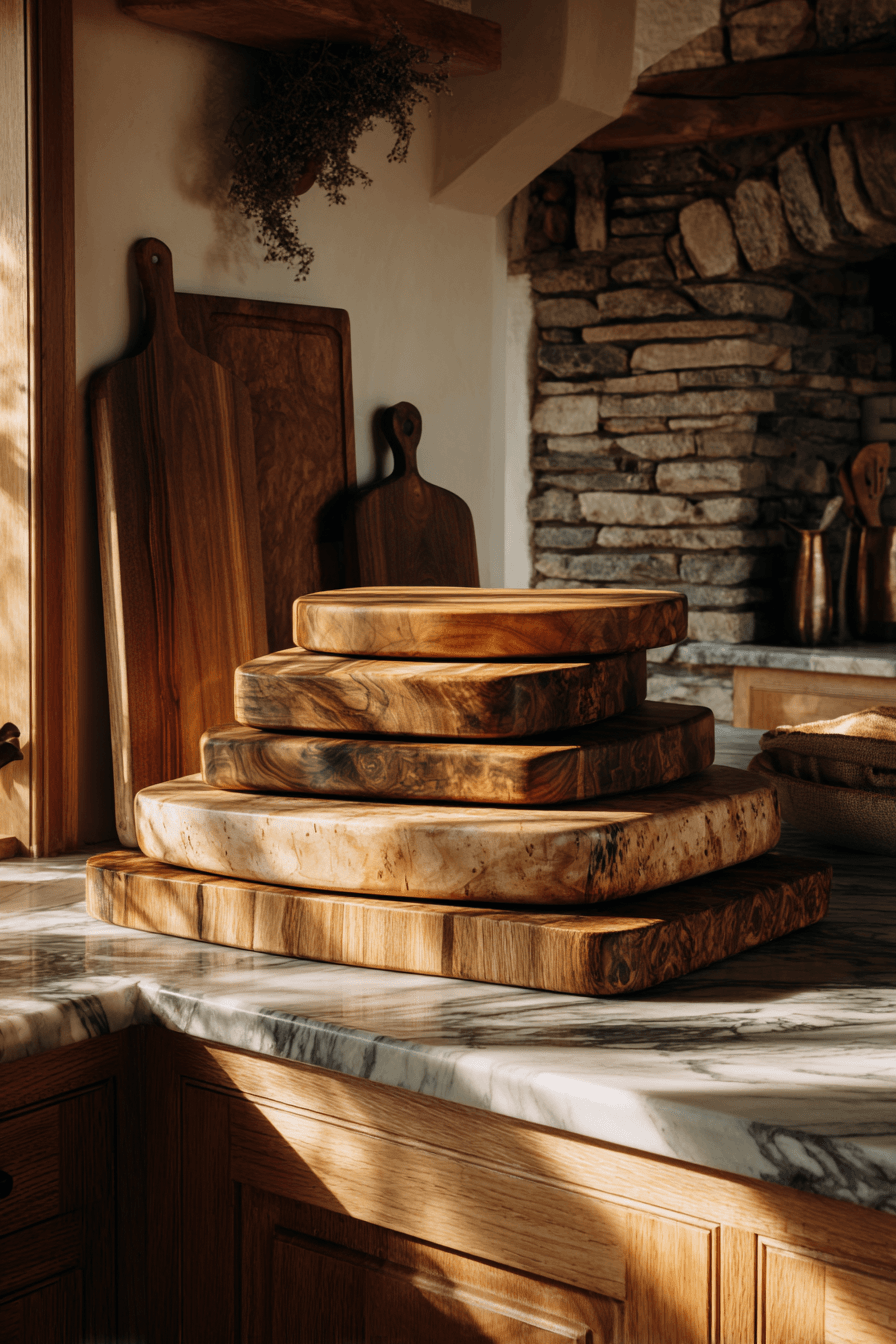
Wooden cutting boards can double as beautiful kitchen decor. Display several boards made from walnut, olive wood, or oak against the backsplash. Their natural grain adds warmth and organic texture. The kitchen feels cozy and thoughtfully styled.
🖼 Steal This Look
- Paint Color: Benjamin Moore White Dove OC-17
- Furniture: thick live-edge wood countertop with visible grain and knots
- Lighting: warm recessed can lights with dimmers to mimic golden hour sun
- Materials: veined marble, reclaimed oak, irregular fieldstone, dried botanicals
This kitchen feels like it belongs to someone who actually cooks slowly and doesn’t rush mornings—there’s permission to leave things out, to let bread rise, to embrace the patina of daily life.
23. Aged Brass Hardware for Soft Wabi Sabi Kitchens
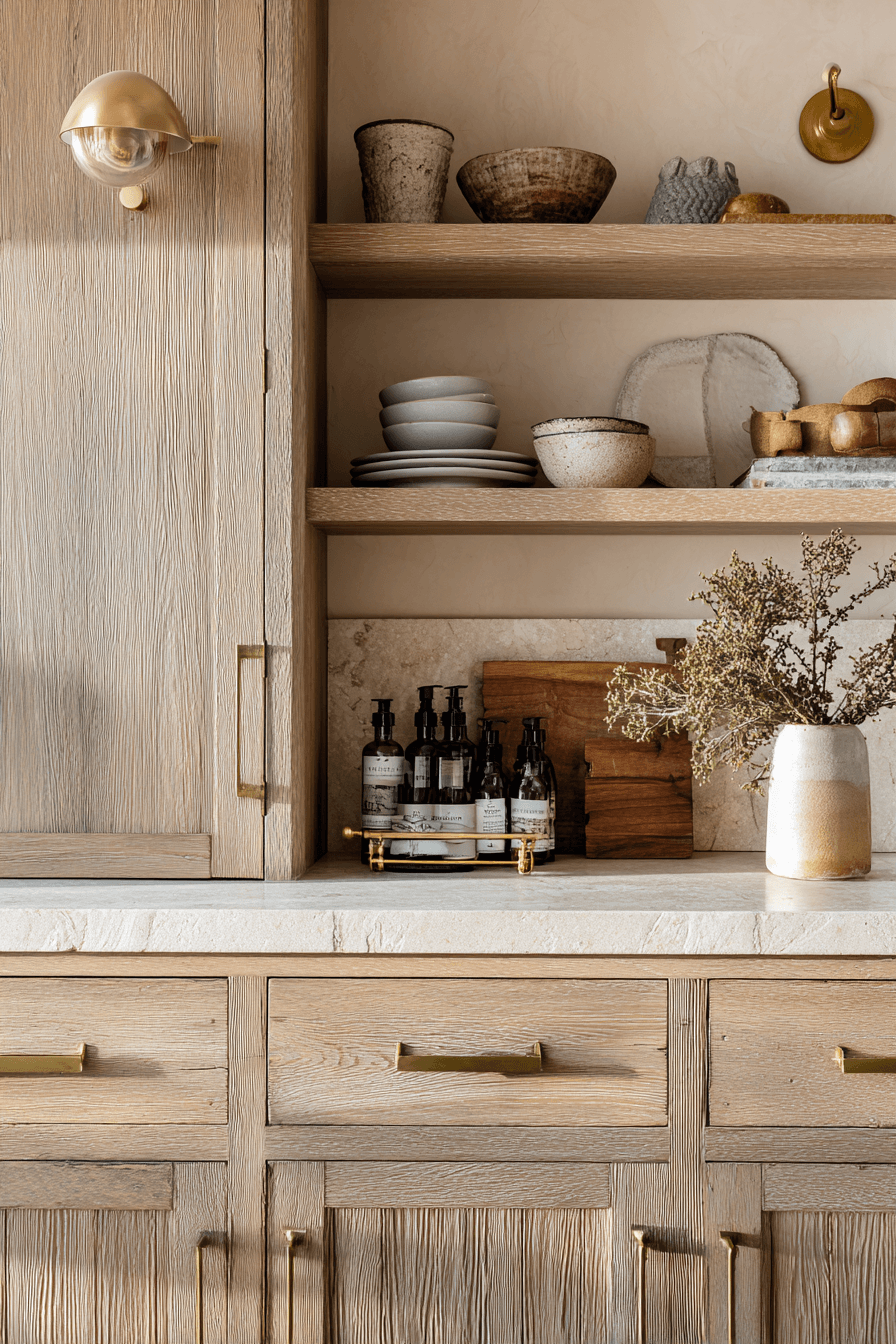
Aged brass hardware brings subtle warmth to cabinets and drawers. Over time the metal develops a soft patina that fits perfectly with wabi-sabi design. Brands like Rejuvenation offer beautiful aged brass pieces. These small details make the kitchen feel warm and authentic.
🖼 Steal This Look
- Paint Color: Farrow & Ball Jitney No.293
- Furniture: cerused oak kitchen cabinets with flat panel doors and open shelving
- Lighting: brass dome wall sconce with clear glass globe shade
- Materials: limed oak, unpolished marble countertop, hand-thrown ceramics, aged brass hardware
There’s something grounding about a kitchen that doesn’t try too hard—these worn textures and soft shadows make cooking feel like a ritual, not a performance.
🛒 Get The Look
24. Mediterranean Meets Wabi Sabi Kitchen Design
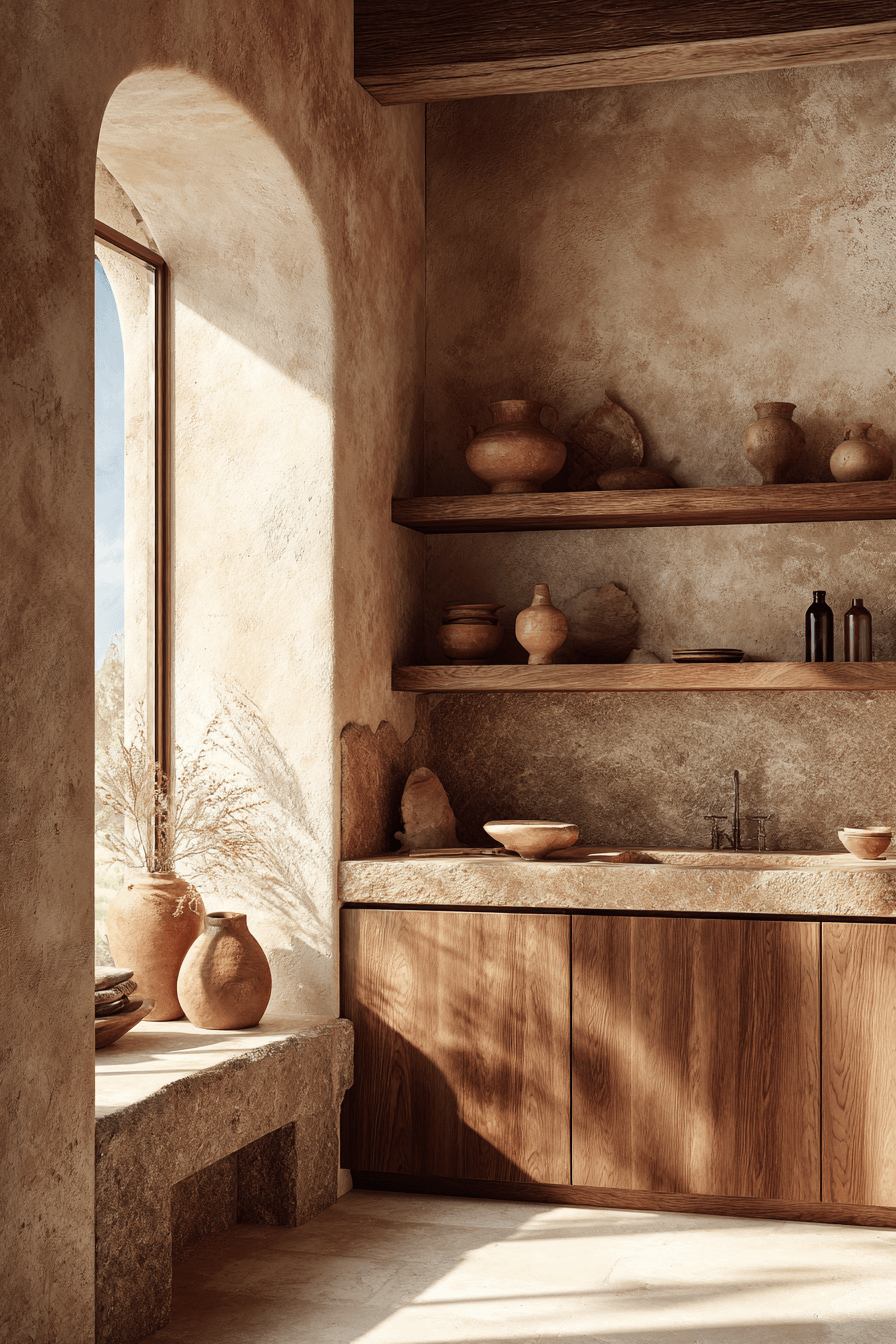
A Mediterranean influence can add warmth to a wabi-sabi kitchen. Think plaster walls, warm stone surfaces, and natural wood cabinets. These materials create a relaxed and sun-washed atmosphere. The space feels cozy, earthy, and timeless.
🎨 Steal This Look
- Paint Color: Behr Weathered Moss N350-3
- Furniture: thick stone slab countertop with live edge, floating solid walnut open shelving
- Lighting: recessed or hidden fixtures only — let the arched window be the primary light source
- Materials: lime-washed plaster walls, rough-hewn travertine or limestone, aged terracotta pottery, air-dried oak or walnut
This kitchen feels like it has existed for centuries, and that’s exactly the point — it’s a space that asks you to slow down and appreciate the imperfect beauty of daily rituals.
👑 Get The Look
25. Unfinished Wood Cabinets for a Raw Organic Feel
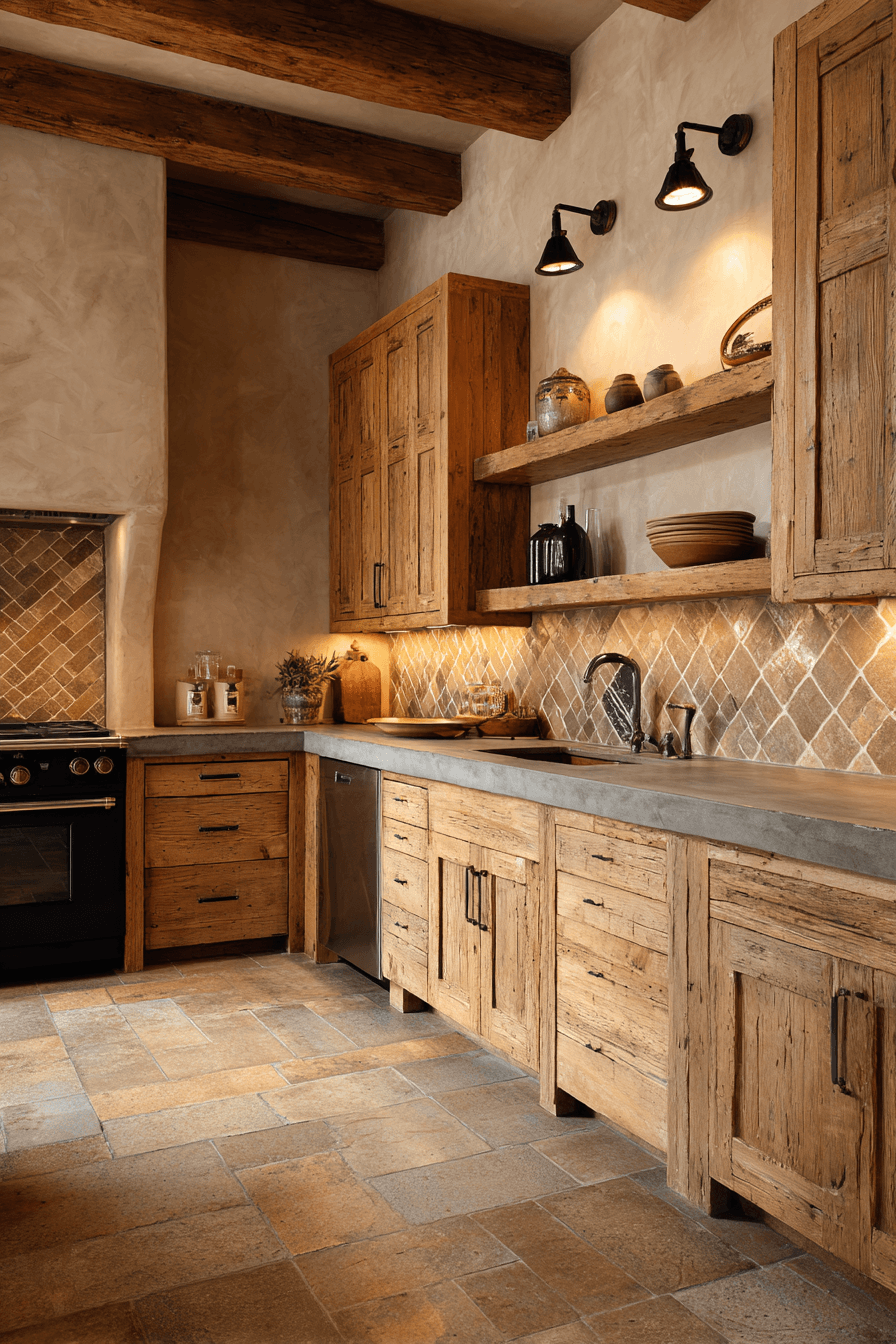
Unfinished wood cabinets highlight the natural beauty of raw materials. The visible grain and slightly imperfect texture create an authentic look. This approach celebrates simplicity and craftsmanship. The kitchen feels organic, cozy, and deeply calming.
✎ Steal This Look
- Paint Color: Valspar Adobe Sand 3003-10C
- Furniture: distressed oak base cabinets with raised panel doors and matching floating open shelves
- Lighting: black adjustable swing-arm wall sconces with conical metal shades
- Materials: weathered oak, hand-troweled plaster, concrete countertops, diamond-pattern terracotta tile, reclaimed ceiling beams
This kitchen feels like it evolved over decades, not installed last Tuesday—that’s the magic of embracing materials that show their age and story.
26. Simple Tea Corners Styled with Japanese Ceramics
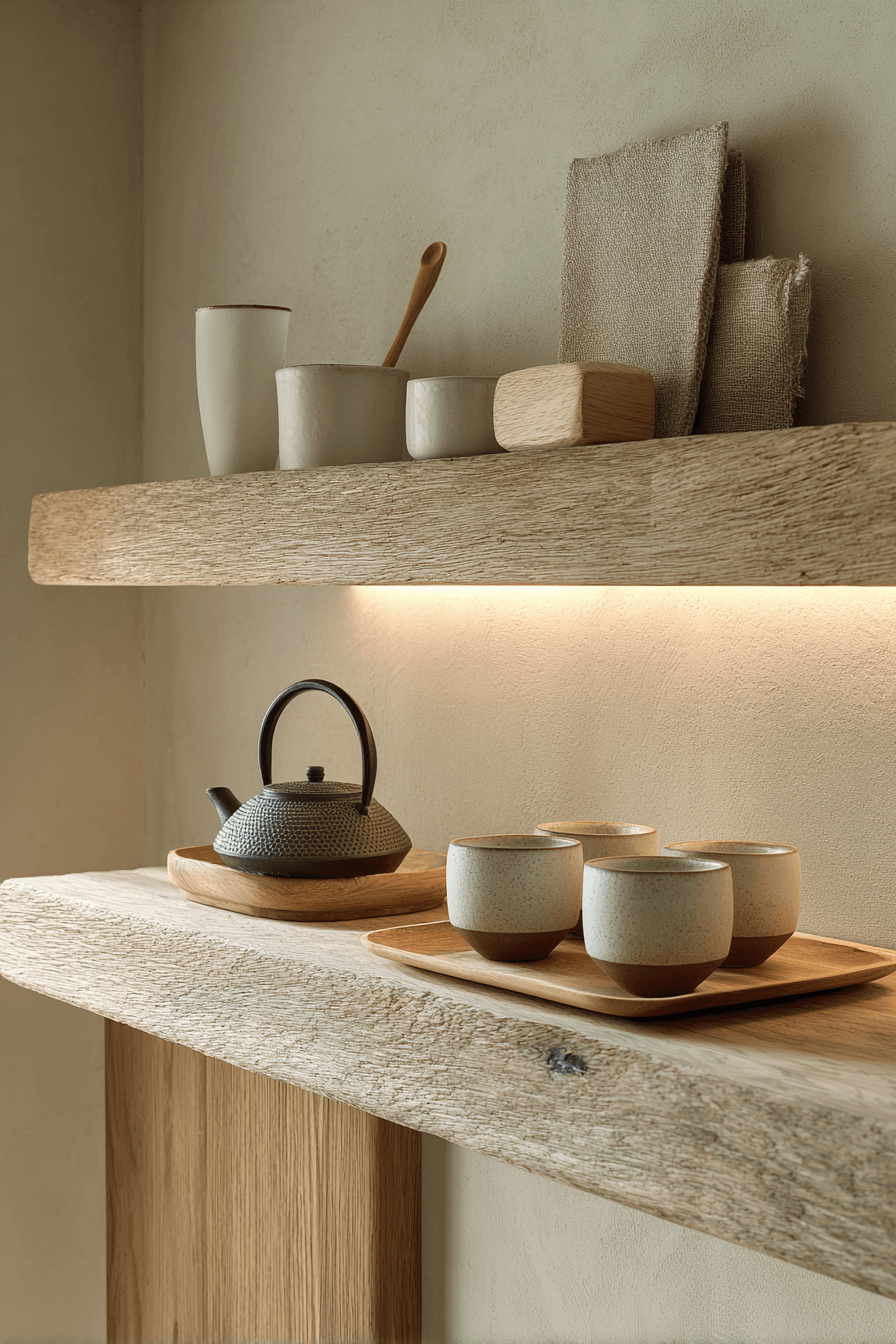
A small tea corner can bring a peaceful ritual into the kitchen. Display teapots and cups made by Japanese ceramic brands like Hasami Porcelain. Keep the area simple and uncluttered to maintain a calm atmosphere. This quiet corner adds warmth and serenity to the space.
✎ Steal This Look
- Paint Color: PPG Stonehenge Greige PPG1024-3
- Furniture: thick live-edge floating shelves in bleached oak
- Lighting: warm white LED strip lighting recessed under shelving
- Materials: rough-sawn oak, unglazed stoneware, raw linen, cast iron
This corner feels like a deep breath in the middle of a busy day. The rough wood and imperfect ceramics remind you that beauty lives in the everyday, not the showroom.
27. Soft Lighting with Paper Lanterns for a Calm Wabi Sabi Kitchen
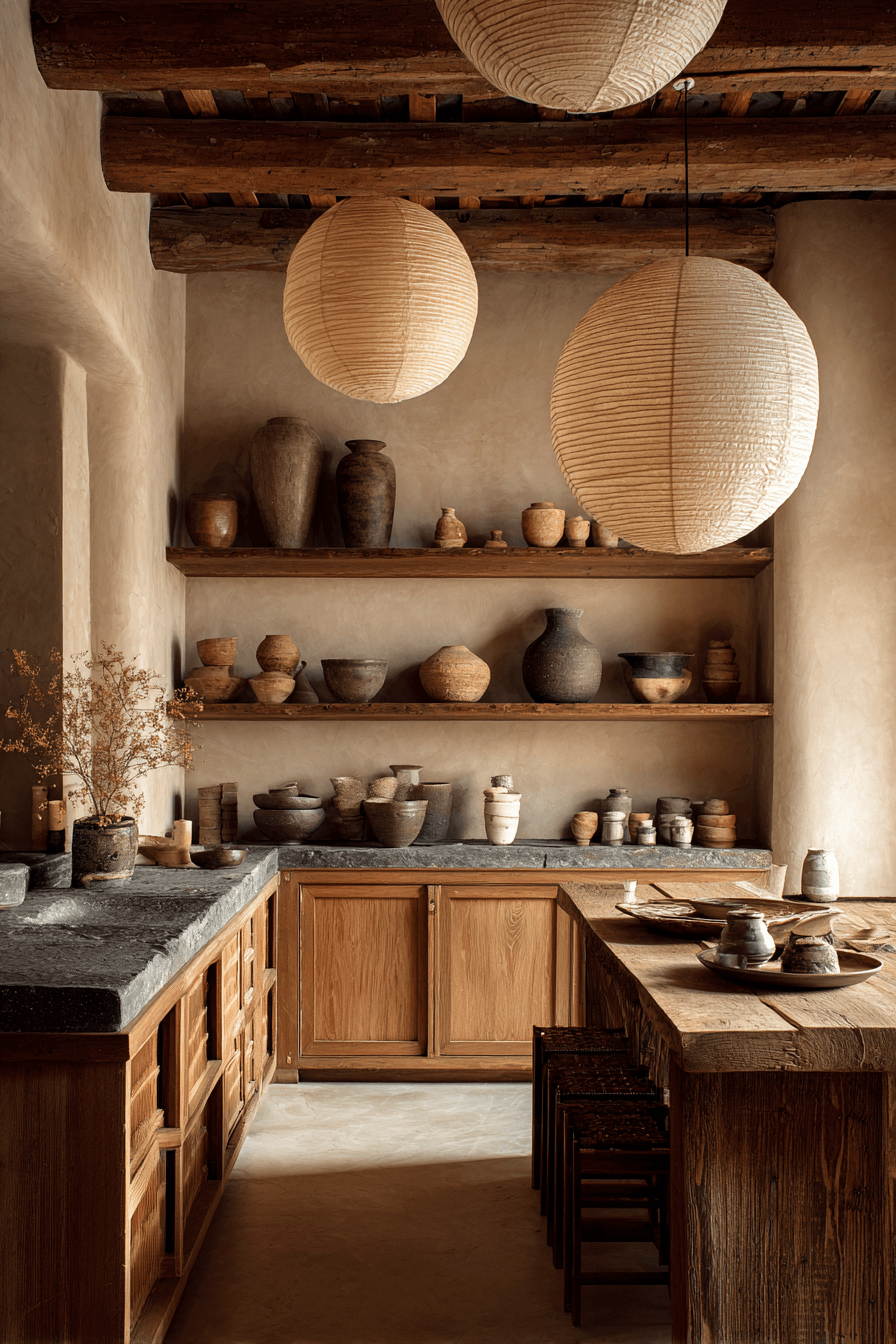
Soft lighting helps create the gentle mood that defines wabi-sabi interiors. Paper lanterns inspired by traditional Japanese design diffuse light beautifully. Brands like HAY offer modern versions that feel airy and sculptural. The kitchen becomes a cozy and tranquil retreat.
A wabi sabi kitchen embraces simplicity, natural materials, and the quiet beauty found in imperfection. By incorporating warm woods, organic textures, and handmade elements, you can create a space that feels calm, grounded, and timeless. The result is a kitchen that invites slow living, thoughtful design, and a deeper appreciation for everyday moments.
🎨 Steal This Look
- Paint Color: Dunn-Edwards Muslin DE6213
- Furniture: reclaimed wood farmhouse table with visible knots and live edge
- Lighting: oversized HAY Rice Paper Shade pendant in natural white
- Materials: unbleached linen, raw terracotta, hand-thrown ceramics, aged brass
This is the kitchen where you actually want to linger over morning coffee, not just rush through. The paper lanterns make everyone look good at dinner parties too.
Keep this one for later
We'll email you the link so you can come back to it.


[…] Wabi Sabi bedroom is a gentle reminder that beauty lives in simplicity, texture, and the quiet imperfections of […]