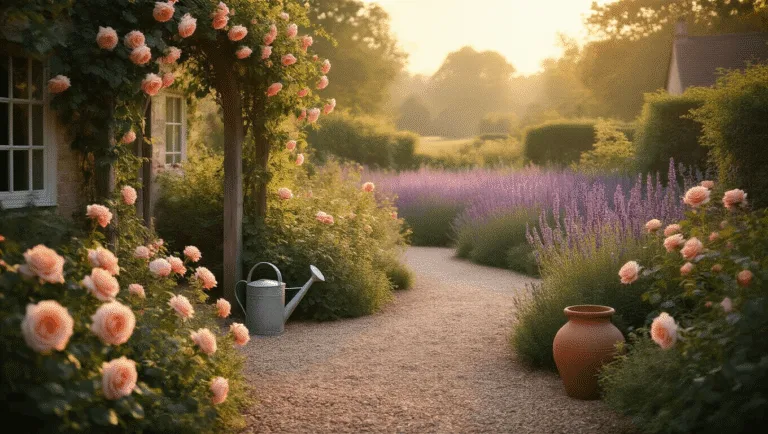
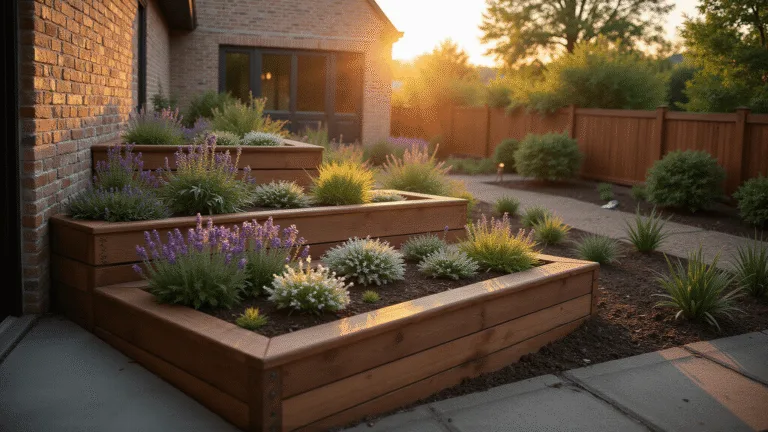
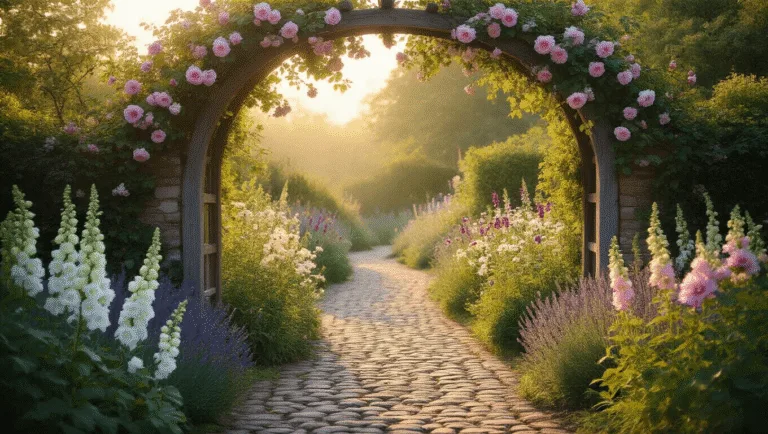
Spacious farmhouse kitchen filled with golden hour light, showcasing a rustic wooden island adorned with cool-season vegetables like vibrant kale, purple cauliflower, and orange carrots, surrounded by cream shaker cabinets and warm terracotta accents.

Fall Gardening: Your Ultimate Guide to Planting Cool-Season Vegetables and More

This post may contain affiliate links. Please see my disclosure policy for details.

Fall Gardening: Your Ultimate Guide to Planting Cool-Season Vegetables and More

Wondering how to make the most of your garden when summer winds down? Fall gardening is your secret weapon for extending the growing season and enjoying fresh, delicious produce right from your backyard.

Spacious farmhouse kitchen with golden hour light, featuring a rustic wooden island adorned with fresh fall vegetables in woven baskets, cream cabinets, butcher block counters, and warm terracotta and sage green accents.

🚀 Pro Tip: Cluster your cool-season vegetables in galvanized troughs right outside your kitchen door—kale, spinach, and radishes thrive in the crisp air and put dinner within arm’s reach through Thanksgiving.
🚫 Avoid This: Avoid planting warm-season crops like tomatoes or basil in fall beds; they’ll stall out in cooling soil and waste prime real estate that brassicas and root vegetables could occupy.

There’s something quietly rebellious about harvesting dinner when your neighbors have packed up their gardens for the year—fall gardening feels like stealing extra months from the calendar.

Why Fall Gardening Rocks

Most gardeners think the growing season ends with the first frost, but they’re missing out! Fall is actually a gardener’s paradise. Cool-season vegetables thrive in milder temperatures, and you’ll face fewer pest problems compared to summer.

What to Plant in Fall

Let’s break down your fall planting options:

Vegetable Superstars
  • Brassicas: Broccoli, cauliflower, Brussels sprouts, and cabbage
  • Root Crops: Carrots, beets, radishes, turnips
  • Leafy Greens: Spinach, kale, lettuce, Swiss chard
  • Legumes: Peas and bush beans
Herbs and Extras

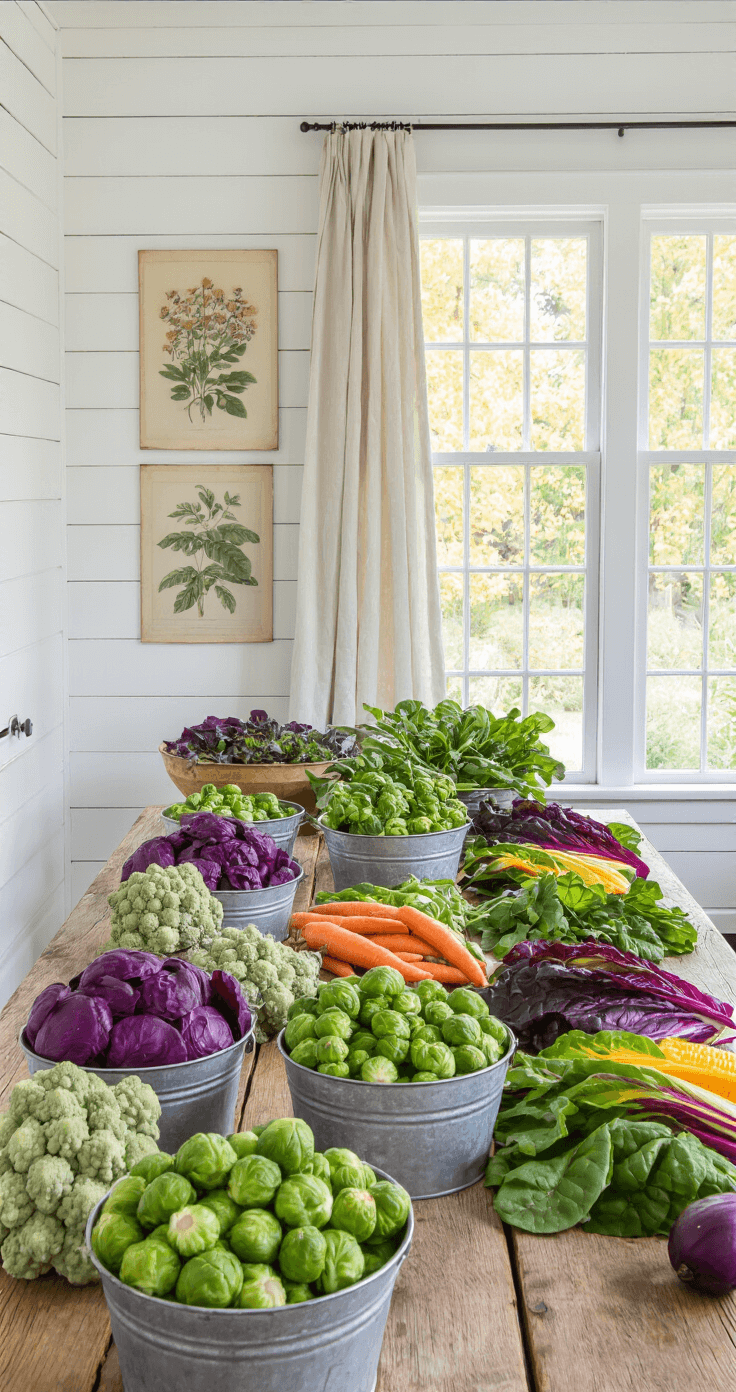
A bright conservatory dining room with soft morning light, featuring a long reclaimed wood table adorned with an abundant fall vegetable harvest, including Brussels sprouts on stems, purple cauliflower, and rainbow Swiss chard in galvanized buckets, against a backdrop of white shiplap walls and vintage botanical prints, captured from an overhead angle.

⚡ Pro Tip: Group your fall vegetables by water needs—leafy greens together in shadier spots, root crops in full sun—to create an organized, visually cohesive kitchen garden that actually performs better.
⛔ Avoid This: Avoid planting warm-season crops like tomatoes or peppers in fall beds; they’ll stall in cooling soil and waste prime real estate your brassicas and greens desperately need.

There’s something deeply satisfying about harvesting your own broccoli while neighbors are putting their gardens to bed—it feels like you’ve cracked a secret code the rest of the world hasn’t figured out yet.

Planting Strategies

Timing is Everything
  • Check your local frost dates
  • Calculate days to harvest
  • Start seeds or transplants accordingly
Planting Methods
  • Transplants: Broccoli, cauliflower, cabbage
  • Direct Seeding: Carrots, spinach, radishes
  • Bulb Planting: Garlic, spring tulips

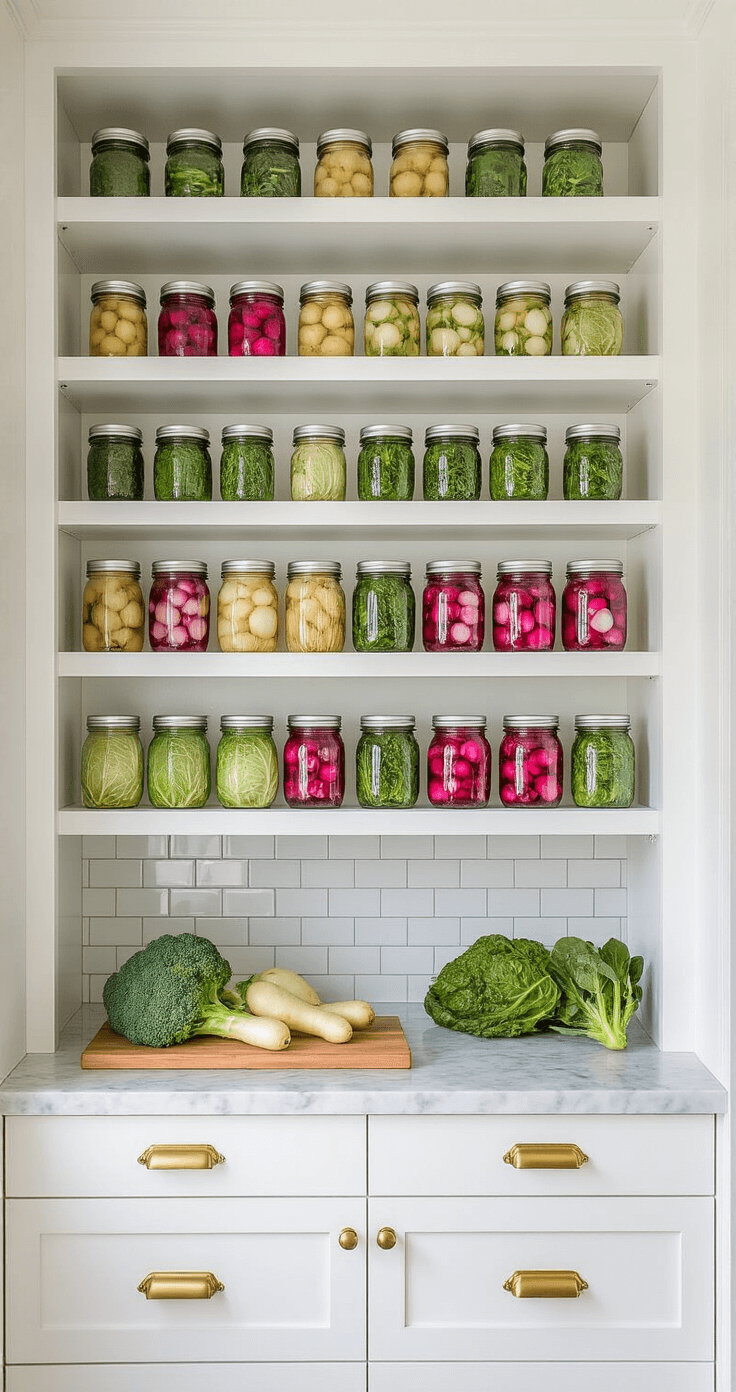
An elegant kitchen pantry featuring floor-to-ceiling white shelves filled with mason jars of preserved fall vegetables, including pickled radishes and fermented cabbage, alongside dried herbs. A marble countertop holds fresh broccoli and turnips, complemented by brass hardware and a subway tile backsplash, all bathed in clean, bright lighting.

★ Pro Tip: Mount a vintage-style metal calendar board near your potting station to track frost dates and succession planting schedules—functional decor that keeps timing visible at a glance.
🚫 Avoid This: Avoid plastic seedling trays and fluorescent grow lights that create a utilitarian greenhouse aesthetic rather than an intentional garden room moment.

There’s something deeply satisfying about a space that honors the rhythm of seasons—this is where patience becomes tangible, where you learn that good things really do take root when you give them proper time and conditions.

✅ Get The Look

Pro Gardening Tips

  1. Test your soil and add organic matter
  2. Mulch generously to retain moisture
  3. Water consistently
  4. Watch for late-season pests

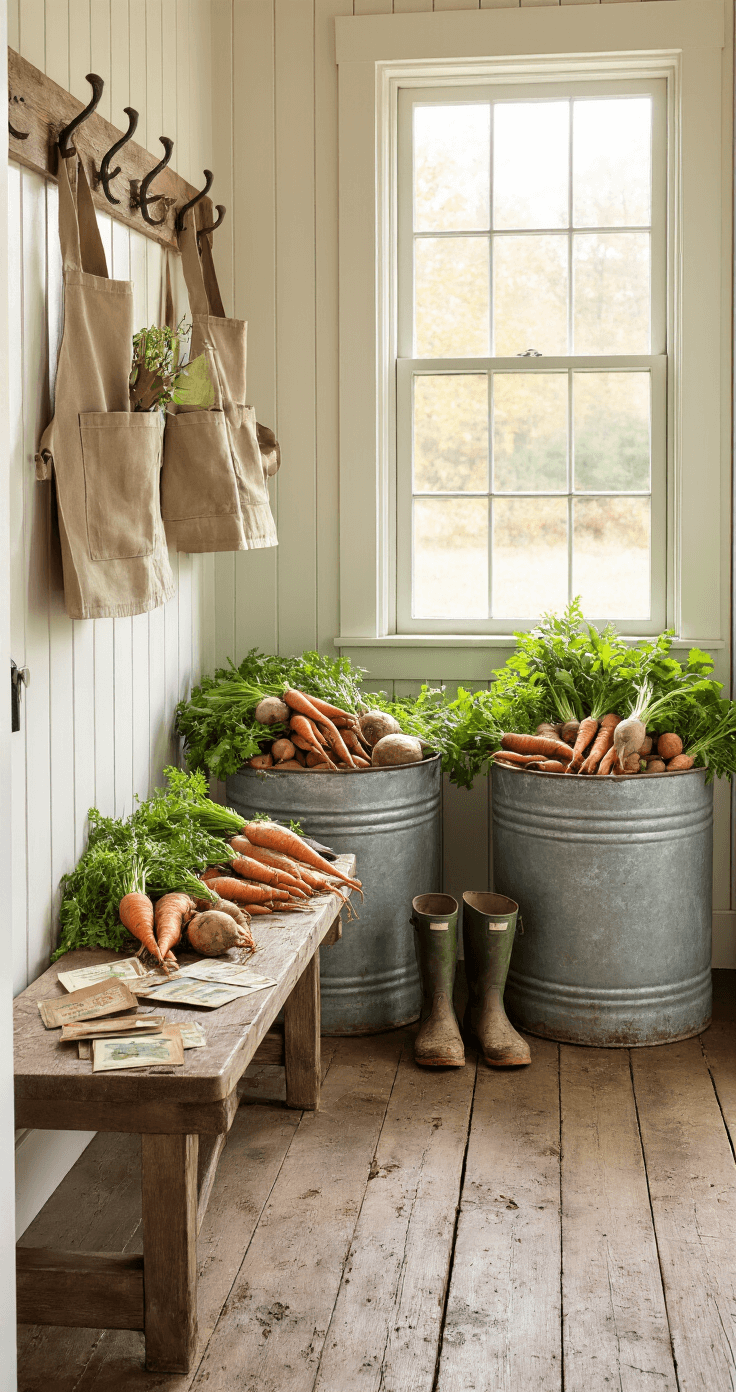
A cozy rustic mudroom bathed in warm late afternoon light, featuring wooden benches alongside galvanized tubs filled with freshly harvested root vegetables. Muddy boots and gardening gloves are scattered on weathered wood floors, while vintage seed packets lie nearby. Beadboard wainscoting and hooks displaying canvas aprons complete the authentic gardening ambiance.

💡 Pro Tip: Layer your mulch 2-3 inches deep around perennials but keep it pulled back 2 inches from stems and trunks to prevent rot—this simple spacing detail makes the difference between thriving and suffocating plants.
🚫 Avoid This: Avoid skipping the soil test; guessing at pH and nutrient levels leads to expensive plant failures that could have been prevented with a $15 kit from your local extension office.

There’s something deeply satisfying about closing up the garden in fall knowing you’ve set the stage for spring—the mulch you spread now is like tucking your plants in for winter.

🛒 Get The Look

Bonus: Cover Crops

Don’t forget about cover crops like rye, clover, and winter peas. They’re nature’s way of improving soil health during the off-season.

Regional Considerations

Your specific planting dates will vary based on:

  • Local climate
  • Frost dates
  • Specific microclimate
Harvest Expectations
Vegetable Days to Harvest Cold Tolerance
Kale 50-65 days Extremely high
Spinach 50-60 days High
Radishes 20-40 days Moderate
Carrots 70-80 days High

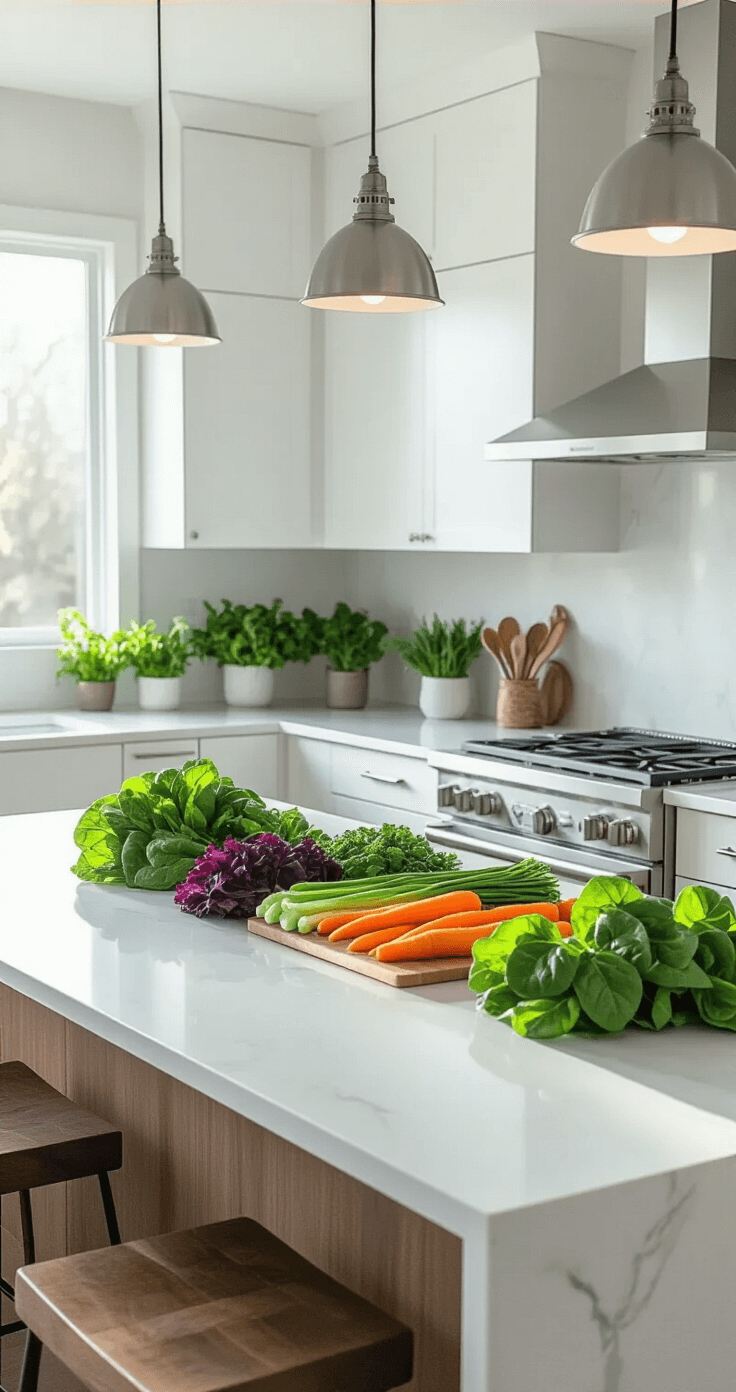
Modern kitchen prep area bathed in bright morning light, featuring a sleek quartz island filled with an array of fresh leafy greens like spinach, kale, and lettuce, surrounded by minimalist white cabinets and stainless appliances, with pendant lighting illuminating the clean lines and vibrant colors of the vegetables.

★ Pro Tip: Group your seed storage by frost tolerance using vintage wooden seed drawers labeled with brass tags—this turns practical garden planning into a styled vignette that honors the rhythm of regional growing seasons.
⚠ Avoid This: Avoid treating your garden planning area as purely utilitarian; even a mudroom corner or potting shed deserves cohesive design that connects to your home’s interior story.

There’s something deeply grounding about acknowledging that your neighbor twenty miles north might be planting kale while you’re still waiting for soil temperatures to drop—regional gardening connects us to place in ways no big-box garden center can replicate.

✅ Get The Look

Final Thoughts

Fall gardening isn’t just about extending your harvest—it’s about setting up your garden for success next spring. With the right planning and a bit of love, you’ll have a thriving garden that keeps producing long after summer fades.

Pro Tip: Invest in quality gardening tools to make your fall planting smooth and enjoyable!

Happy gardening, and enjoy your autumn bounty!
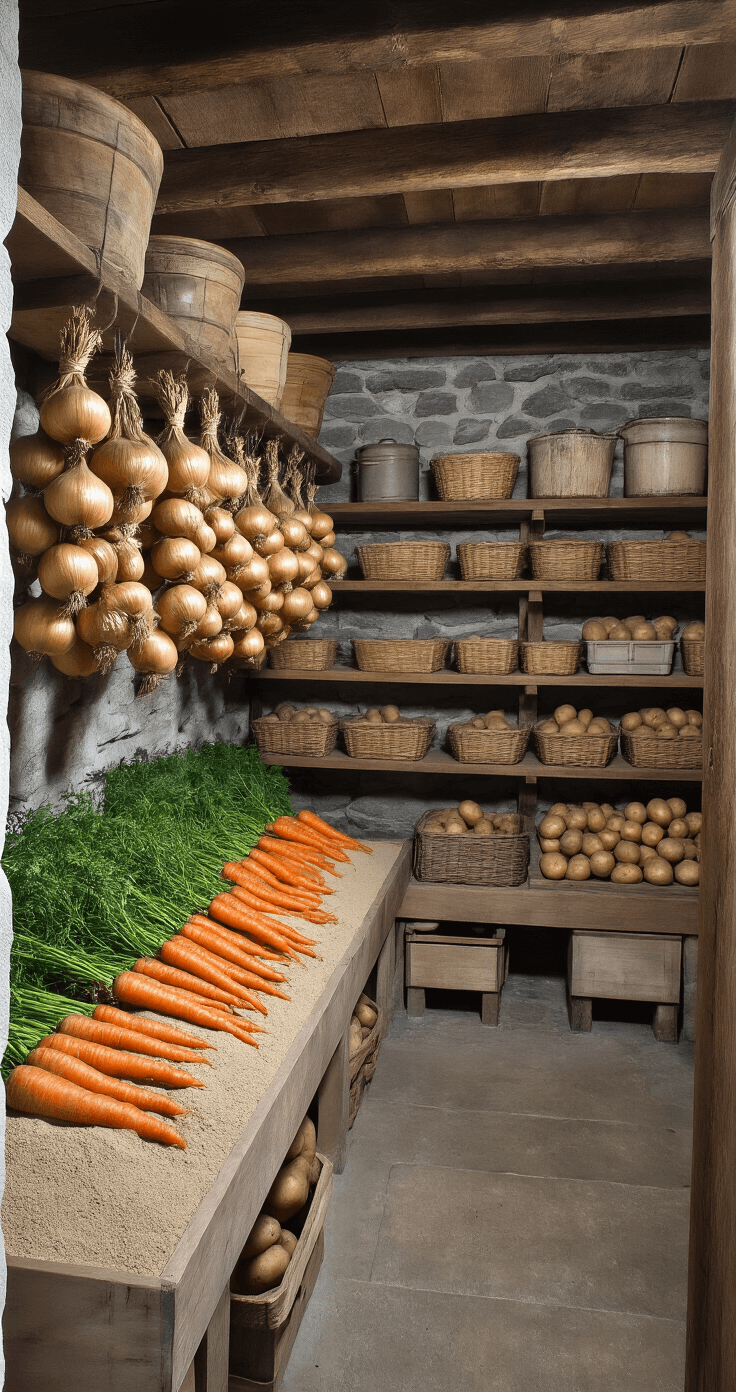
A traditional root cellar showcasing wooden shelves filled with fall harvest items like carrots in sand and hanging braided onions, against a backdrop of stone walls and exposed beams, illuminated by soft ambient lighting. Vintage preservation tools adorn the space, with cool grey tones contrasting with warm wood accents.

A cozy breakfast nook bathed in golden morning light, featuring a round pedestal table adorned with a fresh fall vegetable salad. The seating area includes a banquette with botanical cushions and hanging plants in the windows, showcasing soft greens and warm whites complemented by vibrant vegetable colors, creating an intimate and healthy dining atmosphere.

★ Pro Tip: Display your fall harvest in weathered wooden crates stacked at varying heights near your potting station—this turns functional storage into rustic seasonal decor.
🚫 Avoid This: Avoid storing tools in damp conditions where rust develops; instead, hang them on a pegboard wall painted in a coordinating garden green.

There’s something deeply satisfying about closing up the garden with intention, knowing you’ve tucked everything in for its winter rest.

One comment

Leave a Reply

Your email address will not be published. Required fields are marked *