

This post may contain affiliate links. Please see my disclosure policy for details.
Winter urns outdoor planters need to survive brutal freeze-thaw cycles, protect plant roots from icy temperatures, and still look stunning on your front porch.
I learned this the hard way three winters ago when my favorite ceramic planter split right down the middle overnight. The crack sounded like a gunshot at 2 AM. My neighbor thought someone was breaking in.
Turns out, I’d picked exactly the wrong material for winter conditions.
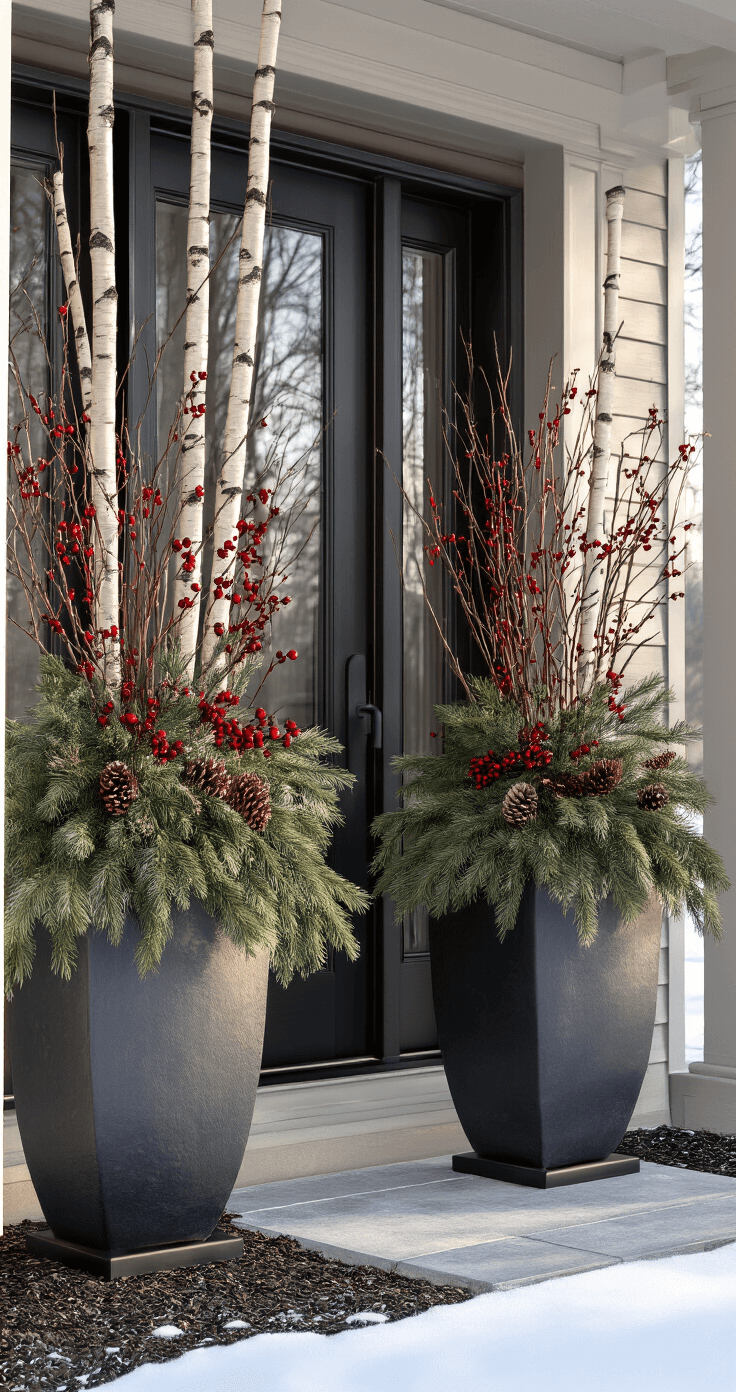
The Materials That Actually Survive Winter (And the Ones That Don’t)
Let me save you from my expensive mistakes.
The Winners:
Fiberglass planters top my list every single time. Fiberglass outdoor planters flex slightly when temperatures swing wildly. That flexibility means they expand and contract without cracking. I’ve had the same fiberglass urns outside my front door for five years now. Zero cracks. Zero chips. They insulate plant roots beautifully without weighing 500 pounds like stone containers.
Fiberstone (fiberclay) combines minerals with resin. It looks exactly like stone but weighs a fraction of what you’d expect. The material resists cracking even when temperatures nosedive. The insulation properties keep roots from turning into plant popsicles.
Concrete planters are basically indestructible. They handle temperatures down to −20°F without breaking a sweat. The thick walls buffer roots from sudden temperature drops. Studies show concrete protects soil temperatures three times longer than other materials when a cold snap hits. Just remember concrete is porous—you’ll need to seal it once a year or moisture seeps in and causes problems.
High-quality resin and heavy-duty plastic work surprisingly well. Resin outdoor planters designed for cold climates have enough flexibility to handle freeze-thaw cycles. They’re lightweight, affordable, and come in designs that actually look good (unlike the cheap plastic pots from big-box stores).
Wood planters and barrels are naturally insulating champions. Freezing doesn’t affect wood structure the way it destroys terracotta. Wooden barrel planters hold massive amounts of soil, which creates extra insulation for roots. The bigger the soil volume, the better the temperature buffer.
The Absolute Losers:
Never, ever use terracotta or unglazed ceramic in winter. These materials are porous. Water gets absorbed into the material. Water freezes. Ice expands. Your planter explodes.
It’s not a matter of *if* but *when*.

Size Matters More Than You Think
Bigger containers aren’t just about aesthetics. They’re about survival.
More soil volume equals better insulation. Think about it—a tiny amount of soil freezes solid in minutes. A large container full of soil takes hours or even days to freeze completely.
Your plant roots have time to adjust instead of getting shocked.
I switched from 12-inch planters to 18-inch urns. The difference in plant survival rates shocked me. Nearly 90% of my winter plants now make it through even the harshest cold snaps.
The Drainage Secret Nobody Talks About
Water sitting at the bottom of your planter is a death sentence.
That pooled water freezes. Ice expands. Cracks form. Your beautiful planter is ruined.
Proper drainage holes are non-negotiable.
I elevate my planters slightly using pot feet or plant stands. This creates airflow underneath. Water drains completely. No ice buildup. No cracks.
Add a layer of gravel or broken pottery at the bottom before adding soil. This prevents drainage holes from getting clogged.

Creating Stunning Winter Urn Displays
Winter doesn’t mean boring brown containers sitting empty.
My favorite winter arrangement combines three elements:
Structural Height Elements:
– Birch poles (vary the heights for visual interest)
– Dogwood branches with colorful bark
– Curly willow stems
– Tall evergreen boughs
Evergreen Filler:
– Cedar clippings
– White pine branches
– Spruce tips
– Boxwood stems
– Holly with berries still attached
Accent Colors:
– Red berry sprays (real or high-quality faux)
– Winterberry branches
– Preserved eucalyptus
– Ornamental grasses
– Pinecones wired onto stems
My Assembly Process:
Start with your tallest structural elements in the back. Push them deep into the soil so they don’t blow over.
Layer in flexible evergreen branches next. Work from the back forward. Create depth by varying branch lengths.
Add colorful accents last. Distribute them evenly throughout the arrangement. Step back frequently. Walk around the planter. Check it from every angle your visitors will see.
The arrangement should look intentional, not like you just shoved branches randomly into dirt.

The Mulch Layer That Changes Everything
I add a 2-3 inch layer of shredded bark mulch on top of the soil.
This does three things:
1. Insulates roots during extreme cold snaps
2. Prevents soil from eroding during winter rain and snowmelt
3. Makes the planter look finished and professional
During predicted deep freezes, I pile extra mulch around the base of living plants. Just for those few brutal nights. I remove the extra mulch when temperatures moderate.
Living Plants vs. Decorative Arrangements
You’ve got two approaches to winter urns.
Living evergreen plants require cold-hardy varieties and proper care. The benefit is greenery that lasts all winter. The downside is you need to water occasionally during warm spells and protect roots during extreme cold.
Decorative cut arrangements require zero maintenance once assembled. The greenery slowly dries but maintains its shape for months. You replace everything in spring. This is my preferred method for my front entrance where I want zero fuss.
I use living plants in protected areas near the house where I can easily tend them. I use decorative arrangements in exposed locations where harsh winds would stress living plants anyway.

The Location Strategy
Not all spots around your house are equally harsh.
South-facing locations get more sun, which causes more frequent freeze-thaw cycles. This is hardest on containers.
North-facing spots stay consistently cold. Less freeze-thaw action means less stress on planter materials.
Areas under roof overhangs are protected from precipitation. Less water exposure means less ice formation inside planter walls.
Windy corners dry out soil faster and increase cold stress on plants.
I place my most expensive planters in protected spots. I use my budget-friendly resin containers in the harshest locations.



[…] 2: Fill Halfway with Potting Mix Use actual potting mix, not garden soil. Garden soil compacts in containers and drowns roots. I use premium potting […]