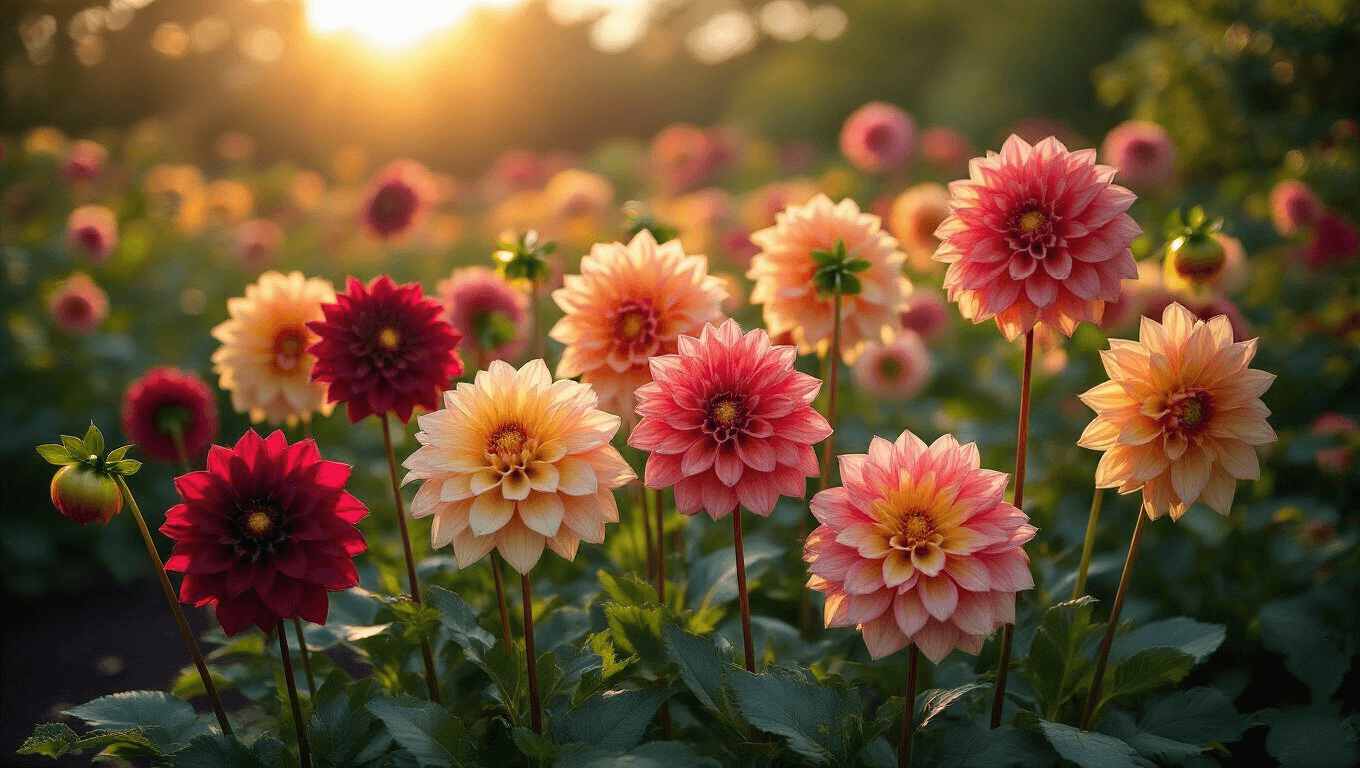
Photorealistic shot of a vibrant dahlia garden at golden hour, featuring lush layers of colorful dahlias in rich colors, glistening dew on petals, dark soil with cedar mulch, and soft morning mist, captured at a 45-degree angle with natural lens flare and subtle bokeh in 8K resolution.

How to Create a Stunning Dahlia Flower Garden: A Comprehensive Guide

This post may contain affiliate links. Please see my disclosure policy for details.

How to Create a Stunning Dahlia Flower Garden: A Comprehensive Guide

Why Dahlias Will Transform Your Garden

Every gardener dreams of a landscape bursting with color and drama. Dahlia flower gardens are your secret weapon.

Key Takeaways:

  • Vibrant, long-blooming flowers
  • Multiple sizes and colors
  • Relatively easy to grow
  • Spectacular from midsummer through fall
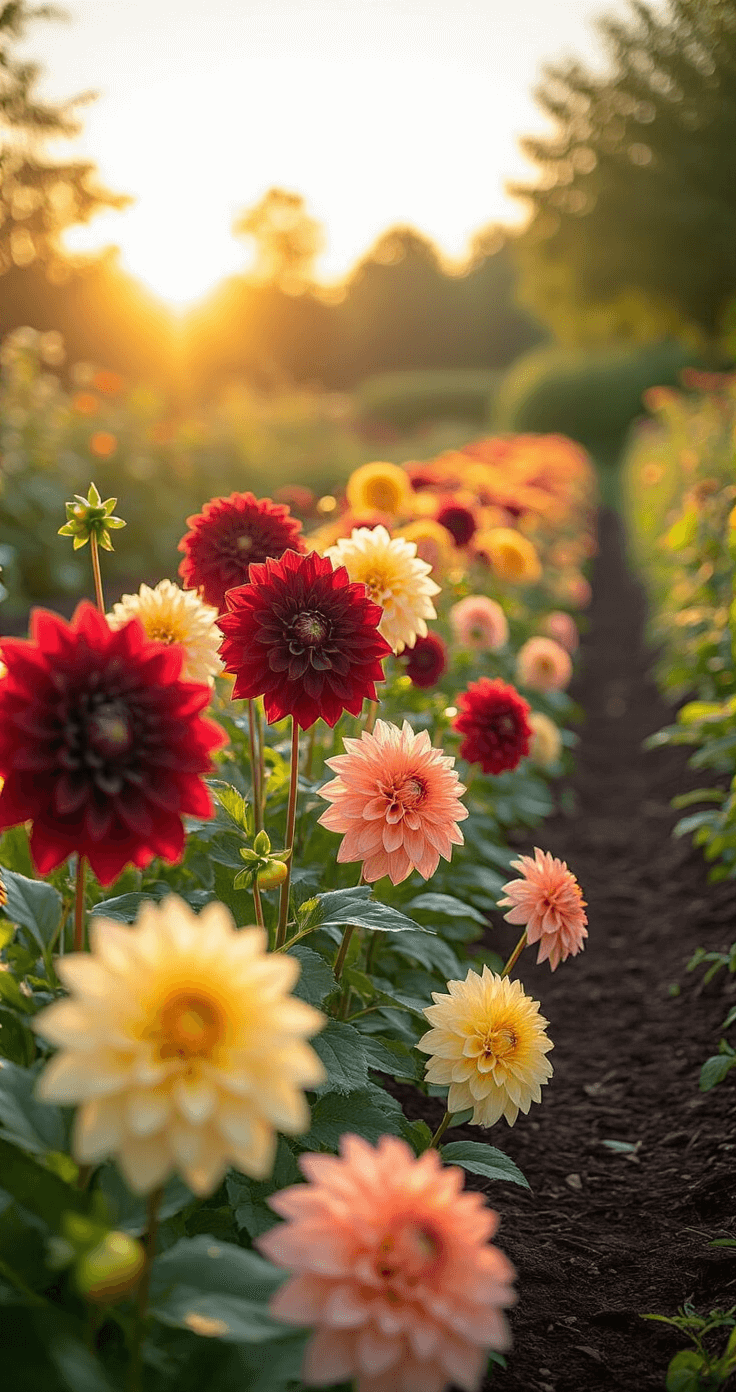
A sunlit raised garden bed at golden hour, featuring vibrant blooming dahlias of various heights and colors, including deep burgundy and coral pink dinner plate varieties in the back and smaller lemony yellow and soft peach pompom types in the front, set against rich dark soil with fresh mulch, captured at a 45-degree angle with lens flare enhancing dew drops on the petals.

★ Pro Tip: Plant dahlias in succession every two weeks from late spring through early summer to extend your bloom season into October, and position taller varieties at the back of borders where they’ll catch golden-hour light like living stained glass.
✋ Avoid This: Avoid planting dahlias in the same spot year after year, as this depletes soil nutrients and increases disease pressure; rotate your dahlia beds on a three-year cycle with nitrogen-fixing cover crops.

There’s something almost meditative about the ritual of disbudding dahlias in the quiet morning hours, knowing each careful pinch promises a dinner-plate bloom worth waiting for—this is the garden room where patience literally pays off in petals.

🔔 Get The Look

Planning Your Dahlia Paradise

1. Choosing the Perfect Location
  • 🌞 Full sun is non-negotiable
  • Well-draining soil is critical
  • Raised beds work magic for drainage
  • Aim for spots with good air circulation
2. When to Plant
  • Wait until soil temperature hits 60°F
  • Typically mid-April to May
  • After last frost danger passes

Planting Like a Pro

Soil Preparation Checklist:
  • Enrich with compost
  • Add organic fertilizer
  • Ensure excellent drainage
  • Plant tubers 4-6 inches deep
Pro Gardener Tips:
  • Space tubers 12-18 inches apart
  • Plant “eye” facing upward
  • Water sparingly initially
  • Increase water after sprouts emerge

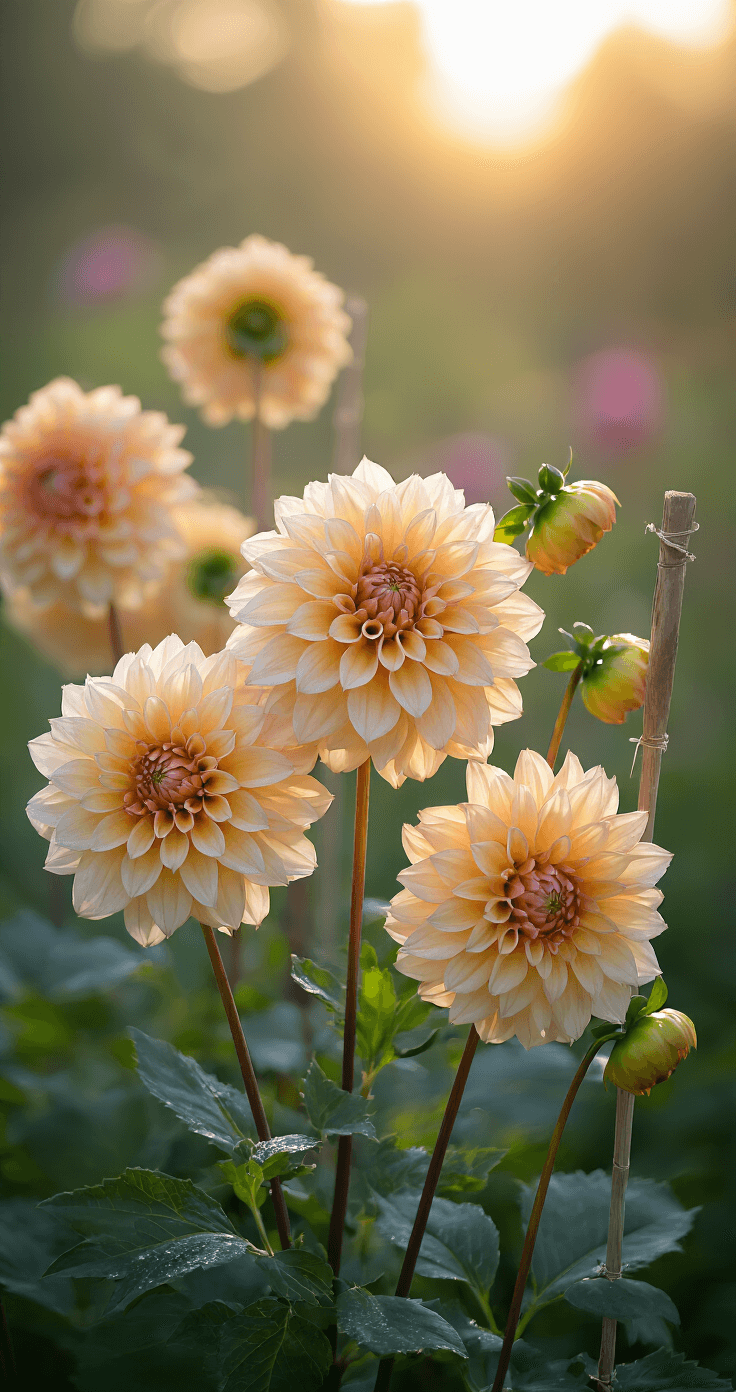
Close-up of a café au lait dahlia in a morning garden, showcasing an 8-inch bloom heavy with dew, surrounded by gentle stakes and twine. The background features a soft bokeh effect, highlighting the intricate petal structure, with the shot taken from slightly below eye level to emphasize grandeur.

★ Pro Tip: Cluster your dahlia tubers in labeled wooden crates before planting—this creates a styled vignette that doubles as functional garden organization and photographs beautifully for seasonal content.
⛔ Avoid This: Avoid plastic nursery trays and fluorescent grow lights in your garden shed aesthetic; they disrupt the organic, heritage-inspired mood that makes dahlia cultivation feel artisanal rather than industrial.

There’s something deeply satisfying about the ritual of preparing soil by hand—it connects you to generations of gardeners who understood that patience in planting yields the most spectacular late-summer blooms.

Selecting Your Dahlia Varieties

Height Ranges:
  • Compact border types: Under 3 feet
  • Medium garden varieties: 3-4 feet
  • Dramatic tall varieties: 4-6 feet
Color Palette Options:
  • Soft pastels
  • Vibrant jewel tones
  • Classic white and cream
  • Dramatic two-tone blooms

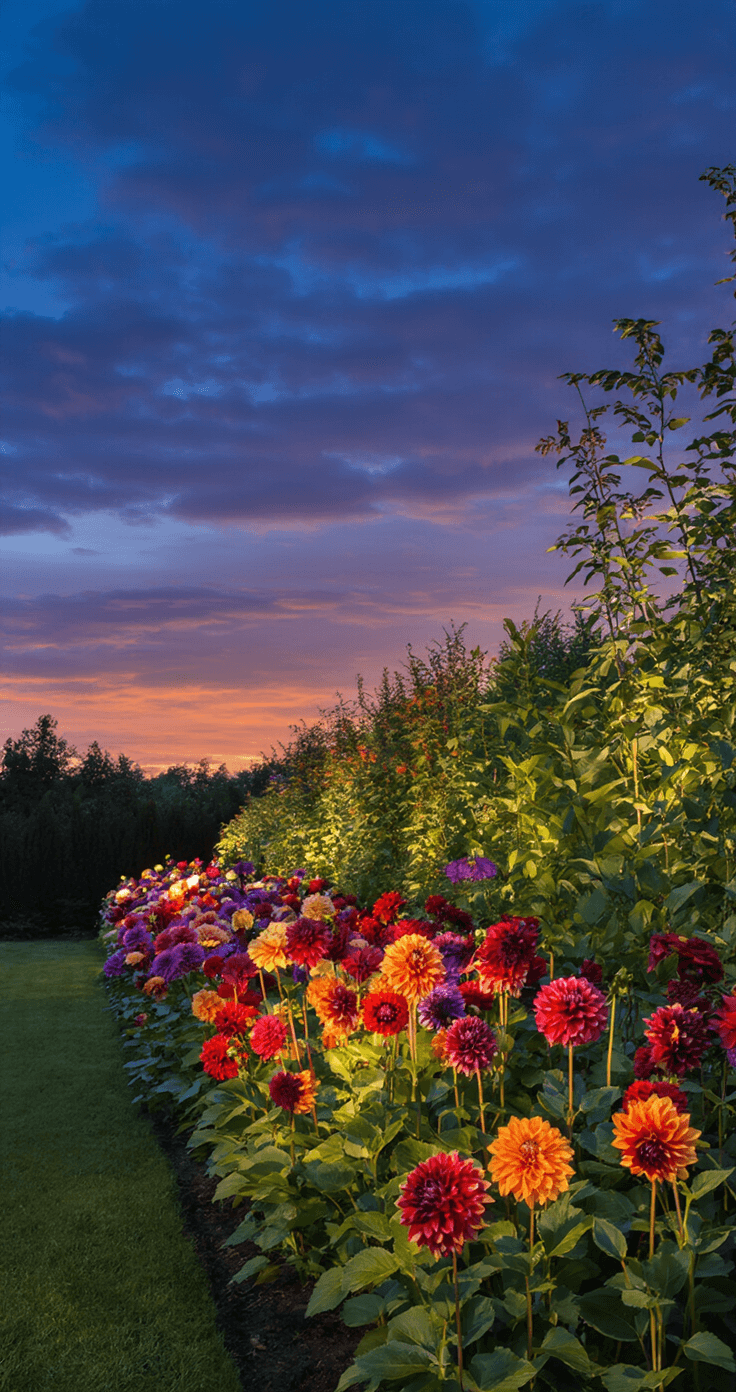
A twilight garden scene featuring a 20-foot border of vibrant dahlias in jewel tones, illuminated by warm landscape lighting, with towering plants casting architectural silhouettes against a deep blue sky.

★ Pro Tip: Group your dahlia varieties by bloom time and height on your potting bench before planting—this prevents the common mistake of placing tall varieties where they’ll shade shorter companions, and lets you stage color transitions from soft pastels to jewel tones across the season.
❌ Avoid This: Avoid purchasing dahlia tubers without verifying their mature height against your garden’s scale; a 6-foot ‘Dinnerplate’ variety will overwhelm a compact border and require staking that disrupts your intended visual flow.

There’s something quietly thrilling about spreading tubers across a worn potting bench in late winter, each gnarled clump holding the promise of August’s impossible blooms—this is the room where patience becomes anticipation.

Maintenance Secrets

Weekly Garden Care:
  • Deadhead regularly
  • Fertilize consistently
  • Check for pest issues
  • Support tall varieties with stakes
Winter Preparation:
  • Lift tubers in cold regions
  • Mulch heavily in mild climates
  • Store tubers properly to ensure next season’s success
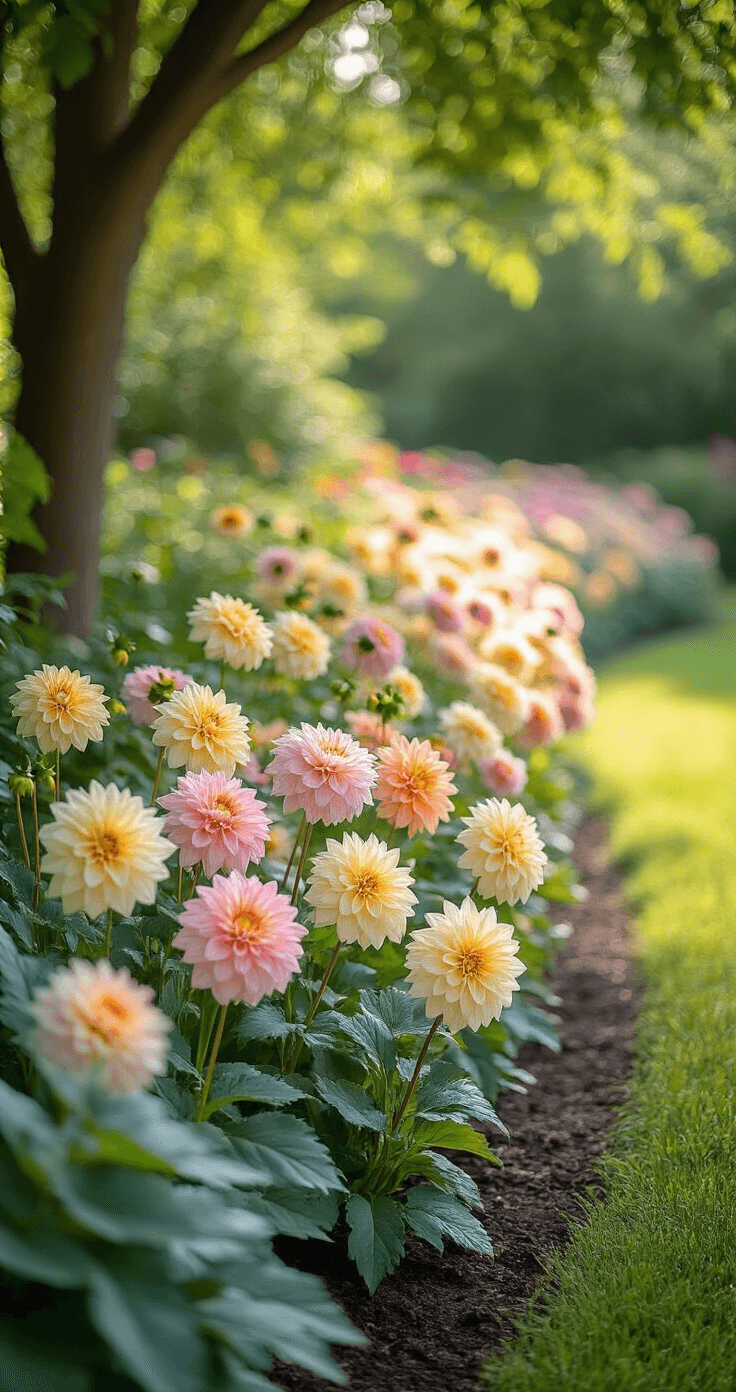
A ground-level view of a compact dahlia border in a shaded garden, featuring pastel blooms in shell pink, butter yellow, and cream, arranged in a curved bed beneath dappled tree cover. The soft midday light filters through the tree canopy, casting spotted light effects on the colorful flowers and contrasting foliage.

Common Beginner Mistakes to Avoid
  • Overwatering before sprouting
  • Inadequate sunlight
  • Poor soil drainage
  • Forgetting to stake tall varieties
★ Pro Tip: Create a dedicated dahlia maintenance station near your garden entrance—stock it with clean pruners, plant labels, and a weatherproof notebook to track bloom performance by variety, so you remember which tubers to prioritize next spring.
⛔ Avoid This: Avoid storing lifted tubers in plastic containers or sealed bags, which trap moisture and cause rot; instead, layer them in shallow cardboard boxes with dry peat moss or vermiculite in a cool, dark basement.

There’s something deeply satisfying about the ritual of lifting and storing tubers each fall—it’s like putting your garden to bed and waking it up again, a tangible connection to next year’s color that makes the winter wait almost bearable.

Budget-Friendly Dahlia Gardening

  • Start with 3-5 varieties
  • Mix height and colors
  • Purchase tubers from reputable nurseries
  • Consider local gardening clubs for exchanges
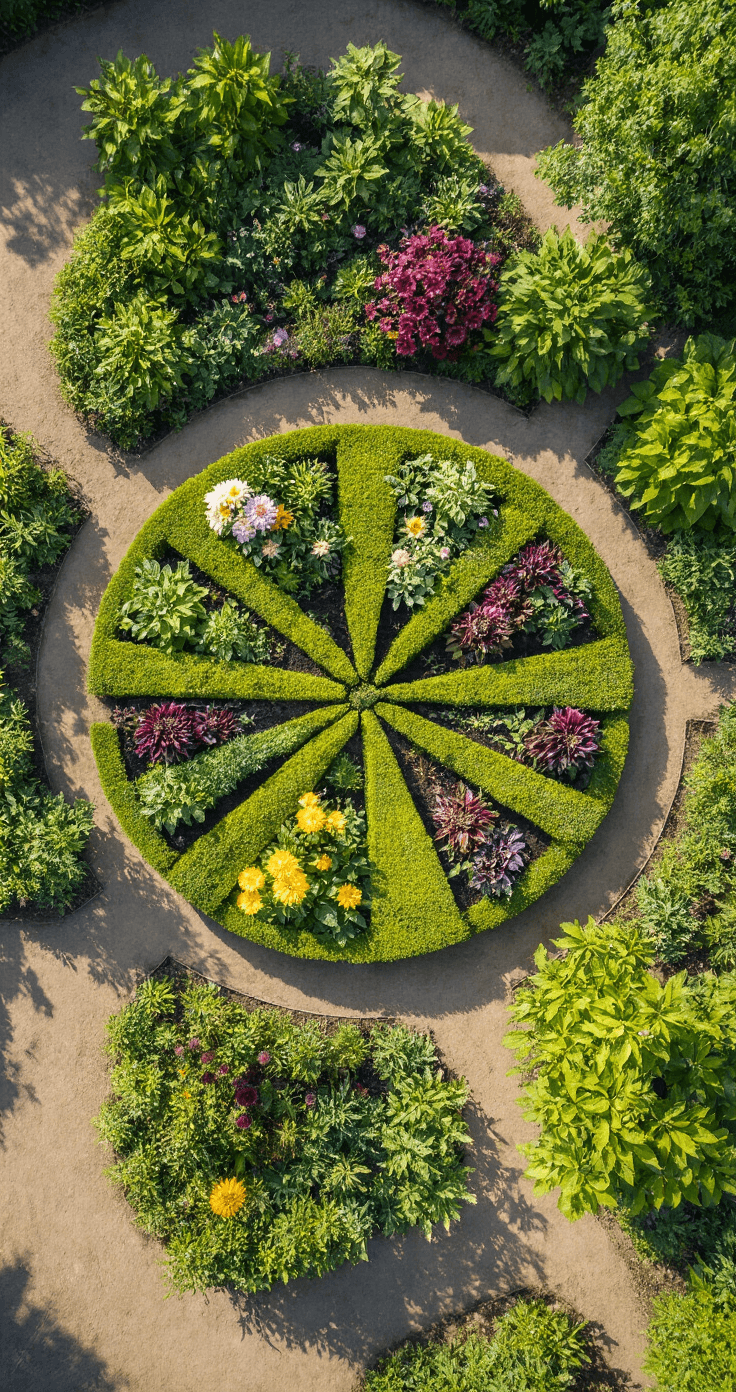
Bird's-eye view of a circular dahlia garden featuring a spoke-like planting pattern with eight wedge-shaped sections in varying color themes, showcasing a gradient of plant heights from 2 feet at the center to 5 feet at the edge, with sharp shadows emphasizing the geometric precision of the layout.

🔎 Pro Tip: Group tubers by bloom time in labeled wooden wine crates—early, mid, and late season—so your cutting garden produces continuously without replanting gaps.
🔥 Avoid This: Avoid buying pre-potted dahlia plants from big-box retailers; they cost 3-4x more than bare tubers and often carry soil-borne diseases that devastate garden beds.

This is where patience pays off—there’s something deeply satisfying about nurturing a shriveled tuber into a dinner-plate bloom that no store-bought bouquet can replicate.

Final Thoughts

Dahlia flower gardens aren’t just plants—they’re living art. With proper care, you’ll create a landscape that stops neighbors in their tracks.

Your Garden, Your Masterpiece

Remember: Patience, sunlight, and love transform ordinary gardens into extraordinary experiences.

Happy gardening! 🌺🌱

Close-up of three varieties of dahlias in purple shades, ranging from deep eggplant to silvery lavender, with water droplets on their petals. The macro photography highlights intricate flower centers against a softly blurred garden background.

🌟 Pro Tip: Cluster dahlias in odd-numbered groupings of 3, 5, or 7 plants to create visual rhythm, and stagger bloom times by mixing early, mid, and late-season varieties so your garden performs from July through frost.
⚠ Avoid This: Avoid planting dahlias in the same spot year after year without soil amendment—this depletes nutrients and increases disease pressure. Rotate beds or refresh soil with compost annually.

There’s something deeply satisfying about stepping outside with morning coffee to discover a dinner-plate dahlia that opened overnight—it’s the kind of quiet triumph that makes the digging and staking worth every minute.

One comment

Leave a Reply

Your email address will not be published. Required fields are marked *