

This post may contain affiliate links. Please see my disclosure policy for details.
Why Your Front Entry Feels… Meh
You know that feeling when you pull up to your house and something just feels off?
The door looks tired.
The lighting makes your porch look like a crime scene.
Those flower pots from 2019 are still hanging on for dear life.
I get it.
Most of us don’t wake up thinking about entryway design, but here’s the thing: your front entry is working 24/7 whether you’re paying attention or not.
– It’s the first thing guests see.
– It’s what delivery drivers photograph.
– It’s what shows up in every single photo of your home.
The Game-Changing Elements That Actually Matter
Start With Your Door (Obviously)
Look, I’m not going to tell you to “choose a door that speaks to your soul” or some nonsense like that.
Here’s what actually works:
– **Modern doors** give you clean lines and that “I have my life together” vibe that contemporary architecture demands.
– **Craftsman styles** bring that vintage charm without looking like you’re trying too hard—perfect if your home has any Arts and Crafts bones.
– **Farmhouse doors** work in both traditional and modern settings, which is why half your street probably has one.
– **Doors with glass panels** let natural light flood your entryway, but here’s the catch: you’ll need window treatments if you value privacy.
I replaced my solid door with a modern front door with glass inserts three years ago, and my electric bill actually dropped because I stopped turning on the entryway light during the day.
Paint It Bold or Go Home
A bold door color is the fastest way to make your entry memorable.
– **Black doors** scream elegance, especially against white trim—but they turn into little ovens in direct sunlight, so think about your climate.
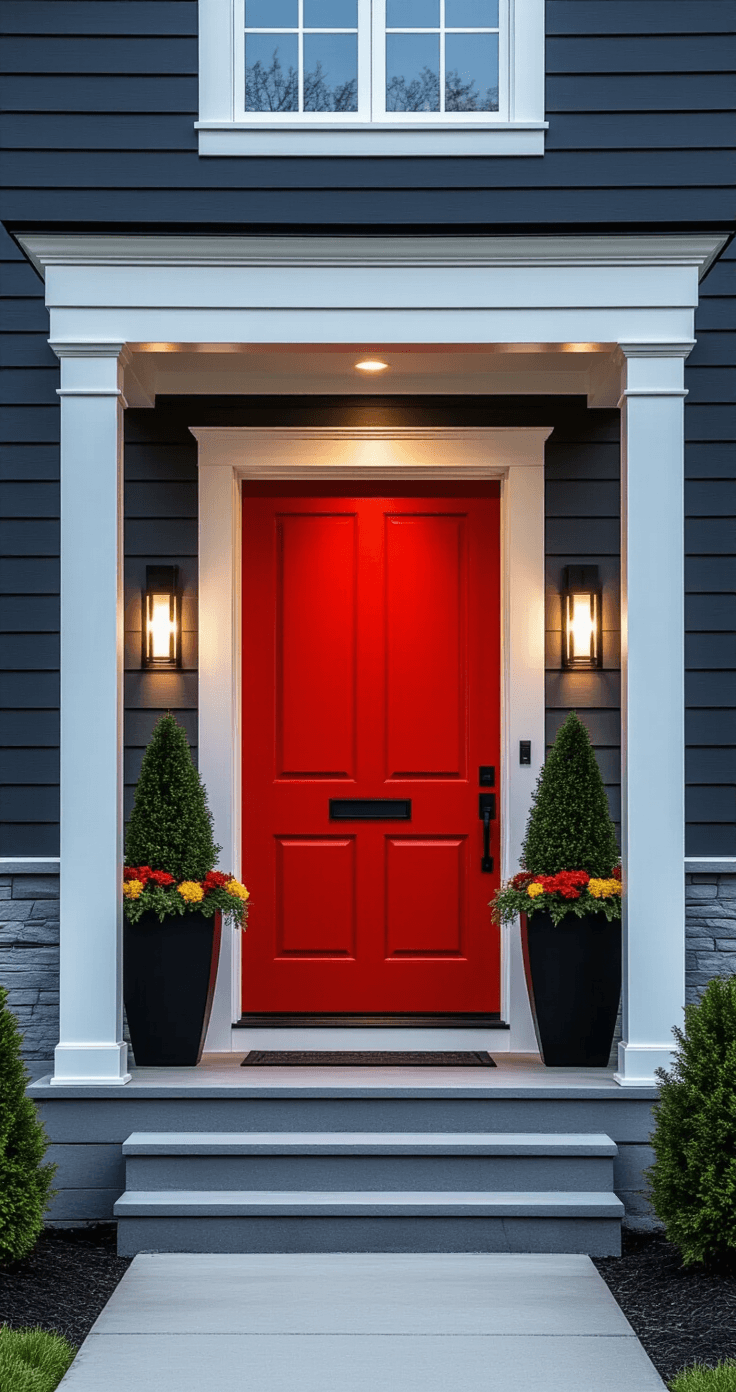
– **Red doors** create that classically modern look when you pair them with charcoal gray siding and crisp white trim.
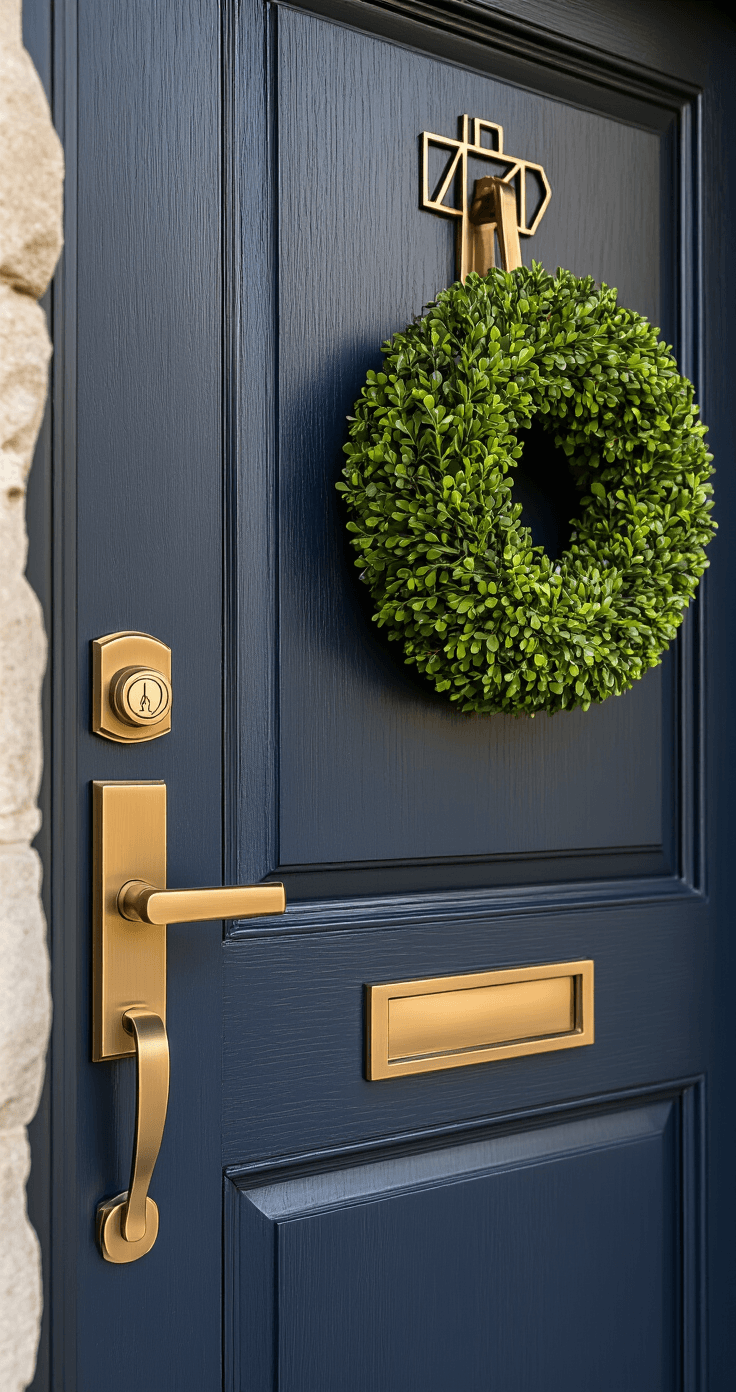
– **Navy blue** is having a moment because it’s bold without being aggressive.
I painted my door a deep emerald green last spring using exterior door paint in bold colors, and I’m not exaggerating when I say three neighbors asked for the color code within a week.
Here’s the secret: choose a color that contrasts with your exterior, not one that blends in.
Create a Focal Point That Doesn’t Require a Second Mortgage
Every great front entry has something that makes you stop and look.
You need one standout element—just one:
– A statement light fixture that looks expensive (even if it wasn’t)
– Architectural details like stone veneer or board-and-batten siding
– Oversized planters with greenery that actually survives your climate
– A covered portico that adds drama and keeps rain off your guests
I added stone veneer to the wall beside my door, and suddenly my basic builder-grade entry looked custom.
The project took a weekend and stone veneer panels] that cost less than a fancy dinner out.
The Lighting Situation (Stop Using That Sad Contractor Special)
Your builder-grade light fixture is doing you no favors.
Here’s how to layer lighting like you know what you’re doing:
– Overhead fixtures should be sized properly, a tiny lantern on a big porch looks ridiculous, and an oversized fixture on a small entry looks cartoonish.
– Path lighting guides people to your door without making them feel like they’re landing a plane.
Save this article
Enter your email and we'll send it straight to your inbox.
– Accent lighting highlights your best features (that new stone veneer, your house numbers, architectural details).
I installed LED outdoor wall sconces on either side of my door, and the difference between “daytime pretty” and “nighttime welcoming” is now consistent.
LED bulbs give you warm light without the energy bill guilt.
Style-Specific Ideas That Work in Real Life
The Modern Minimalist Entry
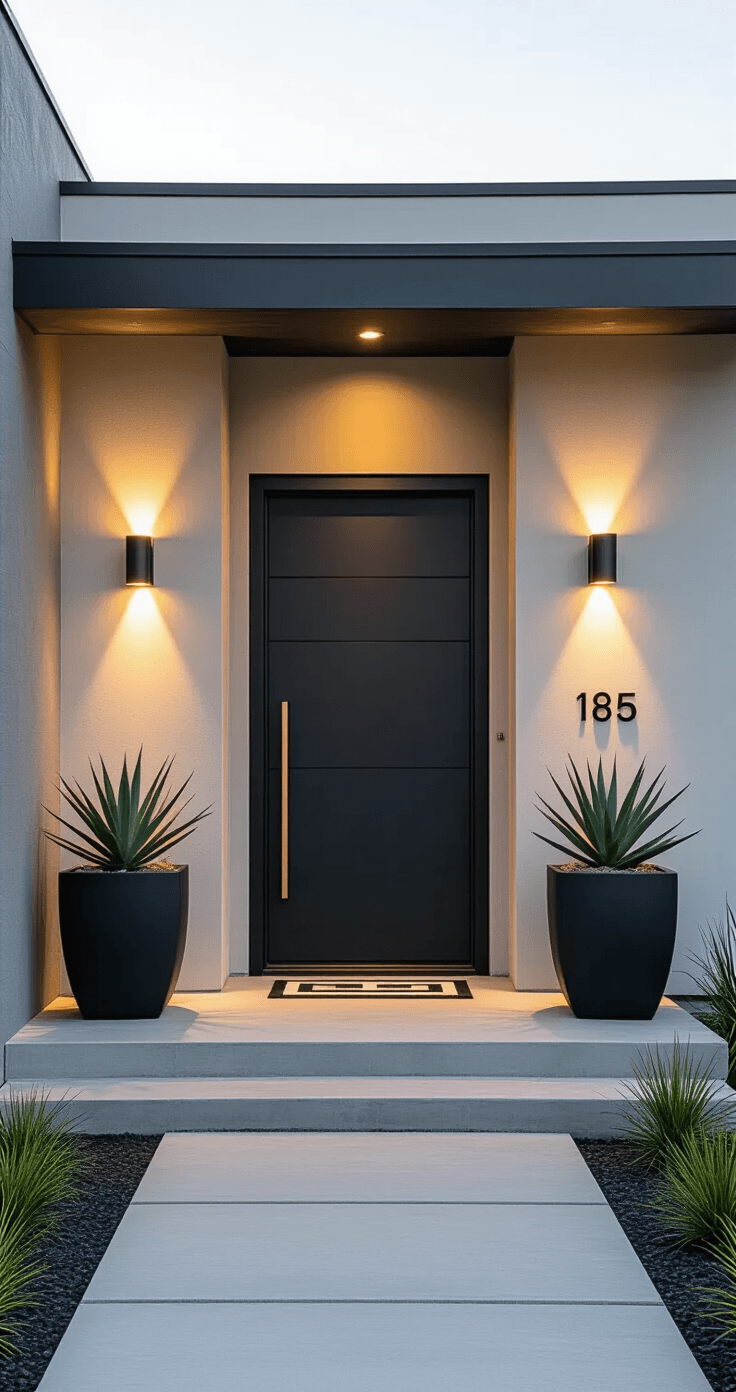
Clean lines are your religion here.
Go for:
– A door with horizontal grooves or a solid slab design
– Geometric house numbers in brushed metal
– Sleek, simple hardware (no ornate handles)
– One dramatic planter with architectural plants
– Linear lighting fixtures
Keep everything symmetrical or deliberately asymmetrical—nothing in between.
The Farmhouse Welcome
This style forgives mistakes better than any other.
You want:
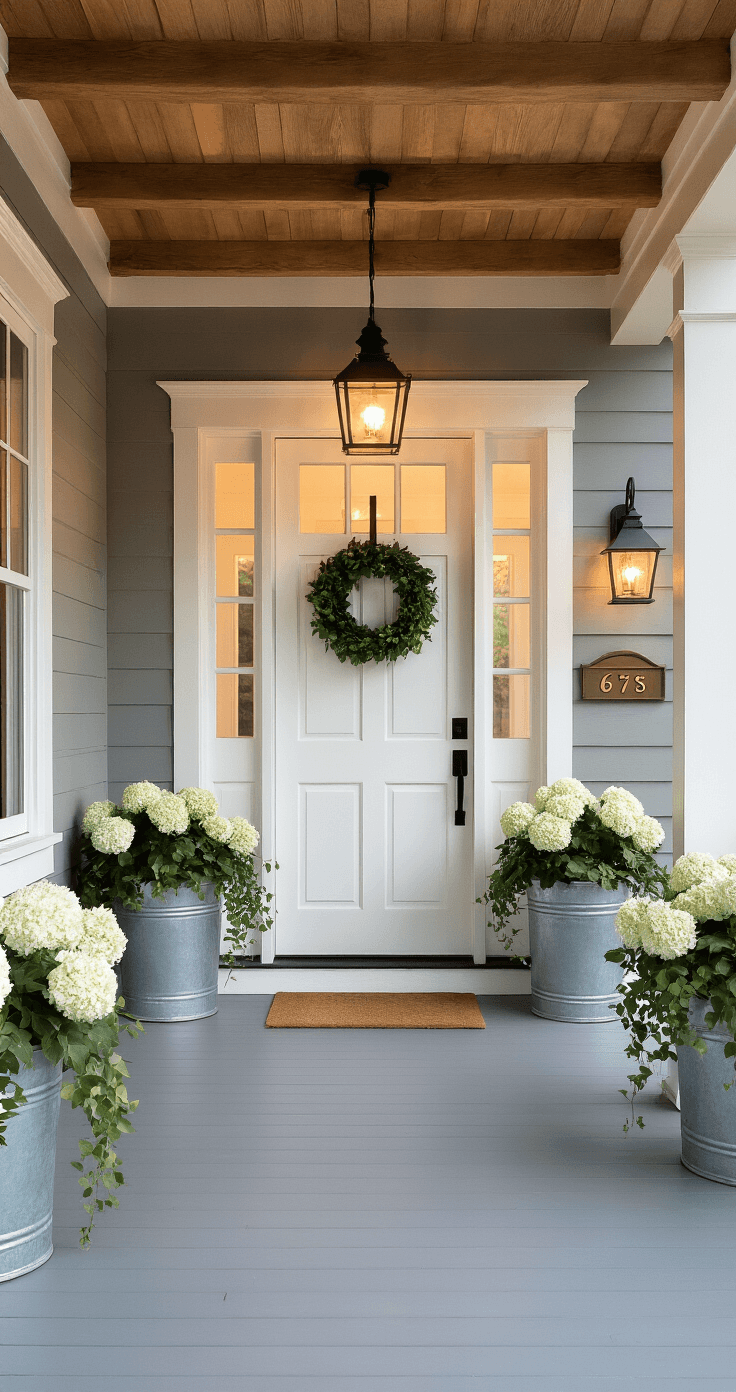
– A classic painted door (white, black, or navy)
– A farmhouse-style porch light with vintage vibes
– A simple wreath (real greenery beats fake every time)
– Matching planters on either side of the door
– Natural wood accents or a stained door with painted trim
The trick is looking collected, not cluttered.
The Coastal Casual Entry
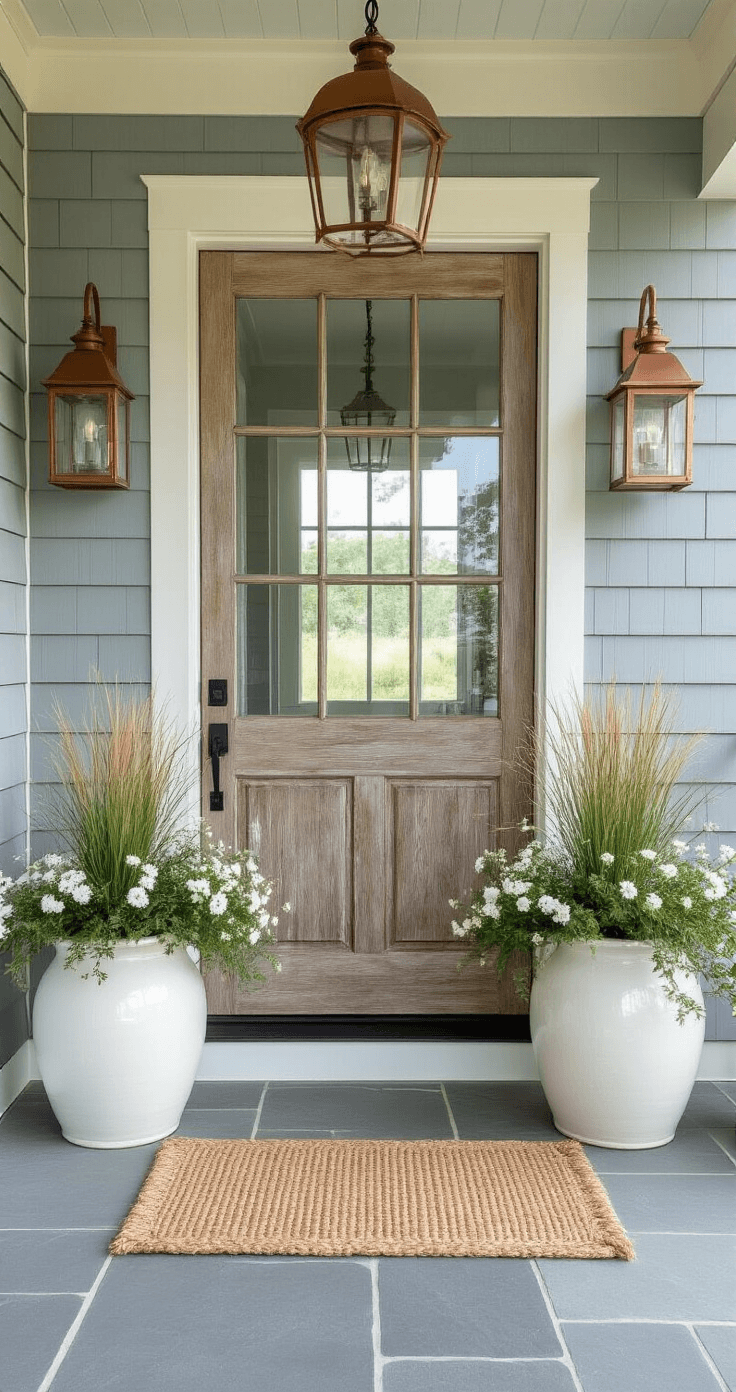
Light, bright, and breezy wins here.
Try:
– Doors with maximum glass for natural light
– Soft blues, whites, or weathered wood tones
– Nautical-inspired lighting (but keep it subtle)
– Driftwood accents or beach grass in planters
– Light-colored stone or painted brick
I’ve seen people go overboard with the anchor motifs—don’t be that person.
The Details That Separate Great from Good Enough
Hardware Matters More Than You Think
Cheap hardware screams cheap house.
Upgrade to:
– Lever handles instead of round knobs (they’re easier to use and look more modern)
– Matching finishes across door hardware, house numbers, and light fixtures
– Quality deadbolts that don’t wiggle when you turn them
Your door handle gets touched every single day—make it something that feels solid.
Add Functional Storage Without Looking Cluttered
A small bench with storage keeps shoes and packages organized.
Wall hooks hold bags and umbrellas.
A console table (if you have a covered porch) gives you space for outdoor storage baskets that hide the chaos.
The goal is “organized and welcoming,” not “we clearly live in this entryway.”
Greenery That Actually Lives
Dead plants are worse than no plants.
Choose options that survive in your specific conditions:
Full sun entries need:
– Succulents in modern planters
– Lavender or rosemary for texture and scent
– Ornamental grasses for height
Shaded entries work with:
– Ferns for lush greenery
– Hostas for low maintenance
– Shade-tolerant flowers like impatiens
I killed seven plants before I accepted that my north-facing entry wasn’t getting enough light for the fiddle leaf fig I kept trying to force.
Now I have ferns that thrive, and I’ve stopped feeling like a plant murderer.
Keep this one for later
We'll email you the link so you can come back to it.


[…] feels like one more thing on an endless to-do list. But here’s what nobody tells you: your front porch is doing PR work for you […]