This post may contain affiliate links. Please see my disclosure policy for details.
Fall Fairy Gardens: Your Complete Guide to Creating Autumn Magic in Miniature
Contents
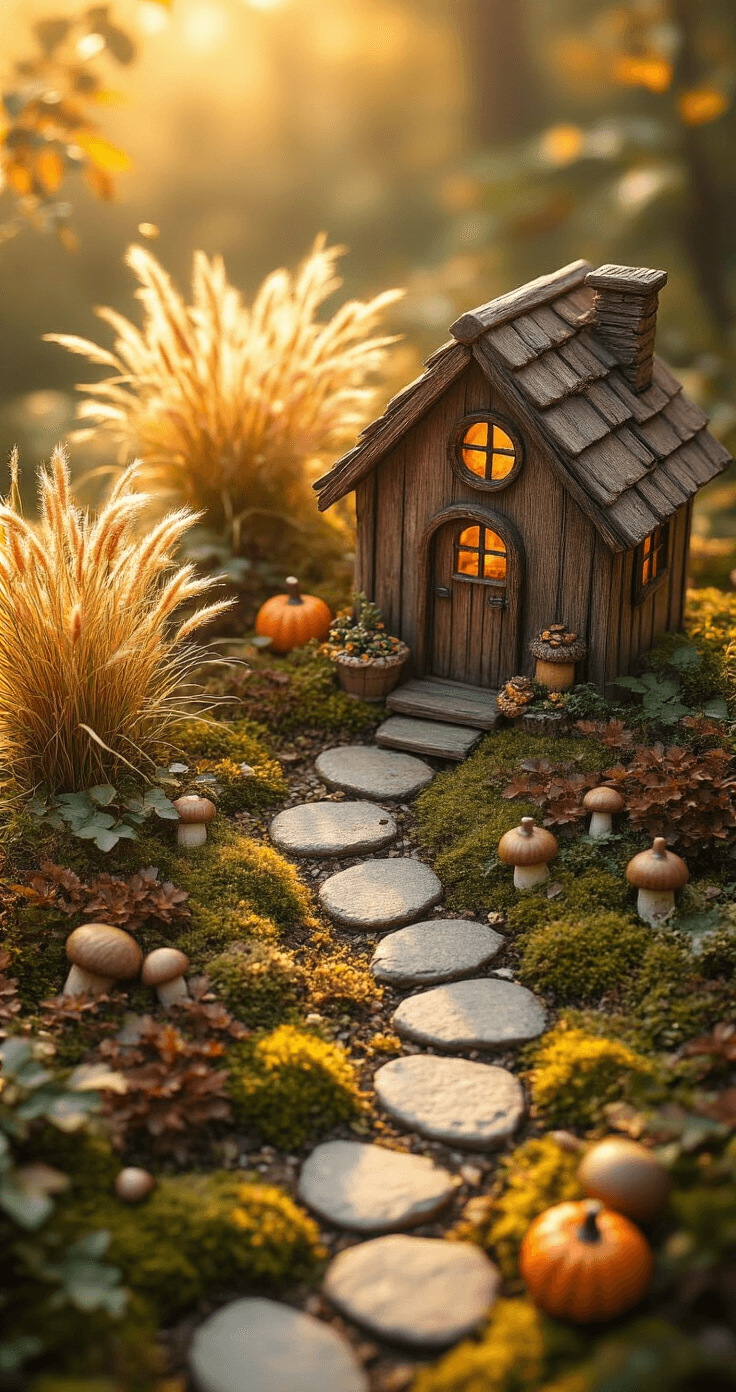
Fall fairy gardens stopped me in my tracks the first time I saw one at a neighbor’s house three years ago.
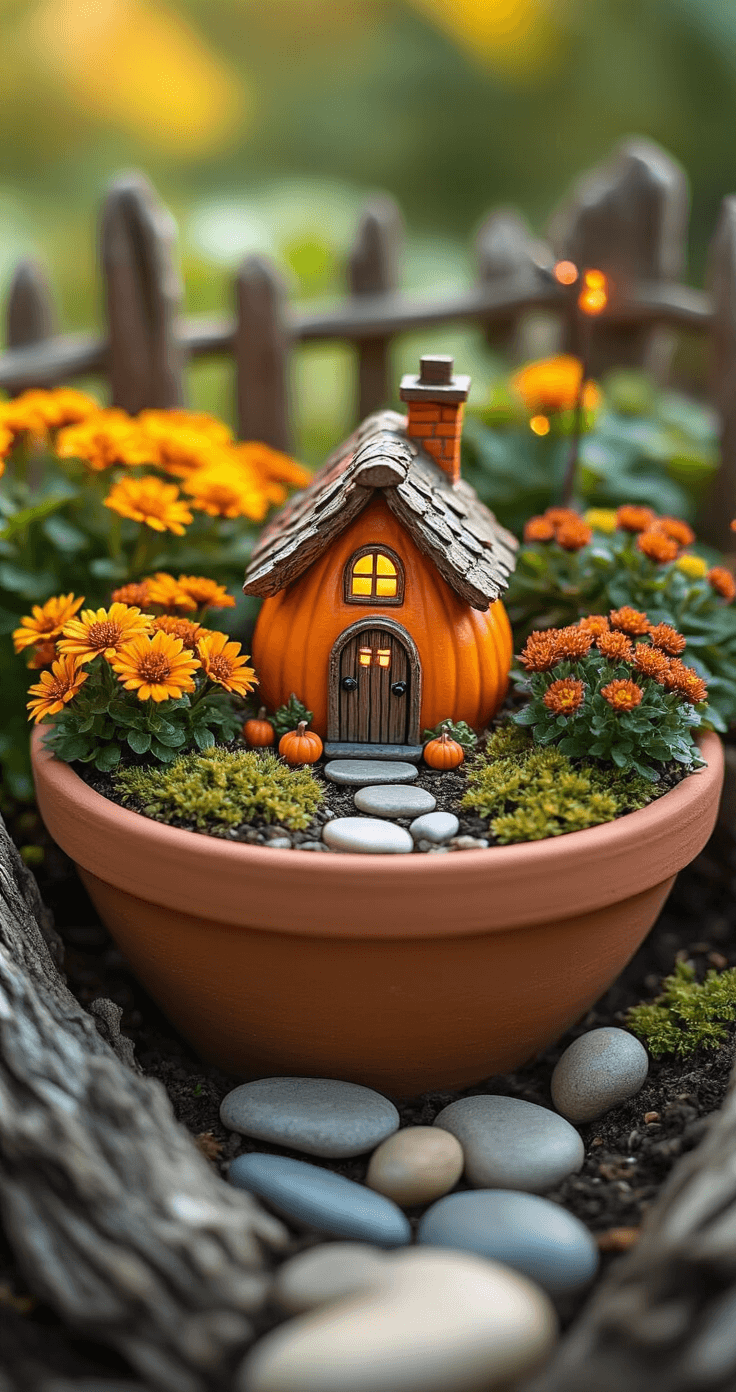
There was this tiny pumpkin cottage, miniature rakes scattered around like some wee fairy had been working the harvest, and honest-to-goodness little mums blooming their hearts out.
I was hooked.
You’re probably wondering if these little gardens are worth the effort, or maybe you’re worried they’ll look cheap and tacky.
I get it.
But here’s the thing: a well-done fall fairy garden brings actual magic to your porch or garden, and it’s way easier than you think.
What Makes Fall Fairy Gardens Different From Regular Ones
I learned this the hard way after trying to just stick some Halloween decorations in my summer fairy garden.
It looked ridiculous.
Fall fairy gardens need their own vibe.
The key differences:
- Seasonal plants that can handle cooler temps
- Warm color palette (oranges, deep reds, golden yellows)
- Harvest and Halloween themes instead of spring flowers
- Rustic accessories that match autumn’s cozy feeling
The whole aesthetic shifts from bright and blooming to cozy and settling-in-for-winter.
Think less “flower fairy” and more “harvest gnome ready for a pumpkin spice latte.”
Starting With Your Container (This Actually Matters)
I’ve made fairy gardens in everything from fancy ceramic pots to an old wooden crate I found in my garage.
The container sets your whole vibe.
Best options for fall:
- Shallow terracotta bowls – they’ve got that earthy autumn look
- Wooden boxes or crates – rustic and perfect for the season
- Decorative fall planters – if you want something ready-made
- Actual hollowed-out pumpkins – temporary but absolutely adorable
I personally love using a wide, shallow container because it gives you more horizontal space for creating little scenes.
Drainage holes are non-negotiable unless you want a muddy fairy swamp situation.
The Plants That Actually Survive Fall
My first attempt at a fall fairy garden died within two weeks because I picked plants that couldn’t handle October temperatures.
Learn from my mistakes.
Plants that work brilliantly:
For color and flowers:
- Mums – the obvious choice, but get the smallest varieties you can find
- Pansies – these little troopers handle cold like champions
- Ornamental kale – weirdly beautiful and tough as nails
For texture and ground cover:
- Sedum – succulents that turn gorgeous colors in fall
- Creeping thyme – stays low, smells amazing, doesn’t take over
- Irish moss – creates that perfect miniature lawn effect
For height and drama:
- Ornamental grasses (miniature varieties) – add movement
- Purple fountain grass – if you’ve got room for something taller
- Chinese lantern plants – those papery orange pods are perfect
I always pick plants that max out around 6-8 inches tall so they don’t overwhelm the fairy elements.
Scale matters more than you’d think.
If you’re going with miniature fairy garden plants, you’ll have way more options for arranging your scene.
Building Your Fall Fairy Structures
This is where it gets fun.
You can buy pre-made fairy houses, but I’ve found the DIY options often look better and definitely feel more personal.
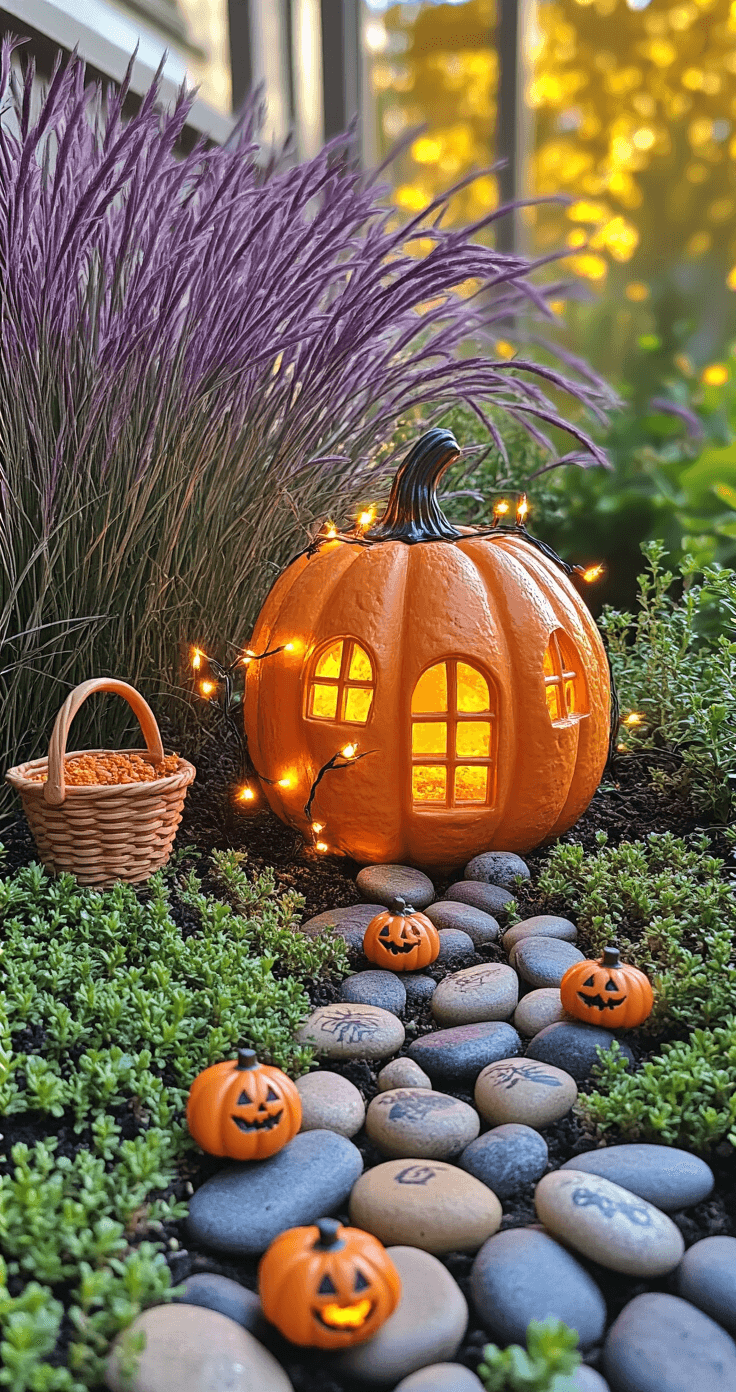
The pumpkin house technique:
I’ve made three of these now, and they’re always the centerpiece.
Grab a craft pumpkin from the dollar store (or use a real one if you’re brave).
Cut out a door and maybe a window or two.
Add a miniature fairy door if you want to get fancy, or just paint one on.
The foam craft pumpkins last forever, and you don’t deal with rot.
Other structure ideas:
- Twig fences – hot glue small sticks together for instant rustic charm
- Acorn cap mushrooms – glue caps to small sticks painted white with dots
- Cork mushrooms – wine corks cut at an angle with painted tops
- Stone pathways – flat pebbles arranged in winding paths
- Bark chip roof tiles – for any fairy structure you build
I spent maybe $15 on supplies for my first DIY setup, and I’ve reused most of it for three years running.

The Accessories That Bring It to Life
Without accessories, you’ve just got a small planter with some plants.
The accessories tell the story.
Essential fall fairy garden accessories:
Harvest theme:
- Miniature pumpkins (polymer clay or tiny real ones)
- Tiny baskets filled with “vegetables”
- Small wheelbarrows
- Little rakes, shovels, and garden tools
- Burlap scraps for texture
Halloween theme:
- Painted rock jack-o-lanterns (I make these every year with my kids)
- Tiny tombstones
- Faux spider webbing
- Battery-operated fairy lights
- Small skeletons or friendly ghosts
Thank