
This post may contain affiliate links. Please see my disclosure policy for details.
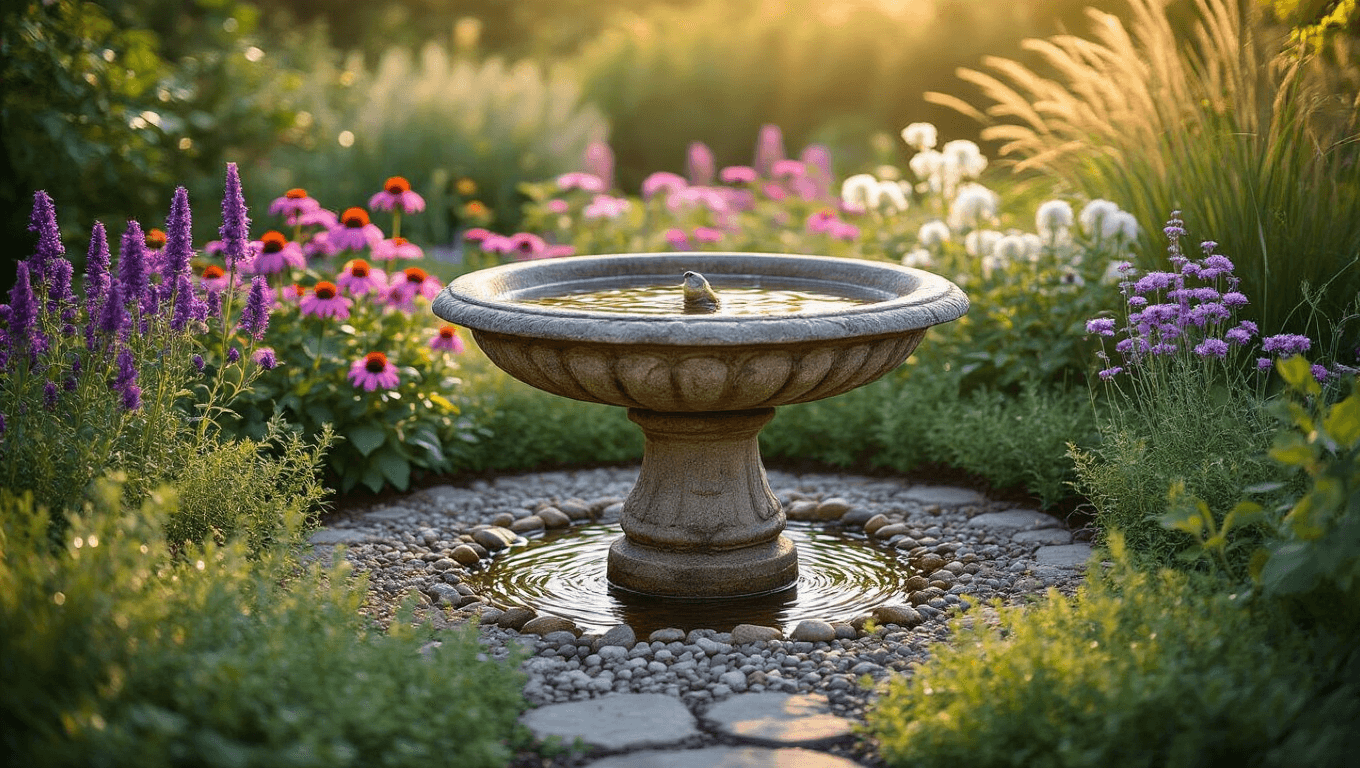
Why Bird Baths Matter in Garden Design
Birds aren’t just visitors—they’re the secret sauce that brings a garden to life. A well-designed flower bed with a bird bath creates:
- A vibrant wildlife sanctuary
- A mesmerizing visual focal point
- An ecosystem that thrives with natural beauty
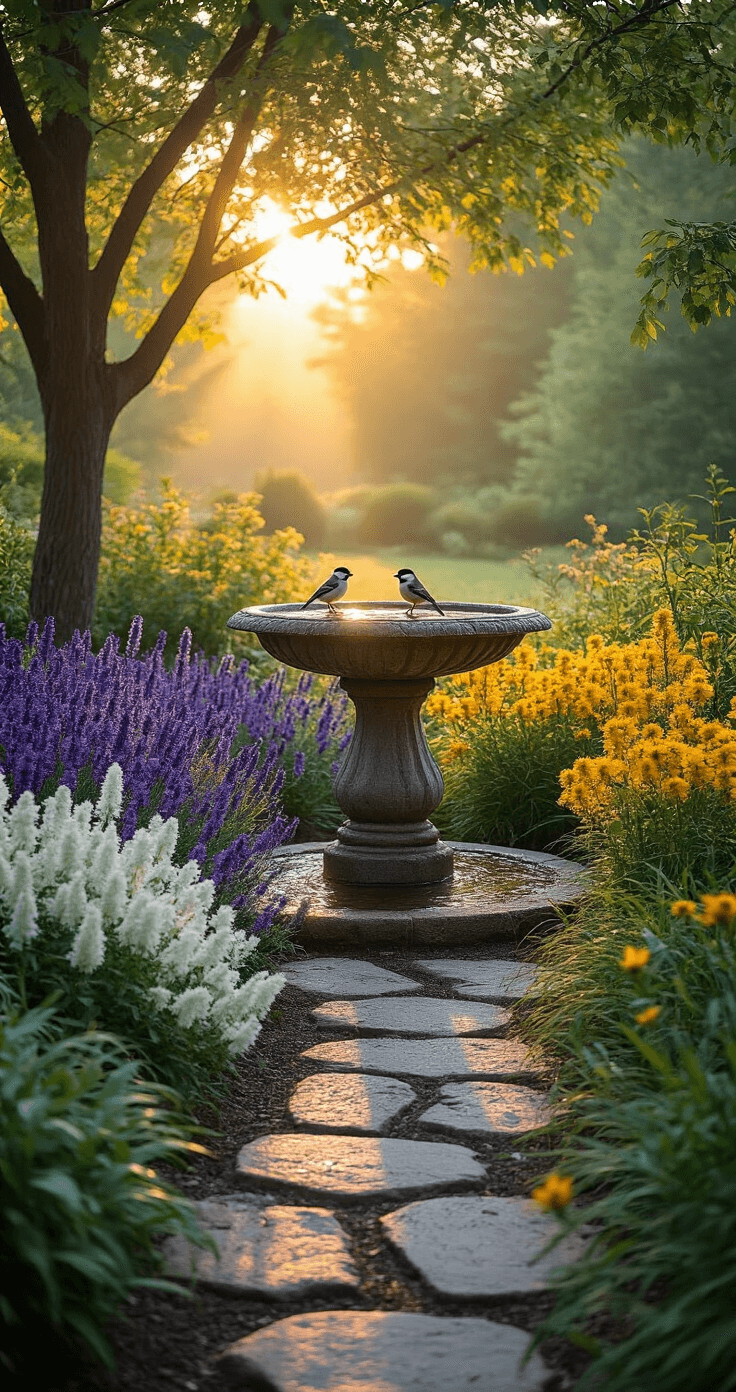
🏠 Steal This Look
- Paint Color: Sherwin-Williams Garden Sage SW 6165
- Furniture: weathered teak garden bench with curved backrest positioned to face the bird bath
- Lighting: solar-powered LED path lights with amber glass domes lining the flower bed perimeter
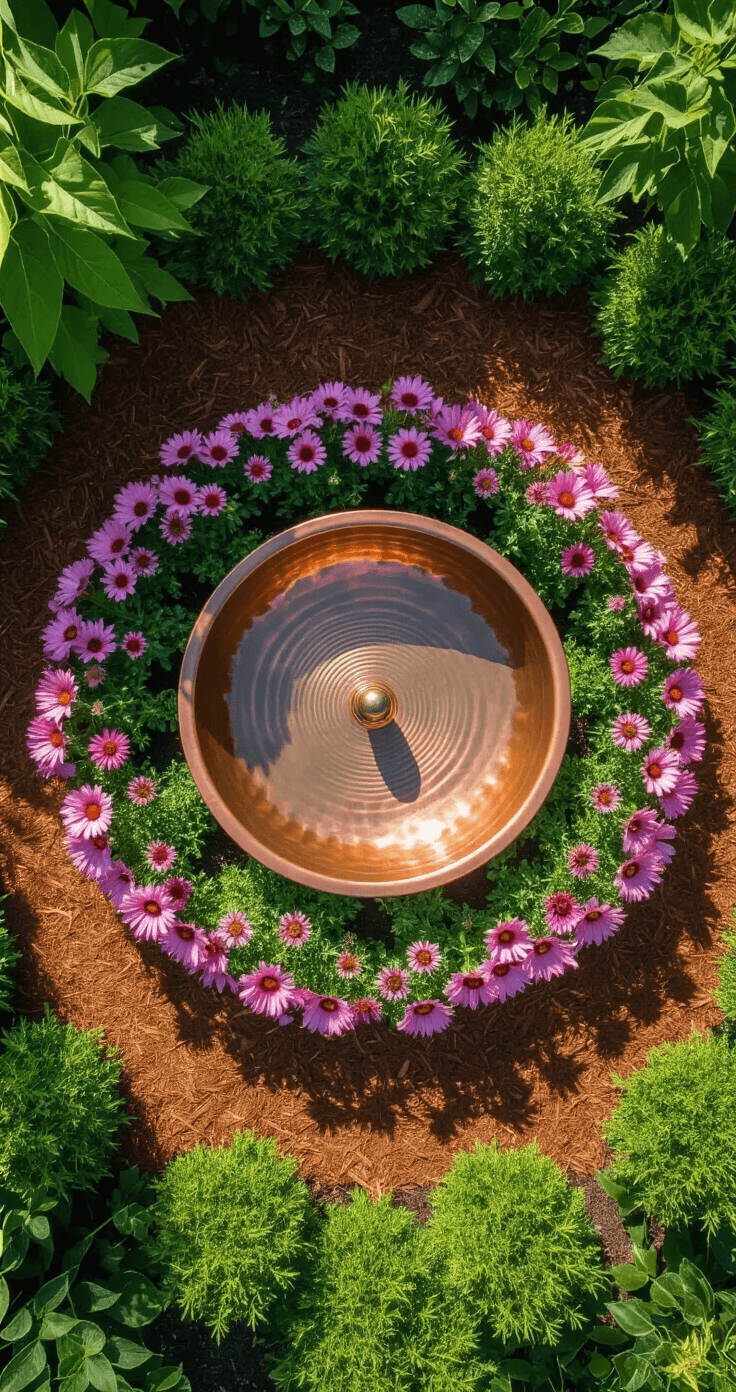
- Materials: natural limestone for the bird bath basin, aged copper for the pedestal, organic mulch, and native flowering perennials
There’s something deeply satisfying about morning coffee on the patio, watching finches splash while the garden wakes up—this is the room where patience pays off in wingsong and unexpected visitors.
Choosing the Perfect Bird Bath Location
Placement is everything. I learned this the hard way after my first attempt left birds feeling exposed and uncomfortable.
Pro Tip: Position your decorative bird bath slightly off-center in the flower bed. This creates visual intrigue and provides birds with strategic viewing angles.
Strategic Placement Considerations:
- Visibility from your favorite window
- Near protective shrubs but with clear escape routes
- Balanced with surrounding landscape
🌟 Steal This Look
- Paint Color: Benjamin Moore Soft Fern 2144-40
- Furniture: weathered teak garden bench positioned at viewing distance from the flower bed
- Lighting: low-voltage LED path lights with warm 2700K temperature flanking the bed’s edge
- Materials: natural stone bird bath basin, aged copper pedestal, organic mulch, native flowering perennials
There’s something deeply satisfying about glancing up from morning coffee to catch a cardinal splashing—placement transforms a decorative object into a daily ritual.
Selecting Plants That Complement Your Bird Bath
Think of your flower bed as a living frame for your bird bath. The right plants make all the difference.
Shade-Loving Plant Combinations:
- Soft ferns
- Elegant hostas
- Delicate astilbe
- Charming Lenten rose
Sun-Drenched Flower Bed Options:
- Vibrant salvia
- Butterfly-attracting bush
- Dramatic hydrangeas
- Textural ornamental grasses
Crucial Tip: Always choose native, non-invasive plant species to support local ecosystems.
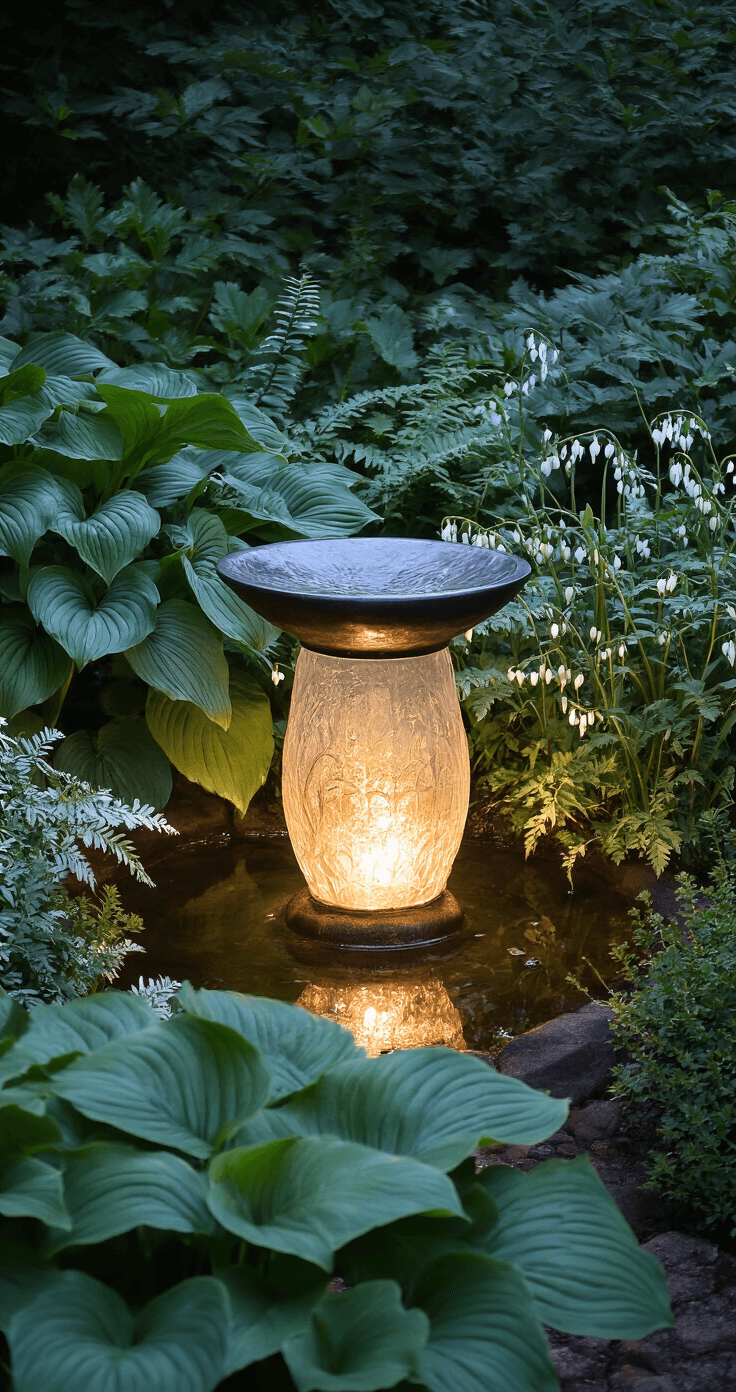
🖼 Steal This Look
- Paint Color: Farrow & Ball Green Smoke 47
- Furniture: weathered teak garden bench with curved backrest positioned at garden path intersection
- Lighting: solar-powered copper pathway lights with warm 2700K output spaced every 6 feet along bed perimeter
- Materials: aged limestone coping stones, untreated cedar mulch, hand-forged iron plant supports, natural fieldstone edging
There’s something deeply satisfying about watching a robin splash in water you’ve surrounded with plants you actually chose yourself—it transforms a generic garden center setup into your own little ecosystem.
Creating Layers and Texture
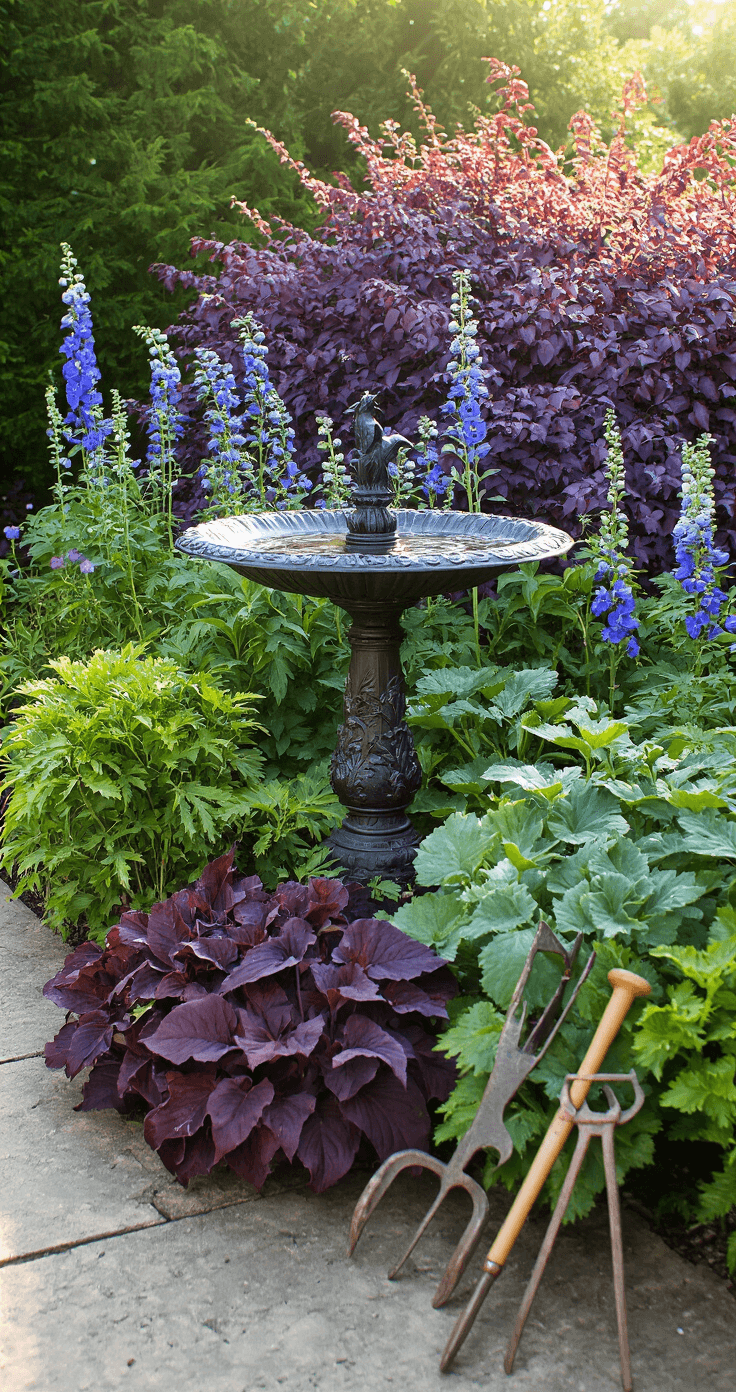
Imagine your flower bed as a multi-tiered stage:
- Ground covers create the foundation
- Medium-height plants add structure
- Taller plants provide dramatic backdrop
Save this article
Enter your email and we'll send it straight to your inbox.
🎨 Steal This Look
- Paint Color: Behr Garden Wall MQ6-26
- Furniture: weathered teak garden bench with curved backrest
- Lighting: solar-powered vintage lantern stake lights with warm amber glow
- Materials: natural stone edging, aged copper bird bath basin, mulch with cedar texture, wrought iron plant supports
There’s something deeply satisfying about watching a garden evolve through the seasons, and this layered approach means your flower bed with bird bath will offer fresh discoveries from first spring shoots through frost.
Water Quality and Bird Attraction
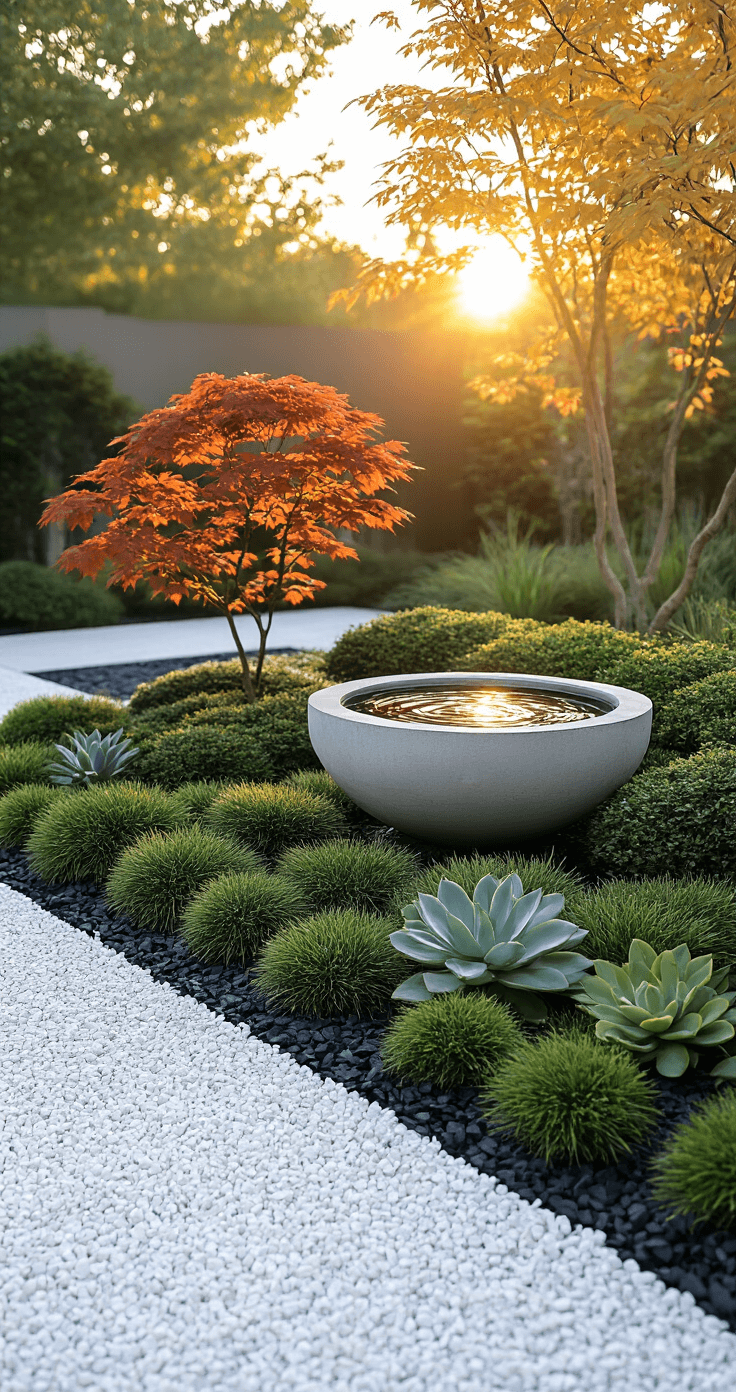
Birds are picky—and rightfully so! Maintain your bird bath cleaning kit religiously:
- Keep water fresh
- Maintain shallow depth (1-2 inches)
- Add small pebbles for secure perching
🎨 Steal This Look
- Paint Color: Valspar Garden Gala 6001-5C
- Furniture: weathered teak potting bench with galvanized steel top
- Lighting: solar-powered copper path lights with warm 2700K output
- Materials: natural stone basin, untreated cedar edging, river rock ground cover
There’s something quietly satisfying about stepping out with your morning coffee to find finches already bathing—the routine becomes a small daily ritual that connects you to the season’s rhythm.
Design Tricks for Small Spaces
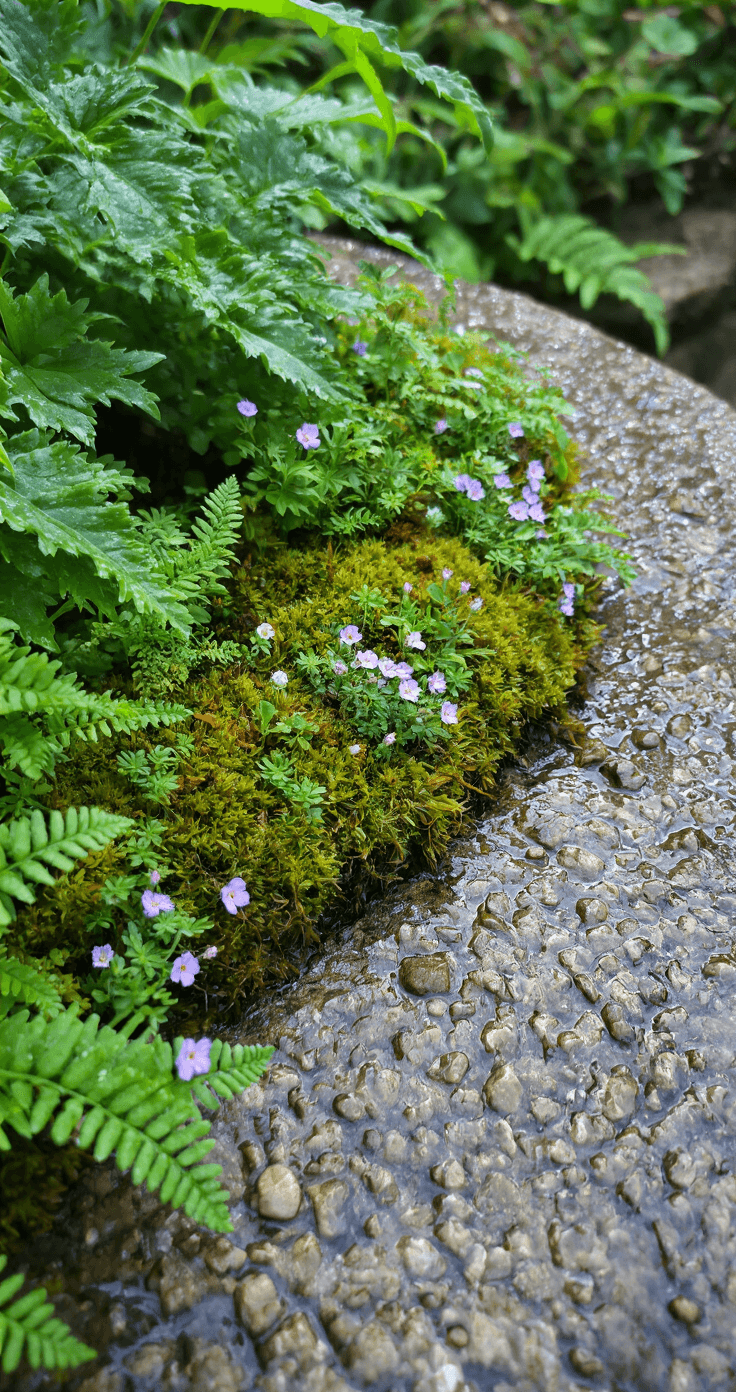
No massive garden? No problem! Try these creative solutions:
- Integrate bird bath into large planters
- Use vertical gardening techniques
- Mix annuals and succulents around the bath
🌟 Steal This Look
- Paint Color: PPG Fernwood Green PPG1134-4
- Furniture: folding bistro table with two stackable chairs, wall-mounted potting bench with drop-leaf work surface
- Lighting: solar-powered string lights with Edison-style bulbs draped along fence line or balcony railing
- Materials: weathered terracotta, galvanized steel planters, reclaimed wood vertical garden frames, river rock mulch
Small-space gardening taught me that constraints breed the most inventive solutions—my own balcony bird bath, wedged between a tomato tower and a stack of succulents, draws more hummingbirds than my neighbor’s sprawling yard ever does.
Seasonal Styling Tips
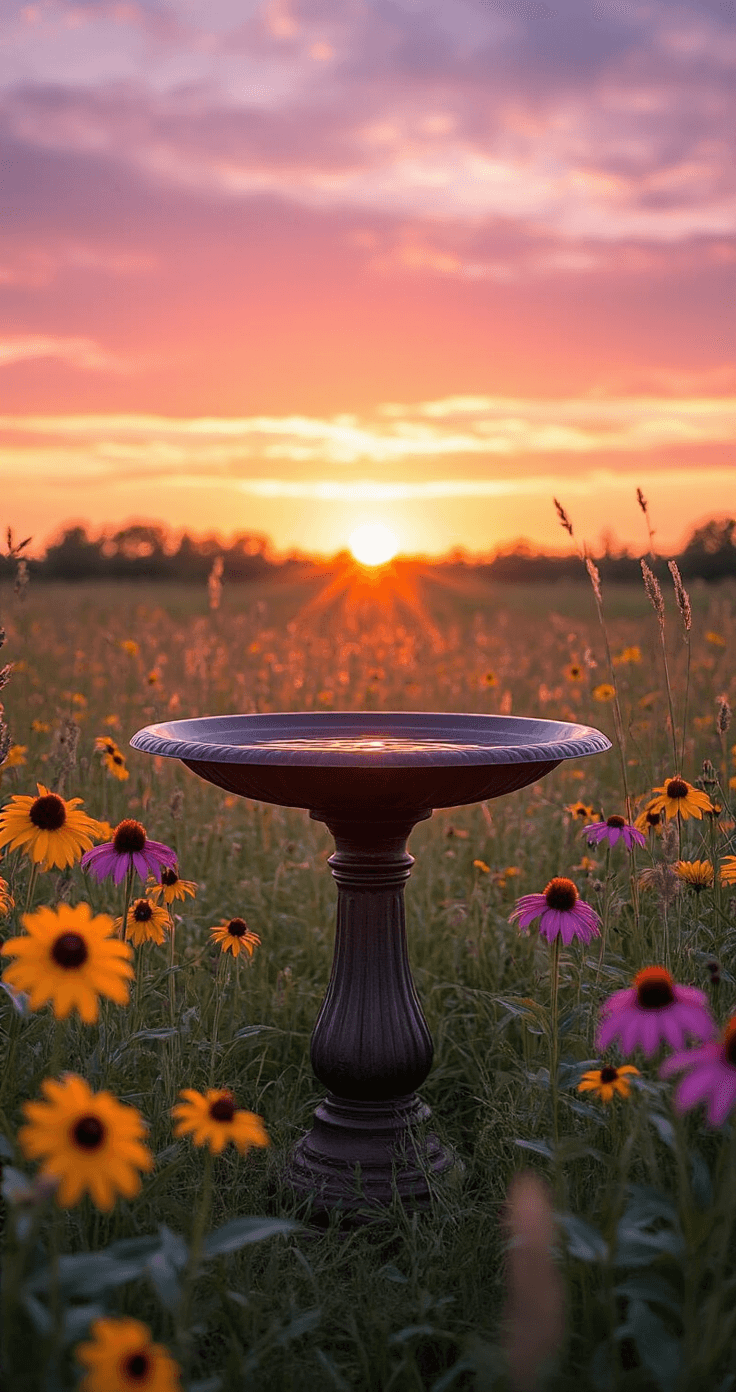
Your flower bed can be a year-round masterpiece:
- Rotate seasonal flowers
- Choose plant colors that complement your bird bath
- Consider texture and winter interest
💡 Steal This Look
- Paint Color: Dunn-Edwards Gardenia DEW337
- Furniture: weathered teak potting bench with zinc top for staging seasonal containers
- Lighting: solar-powered copper path lights with amber LED filaments
- Materials: aged terracotta, galvanized metal planters, cedar mulch, river rock edging
There’s something quietly satisfying about that first robin landing on your bird bath while snow still clings to the garden—it’s the moment your flower bed feels truly alive again.
Pro Gardener Recommendations
- Match plant colors to bird bath material
- Prioritize bird safety
- Create multi-sensory garden experiences
- Experiment with unique bird bath designs
Final Thoughts
A flower bed with a bird bath isn’t just landscaping—it’s creating a living, breathing ecosystem that delights both humans and wildlife.
Your garden is a personal sanctuary. Make it count.
Happy Gardening!
Keep this one for later
We'll email you the link so you can come back to it.


[…] Let your green couch be the star. Everything else should support and elevate its beauty. […]
[…] a single, stunning piece of wood with beautiful […]