This post may contain affiliate links. Please see my disclosure policy for details.
Front Garden Ideas That Actually Make Your Neighbors Stop and Stare
Front garden ideas can transform your home’s curb appeal faster than any other outdoor project, and I’m going to show you exactly how to do it without hiring a landscape designer or emptying your bank account.
You know that sinking feeling when you pull up to your house and realize your front garden looks like it’s given up on life?
The overgrown shrubs blocking your windows, the sad patch of lawn that’s more weeds than grass, and that front door nobody even notices because there’s nothing drawing the eye toward it.
I’ve been there, standing on the pavement with my hands on my hips, wondering where on earth to start.
The good news is that creating a front garden that makes people slow down as they walk past isn’t nearly as complicated as those glossy magazine spreads make it look.
Why Your Front Garden Probably Isn’t Working (And It’s Not Your Fault)
Most front gardens fail for three simple reasons.
The path to your front door is unclear or uninviting.
Your eye should travel naturally from the street to your entrance, but instead, it gets lost in a sea of mismatched plantings or a boring expanse of grass.
Everything is the same height.
Flat gardens look flat in every sense of the word—no drama, no interest, just blah.
You’ve got no focal point.
Without something to anchor the design, the whole space feels scattered and accidental.
I learned this the hard way when I first moved into my Victorian terrace five years ago.
The front garden was essentially a rectangle of patchy grass with two enormous overgrown shrubs that blocked the bay window and made the whole house look dark and unwelcoming.
I kept walking past other people’s front gardens, wondering what they had that mine didn’t.
Then it clicked—they had layers, they had purpose, and they had something that made you want to walk up to the front door.
Start With Your Front Door (Because That’s Where Everyone’s Looking Anyway)
Your front door is the star of the show, period.
Everything else in your front garden exists to frame it, highlight it, and guide people toward it.
Paint it a color that makes a statement.
I’m talking deep navy, glossy black, warm terracotta, sage green, or even a bold yellow if your house can handle it.
The right door color can completely change how your entire house reads from the street.
Mine is Farrow & Ball’s Railings—a rich charcoal-black that makes the white trim pop and gives the whole facade a crisp, finished look.
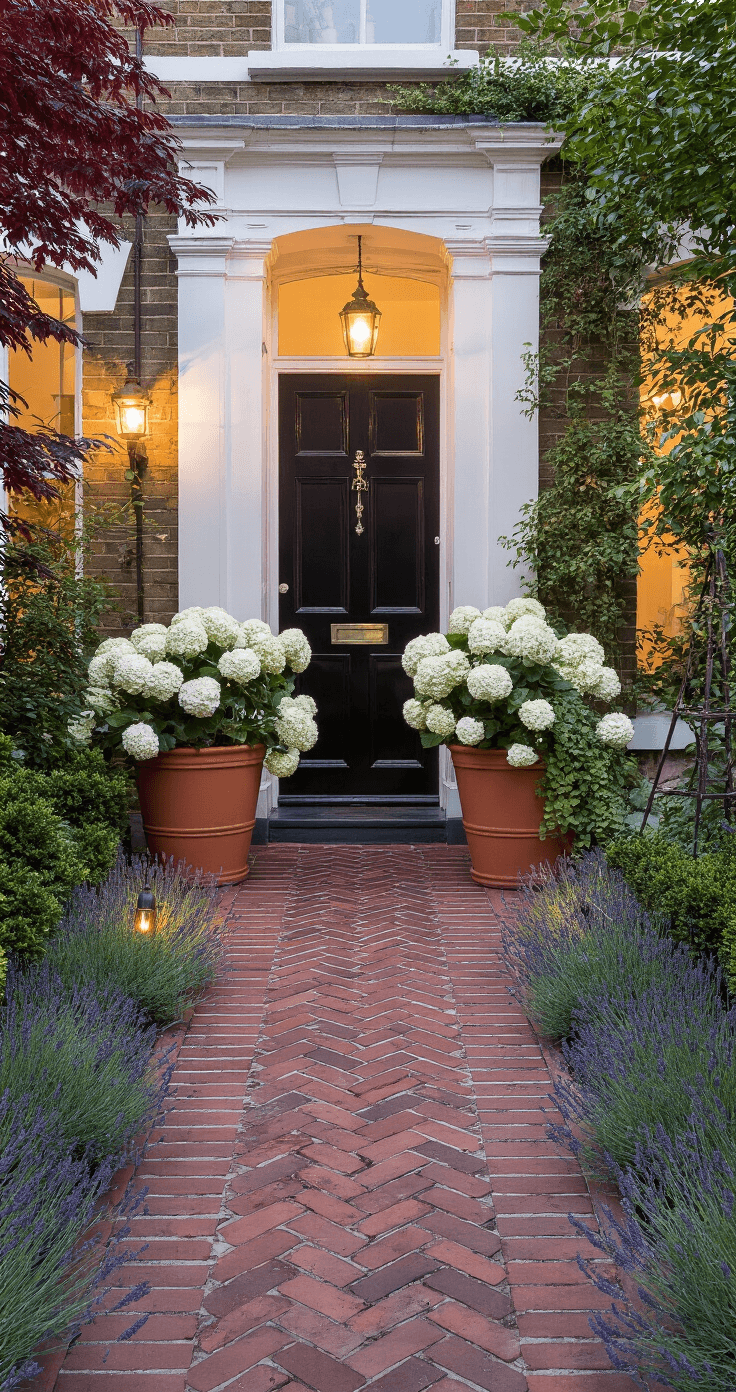
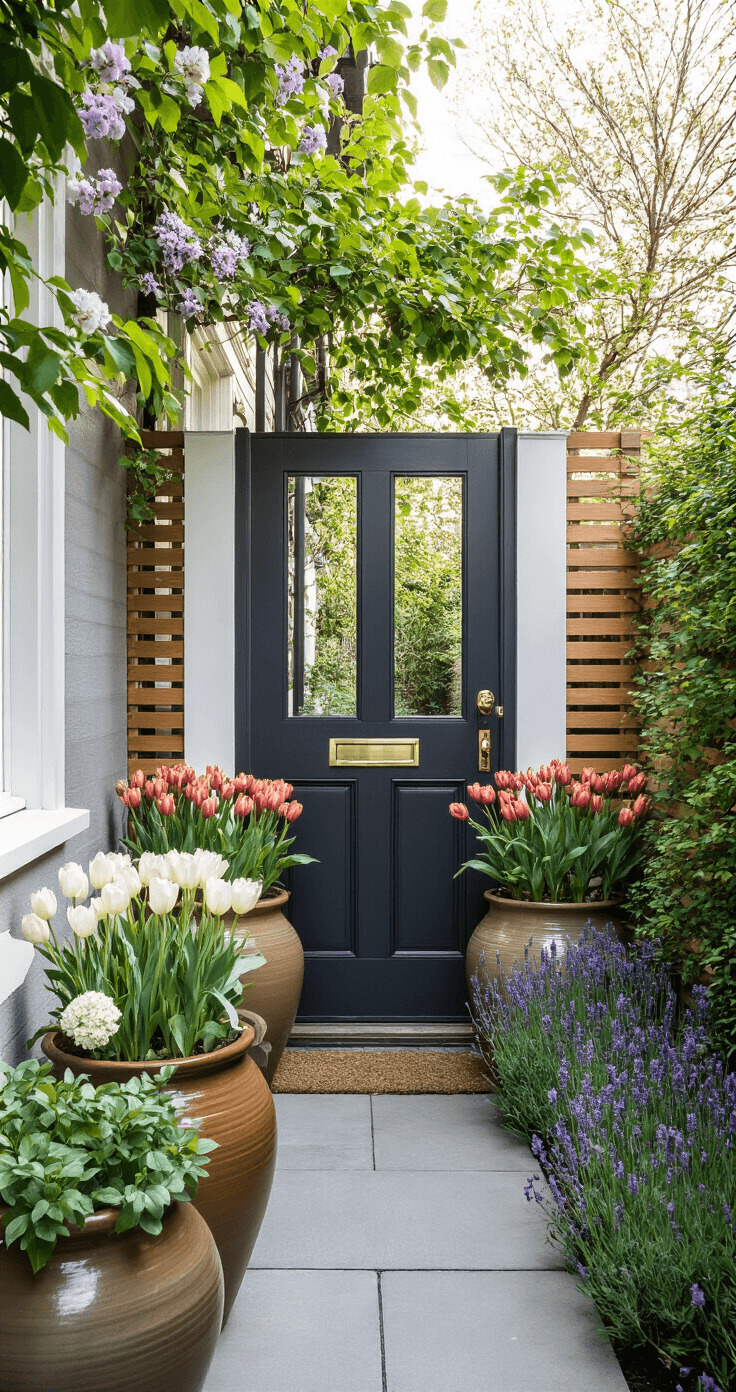
Flank your entrance with matching planters.
Large outdoor planters on either side of your door or steps create instant symmetry and polish.
I use two tall tapered pots—nothing fancy, just simple terracotta—and I rotate what I plant in them seasonally.
- Spring: tulips underplanted with trailing ivy
- Summer: white hydrangeas or lavender
- Autumn: ornamental grasses with purple heuchera
- Winter: evergreen shrubs with berries and winter-flowering pansies
The repetition of the two pots creates rhythm, and the seasonal changes keep the entrance feeling fresh all year.
Add a wreath or door decoration.
This sounds almost too simple, but a beautiful wreath draws the eye straight to your door and signals “this is the way in.”
Save this article
Enter your email and we'll send it straight to your inbox.
I keep mine minimal—eucalyptus and olive branches in summer, something with berries and pine in winter.
Create a Path That Actually Leads Somewhere
If your front garden has a path, it should be obvious where that path goes.
No meandering for the sake of it, no awkward narrow strips that force visitors to walk single file.
Widen your path if it feels cramped.
A path should be at least 90 cm wide—ideally closer to 120 cm—so two people can walk comfortably side by side.
Mine was originally these sad little concrete slabs about 60 cm across, and it felt like walking a tightrope every time someone came to the door.
I ripped them out and laid reclaimed brick in a herringbone pattern, widening the path to a generous 110 cm.
The difference was night and day—suddenly the entrance felt welcoming instead of apologetic.
Edge your path with low-growing plants.
This is where the magic happens.
Lining your path with plants creates those gorgeous layered photos you see on Pinterest, and it guides the eye naturally toward your front door.
I planted low-growing perennials on both sides:
- Catmint (Nepeta) for soft purple flowers and silvery foliage
- Hardy geraniums that spill gently over the edges
- Lady’s mantle (Alchemilla mollis) with those incredible lime-green flowers
- Lavender for structure and scent
The key is choosing plants that stay naturally compact and don’t require constant hacking back.
Nobody has time to be trimming their path edges every other weekend.
Add path lighting for evening drama.
Solar pathway lights are ridiculously easy to install—you literally just push them into the ground—and they make your front garden look intentional and cared-for after dark.
I have eight of them lining my path, and the warm glow they cast on the brick and plants completely transforms the entrance at night.
Layer Your Planting (Because Flat Is Boring)
This is the single biggest difference between a front garden that looks “fine” and one that looks genuinely beautiful.
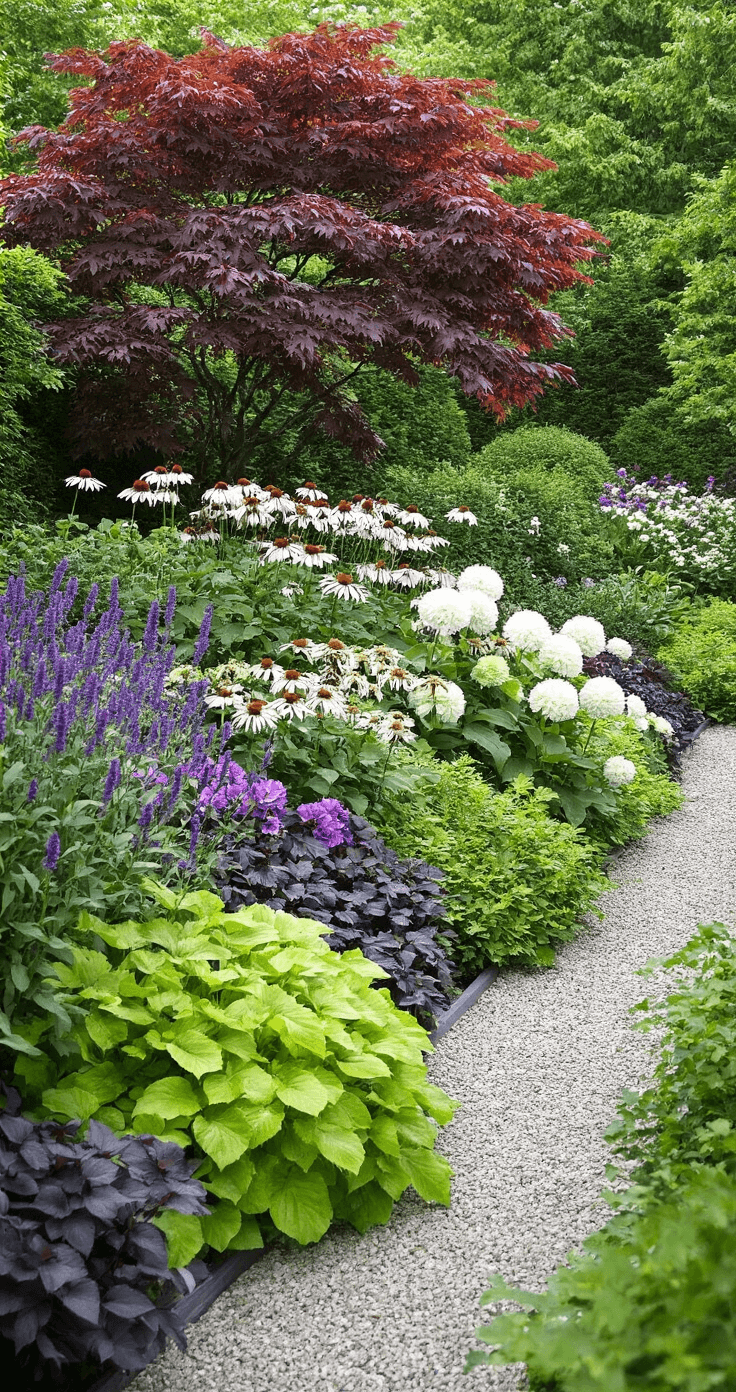
You need plants at different heights creating depth and interest.
Back layer: Foundation shrubs and small trees
These go closest to your house and provide year-round structure.
I planted:
- One Japanese maple in the corner—it’s the focal point of the whole garden with its burgundy leaves and elegant branching structure
- Evergreen shrubs (I used Osmanthus) along the base of the house to soften the hard edge where brick meets ground
- One climbing rose on a simple metal obelisk near the front window for vertical interest and summer flowers
Middle layer: Perennials and medium shrubs
These create the bulk of your color and seasonal interest.
I went for:
Keep this one for later
We'll email you the link so you can come back to it.