This post may contain affiliate links. Please see my disclosure policy for details.
Lavender Flowers: Everything You Need to Know About Growing, Styling, and Using Nature’s Purple Perfection
Lavender flowers have taken over my home, and I’m not even sorry about it.
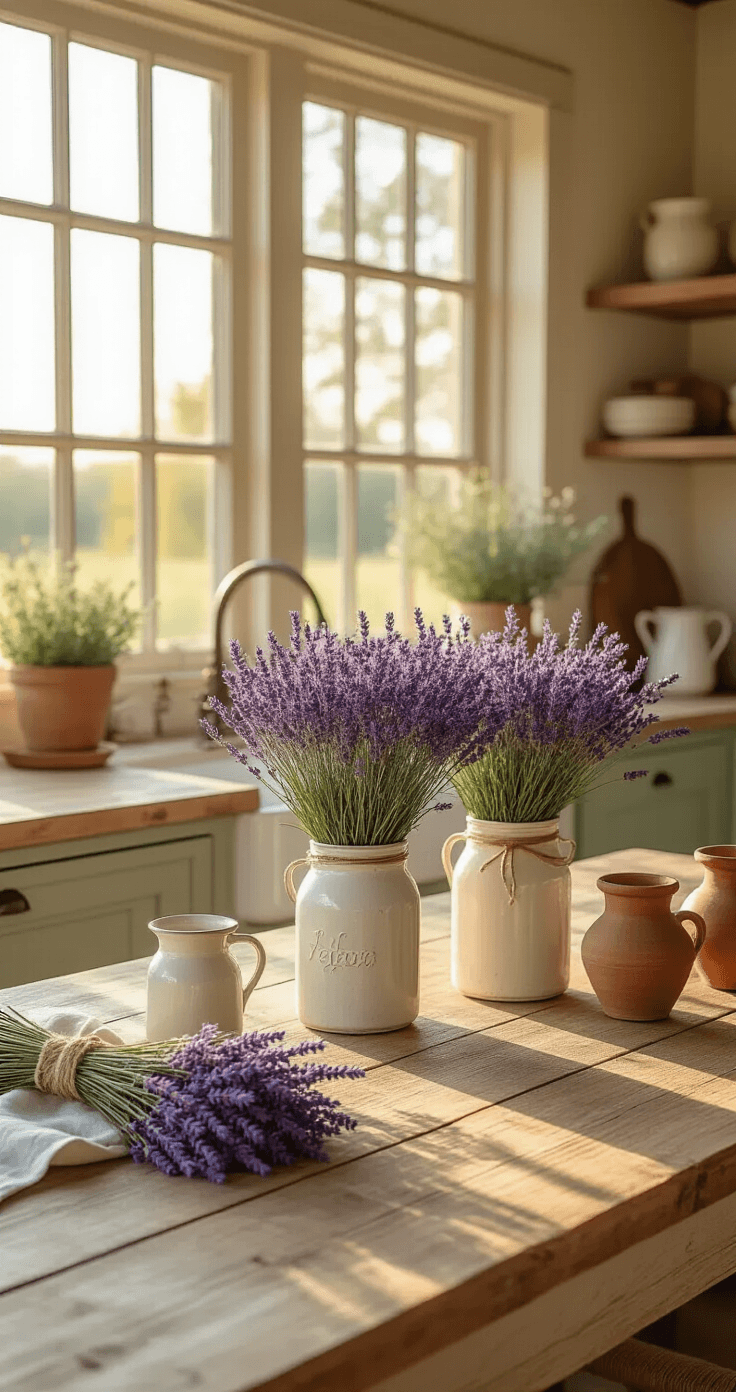
Those gorgeous purple spikes sit in Mason jars on my kitchen counter, hang upside down in my closet, and honestly, I’ve even tucked a few sprigs into my pillowcase because apparently I’ve become that person.
But here’s the thing—I get why you’re curious about these fragrant beauties.
Maybe you’ve killed three lavender plants already and you’re wondering what you did wrong (been there).
Or perhaps you’re scrolling through Pinterest at 2 AM, seeing all those dreamy lavender bouquets in white ceramic vases, and you’re thinking “I want that vibe in my house.”
Or maybe, just maybe, you bought fresh lavender at the farmer’s market on a whim and now you’re standing in your kitchen wondering what the hell to do with it besides letting it die slowly on your counter.
I’ve been in all of these situations, and I’m going to walk you through everything about lavender flowers—from keeping the damn things alive to styling them like you hired an interior designer.
What Exactly Are Lavender Flowers?
Lavender flowers are those narrow, fragrant purple spikes that grow from plants in the Lavandula genus.
They’re basically the overachievers of the plant world—beautiful, useful, and they smell like a fancy spa you can’t afford.
Here’s what you’re looking at:
- The look: Soft purple, lilac, or blue flower spikes with silvery-green foliage that looks elegant even when the plant is just sitting there doing nothing
- The smell: Clean, herbal-floral scent that somehow manages to be both calming and energizing (I know, it doesn’t make sense, but it works)
- The varieties: English lavender (Lavandula angustifolia), French lavender (L. dentata), and Spanish lavender (L. stoechas)—each with their own personality and tolerance for your questionable gardening skills
- The vibe: Calm, purity, relaxation—basically everything your chaotic life isn’t
I remember the first time I bought a lavender plant from the garden center.
The woman working there said, “It’s so easy! Just don’t overwater it!”
Two weeks later, my lavender looked like it had given up on life, and honestly, I took it personally.
How to Actually Keep Lavender Alive (Without a Horticulture Degree)
Let me save you from my mistakes.
Lavender isn’t complicated, but it has opinions about how it wants to live.
Light: Give It All the Sunshine
Full sun means FULL sun.
At least 6 hours of direct sunlight daily.
Not “oh, there’s a window nearby” light.
Not “it gets bright in the afternoon” light.
Actual, real, unfiltered sunshine.
I learned this the hard way when I tried to keep lavender on my north-facing windowsill.
It basically staged a slow-motion protest and stopped flowering entirely.
Soil: Well-Drained or Death
Lavender hates wet feet more than I hate wet socks.
What lavender wants:
Save this article
Enter your email and we'll send it straight to your inbox.
- Sandy or rocky soil that drains fast
- Lean soil (it doesn’t need rich, fertilized earth)
- pH between 6.5-7.5 if you’re getting technical about it
- Absolutely ZERO standing water
What lavender doesn’t want:
- Heavy clay soil
- Moisture-retaining potting mix
- Your well-intentioned daily watering routine
If you’re planting in pots (which I recommend if you live somewhere humid or cold), use a terracotta pot with drainage holes.
Terracotta breathes and wicks away excess moisture, which lavender absolutely loves.
Mix in some perlite or sand to your potting soil—about 30% of the total volume.
Your lavender will thank you by not dying.
Watering: Less is Genuinely More
This is where most people screw up.
Including past me.
The golden rule: Water deeply but infrequently.
Let the soil dry out between waterings—like, actually dry, not just “looks dry on top.”
I stick my finger about two inches into the soil.
If it feels even slightly moist, I wait.
For established outdoor lavender:
- You might water once every two weeks in hot weather
- In cooler weather, maybe once a month
- Some people barely water established lavender at all once it’s settled
For container lavender:
- Check weekly
- Water when the soil is dry two inches down
- Always water until it drains out the bottom, then stop
I killed my first lavender by being a helicopter plant parent.
Turns out lavender prefers the “benign neglect” parenting style.
Climate Considerations: Know Your Zone
Many lavender varieties are hardy in temperate, dry climates.
If you live somewhere humid (hi, Southeast US friends) or extremely cold, lavender can be finicky.
Container growing is your friend if:
- You have harsh winters (below 0°F/-18°C)
- You have high humidity
- Your soil is naturally heavy clay
- You want to move plants to ideal spots
I bring my potted lavender inside during our brutal winters, stick them near a sunny window, and water even less than usual.
They go semi-dormant and look a bit sad, but they survive.
Pruning: Don’t Let It Get Leggy
Lavender needs haircuts.
Without pruning, it gets woody, leggy, and stops flowering as enthusiastically.
The pruning schedule:
Keep this one for later
We'll email you the link so you can come back to it.