

This post may contain affiliate links. Please see my disclosure policy for details.
Stop Right There—What’s This Thing Actually For?
Before you even think about buying lumber or watching YouTube videos at 2 AM, you need to answer one brutally honest question: what’s going into this shed?
I made this mistake myself. I thought I wanted a “general storage shed” until I realized general storage is code for “a place where things go to die.”
Your shed needs a job description:
- Tool storage shed: You’re keeping rakes, shovels, and that garden hose that somehow tangles itself when you’re not looking
- Garden workspace: You want a potting bench, maybe some shelves for seed packets, and enough room to actually move around
- Workshop: Power tools, workbench, and proper lighting because you’re building things, not just storing them
- Multi-purpose structure: The overachiever option where you want everything at once (spoiler: this gets complicated fast)
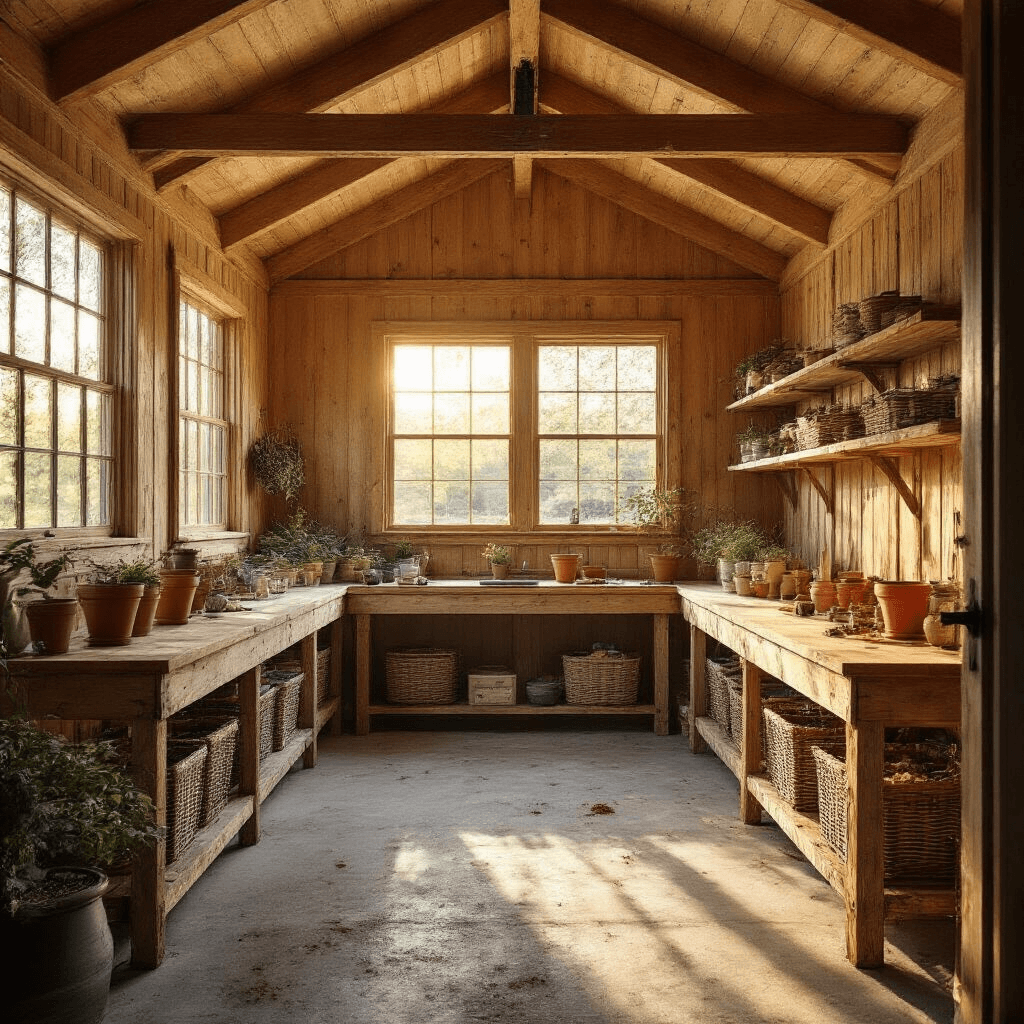
The purpose isn’t just about feeling organized. It determines whether you need electricity running out there, whether you need proper ventilation so your stored items don’t turn into a science experiment, and whether insulation matters.
My neighbor John built a beautiful 10×12 shed for “storage” and then got angry when his workspace idea didn’t fit. Don’t be like John.
🏠 Steal This Look
- Paint Color: Sherwin-Williams Garden Sage SW 7749
- Furniture: heavy-duty steel shelving system with adjustable tiers, wall-mounted French cleat tool storage, and a fold-down workbench that locks vertically when not in use
- Lighting: LED shop light fixtures with pull-chain operation and motion-sensor activation for hands-free entry
- Materials: pressure-treated pine framing, corrugated metal roofing, OSB sheathing with sealed edges, and rubberized floor coating for chemical resistance
I’ve watched too many homeowners finish their dream shed only to realize their riding mower won’t clear the door frame or their workbench blocks the only window—this room demands you plan with your real stuff in hand, not Pinterest in mind.
The Size Question That Everyone Gets Wrong
Walk outside right now and look at your yard. Really look at it.
That space looks bigger than it is, I promise you.
Here’s the breakdown I use:
- Small sheds (under 10×10 feet): Perfect for basic tool storage, seasonal decorations, or that collection of flower pots taking over your garage
- Medium sheds (10×12 to 12×16 feet): The sweet spot for most homeowners who want storage plus a little workspace
- Large sheds (over 16×23 feet): You’re basically building a small house at this point—workshops, studios, or home offices
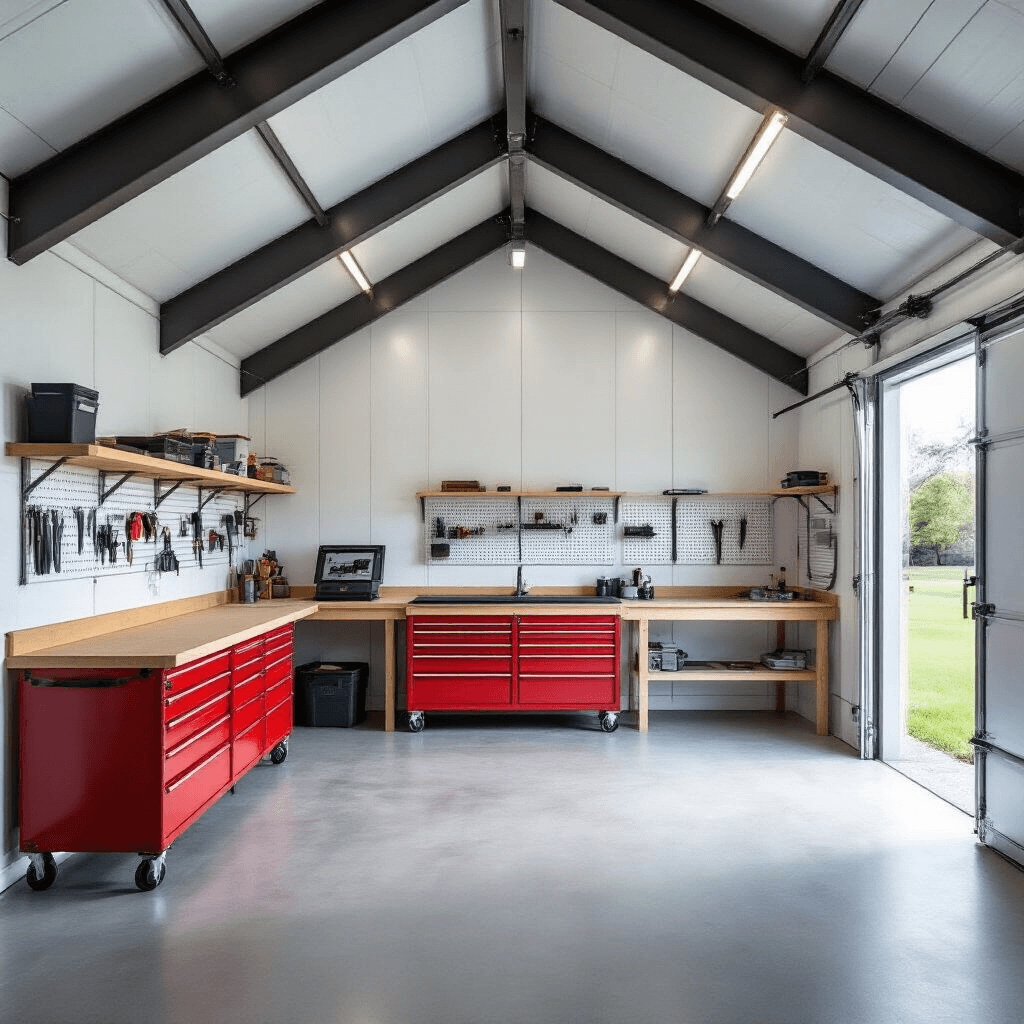
The most popular sizes I see are 8×10, 10×12, and 12×16 feet. There’s a reason for that. They fit most yards without dominating the landscape, and they’re big enough to be useful without becoming your second mortgage.
Cost reality check: Building just the outer shell (floor, walls, and roof) typically runs $10-$15 per square foot. A 10×12 shed means you’re spending $1,200 to $1,800 before you add shelving, paint, or that fancy window you saw on Pinterest.
I measured my available space three times. Then I measured it again with a quality measuring tape because my estimating skills are terrible. Mark out the dimensions with landscape marking paint and actually walk around inside your imaginary shed.
Does it feel right? Can you open a door without hitting the fence? Will your lawnmower actually fit?
🏠 Steal This Look
- Paint Color: Benjamin Moore Kendall Charcoal HC-166
- Furniture: wall-mounted fold-down workbench with integrated pegboard
- Lighting: LED shop light with pull-chain activation, 4000K color temperature
- Materials: pressure-treated pine framing, corrugated metal roofing, composite shiplap siding
I’ve stood in too many cramped sheds where owners admitted they wish they’d gone smaller, but never once met someone who regretted leaving extra yard for their kids to play or for a future garden expansion.
🔔 Get The Look
Style Isn’t Just About Looking Pretty
I used to think shed style was just about curb appeal. Pick something that doesn’t make your neighbors complain at HOA meetings and call it a day.
Wrong.
Style affects function:
Save this article
Enter your email and we'll send it straight to your inbox.
- Lean-to sheds: Attach to an existing structure, save space, but you’re limited on size
- Gable roof designs: Classic triangle roof, water runs off easily, traditional look that matches most homes
- Gambrel sheds: That barn-style roof gives you actual loft space for storage without expanding the footprint
- Modern shed plans: Flat or low-slope roofs, clean lines, and they look fantastic but sometimes have drainage quirks
- Saltbox designs: Asymmetrical roof that’s perfect when you need height on one side but not the other
- Hip roof sheds: All four sides slope down, incredibly stable in wind, but more complex to build
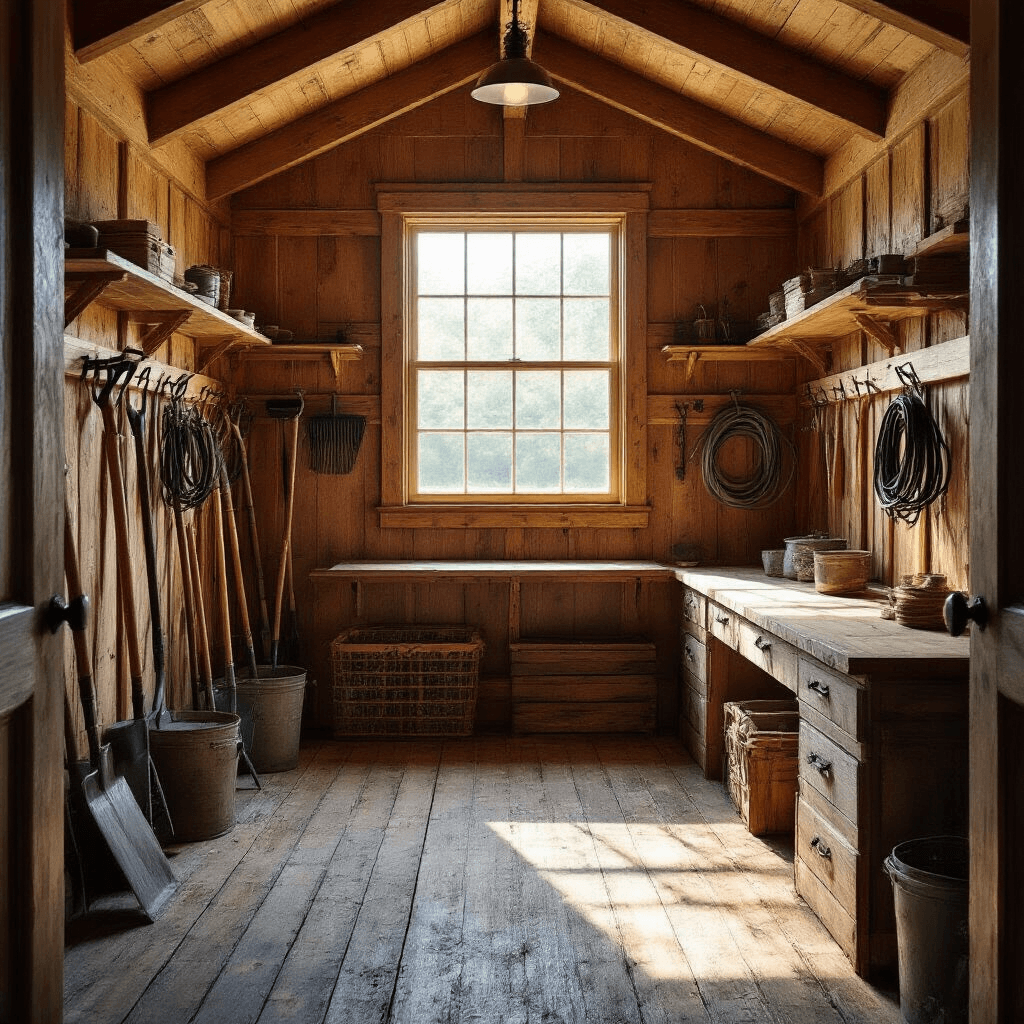
I almost went with a modern flat-roof design because it looked sleek. Then I talked to someone who lives in my area about snow load. Gable roof it was.
Specialized options I’ve seen work brilliantly:
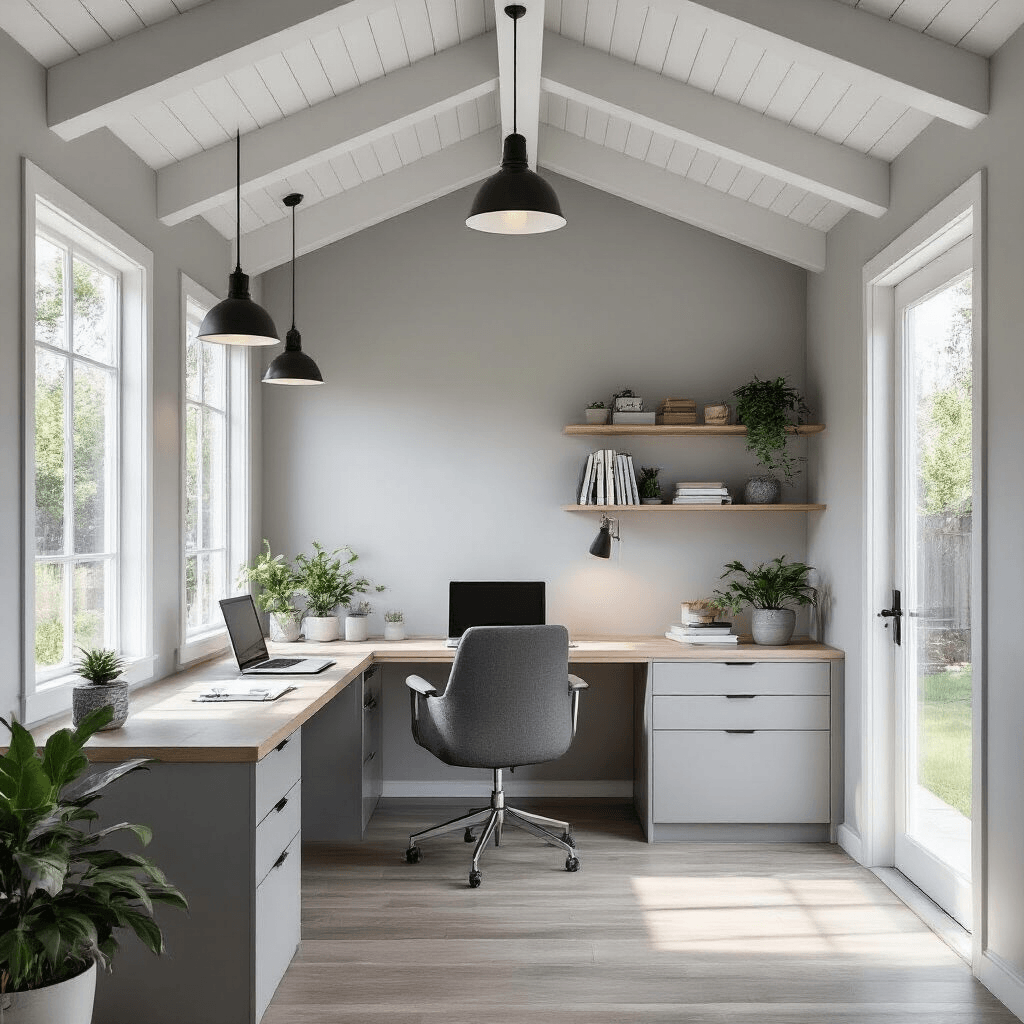
- Office sheds with proper insulation and electrical (hello, remote work)
- Studio sheds for artists, crafters, or anyone needing creative space away from household chaos
- Corner sheds that tuck into unused yard space like puzzle pieces
✎ Steal This Look
- Paint Color: Farrow & Ball French Gray 18
- Furniture: wall-mounted folding workbench with integrated pegboard
- Lighting: industrial gooseneck barn light with motion sensor
- Materials: corrugated metal roofing, cedar shiplap siding, galvanized steel hardware
There’s something deeply satisfying about opening a well-designed shed and feeling the space actually work for you, not against you—it’s the difference between a storage graveyard and a room you genuinely want to step into.
Rectangle vs. Square: The Shape Showdown
This sounds like overthinking until you actually use the shed.
Rectangular sheds give you wall space. You can line up storage shelving units on the long walls and still walk down the middle. They work for most purposes.
Square sheds fit into tight spots better. If your yard space is limited or oddly shaped, a square footprint might be your only option. The trade-off is less wall storage and everything feels a bit more cramped.
I have a rectangular shed now (10×14). The length gives me tool storage on one side and a small workbench on the other. A square shed would have forced me to choose.
Design Tools That Actually Help
Remember when I mentioned watching YouTube videos at 2 AM? Half of them skip the planning phase entirely, which is how people end up rebuilding things.
Software options that don’t require an engineering degree:
Plan7Architect lets you create actual 2D and 3D plans of your shed. You can adjust dimensions, switch between metric and imperial (because sometimes those European shed plans look really good), visualize different roofing materials, and see what your shed looks like before spending a dime.
I’m not getting paid to say this, but being able to see whether metal roofing or asphalt shingles look better on a 3D model saved me from a costly aesthetic mistake.
Many shed suppliers offer online configurators too. You pick your size, style, door placement, window options, and colors. Then you get a price and a visual.
It’s like playing The Sims but for your backyard and with actual consequences.
I
🏠 Steal This Look
- Paint Color: Valspar Cozy White 7006-04
- Furniture: adjustable-height drafting desk with integrated tablet mount for digital sketching
- Lighting: BenQ ScreenBar LED monitor light with dimmable color temperature for late-night planning sessions
- Materials: corkboard wall panels for pinning printouts, matte black powder-coated steel for tool storage, Baltic birch plywood for custom project boards
There’s something deeply satisfying about rotating a virtual shed at midnight, coffee in hand, knowing you won’t discover your door swings into a fence post after the concrete sets.
Keep this one for later
We'll email you the link so you can come back to it.


[…] know it’s tedious, but I learned this lesson after losing an entire container to root rot that carried over from […]