

This post may contain affiliate links. Please see my disclosure policy for details.
The 72×72 Standard (And When It Actually Works)
72 inches wide by 72 inches long is what you’ll find everywhere.
This size fits most standard bathtubs perfectly. Those tubs usually measure 60 inches across, so a 72-inch curtain gives you 6 inches of overlap on each side.
That overlap matters more than you think.

✎ Steal This Look
- Paint Color: Sherwin-Williams Sea Salt SW 6204
- Furniture: a compact teak shower bench that tucks against the tub wall when not in use
- Lighting: a damp-rated brushed nickel flush mount with frosted glass, centered over the tub
- Materials: waffle-weave cotton shower curtain, polished chrome curtain rings, matte porcelain tile surround
Most of us grew up with this size without knowing it, and there’s something reassuring about walking into a rental or starter home and seeing that familiar drape—it just works, until it doesn’t, which is exactly why understanding the math matters before you buy.
Every Shower Curtain Size That Actually Exists
Walk into any store and you’ll see dozens of options. Here’s what actually works:
For Standard Bathtubs:
- 70 x 70 inches – Bare minimum coverage, honestly a bit stingy
- 70 x 72 inches – Slightly better, still cutting it close
- 72 x 72 inches – The goldilocks zone for most people
For Tall Showers:
- 72 x 84 inches – Extra tall, perfect if your ceiling laughs at standard measurements
- 72 x 96 inches – For bathrooms where everything feels oversized
For Wide Spaces:
- 108 x 72 inches – Double-wide for those gorgeous clawfoot tubs
- 144 x 72 inches – When your shower feels more like a small room
For Compact Stalls:
- 54 x 78 inches – Walk-in showers and tight spaces
- 36 x 72 inches – Tiny stalls that barely fit a person
I learned this the hard way after buying three “standard” shower curtains for three different bathrooms. One dragged on the floor. Another left a gap that turned my bathroom into a splash zone. The third? Pure luck – it actually fit.
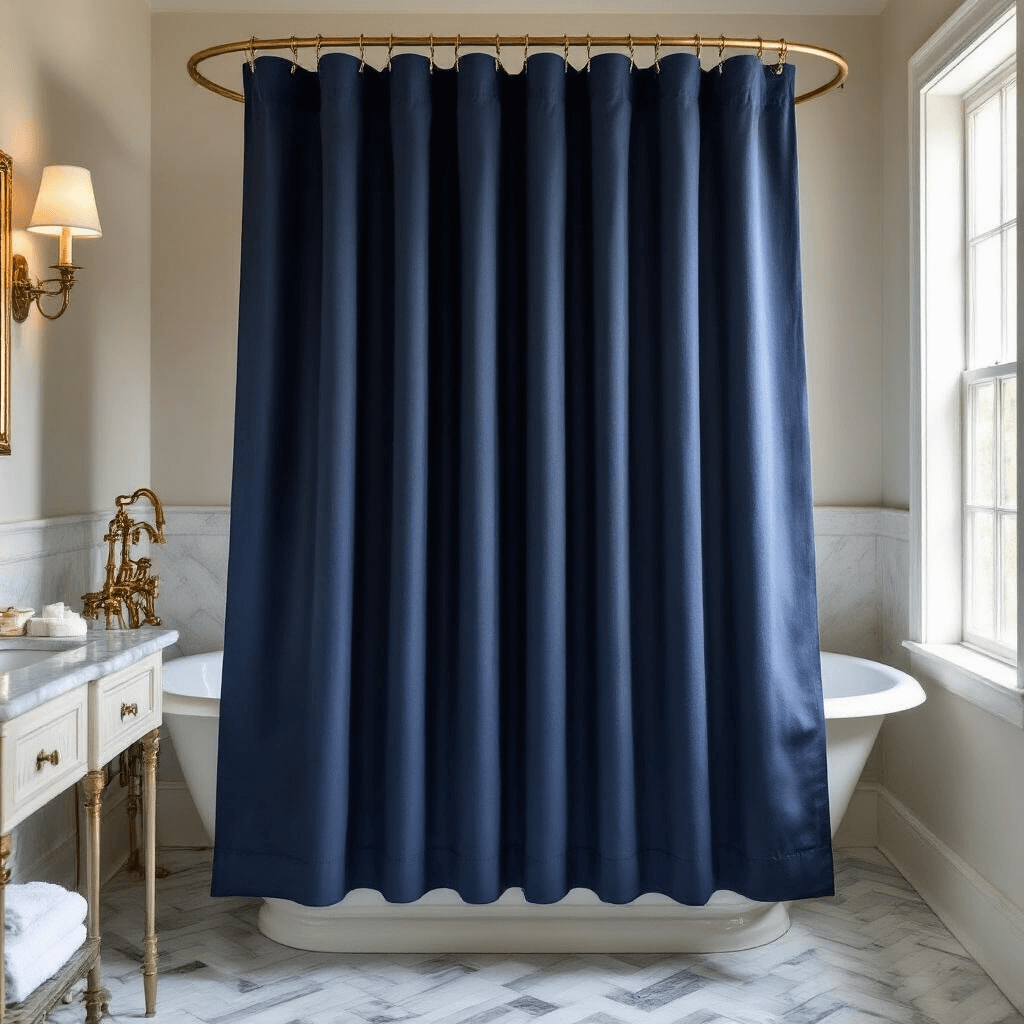
🎨 Steal This Look
- Paint Color: Benjamin Moore Chantilly Lace OC-65
- Furniture: vintage-style brass clawfoot tub with white porcelain interior
- Lighting: schoolhouse glass globe pendant with aged brass hardware
- Materials: matte white subway tile, honed marble threshold, brushed nickel curtain rings, heavyweight cotton duck fabric
I learned this the hard way after buying three ‘standard’ curtains that all hung like sad café curtains in my 1920s bathroom with its unexpectedly tall ceiling.
How to Measure Your Space (Without Screwing It Up)
Grab a measuring tape and let’s do this properly.
For Width:
Start at one wall where your curtain rod sits. Measure straight across to the other wall. Add 12 inches to that number.
Why the extra foot? Your curtain needs to fold and bunch when you move it. A curtain pulled tight across looks terrible and doesn’t keep water in.
For Height:
Measure from where your shower rod hangs down to the tub floor. Subtract 1-3 inches from that measurement.
Your curtain should hover just above the tub bottom. Too long and you’re growing a science experiment. Too short and water escapes like it’s making a prison break.
For Shower Rods:
The standard installation height sits at 75-77 inches from the floor.
This gives you enough clearance for a 72-inch curtain plus shower curtain rings without the bottom dragging.
I once installed a rod at 80 inches because it “looked better.” Spoiler alert: my standard curtain looked like high-water pants.
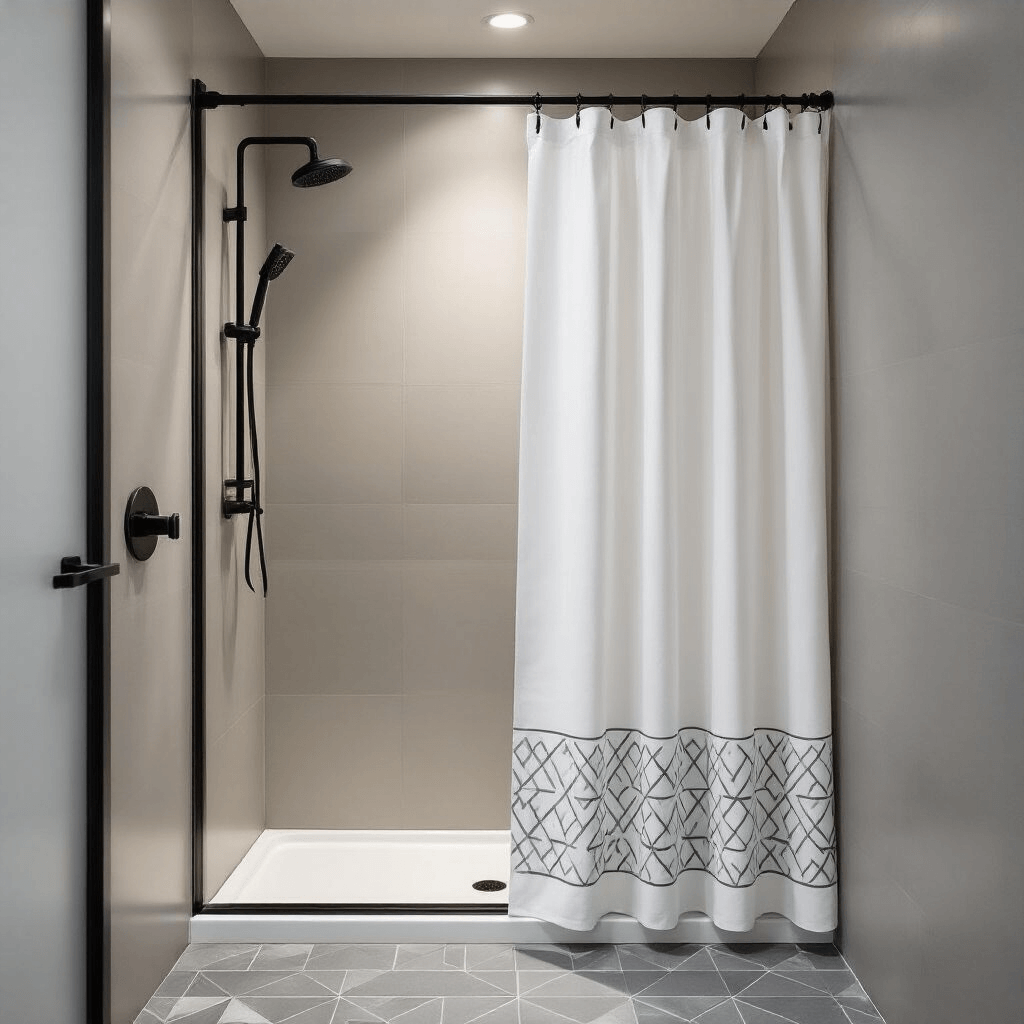
🖼 Steal This Look
- Paint Color: Farrow & Ball Strong White 2001
- Furniture: teak shower bench with slatted seat for towel staging and shaving
- Lighting: IP44-rated brass wall sconce with frosted glass shade, mounted on mirror side
- Materials: matte ceramic subway tile, brushed brass hardware, cotton waffle weave textiles, sealed marble threshold
I’ve watched too many homeowners rush this step with a flimsy cloth tape measure that sags in the middle—your bathroom deserves the rigid metal kind that clicks and locks.
When to Break the Rules
Go Taller If:
- Your ceilings make you feel like you’re in a cathedral
- You’ve got a rainfall showerhead that sprays everywhere
- Your shower/tub combo sits lower than standard
- You’re tired of water sneaking out the bottom
Go Wider If:
- You have a clawfoot tub that shows off its curves
- Your shower stretches longer than 60 inches
- You want a luxurious wrap-around look
- Multiple people use the shower and need privacy from all angles
Go Smaller If:
- You’re dealing with a standalone stall
- Your bathroom was designed for efficiency (read: tiny)
- You have a corner shower with a curved rod
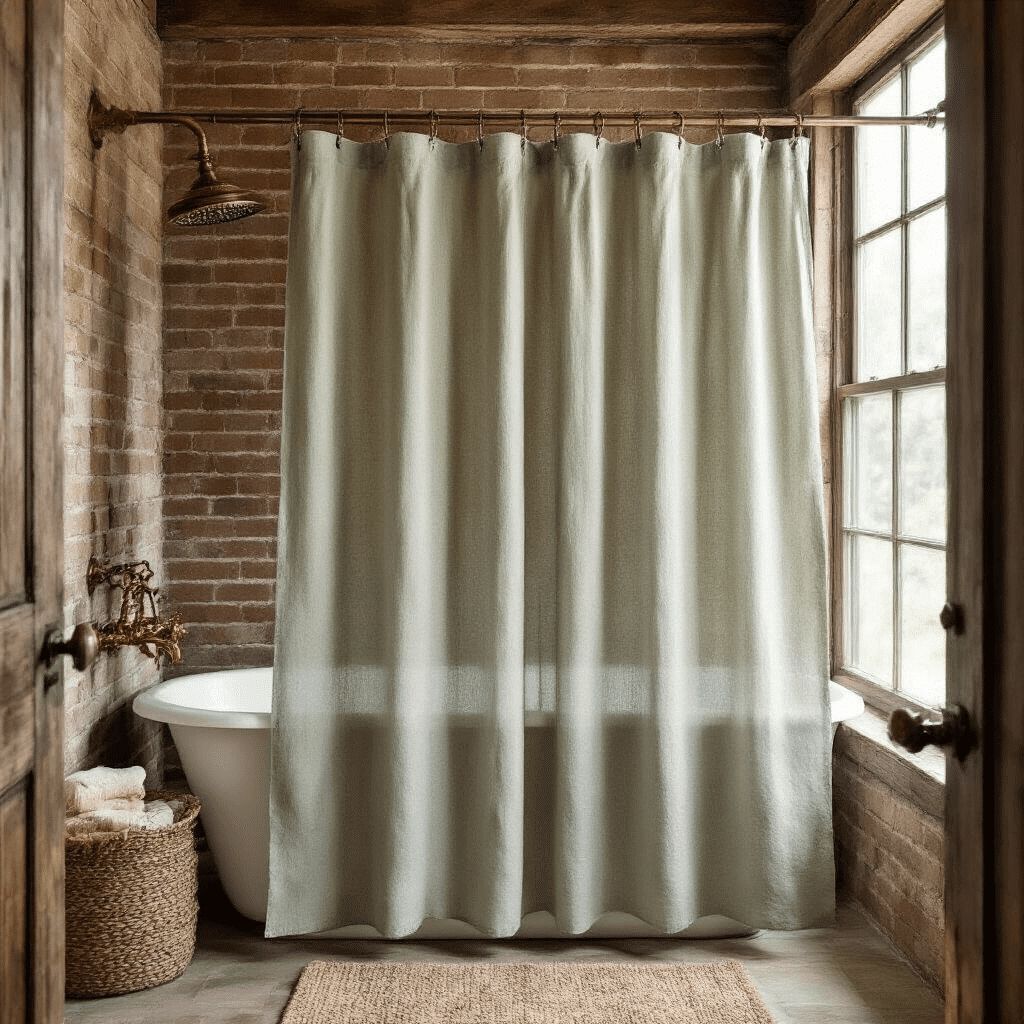
✎ Steal This Look
- Paint Color: Behr Ultra Pure White PPU18-06
- Furniture: teak shower bench with slatted design
- Lighting: moisture-rated brushed nickel flush mount with frosted glass
- Materials: pebble stone shower floor, linen-textured polyester curtain, matte black metal hardware
There’s something deeply satisfying about walking into a shower that feels custom-fitted to your space rather than settling for the one-size-fits-all approach—it’s the difference between a bathroom that functions and one that genuinely feels like yours.
Save this article
Enter your email and we'll send it straight to your inbox.
The Liner Situation Nobody Talks About
Your decorative curtain? That’s just for show.
The real MVP is the liner that actually keeps water contained.
Most shower curtain liners also come in 72×72, but here’s my trick:
Match your liner size to your curtain size.
Sounds obvious, right? You’d be shocked how many people buy a 72×84 decorative curtain and pair it with a standard 72×72 liner.
The liner does the actual work. Make sure it’s long enough and wide enough to do its job.
What I Wish Someone Told Me Earlier
Fabric matters as much as size.
I bought the perfect-sized curtain once – exact measurements, proper length, gorgeous pattern.
It was so thin that water basically laughed and went right through.
Heavy-duty polyester or thick fabric curtains work better than flimsy materials. Weighted hems keep curtains in place instead of billowing around.
Curved rods change everything.
A curved rod adds 6-7 inches of shower space without renovating your bathroom. But now you need to account for that curve when measuring.
Measure the actual arc length, not just wall to wall.
Two curtains beat one fancy curtain.
Decorative outer curtain for style. Waterproof inner liner for function.
This combo lasts longer and looks better than trying to find one curtain that does both jobs.
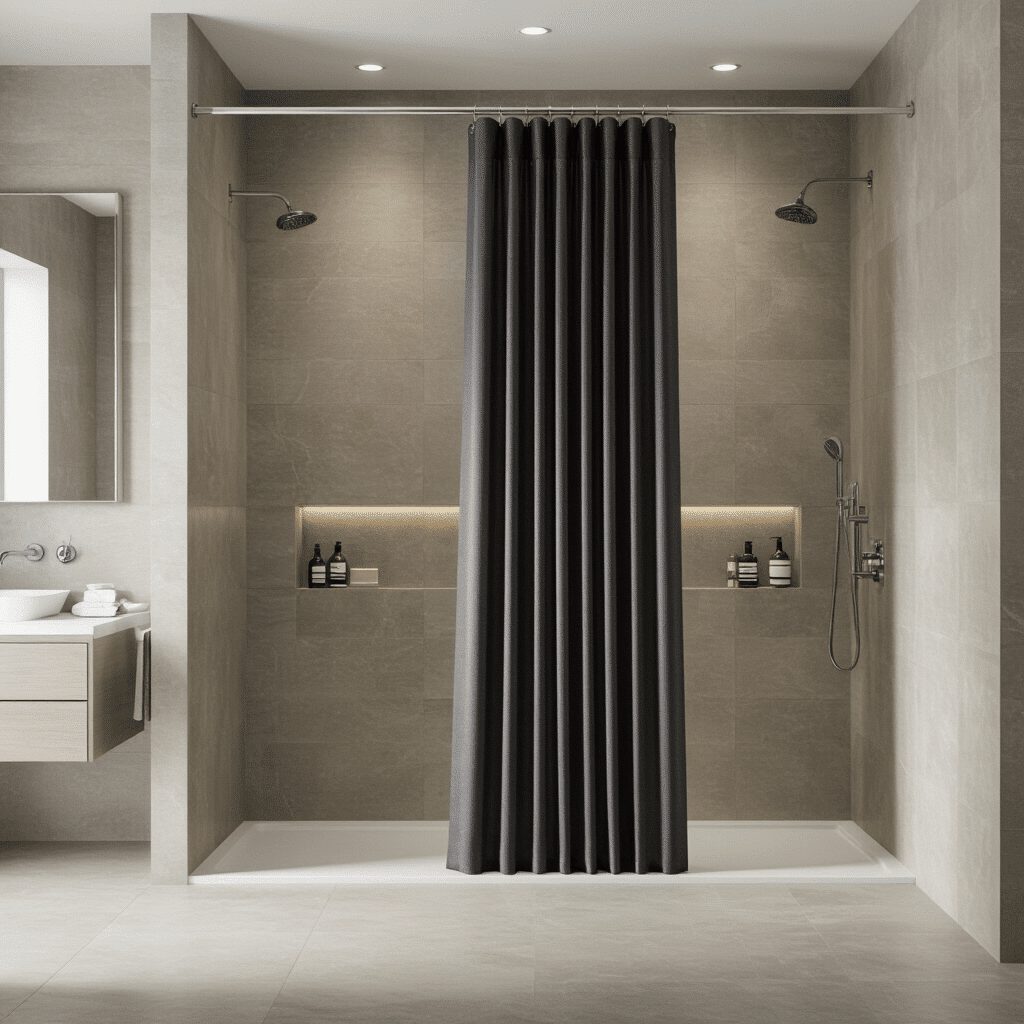
🎨 Steal This Look
- Paint Color: PPG Delicate White PPG1001-1
- Furniture: teak shower bench with slatted design
- Lighting: brushed nickel damp-rated flush mount with frosted glass
- Materials: heavy-duty 100% polyester with weighted bottom hem, rust-resistant metal grommets, mildew-resistant PEVA liner
I learned this the hard way after three soggy bathroom floors and one curtain that looked like a wet tissue—now I always tell friends to invest in the liner-curtain combo from day one, even if it feels like overkill.
The Installation Height Sweet Spot
Mount your rod at 75-77 inches from the floor for standard setups.
This gives you:
- Enough room for curtain rings (they add 2-3 inches)
- Proper clearance above
Keep this one for later
We'll email you the link so you can come back to it.


[…] Most living rooms feel about as welcoming as a dentist’s waiting room. Here’s what’s probably going wrong: […]