

This post may contain affiliate links. Please see my disclosure policy for details.
Sunroom Design Ideas That’ll Make You Never Want to Leave (And I’m Not Even Exaggerating)
Sunroom design ideas can transform that awkward glass-enclosed space into the room you actually want to spend time in—not just the place where your forgotten plants go to die.
I’ll be honest with you. When I first started thinking about sunroom designs, I was overwhelmed by all the possibilities. Should it be a cozy reading nook? A dining area? Just another room filled with stuff I don’t need?
But here’s what I’ve learned after diving deep into this: your sunroom has the potential to be the most versatile, mood-boosting space in your entire home.
Let me walk you through the design ideas that actually work.
Why Your Sunroom Probably Isn’t Living Up to Its Potential
Most sunrooms fall into one of two categories: They’re either freezing cold storage areas for outdoor furniture, or they’re sweltering hotboxes you avoid from May through September.
Sound familiar?
The good news is that with the right design approach, you can fix both problems while creating a space that feels intentional, comfortable, and genuinely useful.
The Foundation: Choosing Your Sunroom’s Personality
Before you buy a single throw pillow, you need to decide what vibe you’re going for.
And no, “nice” isn’t specific enough.
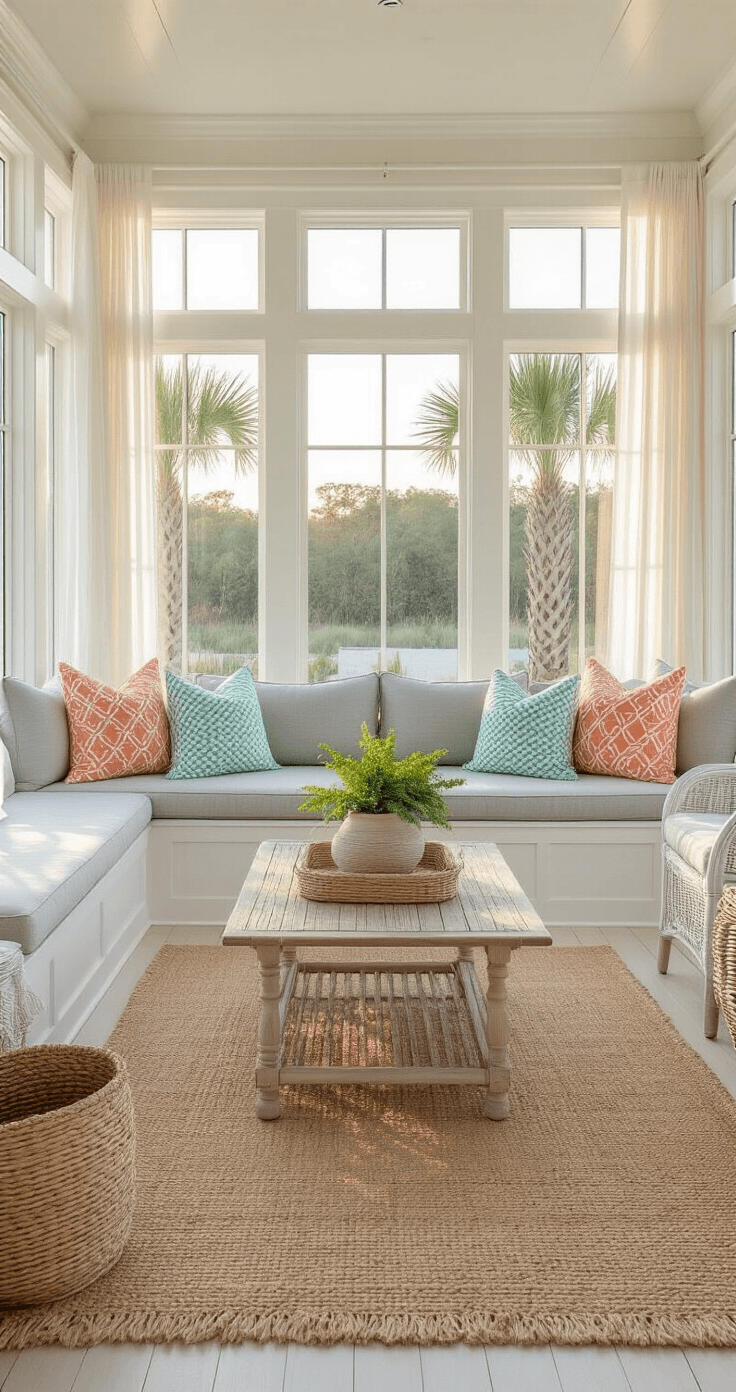
Beach Style (For When You Want Vacation Vibes Year-Round)
I’m obsessed with beach-style sunrooms because they nail the whole “relaxed but pulled together” thing.
Here’s the formula:
- Soft whites and light grays as your base colors
- Built-in window seats (trust me on this one)
- Gray cushions with patterned pillows for visual interest
- Natural textures like woven storage baskets and jute area rugs
The beauty of beach style is that it doesn’t require you to live anywhere near actual water. You’re just borrowing the calm, airy feeling that makes coastal homes so appealing.
Pro tip: Skip the obvious seashell decor unless you want your sunroom to look like a tourist trap gift shop.
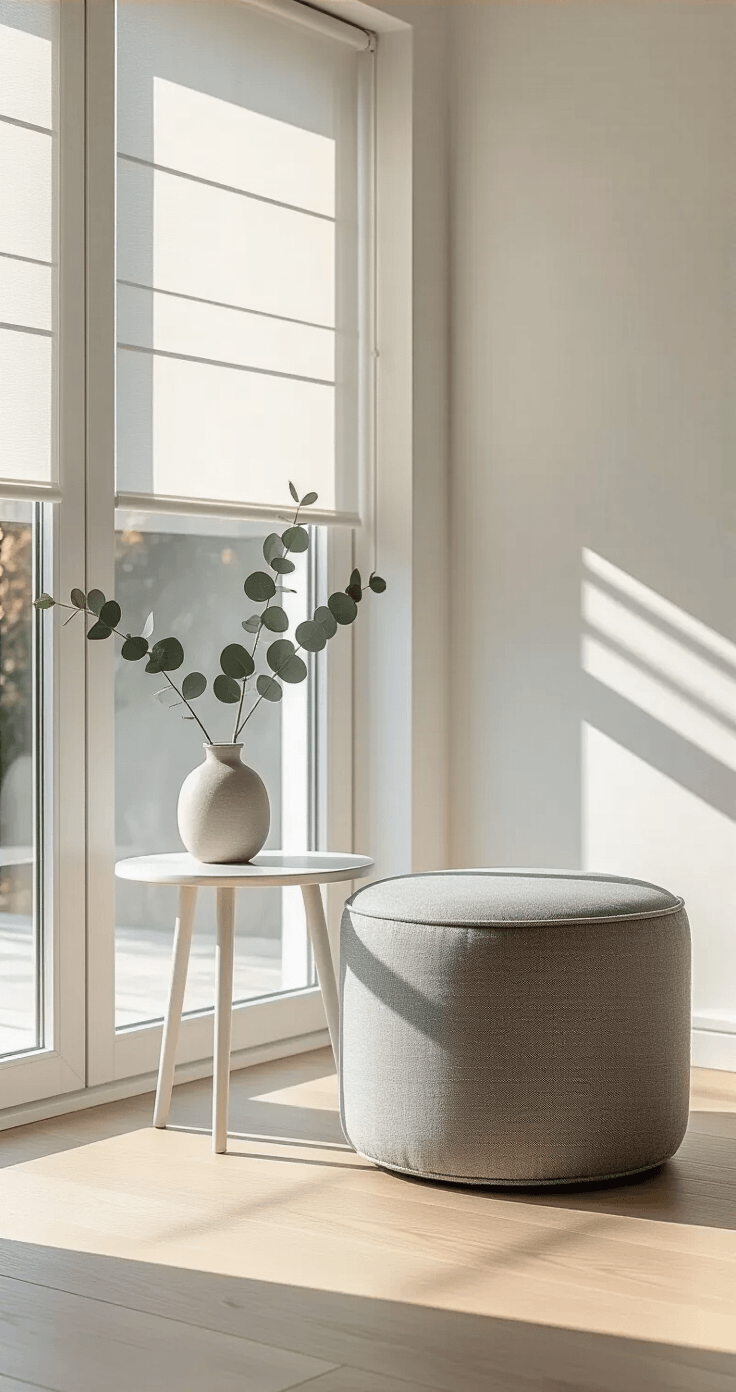
If you’re working with a smaller sunroom, Scandinavian design is your best friend.
The whole philosophy centers on light, functionality, and not cluttering up your space with unnecessary stuff.
Key elements:
Save this article
Enter your email and we'll send it straight to your inbox.
- White walls with gray or beige accents
- Minimal, multifunctional furniture
- Movable storage ottomans that serve as both seating and organization
- Simple tables that don’t overwhelm the space
- Lots of natural light (which your sunroom already has)
I love this approach because it works regardless of your sunroom’s size. A Scandinavian-style sunroom feels spacious even when it’s technically tiny.
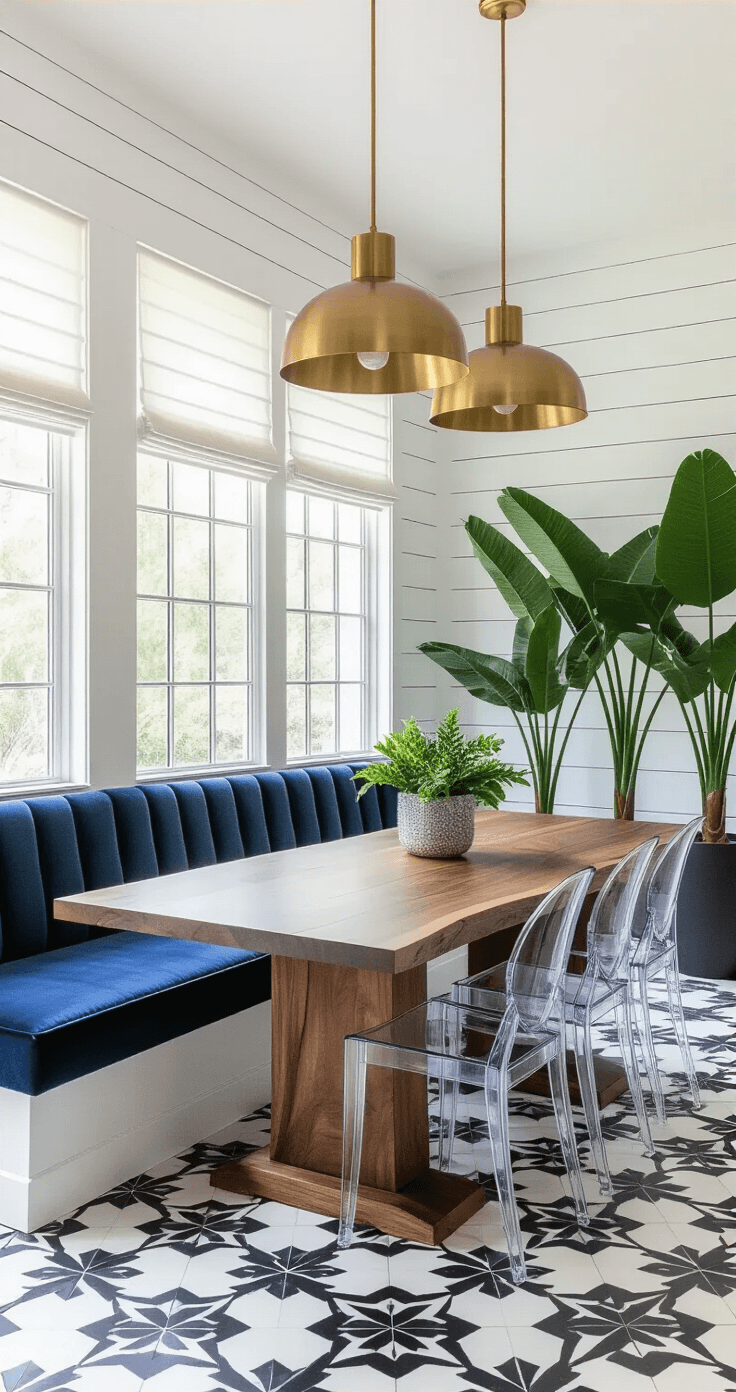
Modern and Contemporary (For Bold Choices and Clean Lines)
This is where you can have some real fun.
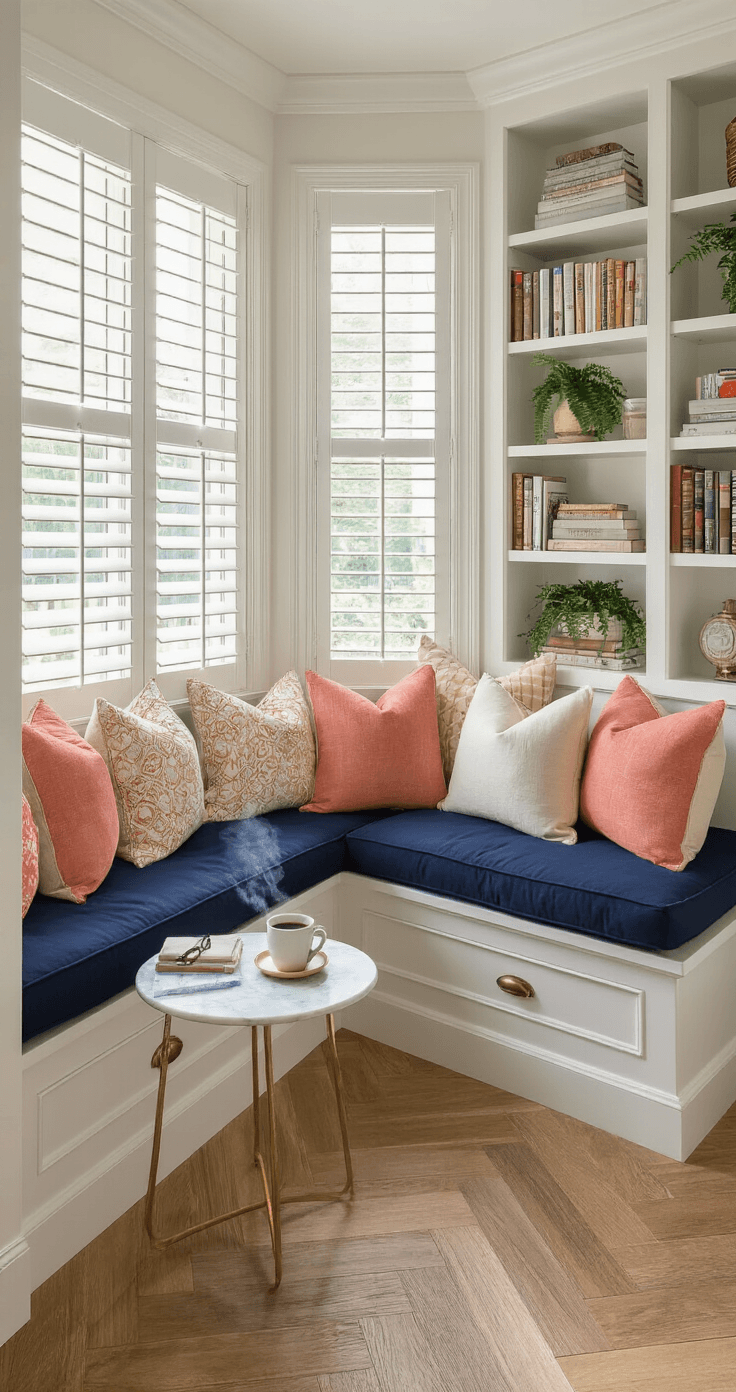
Modern sunrooms aren’t afraid of color or contrast. Think dark blue sofas against white walls, or bold geometric patterns on accent throw pillows.
What makes modern design work:
- Clean architectural lines
- One or two bold focal points (not seven)
- Contrasting floor tiles or patterns
- Statement lighting fixtures
- Furniture with interesting shapes but practical proportions
The trick is restraint. Pick your bold moments carefully instead of turning everything up to eleven.
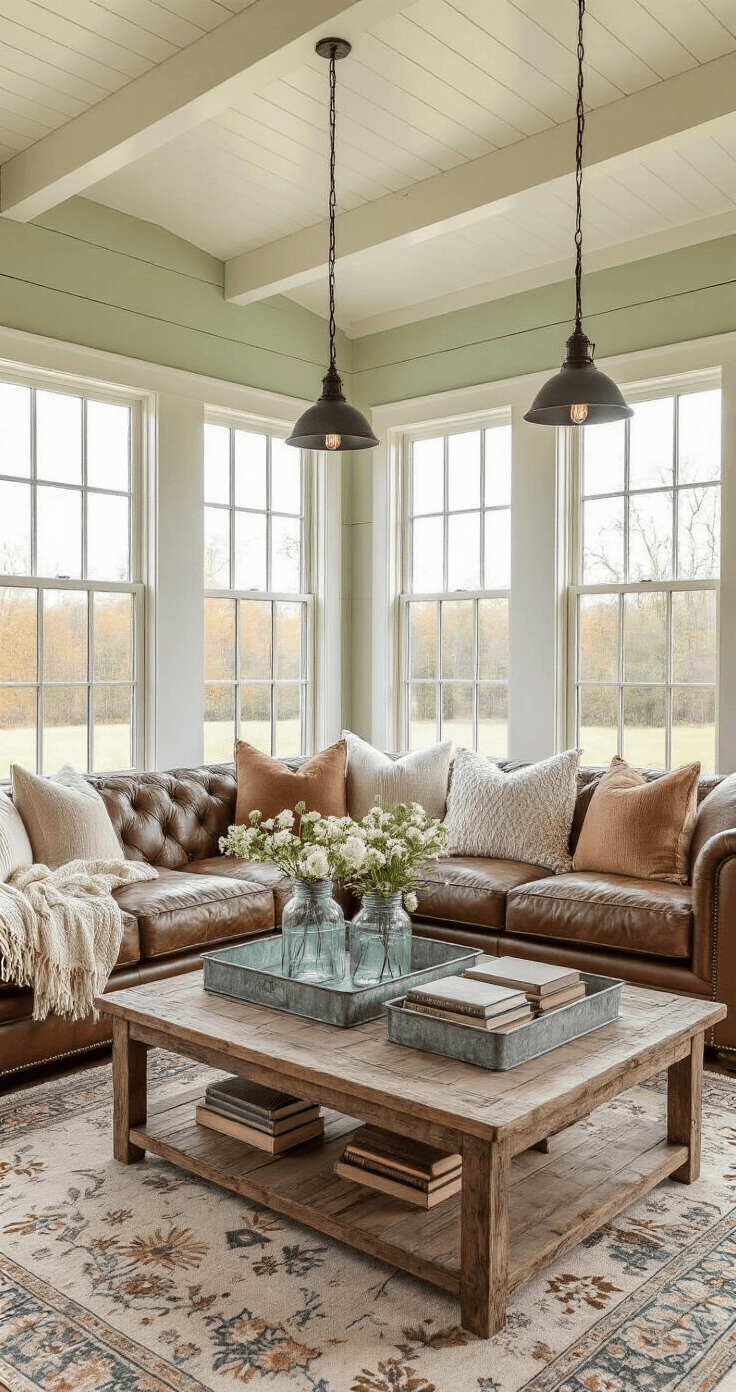
Farmhouse Style (Cozy Without the Pinterest Overload)
Look, I know farmhouse style has been everywhere for the past decade. But there’s a reason it works so well in sunrooms.
The winning combination:
- Natural wood tones (but not everything has to be reclaimed barn wood)
- Shiplap walls if you’re into that (I won’t judge)
- Vintage-inspired light fixtures
- Neutral base with warm accent colors
- Textures like linen, cotton, and weathered wood
The key to farmhouse style that doesn’t feel overdone is mixing in contemporary elements. Pair that rustic wood table with modern chairs. Balance the shiplap with sleek light fixtures.
Color Strategies That Actually Make Your Sunroom Look Better
Here’s something nobody tells you about sunrooms: the wrong colors can make them feel like fishbowls.
For making small sunrooms feel larger: Stick with soft, light colors as your foundation. Beige, warm whites, light grays, and soft taupes create an airy feeling that doesn’t close in on you.
For adding personality without chaos: Use accent colors strategically through pillows, throws, artwork, and small furniture pieces. Don’t paint every wall a different color like you’re decorating a preschool classroom.
For creating calm spaces: Beige tones work wonders. I know beige gets a bad rap as boring, but a well-executed beige palette feels sophisticated and restful.
For dramatic flair: Dark colors can actually work in sunrooms with tons of natural light. A deep navy accent wall or dark gray furniture creates striking contrast without making the space feel cave-like.
<img
Keep this one for later
We'll email you the link so you can come back to it.


[…] Pair the textiles with neutral furniture so the room still feels balanced and bright. This idea adds personality while keeping the sunroom cozy and […]