

This post may contain affiliate links. Please see my disclosure policy for details.
How to Keep Your Pine Trees Thriving Through Winter’s Worst
Contents
Keeping pine trees healthy during winter starts with one thing most people get completely wrong: watering.
I know what you’re thinking. Water during winter? That sounds backwards, right?
Here’s the thing—your pine trees don’t actually go dormant like you’d expect. Those needles keep losing moisture all winter long, even when it’s freezing outside. And when the ground turns into concrete, the roots can’t pull up water to replace what’s lost.
That’s when things go sideways.
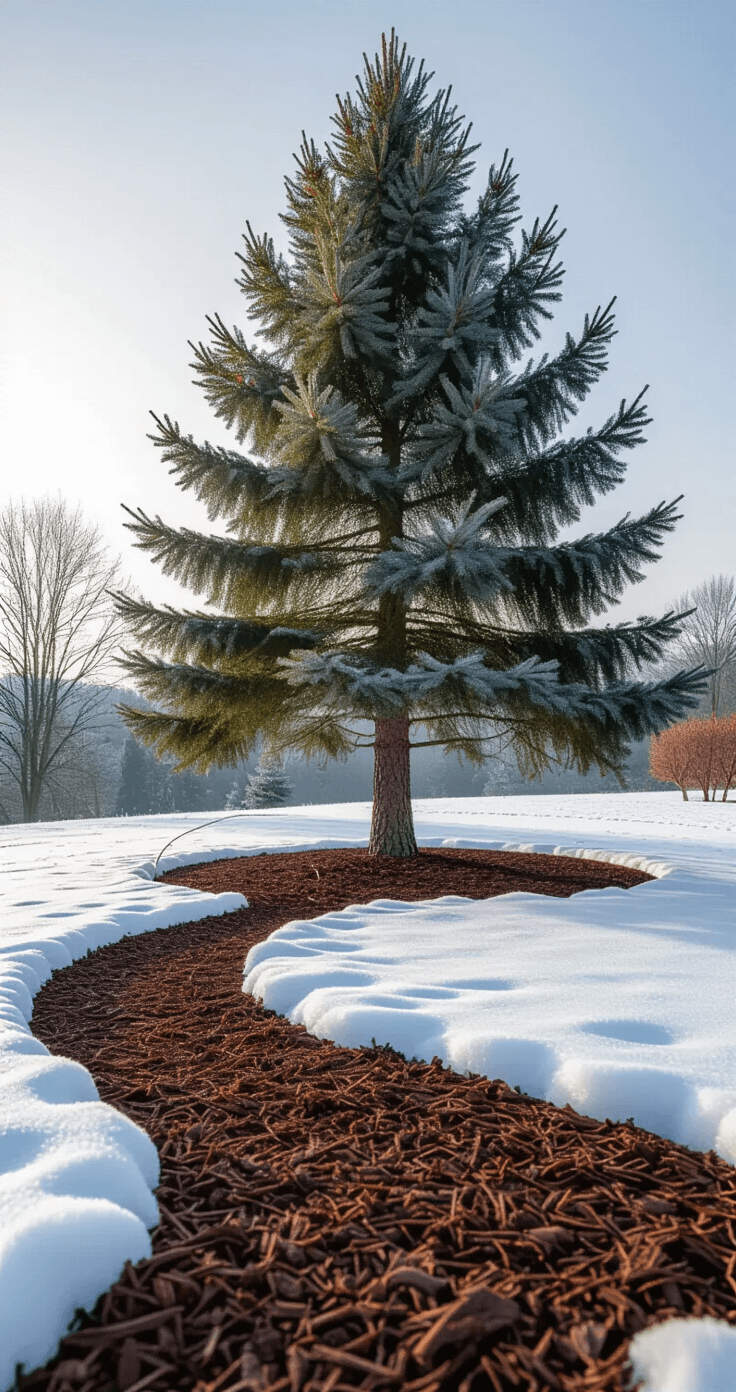
Why Your Pine Trees Struggle in Winter (And What Actually Kills Them)
Let me be straight with you. Winter doesn’t kill pine trees because it’s cold. They’re built for that.
What destroys them is desiccation—basically, they dry out and die of thirst while standing in frozen ground.
The needles keep transpiring (fancy word for breathing out moisture) all season. Meanwhile, frozen soil blocks the roots from accessing water. It’s like being stranded in a desert while standing next to a frozen lake.
The worst part? You won’t see the damage until spring rolls around and half your tree looks like it went through a bonfire.
Here’s what you’re up against:
- Winter burn: Brown, crispy needles on the south and west sides where sun and wind hit hardest
- Frost cracks: Trunk splits from wild temperature swings
- Branch breakage: Heavy snow and ice snapping limbs
- Salt damage: Road salt creeping into the root zone and poisoning your tree
- Rodent damage: Hungry critters gnawing bark when food gets scarce
The Three Non-Negotiable Winter Care Steps
Water Like Your Tree’s Life Depends On It (Because It Does)
This is the hill I’ll die on. Watering is the single most important thing you can do for pine trees in winter.
I water mine any day the temperature climbs above 40°F and the ground isn’t frozen solid.
Here’s my routine:
- Fall prep: Deep soak before the first hard freeze—I’m talking a good 2-3 hours with a soaker hose running
- Winter watering: Check soil moisture every couple weeks when temps are decent
- Pre-freeze watering: If a hard freeze is coming tonight, water thoroughly during the day
- Young trees: These need water once or twice weekly during fall until the ground freezes—they’re still establishing roots and can’t afford to get stressed
The goal is keeping that soil consistently moist but not waterlogged. Stick your finger in the soil near the drip line (where the branches end). If it’s dry two inches down, it’s time to water.
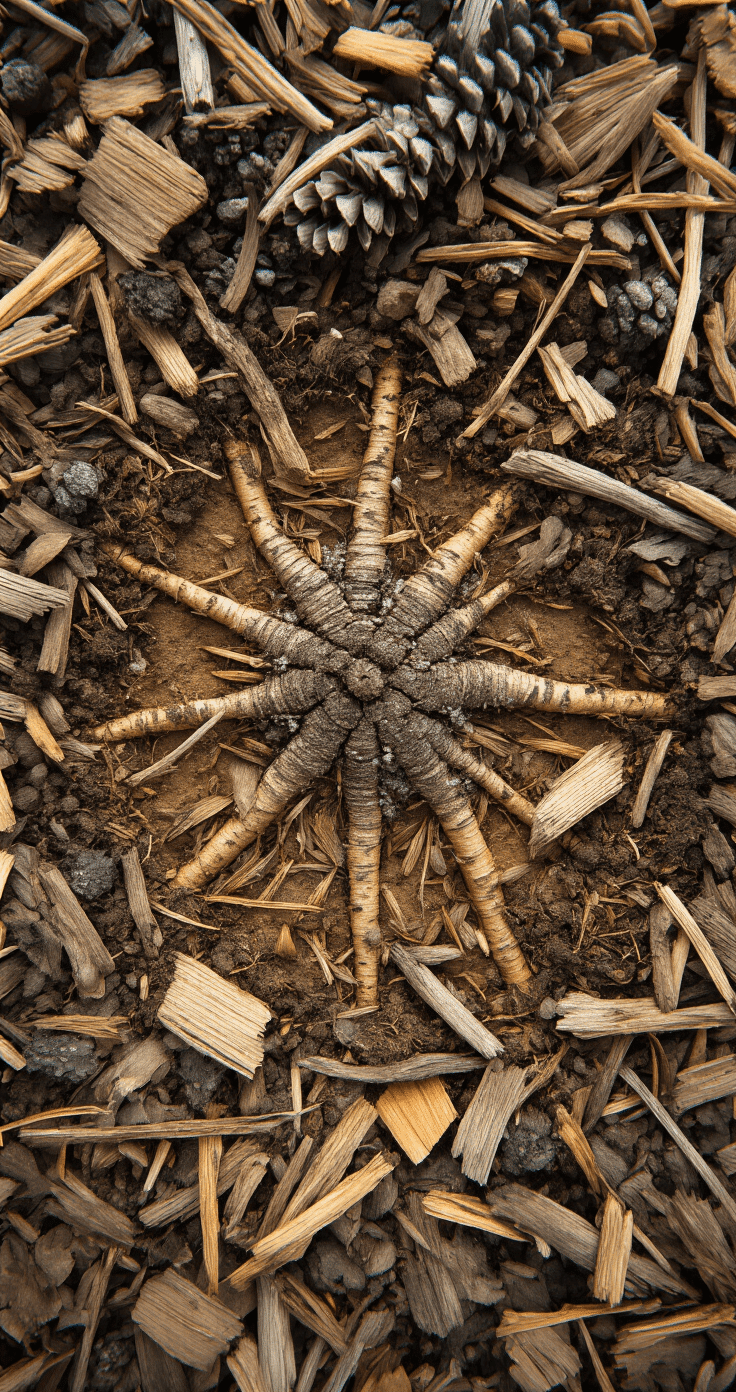
Mulch: Your Tree’s Winter Blanket
I spread organic mulch around my pines every fall like I’m tucking them in for a long sleep.
Here’s the setup:
- 3-4 inches thick around the base
- Extend it to the drip line if you can
- Keep it 4-6 inches away from the trunk itself (bark needs air, not constant moisture)
- Use wood chips, shredded leaves, pine needles, or straw
What this does:
- Insulates soil so it doesn’t freeze as deep
- Traps moisture so you don’t have to water as often
- Moderates soil temperature swings
- Breaks down over time and feeds the soil
I’ve seen the difference myself. Trees with proper mulch show way less winter burn than exposed ones, even in the same yard.
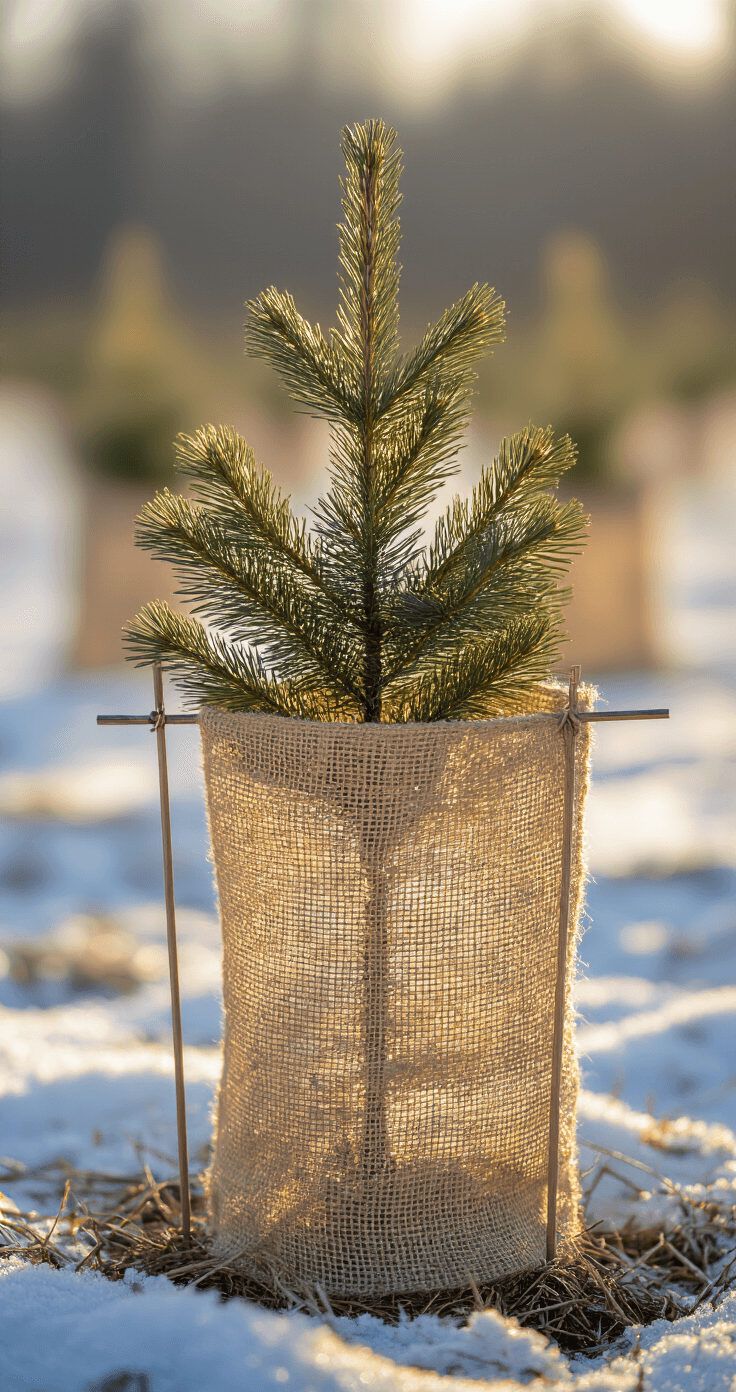
Wrap and Protect: Your Defense Against the Elements
Not every pine needs wrapping, but young trees and newly planted specimens absolutely do.
For the trunk, I use tree wrap tape:
- Start at the bottom and spiral up
- Overlap each layer by about a third
- Cover the trunk up to the first branches
- Remove it in spring once frost danger passes
This prevents sunscald—those nasty cracks that happen when winter sun heats up bark during the day, then temperatures plummet at night.
For windbreak protection, here’s what works:
Set up a burlap screen on the side where wind hits hardest (usually south or west). Drive stakes in a triangle or square around younger trees. Wrap burlap around the stakes—not directly on the branches. Leave the top open so light gets in and air circulates.
I learned this the hard way. Wrapping burlap directly on branches traps moisture and invites disease. The stake method creates a windbreak while letting the tree breathe.
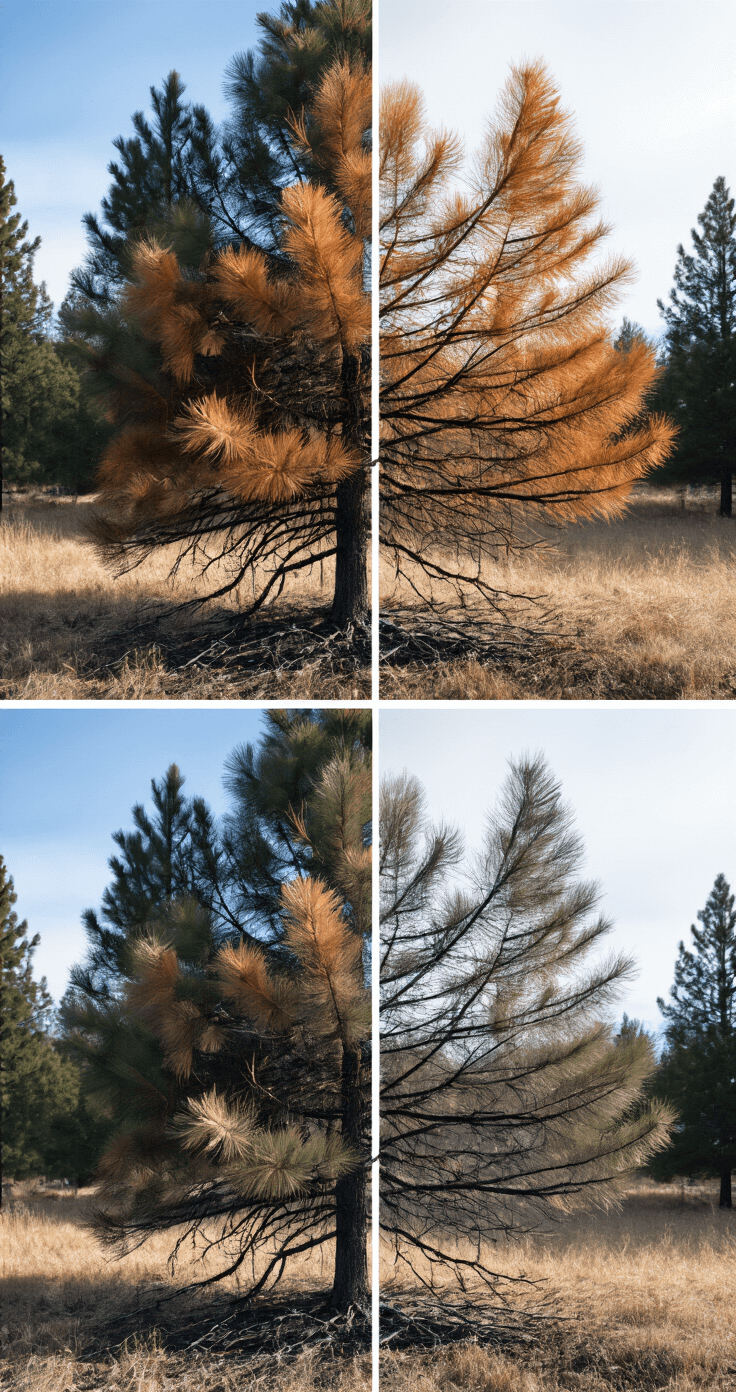
Stopping Winter Burn Before It Starts
Winter burn looks like someone took a blowtorch to one side of your tree. Brown, dead needles clustered on the sunny, windy side.
Why it happens: Your tree loses water through its needles faster than frozen roots can replace it.
How to prevent it:
Plant smart from the start
- Avoid south and southwest exposures next to buildings
- Don’t plant in wind tunnels between structures
- Choose sheltered spots when possible
Use anti-desiccant sprays
These create a waxy coating on needles that slows water loss. Apply them in late fall and again in late winter during a warm spell. Follow the label directions exactly—timing matters.
Create physical barriers
That burlap windbreak I mentioned earlier? It’s your best defense against winter burn.
Keep salt away
Road salt and ice melt products are poison to pines. Keep them at least 15 feet from any pine tree. Use sand or kitty litter for traction on walkways near trees instead.






[…] Classic Wizarding Route Traditional green tree with antique gold ornaments keeps things elegant. Perfect if you share your space with someone who thinks themed trees are “too […]