This post may contain affiliate links. Please see my disclosure policy for details.
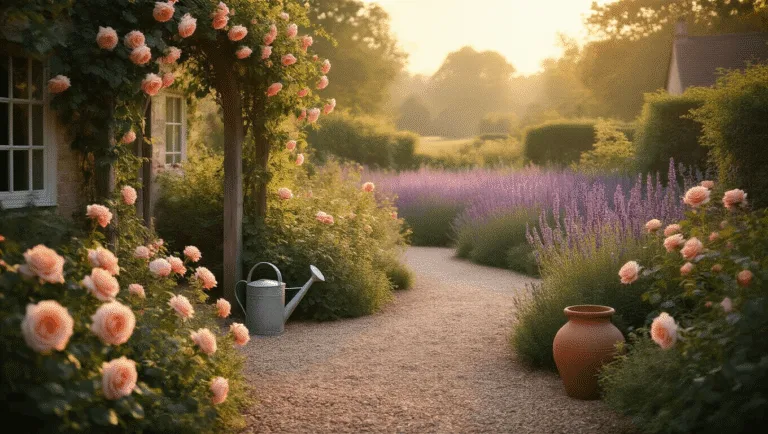
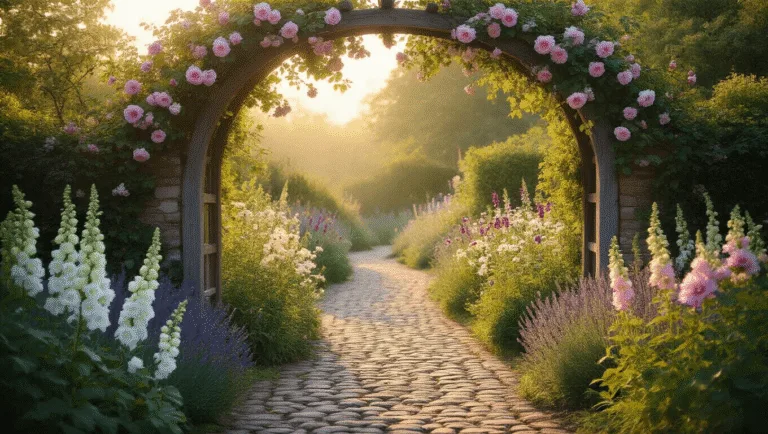
Hey there, fellow garden enthusiasts! Ready to transform your outdoor space into a dreamy, romantic paradise? Cottage garden borders are your ultimate ticket to a landscape that looks like it’s straight out of a fairytale.

What Makes Cottage Garden Borders So Magical?
Imagine a garden that’s bursting with life, color, and a touch of wild abandonment. That’s the essence of cottage garden borders – where plants dance together, spill over pathways, and create a living, breathing masterpiece.
Front of the Border: Your Garden’s Welcome Mat
Let’s start with the stars of your border’s front line:
- Hardy Geraniums: These little champs are like nature’s ground cover superstars
- Pinks (Dianthus): Bringing that dreamy clove scent and compact cuteness
- Rock Rose: Bright flowers that’ll make your border pop
- Sea Holly: Adding some texture and unique color vibes
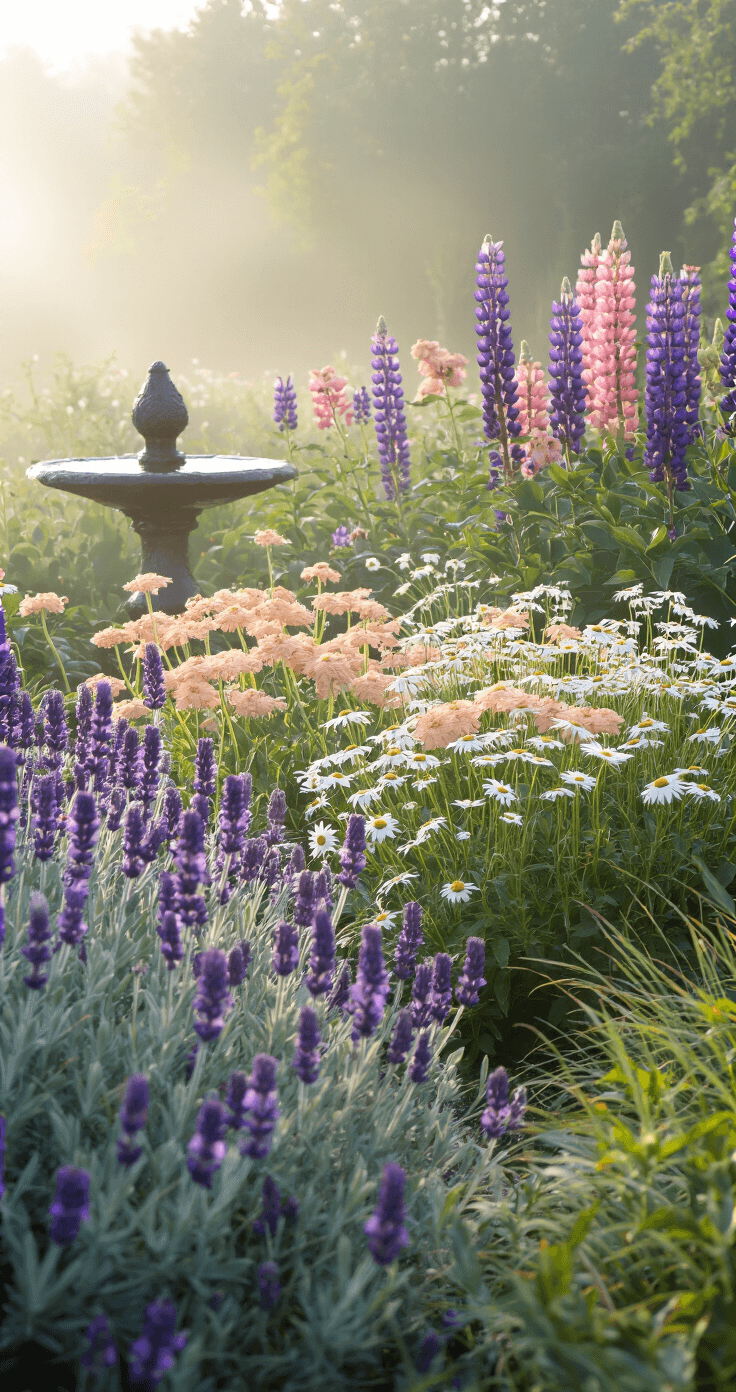
💡 Steal This Look
- Paint Color: Sherwin-Williams Garden Sage SW 6167
- Furniture: weathered teak garden bench with curved backrest positioned at border edge
- Lighting: solar-powered vintage-style shepherd’s hook lanterns with amber glass
- Materials: crushed limestone edging, aged terracotta pots, untreated cedar mulch, wrought iron plant markers
There’s something deeply satisfying about that first glimpse of your garden from the street—this narrow strip of earth is where you set the tone for everything beyond, and I’ve found guests always pause here before they even reach the door.
Middle of the Border: The Color Symphony
Time to bring in some mid-height drama:
- Phlox: Pastel blooms that smell like honey and attract pollinators
- Yarrow: The low-maintenance superstar that thrives anywhere
- Lavender: Because who doesn’t love a plant that looks and smells amazing?
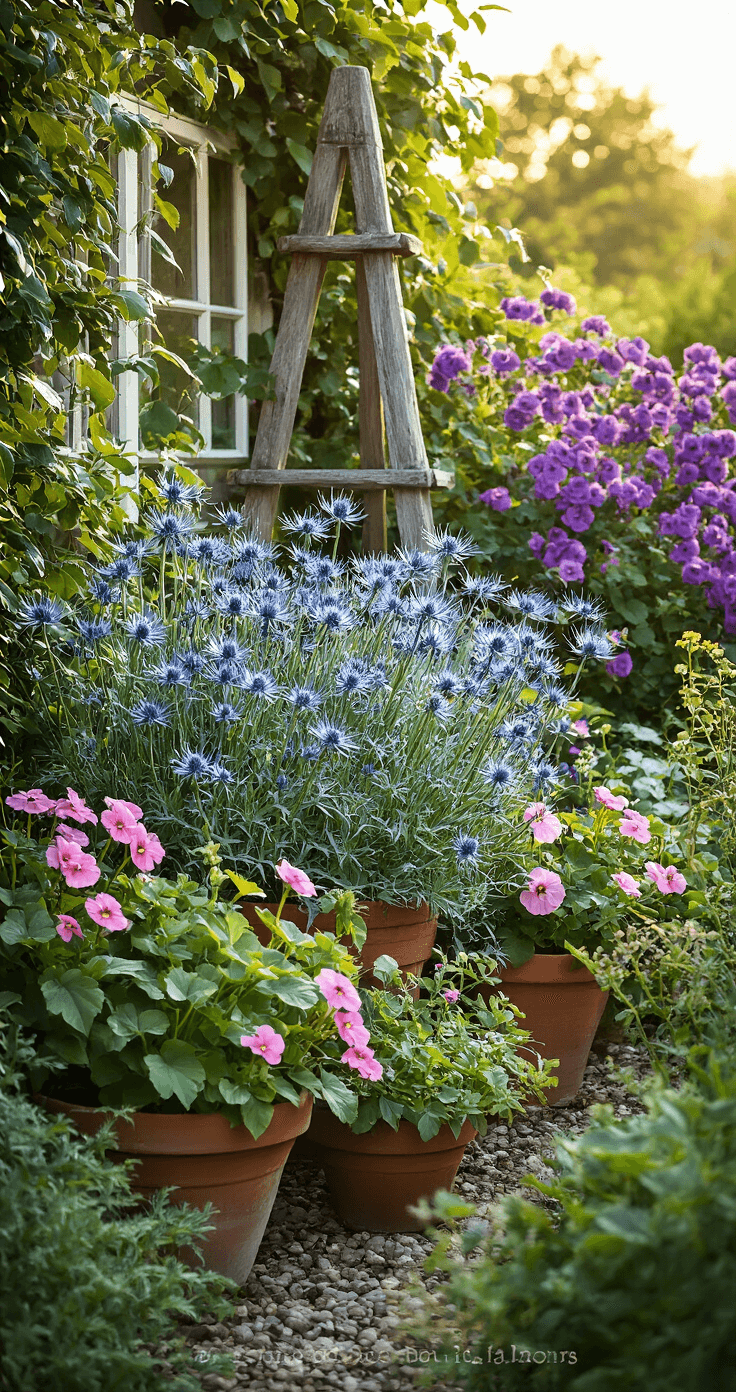
🌟 Steal This Look
- Paint Color: Benjamin Moore Soft Fern 2144-40
- Furniture: a weathered teak potting bench with zinc top for arranging cuttings
- Lighting: solar-powered vintage-style shepherd’s hook path lights with amber glass
- Materials: crushed limestone gravel paths, aged terracotta pots, woven willow plant supports, hand-forged iron plant markers
This is where your garden starts to feel like a living thing rather than a display—I’ve watched borders transform when gardeners stop worrying about color wheels and instead plant what they love to smell brushing past on summer evenings.
Back of the Border: Dramatic Height and Structure
Let’s talk about the backbone of your cottage garden:
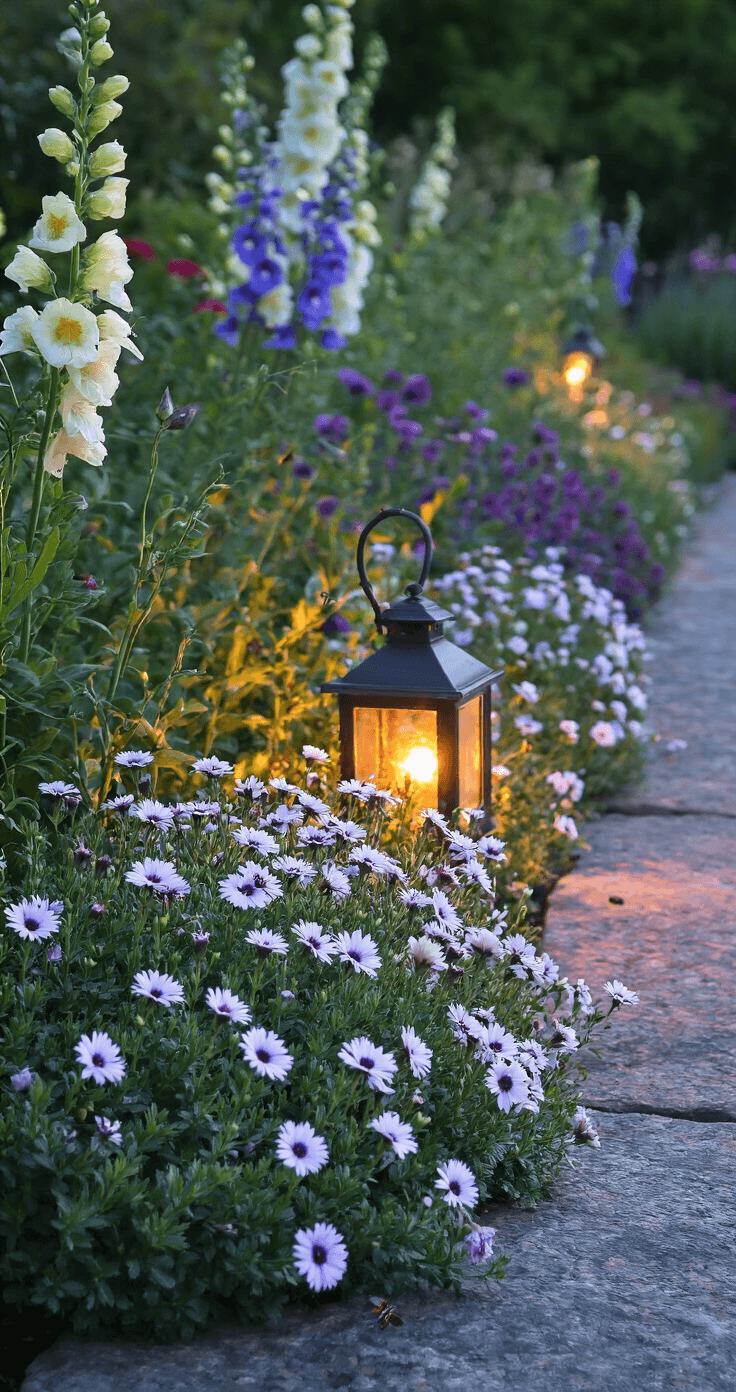
- Delphiniums: Tall, dramatic spires in dreamy colors
- Lupins: Those vibrant, pea-like flower clusters
- Butterfly Bush: Attracting pollinators and adding a wild touch
- Roses: The absolute heart and soul of any cottage garden
Save this article
Enter your email and we'll send it straight to your inbox.
Pro Design Tips for Killer Cottage Borders
Planting Principles That Work Magic
- Group Planting: Forget rigid lines. Think soft, natural clusters
- Layering: Tall plants in back, medium in middle, short in front
- Color Play: Soft blues, pinks, whites, and purples are your friends
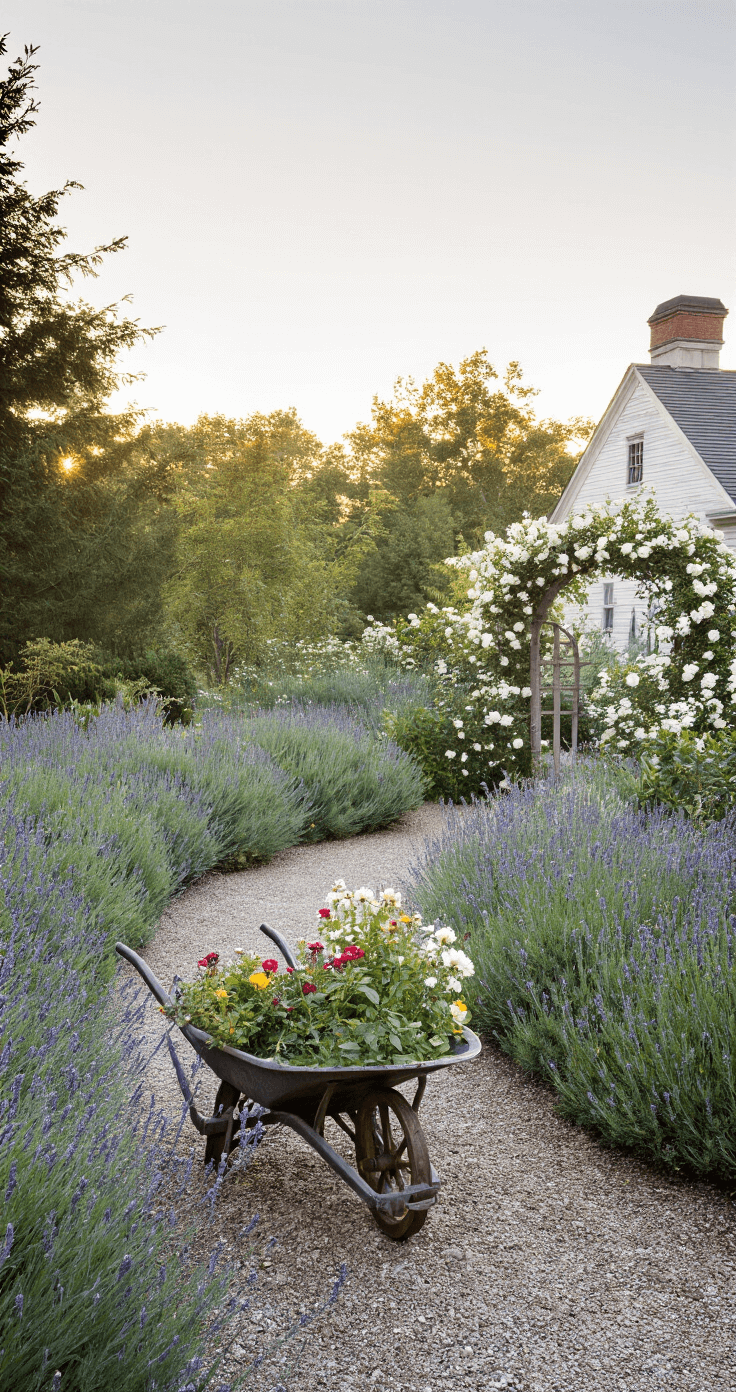
💡 Steal This Look
- Paint Color: Farrow & Ball Green Smoke 47
- Furniture: weathered teak potting bench with zinc top for staging containers and cutting flowers
- Lighting: antique brass shepherd’s hook lanterns with seeded glass, 6-foot height
- Materials: rough-hewn oak edging, crushed limestone paths, aged terracotta, hand-forged iron plant supports
There’s something deeply satisfying about standing at the back of a mature border, surrounded by blooms towering above your head—it’s the closest most of us get to wandering through a living watercolor.
Maintenance: Keeping the Magic Alive
- Deadhead spent blooms
- Stake tall plants early
- Mulch like your garden’s life depends on it (because it kind of does)
Container Solutions for Small Spaces
No big yard? No problem! Large garden pots can totally work for your cottage garden dream.
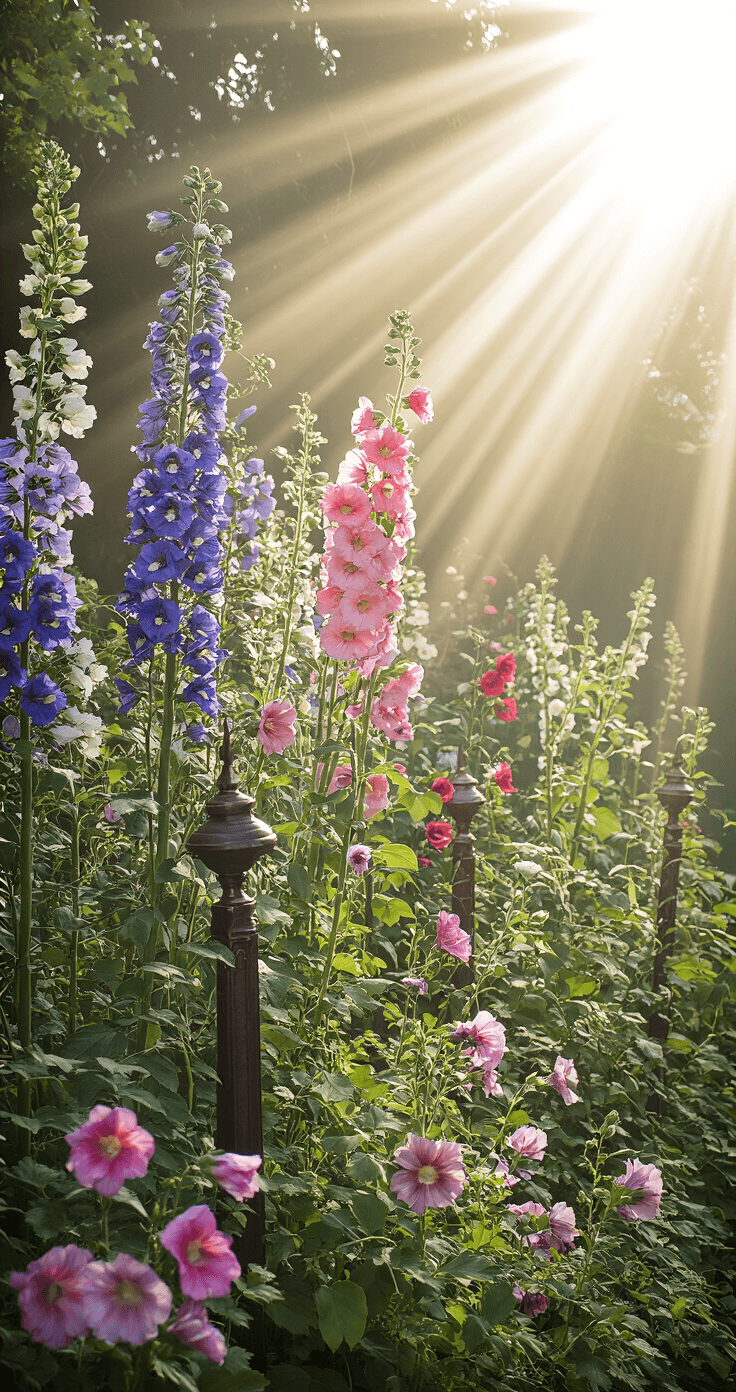
✎ Steal This Look
- Paint Color: Behr Garden Wall N400-3
- Furniture: weathered teak potting bench with zinc top
- Lighting: solar-powered shepherd’s hook lanterns with seeded glass
- Materials: aged terracotta, raw cedar stakes, hemp twine, crushed gravel pathways
There’s something deeply satisfying about the ritual of deadheading with morning coffee in hand, and a proper potting bench gives even the smallest balcony garden that ‘established cottage’ soul.
Pro Tips for That Authentic Cottage Feel
- Curved paths? Yes, please!
- Let plants self-seed and create happy little surprises
- Throw in some vintage containers or rustic wooden edging
The Secret Sauce: Embracing Controlled Chaos
The magic of cottage garden borders is in their seemingly effortless, abundant look. It’s not about perfection – it’s about creating a living, breathing landscape that tells a story.
Quick Reference Plant Chart
| Plant | Vibe | Best Spot |
|---|---|---|
| Russian Sage | Airy & Silver | Middle/Back |
| Foxglove | Tall & Bee-Friendly | Back |
| Catmint | Aromatic | Front/Middle |
Pro Tip: Your cottage garden should feel like a warm, welcoming hug from Mother Nature herself.
Remember, there are no strict rules in cottage gardening – just guidelines and a whole lot of love. Happy planting, garden warriors!
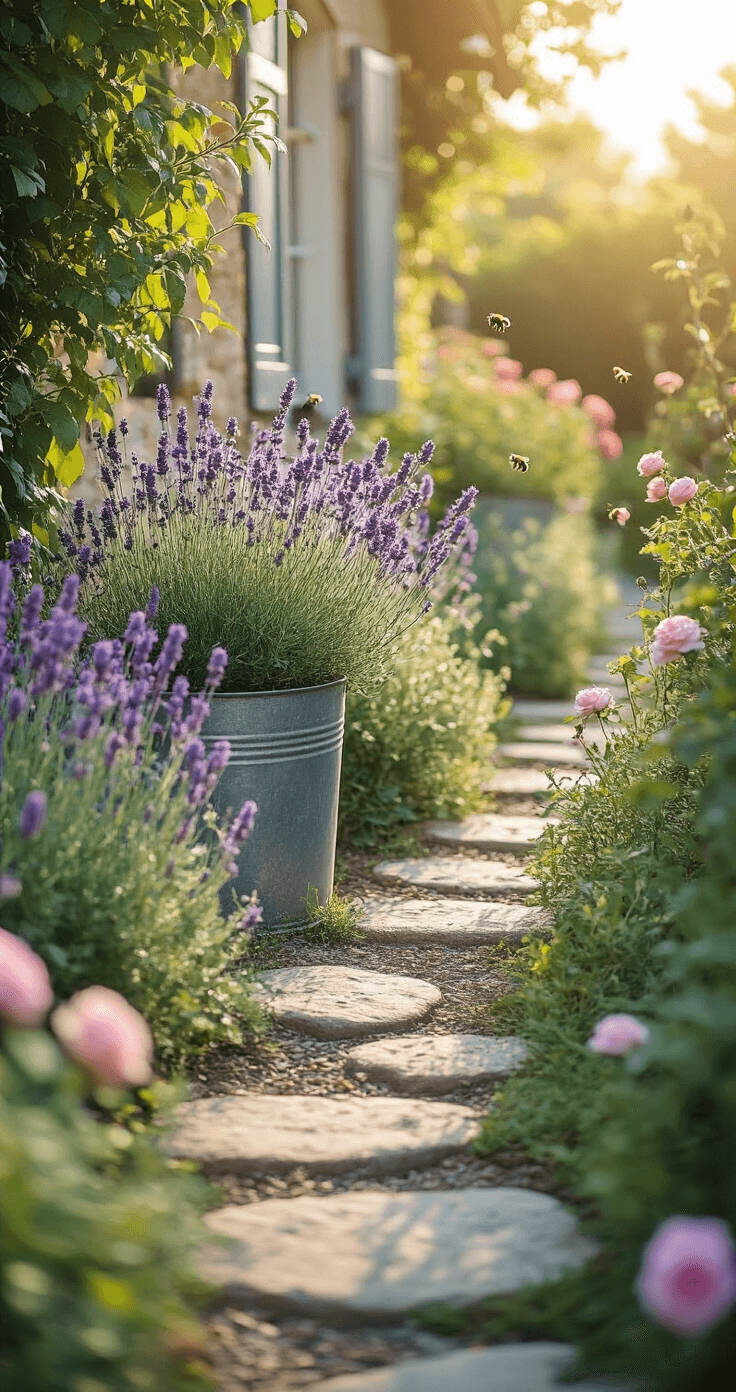
★ Steal This Look
- Paint Color: use Valspar brand. Match the ACTUAL wall color in the image. Format: Valspar Garden Gate 5004-2B
- Furniture: weathered teak potting bench with zinc top, vintage cast iron garden chair with peeling sage paint, reclaimed barn wood console table for displaying terracotta pots
- Lighting: galvanized steel gooseneck barn light with seeded glass, solar-powered copper fairy string lights draped over rustic wooden pergola
- Materials: hand-hewn limestone pavers with moss joints, untreated cedar raised beds, aged terracotta with lichen patina, woven willow edging, raw linen cushions
There’s something deeply restorative about a garden that doesn’t demand perfection from you—I’ve found that the most beloved cottage borders are the ones where the gardener finally stopped fighting nature and started collaborating with it.
Keep this one for later
We'll email you the link so you can come back to it.