
This post may contain affiliate links. Please see my disclosure policy for details.
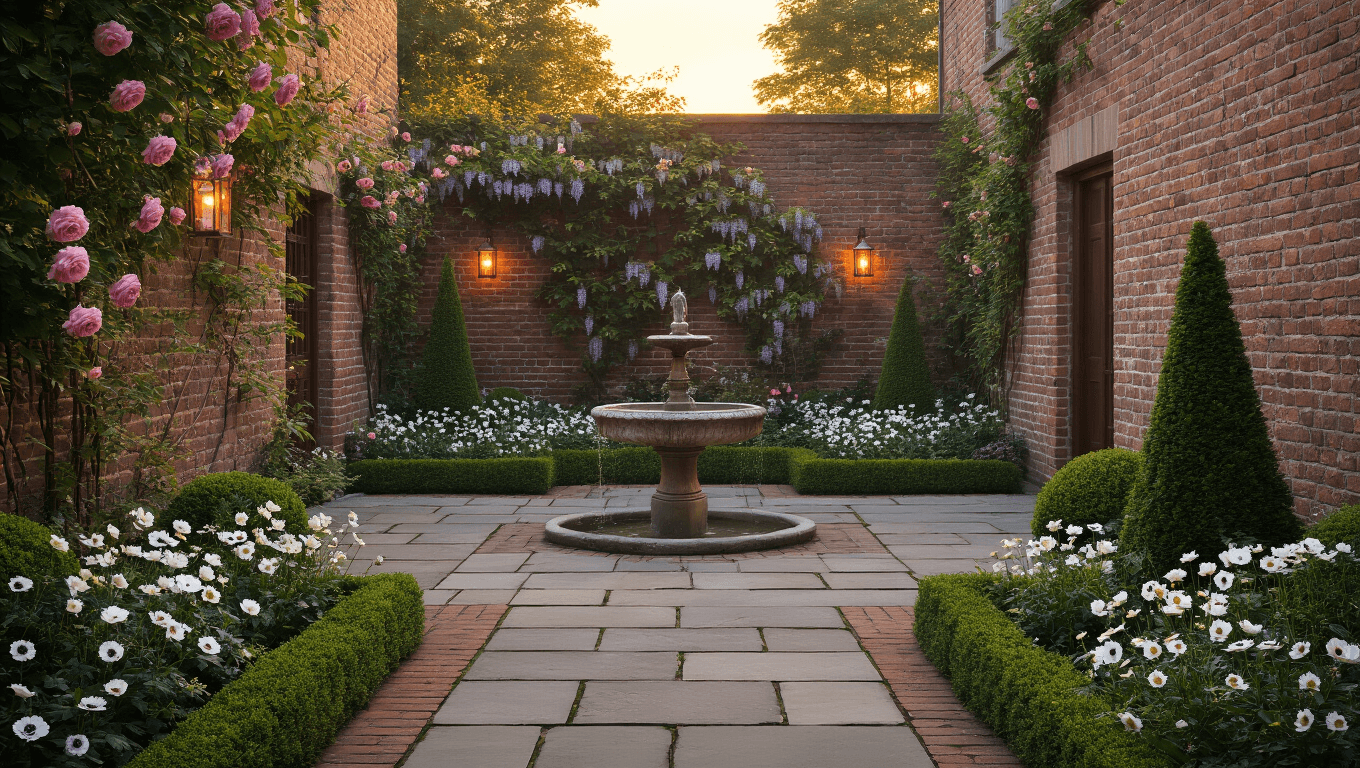
What Makes an English Courtyard Garden Unique?
Imagine stepping into a small, enclosed paradise where every square inch tells a story of design and nature. English courtyard gardens aren’t just spaces – they’re carefully crafted experiences.
Key Design Elements That Define the Space
Structural Foundations:
- Brick or stone walls creating natural boundaries
- Geometric paving that guides the eye and foot
- Precisely clipped hedges and topiary forms
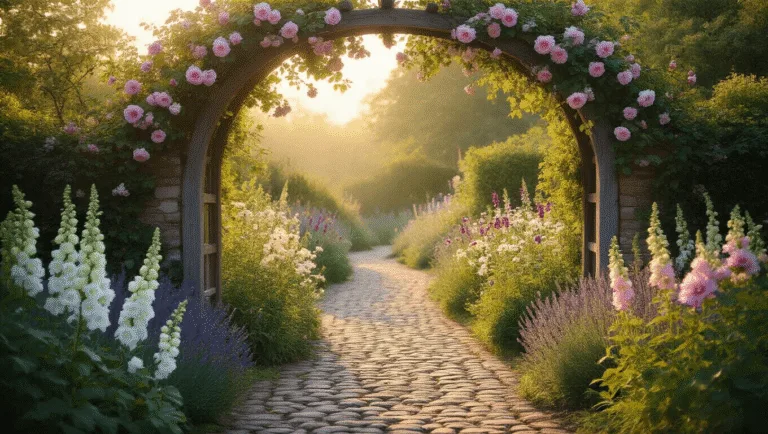
- Strategic use of vertical elements like arches and trellises
The Perfect Balance: Formality Meets Romance
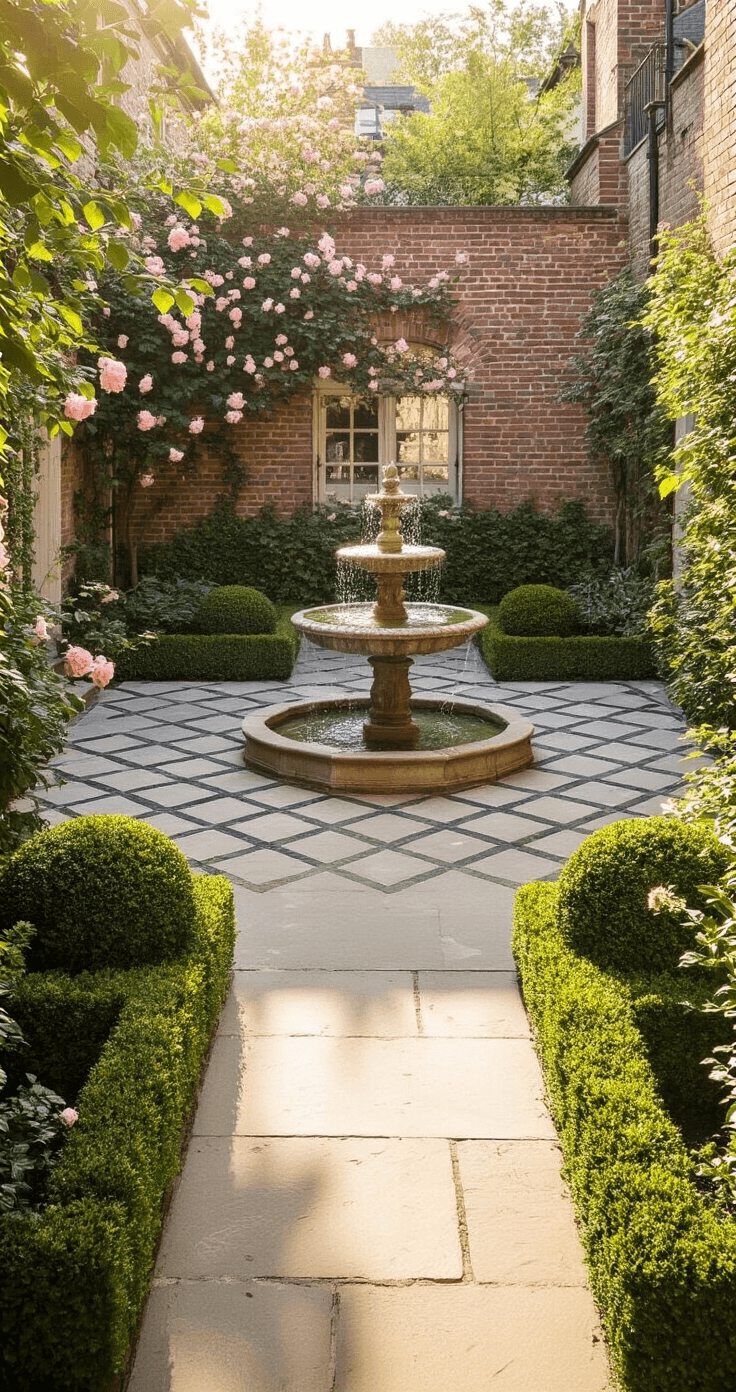
The magic of an English courtyard lies in its perfect tension between:
- Structured hardscapes (neat paths, defined edges)
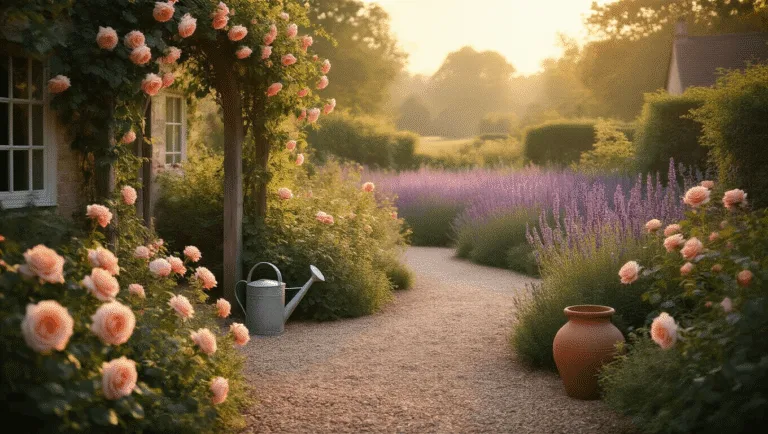
- Soft, lush plantings (climbing roses, perennial borders)
🌟 Steal This Look
- Paint Color: Sherwin-Williams Garden Sage SW 6165
- Furniture: cast iron bistro set with scrollwork detailing, weathered teak bench with curved arms, antique limestone pedestal table
- Lighting: oversized blackened brass lantern on shepherd’s hook, solar-powered festoon string lights with warm amber bulbs
- Materials: reclaimed York stone pavers, aged brick with lime mortar, wrought iron with verdigris patina, hand-thrown terracotta, clipped boxwood, climbing English roses
There’s something deeply satisfying about the discipline these gardens demand—every hedge line crisp, every path purposeful—yet they never feel rigid because the planting softens every edge.
👑 Get The Look
Creating Your Courtyard: A Step-by-Step Approach
1. Define Your Space
Essential Enclosure Techniques:
- Use brick walls or dense hedging
- Create clear boundaries
- Design with purpose – whether for dining, meditation, or pure visual pleasure
2. Master the Hardscape
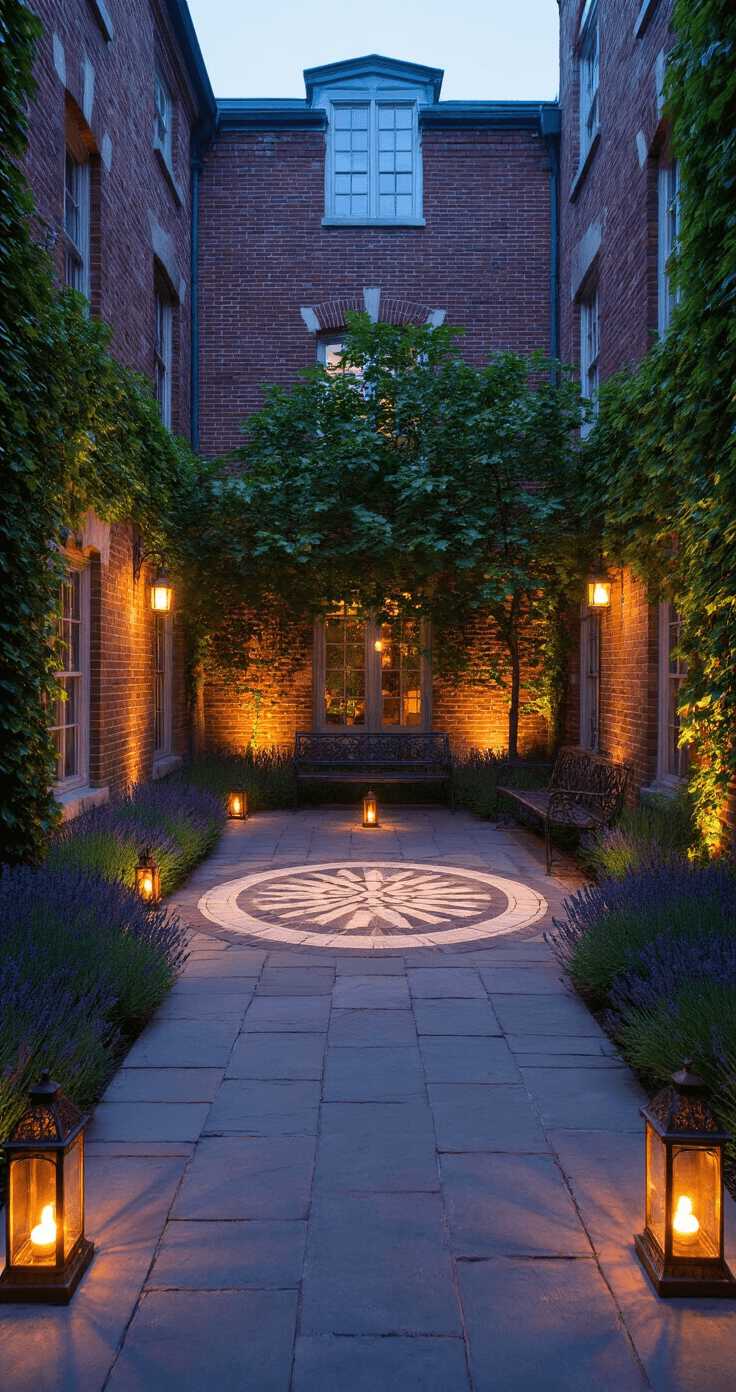
Materials That Whisper History:
- Stone pavers
- Reclaimed brick
- Wooden elements with aged patina
- Geometric layouts that feel intentional
3. Strategic Plant Selection
Vertical Planting Strategies:
- Climbing roses along walls
- Clematis threading through trellises
- Espaliered fruit trees maximizing narrow spaces
- Compact, repeated plant varieties for cohesion
4. Create Compelling Focal Points
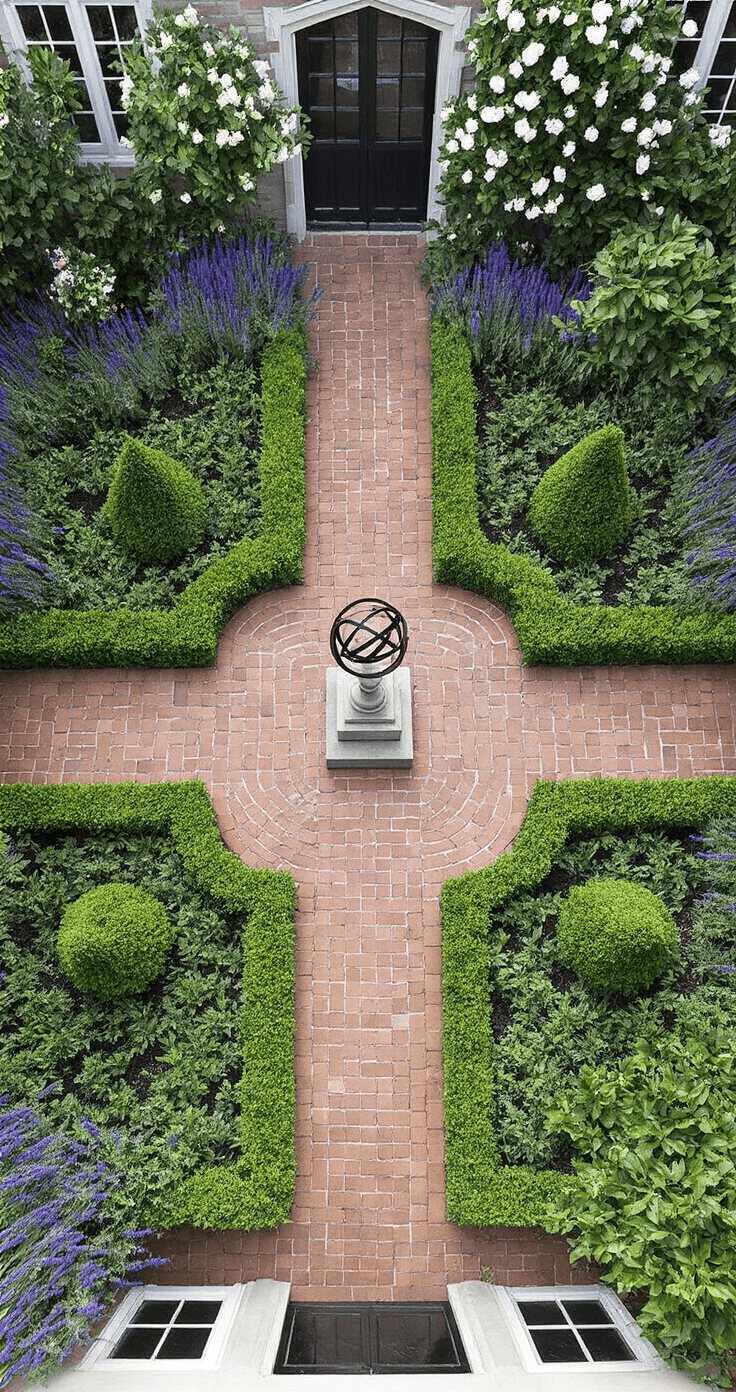
Must-Have Centerpiece Options:
- Classic stone fountain
- Elegant statue
- Sculptural topiary
- Sundial with historical charm
5. Layer Your Lighting
Evening Transformation Techniques:
- Subtle wall washing
- Uplighting for dramatic topiary shadows
- Soft lantern placements
- Strategic candle positioning
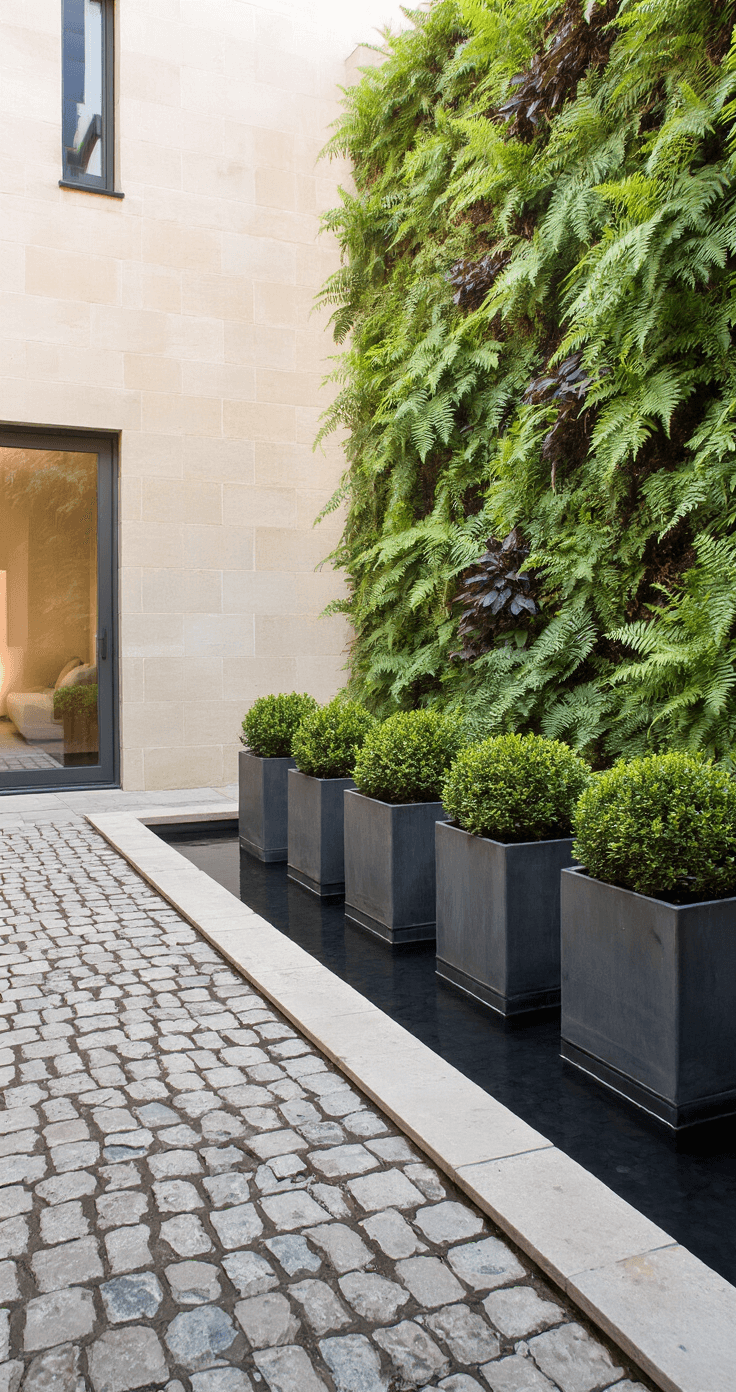
✎ Steal This Look
- Paint Color: Benjamin Moore Hampshire Taupe HC-85
- Furniture: weathered teak bistro set with curved arms and slatted seats
- Lighting: antiqued brass wall lantern with seeded glass panels
- Materials: reclaimed Yorkstone pavers, aged brick with soft mortar wash, limewashed render, wrought iron trellis with verdigris patina
There’s something deeply satisfying about a courtyard that feels discovered rather than designed, as if the walls have simply always held these plants and the stone has settled naturally over centuries.
Pro Tips for Small Urban Courtyards
Space-Maximizing Secrets:
Save this article
Enter your email and we'll send it straight to your inbox.
- Use mirrors to create depth illusion
- Choose slim water features
- Prioritize evergreen structures
- Select high-performance plants
Common Mistakes to Avoid
- Overcrowding the space
- Ignoring vertical potential
- Neglecting year-round interest
- Forgetting lighting design
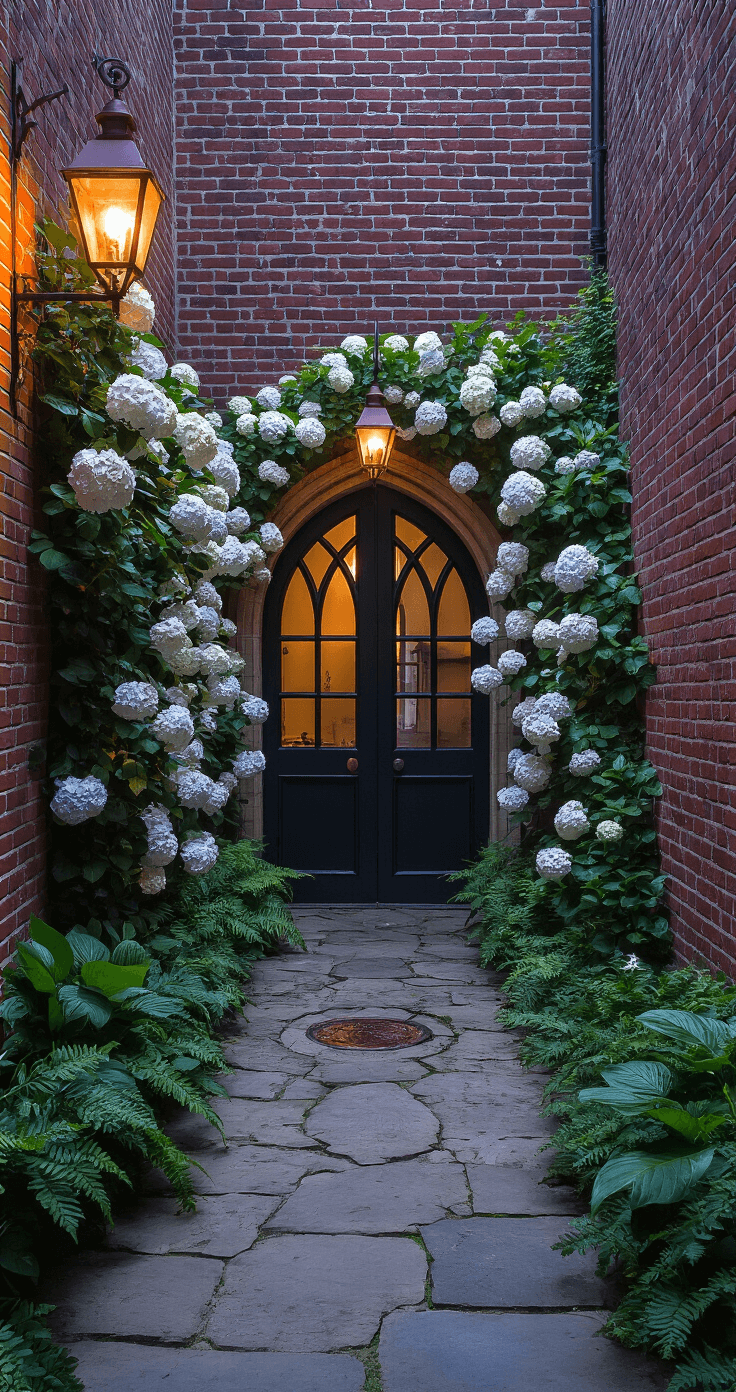
🎨 Steal This Look
- Paint Color: use Behr brand. Match weathered limestone walls typical of English courtyard gardens. Format: Behr Limewash PPU24-05
- Furniture: cast iron bistro set with curved legs and small-scale proportions, aged teak bench with slatted back against a wall
- Lighting: antique brass wall-mounted lantern with seeded glass, low-voltage copper path lights with warm 2700K temperature
- Materials: reclaimed York stone pavers, aged terracotta pots with lichen patina, wrought iron trellis with climbing jasmine, gravel in soft golden tones
There’s something deeply restorative about stepping into a courtyard that breathes—where every element earns its place and your eye travels naturally upward to sky and greenery rather than bouncing between competing focal points.
✓ Get The Look
Your Courtyard Starter Checklist
Must-Have Elements:
- ✓ Enclosed boundary
- ✓ Geometric paving
- ✓ One sculptural focal point
- ✓ Structural evergreen plants
- ✓ Climbing plants
- ✓ Seating area
- ✓ Layered lighting
Budget-Friendly Implementation
Not every stunning courtyard requires a massive investment. Start small:
- Reuse existing materials
- Choose native plants
- DIY simple hardscaping
- Gradually build your design
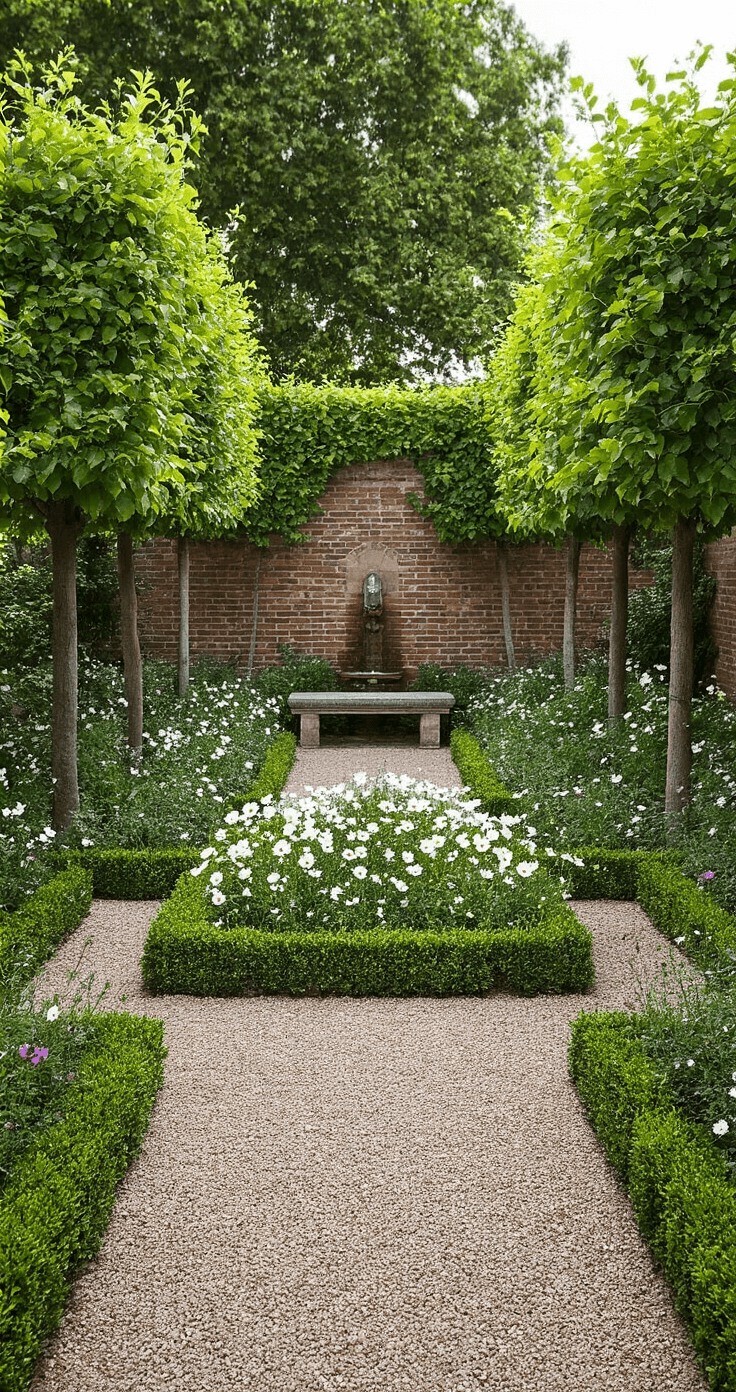
✎ Steal This Look
- Paint Color: PPG Stonehenge Greige PPG1020-3
- Furniture: weathered teak folding bistro set with curved iron legs
- Lighting: solar-powered festoon string lights with warm white Edison bulbs
- Materials: reclaimed brick pavers, pea gravel, untreated cedar trellis, self-seeding wildflower meadow mix
There’s something deeply satisfying about a courtyard that evolved slowly, where every stone carries a story of salvage and every plant came from a cutting or a seed packet.
Maintenance Insights
Keep Your Courtyard Thriving:
- Regular hedge trimming
- Seasonal plant rotation
- Annual hardscape refresh
- Minimal but consistent care
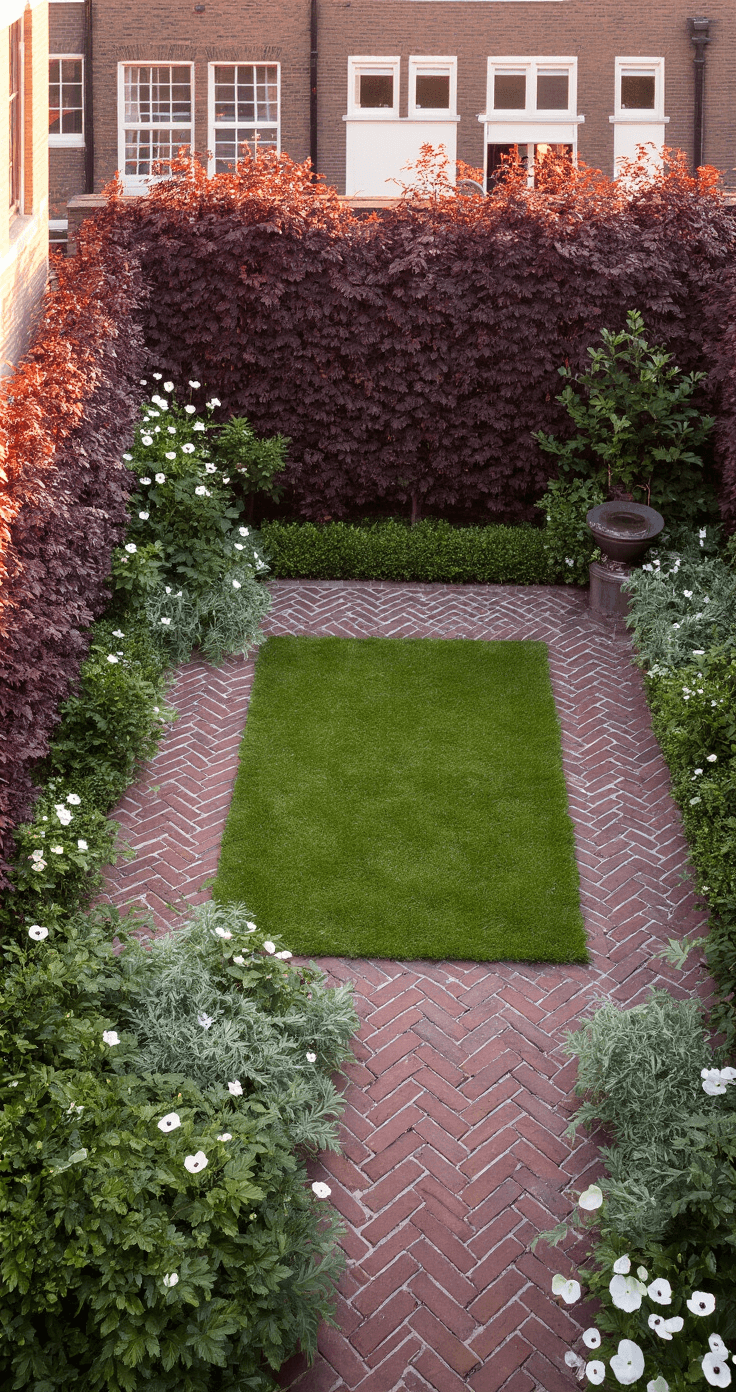
🏠 Steal This Look
- Paint Color: Dunn-Edwards Garden Wall DE5638
- Furniture: weathered teak bench with slatted seat, positioned against ivy-covered wall
- Lighting: brass gooseneck wall sconce with seeded glass shade
- Materials: aged limestone pavers, clipped boxwood, wrought iron trellis, mossy terracotta
There’s something deeply meditative about the ritual of courtyard tending—the way morning light catches dew on boxwood after trimming, the satisfaction of a swept stone path—that transforms maintenance from chore to daily grounding practice.
Final Thoughts
English courtyard gardens are more than landscapes – they’re personal retreats that blend history, design, and nature. With thoughtful planning and creative execution, you can transform even the smallest outdoor space into a breathtaking sanctuary.
Pro Tip: Remember, perfection comes from understanding principles, then making them uniquely yours. Your courtyard should reflect your personal style while honoring timeless English garden traditions.
Are you interested in Japanese courtyard gardens? Read here how to design Japanese courtyard gardens.
Or maybe gravel courtyard gardens make your heart beat faster? Read here more about gravel courtyard gardens.
Keep this one for later
We'll email you the link so you can come back to it.


[…] Create a mini indoor zen garden […]