

This post may contain affiliate links. Please see my disclosure policy for details.
Fall Potted Plants That’ll Make Your Front Porch the Envy of the Neighborhood
Fall potted plants for your front porch aren’t just about slapping some mums in a container and calling it a day.
I learned this the hard way my first autumn in my new house when I proudly arranged three identical orange mums in matching pots and wondered why my porch looked like a grocery store display.
Your neighbors are probably dealing with the same confusion right now—staring at their sad summer petunias wondering what comes next, or worse, leaving their porch bare like some kind of seasonal surrender.
Let me save you from my mistakes and show you how to create a front porch that makes people slow down their cars.
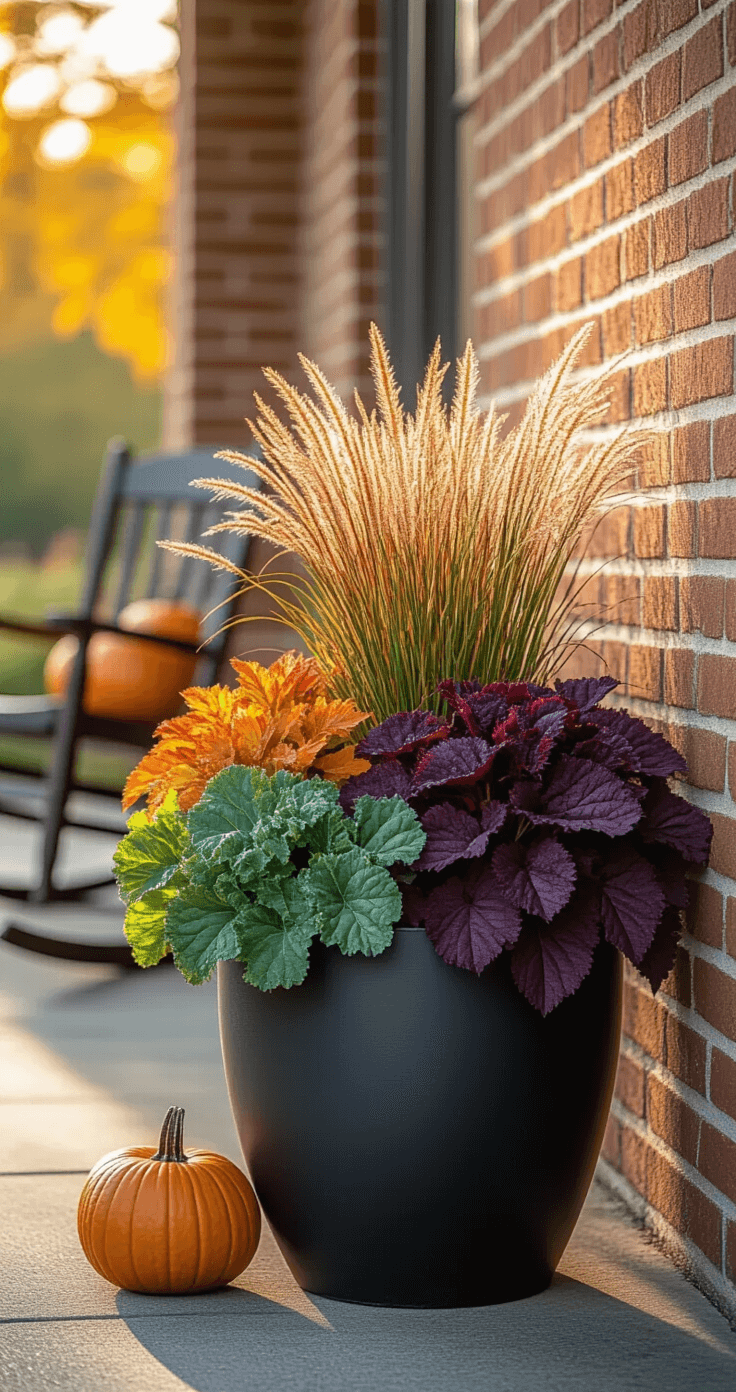
Why Your Summer Plants Are Officially Done For
Listen, I get it.
Those geraniums gave you their all through August, but now they’re looking scraggly and sad, and no amount of deadheading will bring back their glory.
Fall is a completely different beast, and your plants need to match the weather, not fight against it.
Here’s what actually works when temperatures drop:
- Plants that laugh at frost instead of surrendering to it
- Foliage that gets MORE beautiful as it gets colder
- Blooms specifically engineered for autumn light
- Textures that complement pumpkins, not pool floats
The secret? Stop thinking like it’s an extended summer and start embracing what makes fall special.
The Fall All-Stars That Won’t Let You Down
🎨 Steal This Look
- Paint Color: Sherwin-Williams Tricorn Black SW 6258
- Furniture: weathered teak Adirondack chair with slatted back
- Lighting: oversized black metal lantern with clear seeded glass panels
- Materials: terracotta with aged patina, galvanized zinc, raw cedar, dried ornamental grasses
Your front porch is the handshake your home offers the world, and fall is when that greeting matters most—people are actually walking outside again, sipping coffee on cool mornings, and judging your curb appeal with renewed attention.
Mums: The Reliable Workhorse Everyone Underestimates
I used to think mums were boring until I actually paid attention to what they bring to the table.
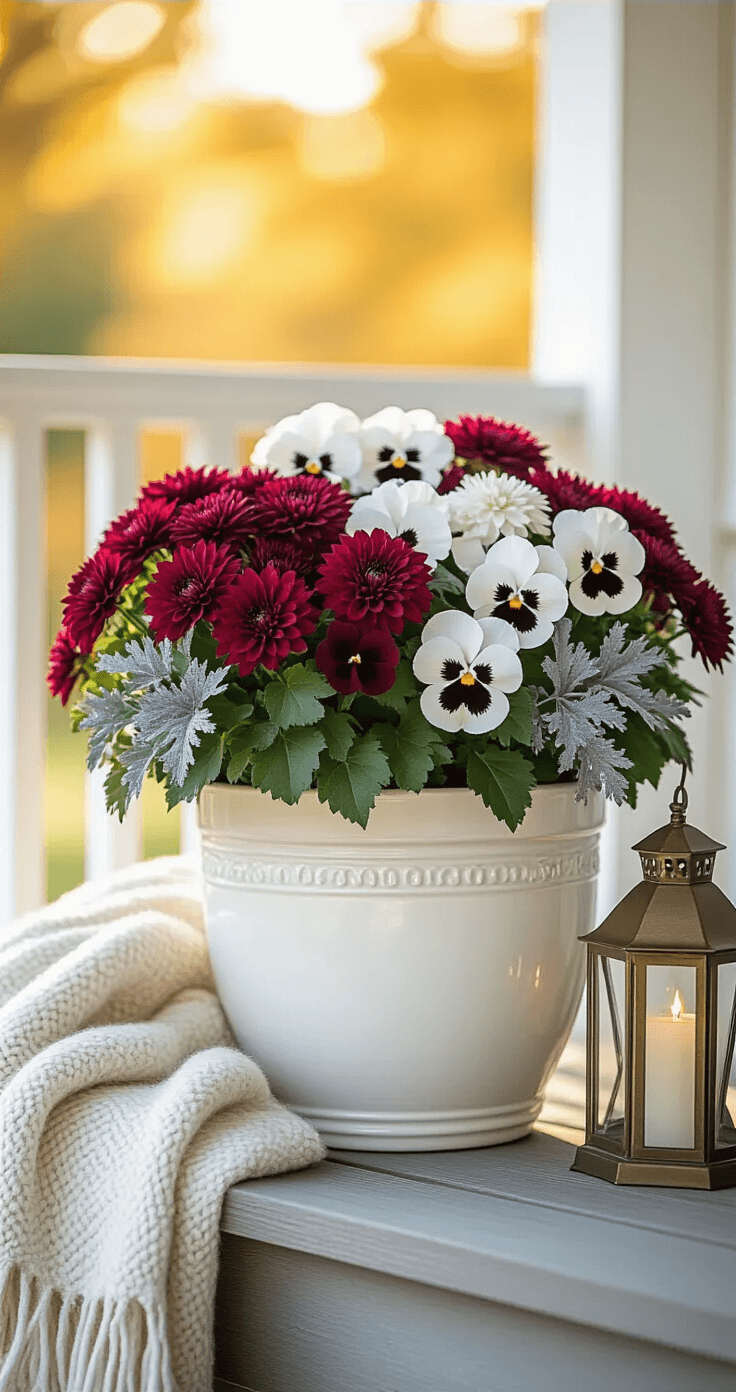
These tight little powerhouses bloom in every shade of autumn—burnt orange, deep burgundy, sunshine yellow, even white if you’re going for that sophisticated look.
What makes mums actually great:
- They bloom for WEEKS without fussing
- One plant fills space like three of anything else
- They’re basically indestructible in fall weather
- Available everywhere, which means you’re not hunting specialty nurseries
Pro move I wish someone had told me earlier: if you want them back next year, get them in the ground before the first hard freeze so they can establish roots over winter.
Otherwise, treat them like the seasonal fling they are and compost them when they’re done.
Grab hardy garden mums in late summer for the longest show.
🏠 Steal This Look
- Paint Color: Benjamin Moore Autumn Cover 2170-30
- Furniture: weathered teak Adirondack chair with slatted back
- Lighting: oversized blackened brass carriage lantern with seeded glass
- Materials: terracotta with aged patina, woven seagrass baskets, cast iron plant stands, rough-hewn cedar porch flooring
I killed my first dozen mums by overwatering them like houseplants—turns out they want to dry out between drinks, and that tough-as-nails reputation only holds if you don’t drown them with kindness on a covered porch.
Ornamental Kale and Cabbage: The Dramatic Overachievers
The first time I used ornamental kale, my neighbor asked if I was growing vegetables on my porch.
Now she copies my arrangements every year because she saw how those ruffled leaves stole the entire show.
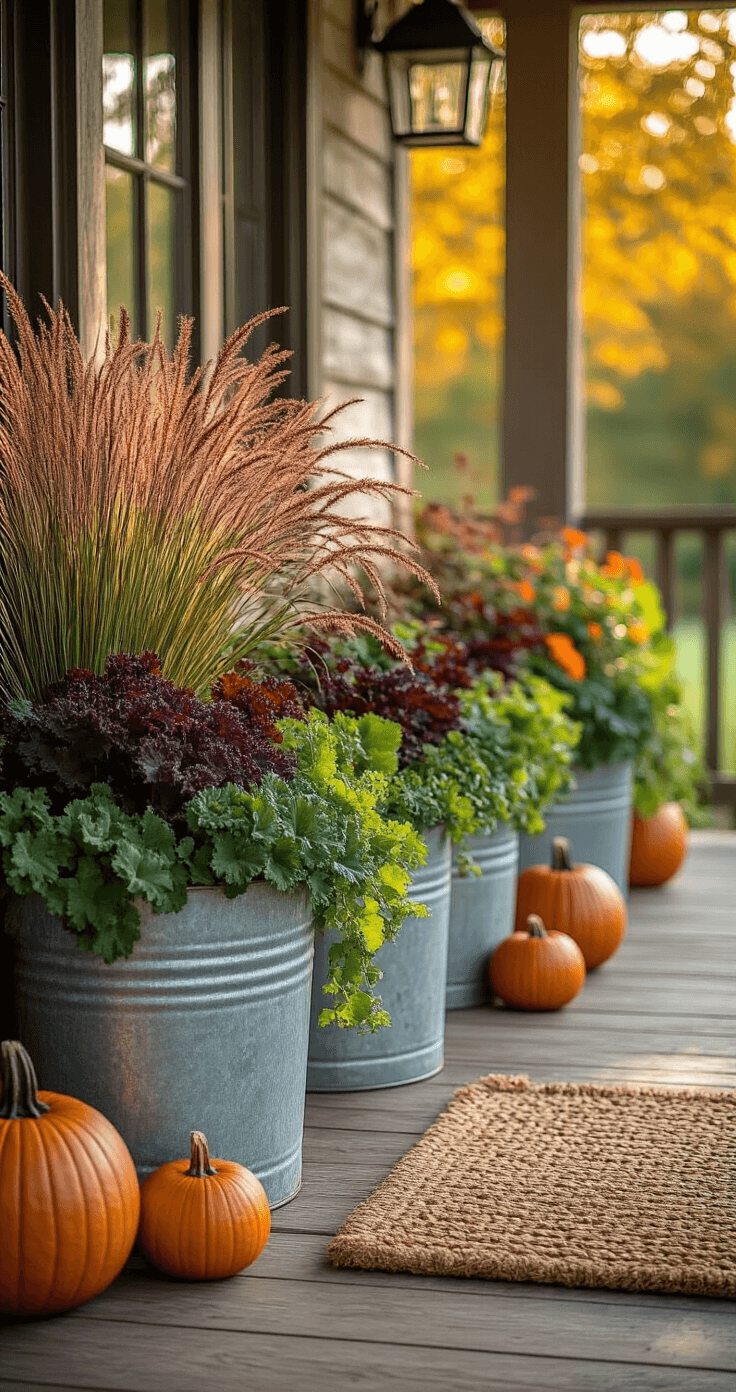
These plants are the supermodels of fall containers—sculptural, stunning, and they actually get MORE colorful when it’s cold.
Why I’m obsessed with them:
- Deep purple and cream combinations that look expensive
- They intensify as temperatures drop (most plants do the opposite)
- Last well past when everything else has quit
- Give your porch that editorial, designed look
I plant them as the anchor in my containers and build everything else around them.
Full sun to partial shade works, and they’re so tough that early frost barely registers.
Save this article
Enter your email and we'll send it straight to your inbox.
🖼 Steal This Look
- Paint Color: Farrow & Ball Paean Black 294
- Furniture: a wrought iron bistro set with curved scrollwork in aged bronze finish
- Lighting: oversized galvanized steel barn pendant with exposed Edison bulb
- Materials: weathered zinc planters, raw concrete, brushed copper accents, chunky knit wool throws
There’s something deeply satisfying about a plant that actually rewards you for suffering through the first hard frost—while your neighbors’ mums turn to mush, your kale turns almost neon.
Heuchera: The Underrated Mood Setter
Coral bells might not bloom much in fall, but their foliage does heavy lifting that flowers just can’t match.
I use varieties with burgundy and copper tones because they echo falling leaves without literally being falling leaves.
Some have veining that catches light in the most unexpected way—almost like stained glass when the afternoon sun hits them right.
They’re perennials, so I pull them from containers in late fall and tuck them into garden beds where they’ll return next year.
Free plants forever? Yes, please.
Pansies and Violas: The Happy Little Troopers
These cheerful faces keep blooming straight through fall and often into early winter if you’re not in a brutal climate zone.
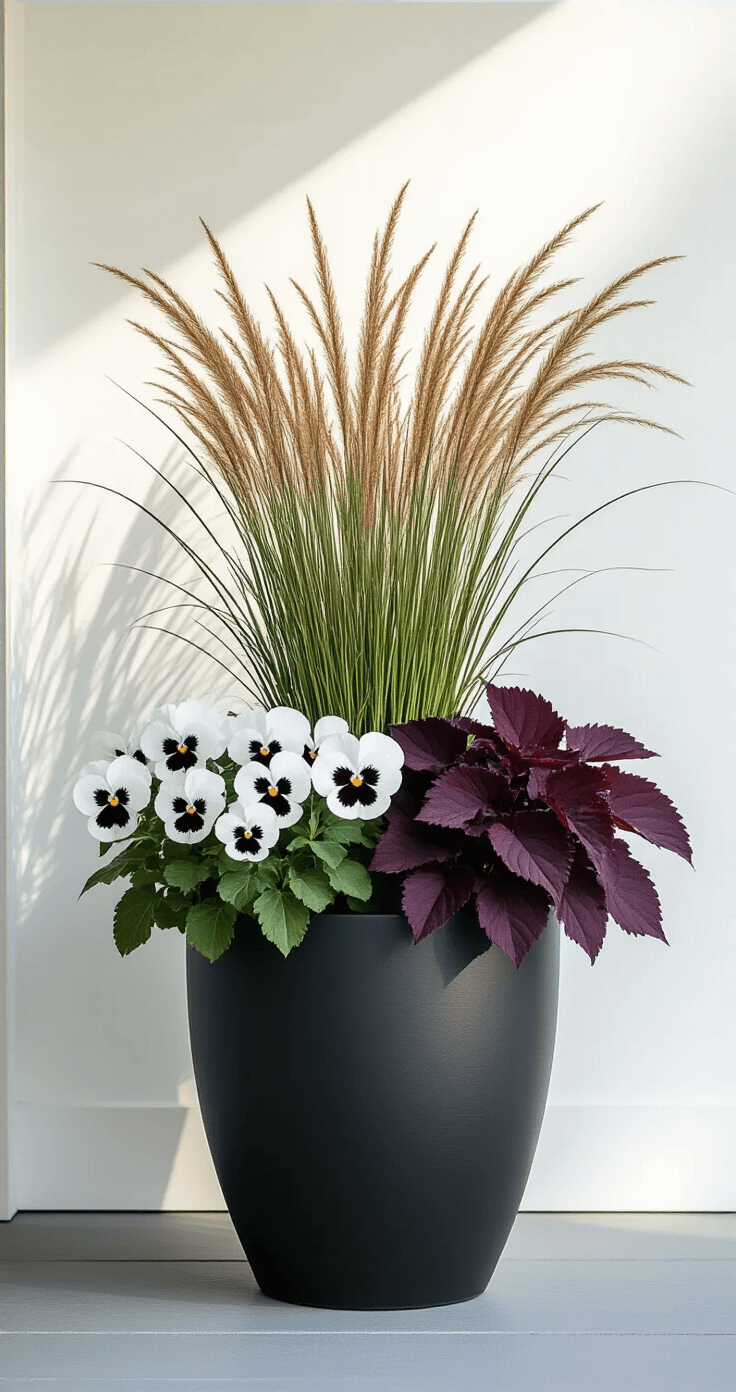
I mass them in decorative fall planters by themselves sometimes—just one color repeated creates surprising impact.
They’re perfect if you’ve got kids who want to help with planting because they’re basically foolproof.
💡 Steal This Look
- Paint Color: Valspar Autumn Russet 2009-7A
- Furniture: weathered teak potting bench with lower shelf for storing extra containers and soil
- Lighting: solar-powered Edison bulb string lights draped along porch railings
- Materials: aged terracotta, galvanized metal buckets, burlap ribbon, copper plant markers
There’s something deeply satisfying about these resilient little blooms greeting you after a long day—they’re the horticultural equivalent of a friend who shows up no matter what, and kids absolutely light up when their plantings actually survive.
Ornamental Grasses: The Drama Queens (Affectionate)
This is where you add height and movement that makes your arrangements look professionally designed.
Fountain grass, ruby grass, maiden grass—they all bring that vertical drama that keeps containers from looking flat and boring.
I learned this from a landscaper friend who pointed out that my containers looked “horizontally challenged.”
She was right.
Adding ornamental grasses changed everything.
The magic they bring:
- Height that draws eyes up and makes entries feel grander
- Movement when wind passes through
- Texture that contrasts beautifully with broad leaves and flowers
- Structure that holds up when everything else gets soggy
How to Actually Combine These Without Looking Like a Plant Hoarder
My first elaborate container looked like I’d robbed a garden center and shoved everything into one pot.
Turns out there’s a method to this.
The Foundation Formula That Always Works
Start with your thriller—that’s the tall dramatic element (ornamental grass or tall kale).
Add your fillers—the mums, pansies, or heuchera that create bulk and color.
Finish with spillers—trailing ivy or creeping jenny that softens edges and makes the whole thing look established rather than brand new.
My go-to combinations:
- Tall fountain grass + orange mums + trailing ivy = classic fall that never disappoints
- Purple ornamental kale + burgundy heuchera + white pansies = sophisticated and unexpected
- Mixed mums in warm tones + decorative branches = simple but polished
- Ruby grass + mixed kale varieties + creeping jenny = textural masterpiece
The Pumpkin Integration Strategy
Keep this one for later
We'll email you the link so you can come back to it.



[…] them around the edges of your containers for cascading color that softens hard pot […]