

This post may contain affiliate links. Please see my disclosure policy for details.
Farmhouse summer porch decor has taken over neighborhoods faster than dandelions in spring, and I get it—there’s something irresistible about a porch that makes you want to grab sweet tea and settle in for the afternoon.
But here’s my problem with most farmhouse porch advice: it’s gotten predictable.
Everyone’s got the same galvanized everything, the same “Gather” signs, the same exact vibe.
I’ve spent seven summers tweaking my own porch, making mistakes that cost me money and time, and I’m going to walk you through what actually works—not just what looks good in a staged photo.
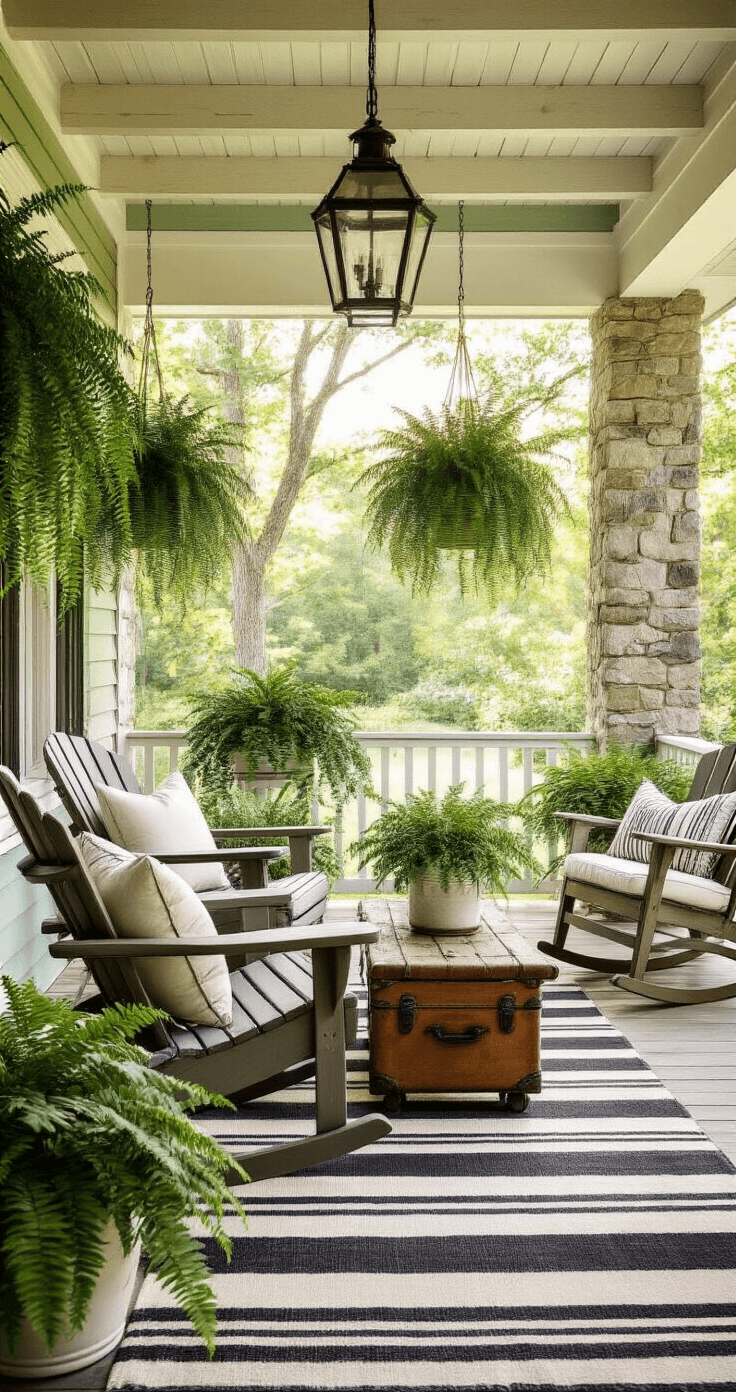
Why Your Porch Probably Feels Off (And It’s Not Your Fault)
Let me be blunt.
Most people overthink their porches or under-think them—there’s rarely a middle ground.
You either end up with a cluttered mess that looks like a flea market exploded, or you’ve got two lonely chairs and a dead plant.
The farmhouse summer porch works because it balances three things:
- Comfort (you should actually want to sit there)
- Nature (plants, wood, natural textures)
- Personality (the stuff that makes it yours, not a catalog copy)
Miss one of these, and your porch feels incomplete.
The Foundation: Getting Your Seating Situation Right
Here’s where I see people go wrong immediately.
They buy seating that looks farmhouse but feels terrible.
I learned this the hard way with a set of wicker chairs that looked perfect but felt like sitting on anger.
Your seating needs to pass the 30-minute test.
Sit in it for 30 minutes with a book.
If your back hurts or you’re shifting around, it fails.
Seating Options That Actually Work:
- Rocking chairs: Classic for a reason—the motion keeps you comfortable longer than static seating.
- Adirondack chairs: Wide armrests double as side tables, and the recline angle is perfect for late afternoon.
- Porch swing: The crown jewel if your porch structure can handle it—I added mine in year three and wish I’d done it immediately.
- Wicker furniture with cushions: Notice I said with cushions—bare wicker is decorative torture.
I keep a steamer trunk at the end of my porch that holds extra pillows and blankets but also serves as emergency seating when we have more people than chairs.
It’s the kind of dual-purpose piece that makes farmhouse style functional instead of just pretty.

🏠 Steal This Look
- Paint Color: Benjamin Moore White Dove OC-17
- Furniture: weathered teak Adirondack chairs with wide slatted arms, paired with a natural wicker loveseat featuring deep seat cushions
- Lighting: oversized black metal barn pendant with seeded glass, hung from porch ceiling beam
- Materials: unfinished teak, natural rattan, Sunbrella canvas in sage green, braided jute, galvanized metal accents
This is where summer actually happens—morning coffee, evening thunderstorms, the neighbor who lingers—so your seating choices determine whether your porch becomes a destination or just a pass-through.
Greenery: The Difference Between “Nice Porch” and “Holy Cow, Look at That Porch”
Plants transform everything.
But dead plants do the opposite.
I killed approximately eleven ferns before I figured out what actually thrives on my porch.
Here’s what I wish someone had told me:
Your porch has microclimates—different areas get different sun, wind, and water.
Stop buying plants based on what looks good and start buying based on what your specific porch conditions support.
Save this article
Enter your email and we'll send it straight to your inbox.
My Current Plant Lineup (All Still Alive):
- Hanging ferns: I use hanging basket planters with Kimberly Queen ferns because they’re more forgiving than Boston ferns when I inevitably forget to water.
- Hostas in large pots: These shade-lovers fill space beautifully and survive my benign neglect.
- Dipladenia: Bright pink blooms that handle heat without constant watering.
I group plants in odd numbers (three or five) at different heights.
One tall plant in the corner, medium-height plants flanking the door, low plants on side tables.
This creates visual rhythm instead of a plant lineup that looks like they’re waiting for a bus.

✎ Steal This Look
- Paint Color: Farrow & Ball Green Smoke 47
- Furniture: weathered teak potting bench with galvanized steel top for staging plants and storing tools
- Lighting: oversized rattan pendant with Edison bulb for ambient evening glow among the foliage
- Materials: aged terracotta, raw zinc planters, reclaimed wood boxes, woven seagrass baskets, hammered copper watering cans
I finally stopped apologizing for my black thumb when I realized thriving plants matter more than trendy ones—now my porch looks like I’ve been gardening for decades instead of desperately googling ‘why is my fern crispy’ at midnight.
Textiles: Making Hard Surfaces Feel Like Home
Bare wood and metal get uncomfortable fast.
You need textiles, but outdoor textiles are tricky because weather destroys most fabrics.
I’ve learned to invest selectively.
For rugs: I use a striped outdoor rug in black and white that hides dirt and defines the seating area.
It cost $60 three years ago and still looks decent because the pattern camouflages stains.
For pillows: Only buy ones labeled waterproof or water-resistant.
Regular indoor pillows get moldy and disgusting by mid-July.
I learned this after ruining $80 worth of pretty pillows in one rainy week.
Keep a storage bin nearby to toss pillows in when storms roll in—even waterproof ones last longer when they’re not constantly soaked.

💡 Steal This Look
- Paint Color: Behr Swiss Coffee 12
- Furniture: weathered teak Adirondack chairs with wide slats
- Lighting: oversized galvanized metal barn pendant with seeded glass
- Materials: solution-dyed acrylic, recycled plastic weave, marine-grade canvas, powder-coated aluminum
This is where I finally stopped treating my porch like a second-class living room and started investing in pieces that could actually survive my forgetfulness when thunderstorms hit at 2am.
Lighting: Extending Your Porch Time Past Sunset
Evening porch time hits different.
Good lighting makes it magical instead of mosquito-filled darkness.
I layer three types:
- Overhead functional light: A gooseneck light by the door so we can actually see to unlock it.
- Ambient lighting: Solar lanterns scattered around—I bought six from Dollar Tree at $5 each and they’ve lasted two summers.
- Accent lighting: String lights (yes, I know everyone has them, but they work) wrapped around porch posts.
The key is dimmer lights than you think you need.
Bright porch lighting feels institutional.
Softer lighting feels like vacation.

★ Steal This Look
- Paint Color: use Valspar brand. Match the ACTUAL wall color in the image. Format: Valspar ColorName CODE
- Furniture: weathered cedar Adirondack chairs with wide arms for lantern placement
- Lighting: galvanized steel gooseneck barn light with warm 2700K LED bulb; solar-powered flickering candle lanterns; vintage-style Edison bulb string lights with black cord
- Materials: galvanized metal, weathered cedar, frosted glass, braided jute cord, solar plastic housing
This is where summer memories actually happen—when the fireflies come out and you’re still sitting there with a cold drink because the light feels too good to leave.
Keep this one for later
We'll email you the link so you can come back to it.





[…] go forth, my friends, and create the farmhouse kitchen of your dreams. And remember, if all else fails, there’s always […]