

This post may contain affiliate links. Please see my disclosure policy for details.
How to Create a Stunning Vertical Herb Garden Wall: A Complete Guide
Growing herbs doesn’t require acres of land. With a vertical herb garden wall, you can transform any blank space into a lush, green culinary paradise.
Why Vertical Herb Gardens are a Game-Changer
Let’s be real – space is precious. Vertical herb gardens solve multiple problems in one brilliant solution:
Space-Saving Superstars
- Converts empty wall space into a productive garden
- Perfect for apartments, patios, and small homes
- Eliminates ground space limitations
Cooking Benefits
- Fresh herbs literally at your fingertips
- No more wilted store-bought herbs
- Instant flavor boost for every meal
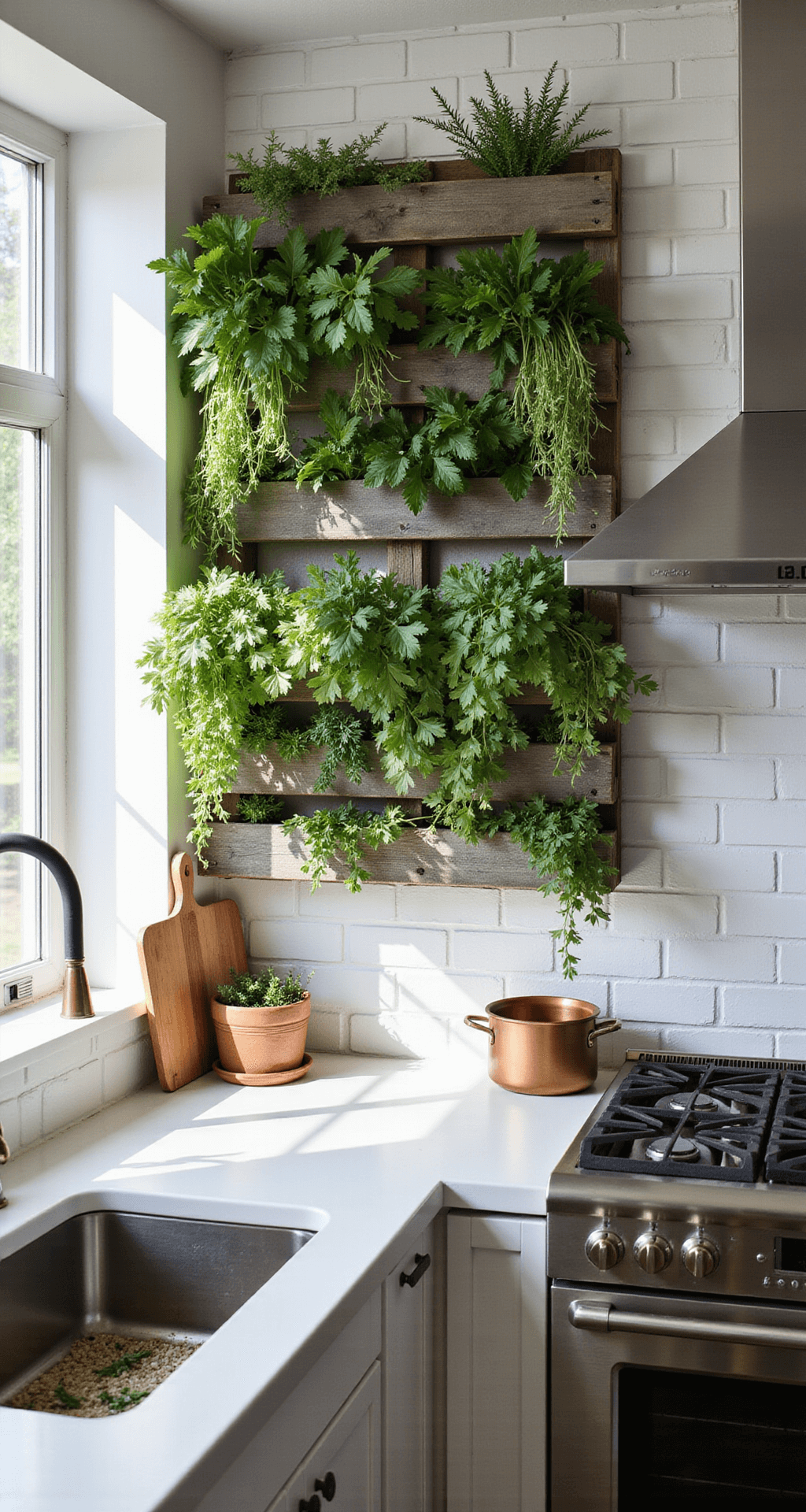
🖼 Steal This Look
- Paint Color: Benjamin Moore Chantilly Lace OC-65
- Furniture: narrow rolling kitchen cart with butcher block top for prep station beneath garden
- Lighting: adjustable-arm brass wall sconce with warm 2700K LED for targeted herb growth
- Materials: raw cedar vertical planter boxes, matte black powder-coated steel mounting brackets, unglazed terracotta pots for moisture control
There’s something deeply satisfying about snipping thyme mid-recipe without breaking your flow—these gardens turn the wall between you and dinner into something alive and useful.
✅ Get The Look
Creative Vertical Herb Garden Designs
1. Pallet Paradise
Wooden pallets aren’t just shipping materials – they’re garden gold!
What You’ll Need:
- Clean wooden pallet
- Landscape fabric
- Potting soil
- Herb seedlings
- Mounting hardware
Pro Tip: Sand the pallet and treat with non-toxic wood sealant to extend its life.
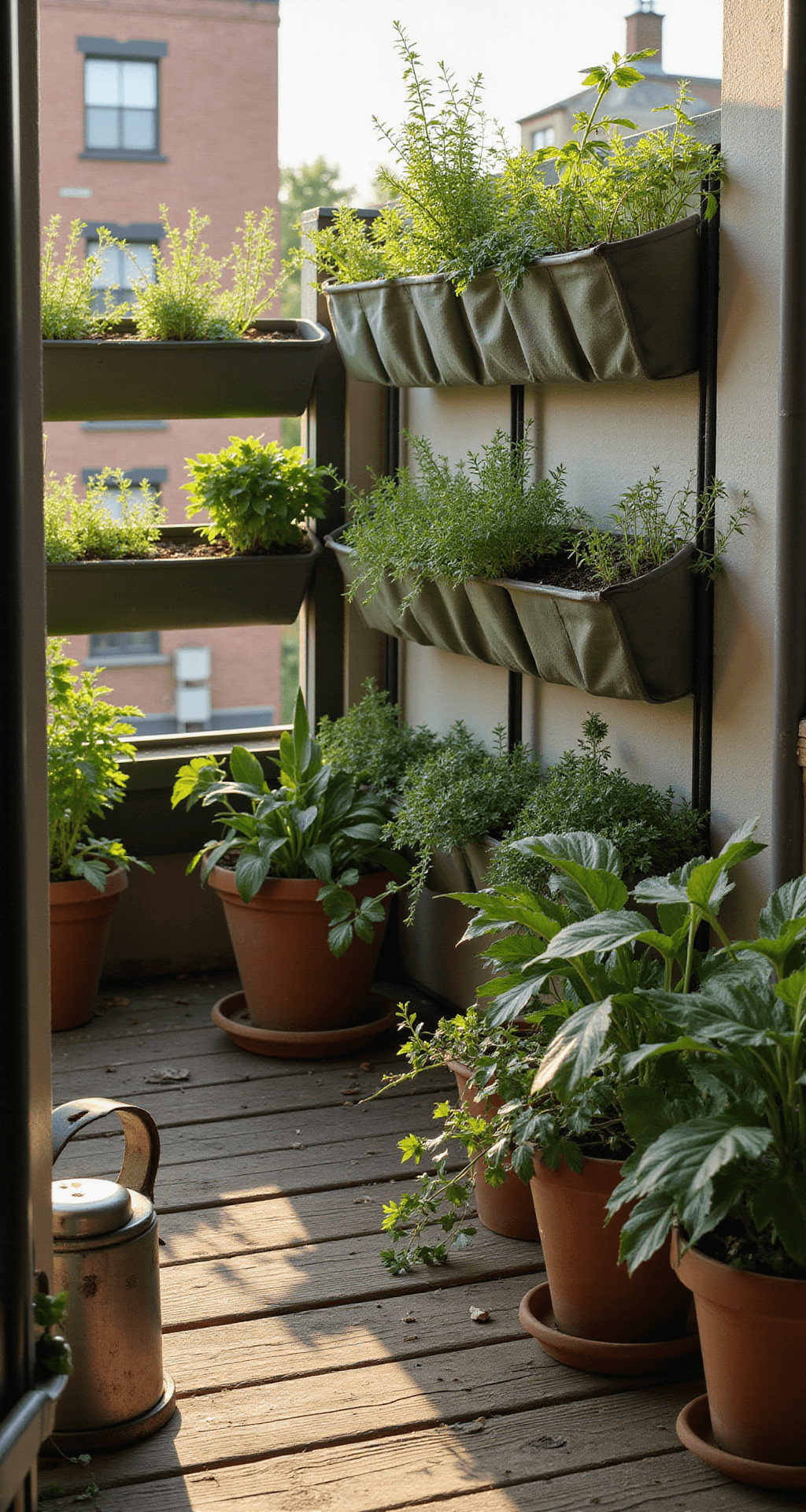
2. Hanging Pocket Gardens
Fabric shoe organizers become instant herb havens:
- Lightweight
- Easily mountable
- Minimal investment
- Multiple growing pockets
3. Terracotta Pot Wall
Classic ceramic charm meets modern gardening:
- Individual pots create visual interest
- Easy to replace individual plants
- Allows precise plant care
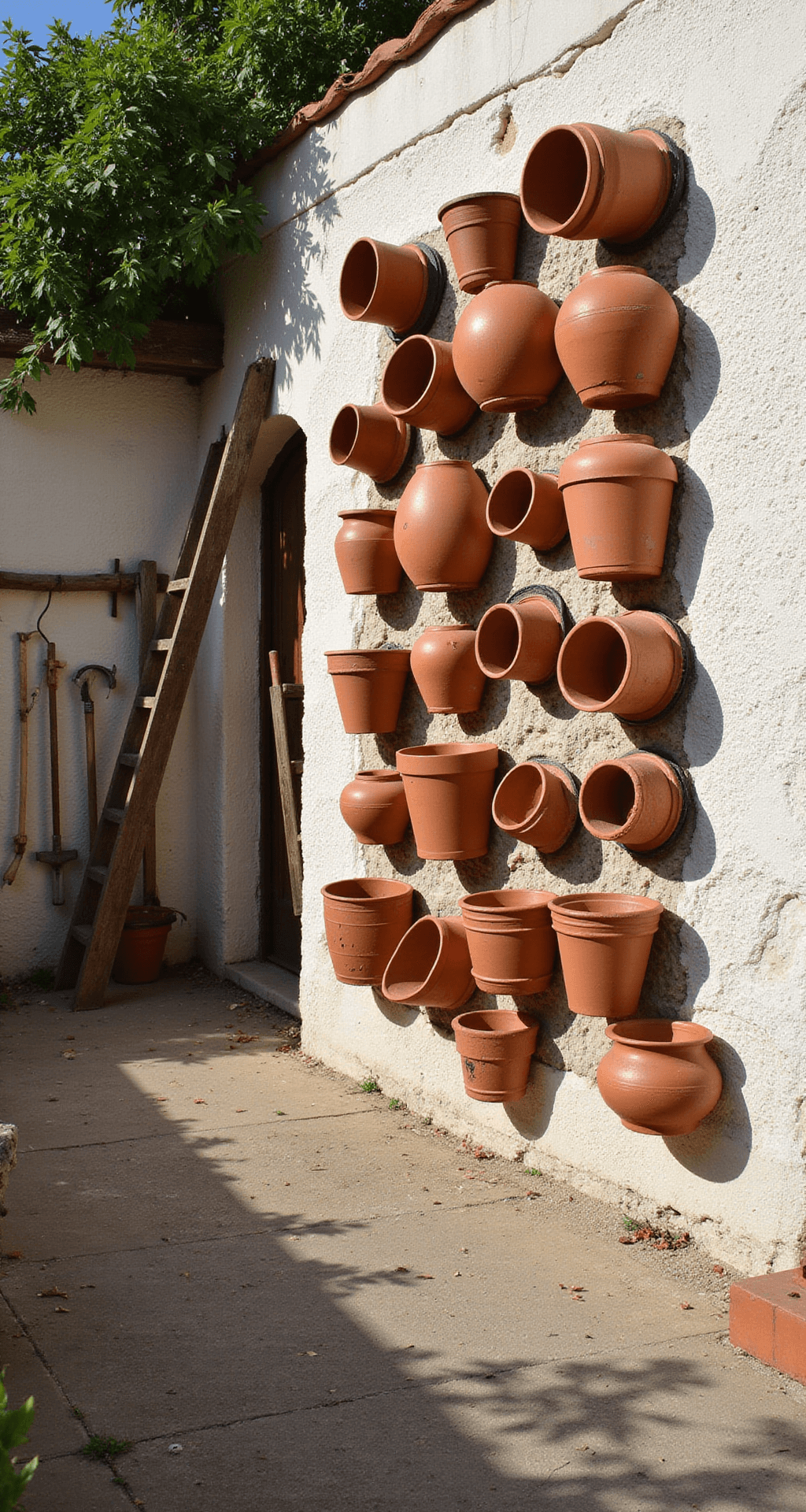
🎨 Steal This Look
- Paint Color: use Farrow & Ball brand. Match the ACTUAL wall color in the image. Format: Farrow & Ball ColorName CODE
- Furniture: weathered teak potting bench with galvanized steel top, positioned against the wall as both workspace and display surface
- Lighting: industrial gooseneck barn light in matte black with warm LED bulb, mounted above the growing zone
- Materials: rough-sawn cedar, raw terracotta, untreated hemp rope, zinc-coated hardware, organic jute landscape fabric
There’s something deeply satisfying about snipping fresh basil within arm’s reach of your stove—this wall turns the utilitarian act of cooking into a sensory ritual that connects you to the growing cycle.
Save this article
Enter your email and we'll send it straight to your inbox.
Herb Selection: Pick Your Plant Performers
Top Herbs for Vertical Gardens:
- Basil: Sun-loving, fast-growing
- Thyme: Compact, drought-resistant
- Mint: Spreads quickly (use separate containers!)
- Rosemary: Sturdy, architectural presence
- Chives: Slim, perfect for tight spaces
Essential Setup Tips
Sunlight Matters
- South-facing walls provide most light
- Use tiered design to maximize sun exposure
- Place sun-loving herbs on top tier
- Shade-tolerant herbs go on lower levels
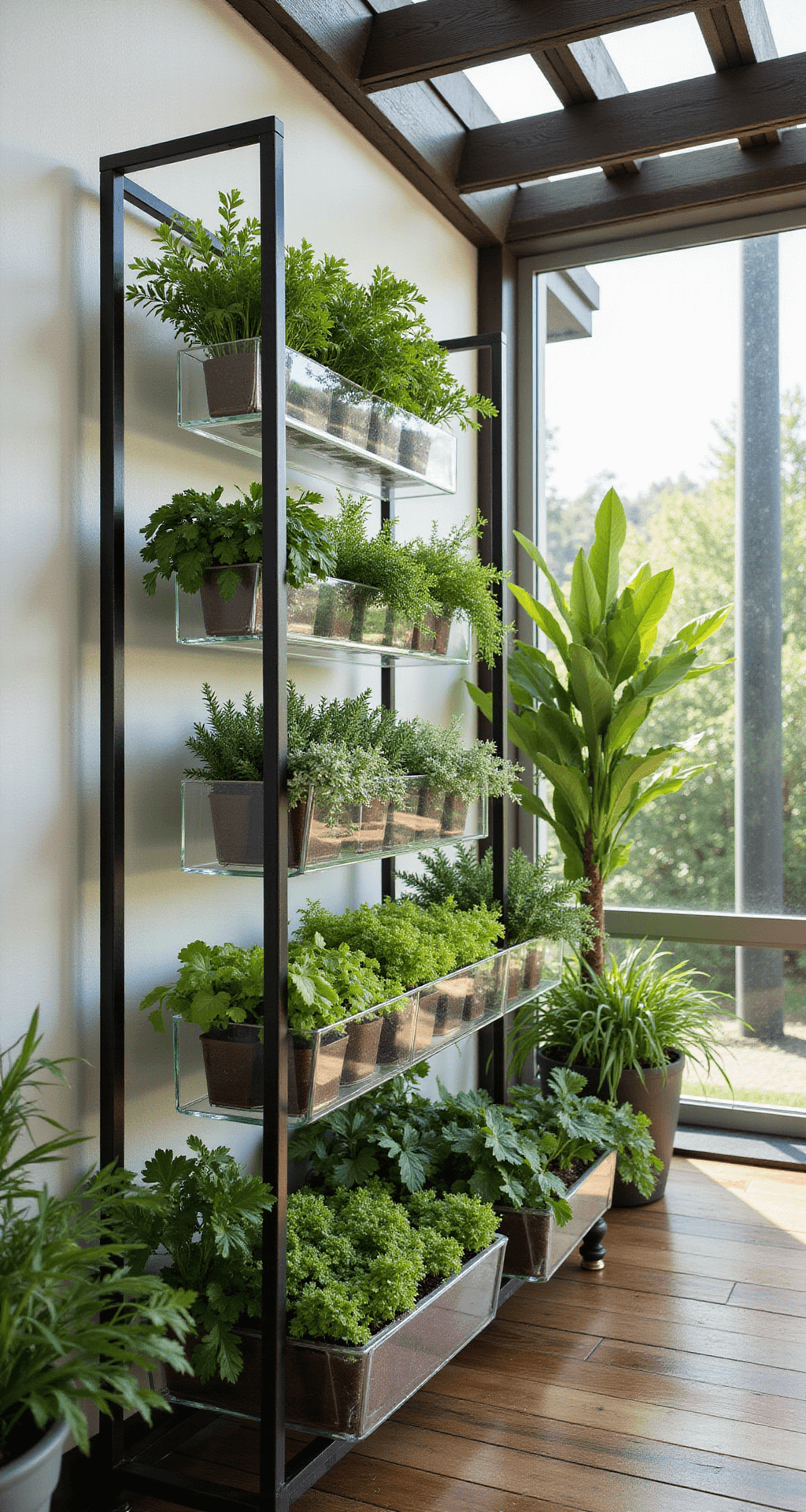
Soil and Drainage
Critical Components:
- Use lightweight, well-draining potting mix
- Ensure every container has drainage holes
- Add small pebbles at bottom for extra drainage
Maintenance Made Simple
Weekly Care Routine:
- Check soil moisture
- Trim herbs regularly to encourage growth
- Rotate plants for even sun exposure
- Remove any dead or yellowing leaves
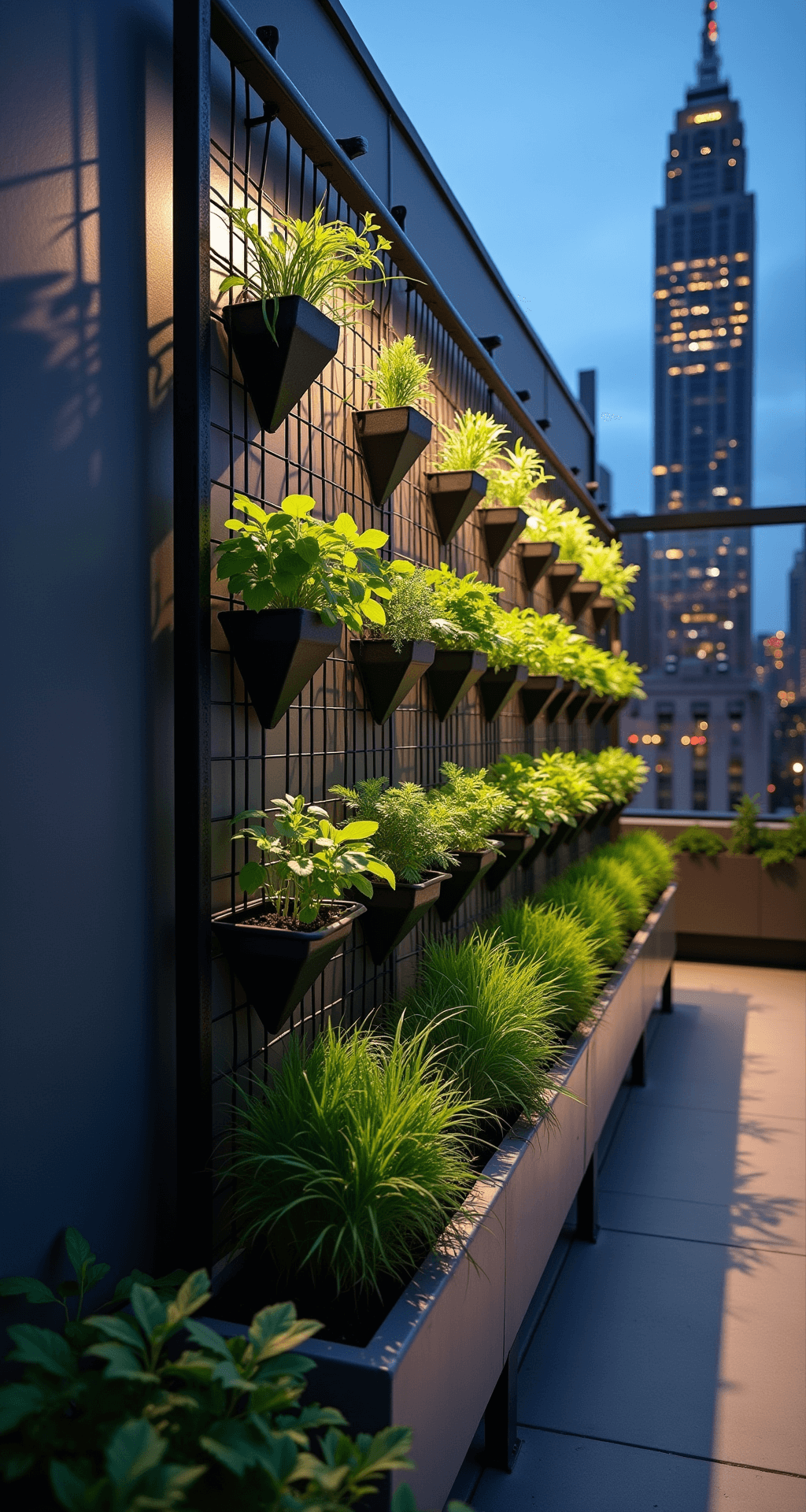
🏠 Steal This Look
- Paint Color: PPG Olive Shadow PPG1120-5
- Furniture: wall-mounted cedar herb planter boxes with built-in irrigation channels, narrow potting bench with galvanized steel top
- Lighting: adjustable-arm brass grow light sconces with warm 3000K full-spectrum bulbs
- Materials: unfinished cedar for natural rot resistance, raw terracotta pots for breathability, brushed brass hardware that patinas gracefully, unsealed concrete for the potting surface
There’s something deeply satisfying about a Sunday morning spent with scissors and a small bowl, harvesting what you’ve grown—this routine becomes less chore and more ritual when your setup is designed for easy access.
Budget-Friendly Options
Vertical herb gardens don’t need to break the bank:
- Repurpose existing materials
- Start with 3-5 herbs
- Use recycled containers
- Estimated startup cost: $30-$75
Common Mistakes to Avoid
- ❌ Overcrowding plants
- ❌ Ignoring individual herb needs
- ❌ Forgetting drainage
- ❌ Inconsistent watering
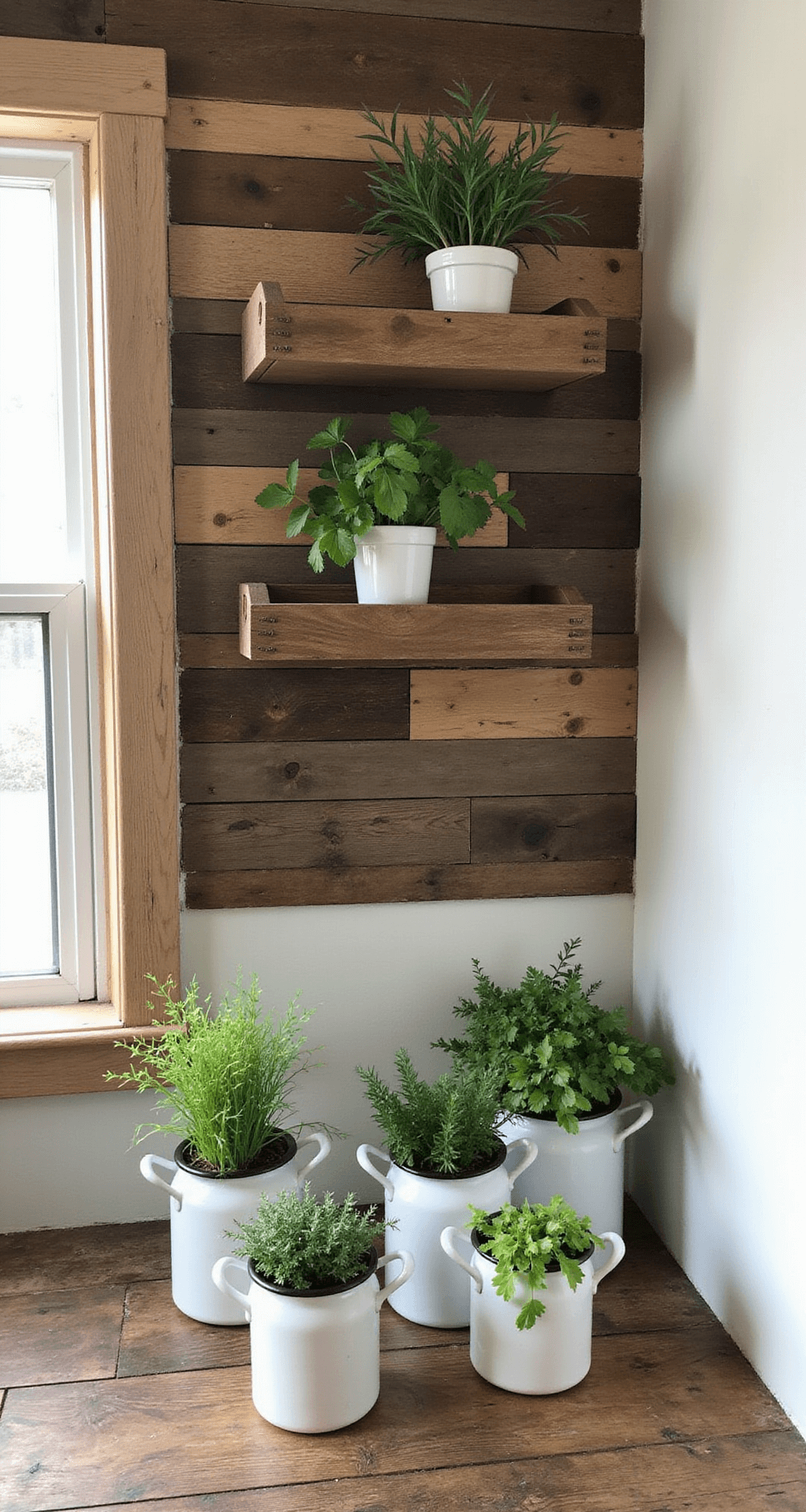
🏠 Steal This Look
- Paint Color: Clare Paint Fresh Kicks 0010
- Furniture: wall-mounted cedar herb planter with individual removable pots
- Lighting: adjustable-arm brass grow light sconce
- Materials: untreated cedar, terracotta, matte black metal, unglazed clay
We’ve all killed a windowsill basil plant, but a wall system actually makes consistent care easier once you respect each herb’s personality—think of it as curating a tiny neighborhood rather than forcing roommates together.
Pro Gardener Secrets
- 🌿 Group herbs with similar water/sun requirements
- 🌿 Use self-watering systems for consistent moisture
- 🌿 Harvest herbs regularly to promote growth
- 🌿 Experiment and have fun!
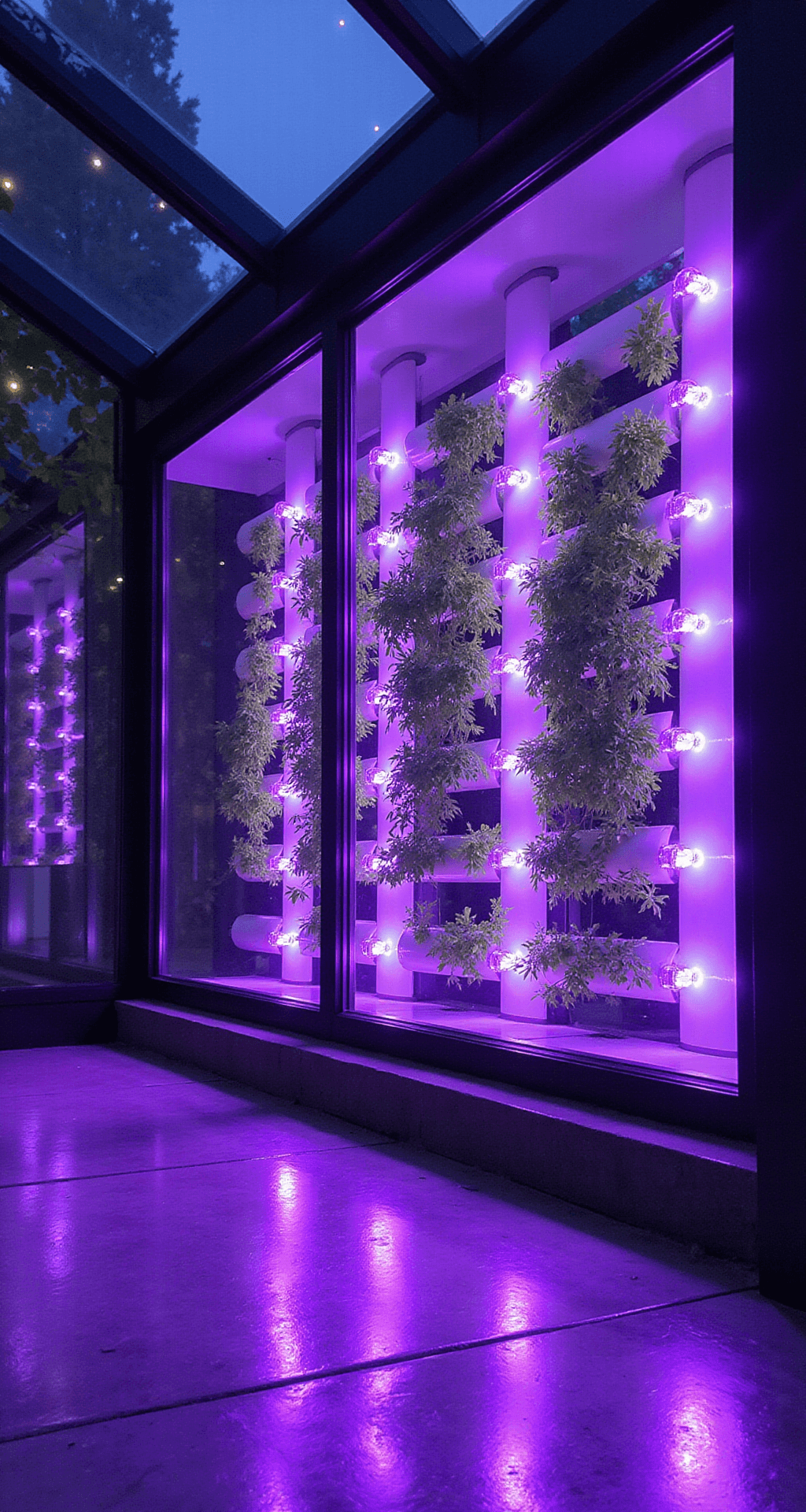
🏠 Steal This Look
- Paint Color: Fine Paints of Europe Hollandlac Brilliant S 6020-G30Y
- Furniture: Cedar potting bench with zinc-top work surface and lower slatted shelving for tool storage
- Lighting: Galvanized steel gooseneck barn light with full-spectrum grow bulb capability
- Materials: Untreated cedar for planters (naturally rot-resistant), raw zinc for labels, hemp twine for tying herbs, unglazed terracotta for moisture regulation
This is where the romance of gardening meets the reality of daily cooking, and the wall becomes a living pantry you actually use rather than just admire.
Final Thoughts
A vertical herb garden isn’t just a garden – it’s a living, breathing piece of functional art. Whether you’re a culinary enthusiast or a design lover, this project transforms your space while providing fresh, delicious herbs.
Start small, learn as you grow, and watch your vertical herb garden become a stunning, productive masterpiece.
Keep this one for later
We'll email you the link so you can come back to it.





[…] Create a gallery wall of memories […]