
This post may contain affiliate links. Please see my disclosure policy for details.
Why Container Herb Gardens Are a Game-Changer
Let’s cut to the chase: you want fresh herbs, minimal hassle, and a touch of green in your living space. Container herb gardens are your secret weapon.
Quick Snapshot: What You’ll Achieve
- Setup Time: Just 30-60 minutes
- Space Needed: Windowsill, balcony, or kitchen counter
- Difficulty: Beginner-friendly
- Budget: $20-$100

🖼 Steal This Look
- Paint Color: Sherwin-Williams Sage SW 2861
- Furniture: narrow console table with built-in grow light shelf for kitchen or dining area herb display
- Lighting: full-spectrum LED grow light bar with timer, mounted under upper cabinet or on adjustable gooseneck stand
- Materials: unglazed terracotta pots, reclaimed wood planter boxes, galvanized metal herb markers, hemp fiber pot liners
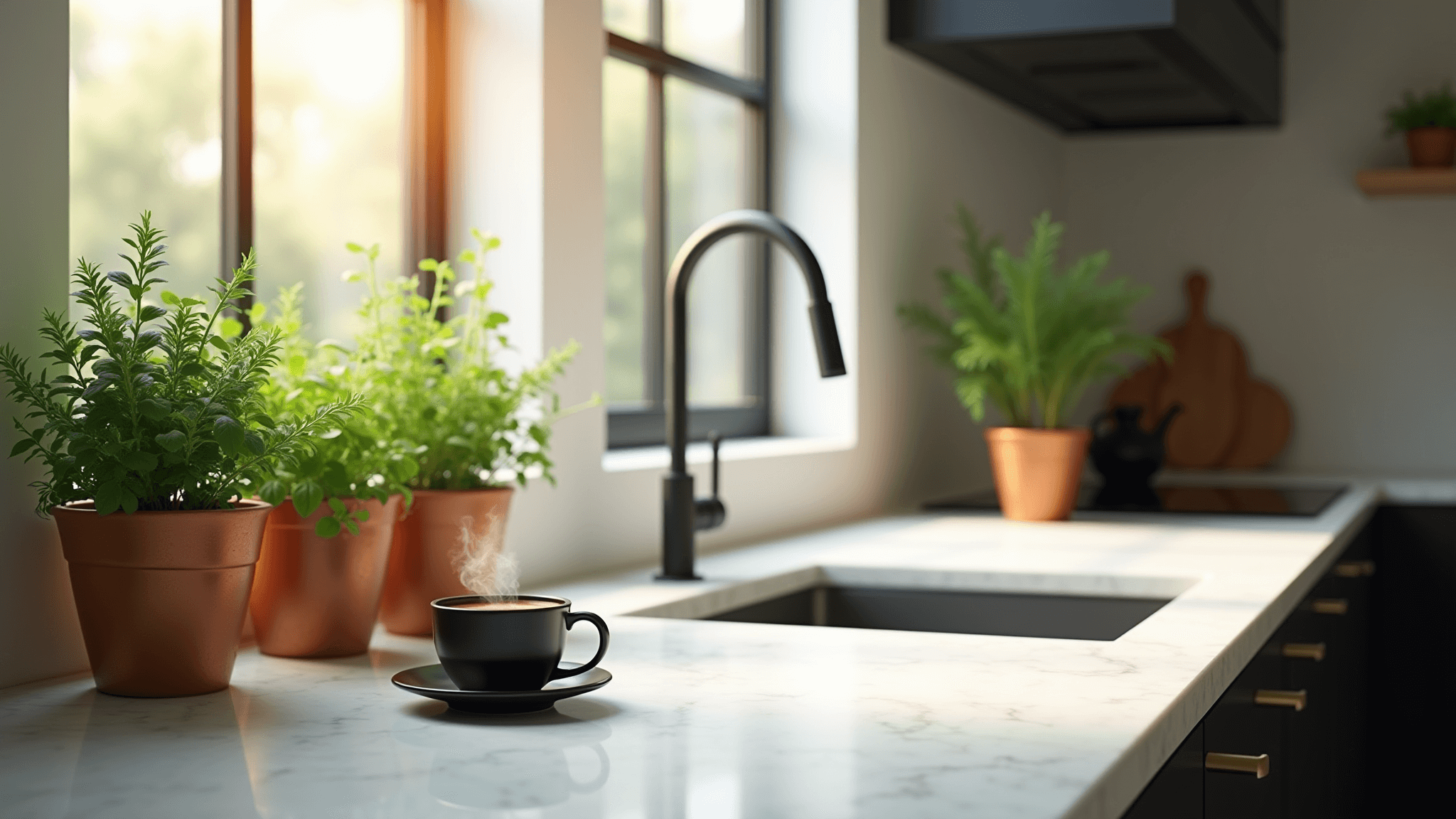
There’s something deeply satisfying about snipping fresh basil mid-recipe without stepping outside—container herbs turn even the smallest rental kitchen into a working garden.
Choosing Your Herb Haven: Container Basics
Container Essentials
The Non-Negotiables:
- Drainage holes (this is crucial!)
- Minimum 8-12 inches wide
- Food-safe materials like:
- Terracotta
- Untreated cedar
- Stainless steel
- Heavy-duty grow bags
Soil Success: The Foundation of Flavor
Perfect Soil Mix:
- 1/3 topsoil
- 1/3 compost
- 1/3 coarse sand
- OR pre-mixed potting soil designed for herbs

🎨 Steal This Look
- Paint Color: Benjamin Moore Sage Tint 458
- Furniture: weathered teak potting bench with galvanized steel top
- Lighting: gooseneck barn light in matte black with warm LED
- Materials: raw terracotta, untreated cedar, galvanized metal, hessian burlap, unglazed clay
There’s something deeply satisfying about running your fingers through warm terracotta on a morning harvest, knowing exactly what your food grew in.
Herb Selection: Your Culinary Toolkit
Top Herbs for Beginners
Sun-Loving Champions:
- Basil
- Rosemary
- Thyme
- Sage
- Oregano
- Chives
- Mint
- Parsley
Pro Tip: Group herbs with similar water and sunlight needs together!

🌟 Steal This Look
- Paint Color: Farrow & Ball Cooking Apple Green 32
- Furniture: galvanized steel raised planter box with cedar trim, 24-inch height for ergonomic harvesting
- Lighting: industrial gooseneck barn light in matte black with warm 2700K LED bulb
- Materials: raw terracotta, untreated cedar, brushed zinc plant markers, linen herb-drying bundles
There’s something deeply satisfying about stepping outside your kitchen door and snipping exactly what you need—no plastic clamshells, no wilted grocery store sprigs, just the sharp scent of rosemary on your fingers before dinner.
Step-by-Step Planting Guide
- Select a bright location (6+ hours of sunlight)
- Prepare your container with drainage layer
- Fill with prepared soil mix
- Plant herbs:
- Tall herbs in center/back
- Trailing herbs at edges
- Water thoroughly
Care and Maintenance: Keep Your Herbs Happy
Watering Wisdom
- Water deeply
- Allow soil to almost dry between waterings
- Avoid letting herbs wilt
Pruning Secrets
- Snip herbs regularly
- Encourages bushier growth
- Prevents early flowering
Feeding Fundamentals
- Monthly light feeding
- Use organic fertilizer
- Diluted fish emulsion works wonders
Save this article
Enter your email and we'll send it straight to your inbox.
★ Steal This Look
- Paint Color: use Valspar brand. Match the ACTUAL wall color in the image. Format: Valspar ColorName CODE
- Furniture: weathered cedar potting bench with galvanized steel top
- Lighting: adjustable-arm brass pharmacy sconce
- Materials: terracotta clay, untreated cedar, brushed brass, raw linen, cast concrete
There’s something deeply satisfying about stepping onto your patio with morning coffee to snip fresh herbs—this care routine becomes meditative once you learn your plants’ rhythms.
Common Pitfalls to Avoid
Herb Killers to Watch:
- Poor drainage
- Overcrowding containers
- Inconsistent watering
- Ignoring sunlight requirements
Style and Creativity
Mix It Up
- Combine culinary herbs with ornamental plants
- Use unique containers like vintage mugs
- Add seasonal flowers for color

💡 Steal This Look
- Paint Color: Dunn-Edwards Garden Spot DET543
- Furniture: weathered wood potting bench with galvanized steel top
- Lighting: vintage-style gooseneck barn sconce in oil-rubbed bronze
- Materials: terracotta, aged zinc, reclaimed barn wood, hand-thrown ceramic
This is where your herb garden becomes truly yours—those chipped enamel mugs from your grandmother’s kitchen or the cracked teapot you couldn’t part with finally earn their place in the sun.
Benefits Beyond the Plate
- Mobility (move herbs as needed)
- Easy pest management
- Fresh ingredients at your fingertips
- Beautiful, living decor
Photography Tips for Your Herb Garden
- Natural light is your friend
- Capture harvesting moments
- Highlight texture and color
- Use overhead and side angles

💡 Steal This Look
- Paint Color: use Fine Paints of Europe brand. Match the ACTUAL wall color in the image. Format: Fine Paints of Europe ColorName CODE
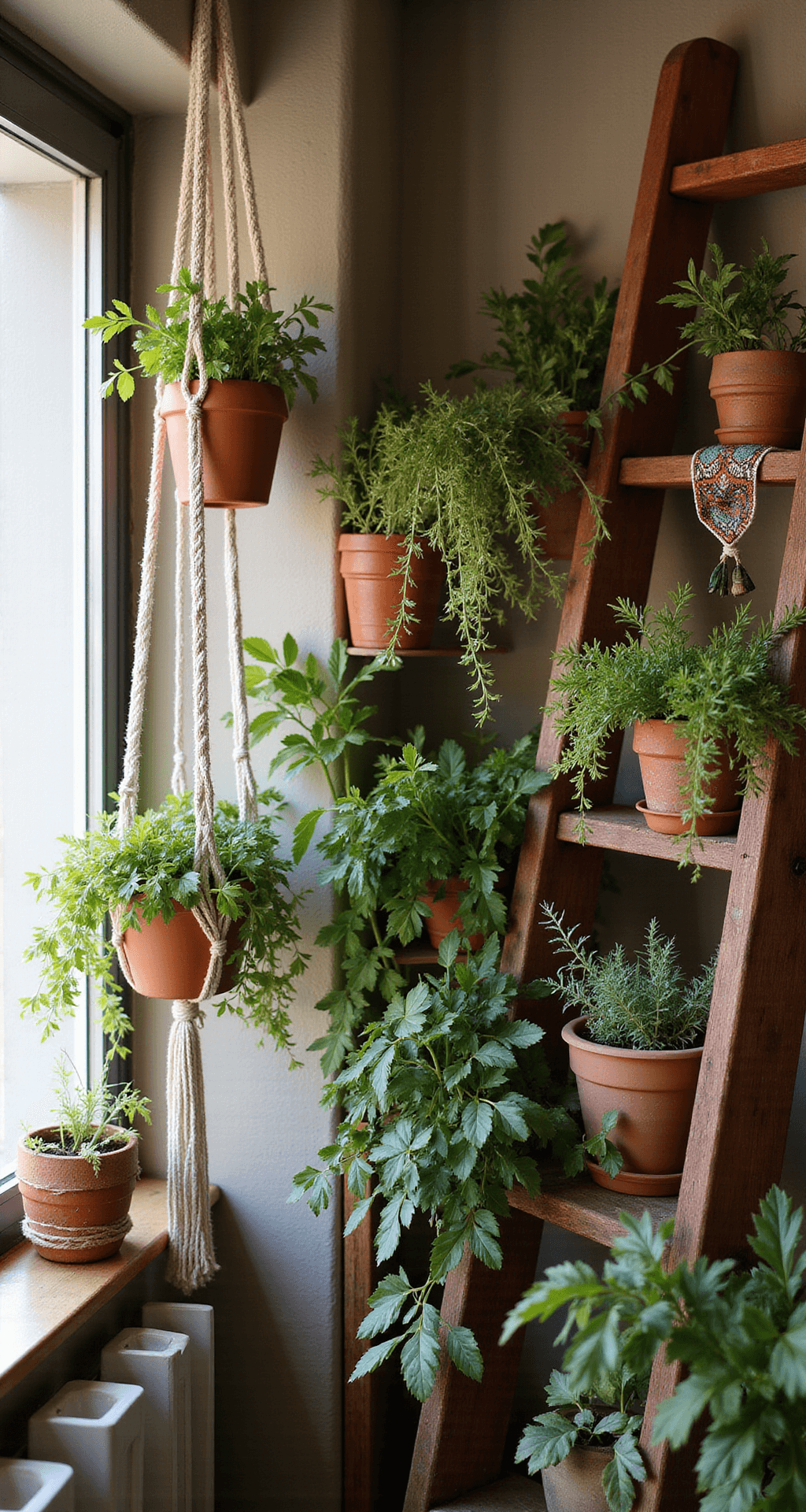
- Furniture: weathered teak potting bench with galvanized steel top, vintage wooden step ladder for tiered herb display
- Lighting: adjustable architect’s swing-arm wall sconce in matte black with warm 2700K LED bulb for directional task lighting
- Materials: raw terracotta, brushed zinc, reclaimed barn wood, hand-thrown ceramic, linen backdrops
There’s something deeply satisfying about documenting the slow unfurling of your herbs—the way thyme cascades over a weathered pot rim deserves to be remembered, not just harvested.
Final Thoughts
Container herb gardens aren’t just about growing plants—they’re about creating a living, breathing kitchen companion that transforms your cooking and living space.
Start small, stay curious, and enjoy the journey!

🌟 Steal This Look
- Paint Color: use Backdrop brand. Match a warm, sunlit kitchen with soft cream walls. Format: Backdrop Harlow 04
- Furniture: wall-mounted folding potting bench with galvanized steel top
- Lighting: adjustable brass-arm sconce with warm 2700K LED bulb
- Materials: terracotta clay, aged zinc, raw linen, reclaimed wood
There’s something deeply satisfying about snipping fresh thyme while your sauce simmers—it’s the small daily ritual that makes a kitchen feel truly alive.
Keep this one for later
We'll email you the link so you can come back to it.




[…] herb gardens don’t need to break the […]