This post may contain affiliate links. Please see my disclosure policy for details.
How to Paint Kitchen Cabinets Like a Pro: Transform Your Space on a Budget
Painting kitchen cabinets is the most cost-effective way to transform a kitchen. The best results come from proper preparation, quality paint, and patience. The key is cleaning, sanding, priming, and using a durable paint finish.
Why Paint Your Kitchen Cabinets?
Let’s cut to the chase. Painting kitchen cabinets can:
- Save thousands compared to full cabinet replacement
- Completely refresh your kitchen’s look
- Give you a custom design without custom prices
- Increase your home’s value with a professional-looking upgrade
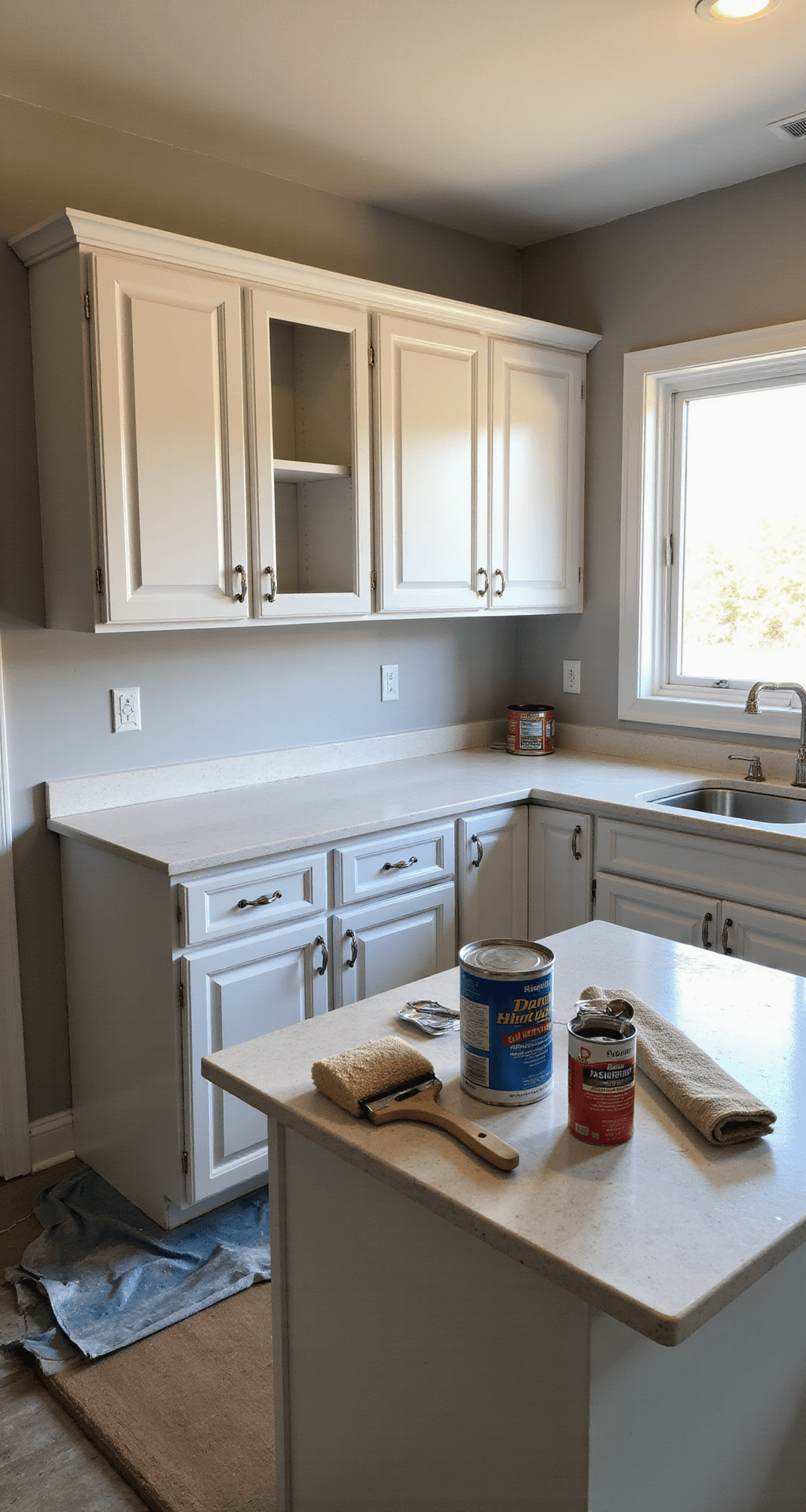
🌟 Steal This Look
- Paint Color: Benjamin Moore Advance Kitchen & Bath 2X CC-20 Linen White
- Furniture: Shaker-style kitchen cabinets with clean lines, suitable for repainting
- Lighting: Recessed LED downlights or pendant lights above kitchen island for task lighting
- Materials: Cabinet-grade primer, semi-gloss or satin finish paint, brushed nickel or matte black cabinet hardware
Cabinet painting is the smart homeowner’s shortcut to a kitchen that looks designer-fresh without the designer price tag. It’s the single highest-ROI kitchen upgrade you can tackle yourself or hire out.
What You’ll Need: Your Cabinet Painting Survival Kit
Essential Tools and Materials:
- Screwdriver
- Sandpaper (120-220 grit)
- Primer
- High-quality cabinet paint
- Paint brushes and foam rollers
- Degreaser
- Drop cloths
- Safety gear (gloves, mask, eye protection)
The Step-by-Step Cabinet Transformation
Prep Work: The Make-or-Break Stage
Cleaning is Everything
Kitchen cabinets are grease magnets. Before anything else:
- Remove all hardware
- Deep clean with a heavy-duty degreaser
- Sand surfaces lightly to create paint grip
- Wipe down with a tack cloth to remove dust
Pro Tip: Label your cabinet doors and hardware! Trust me, you’ll thank yourself later when reassembling.
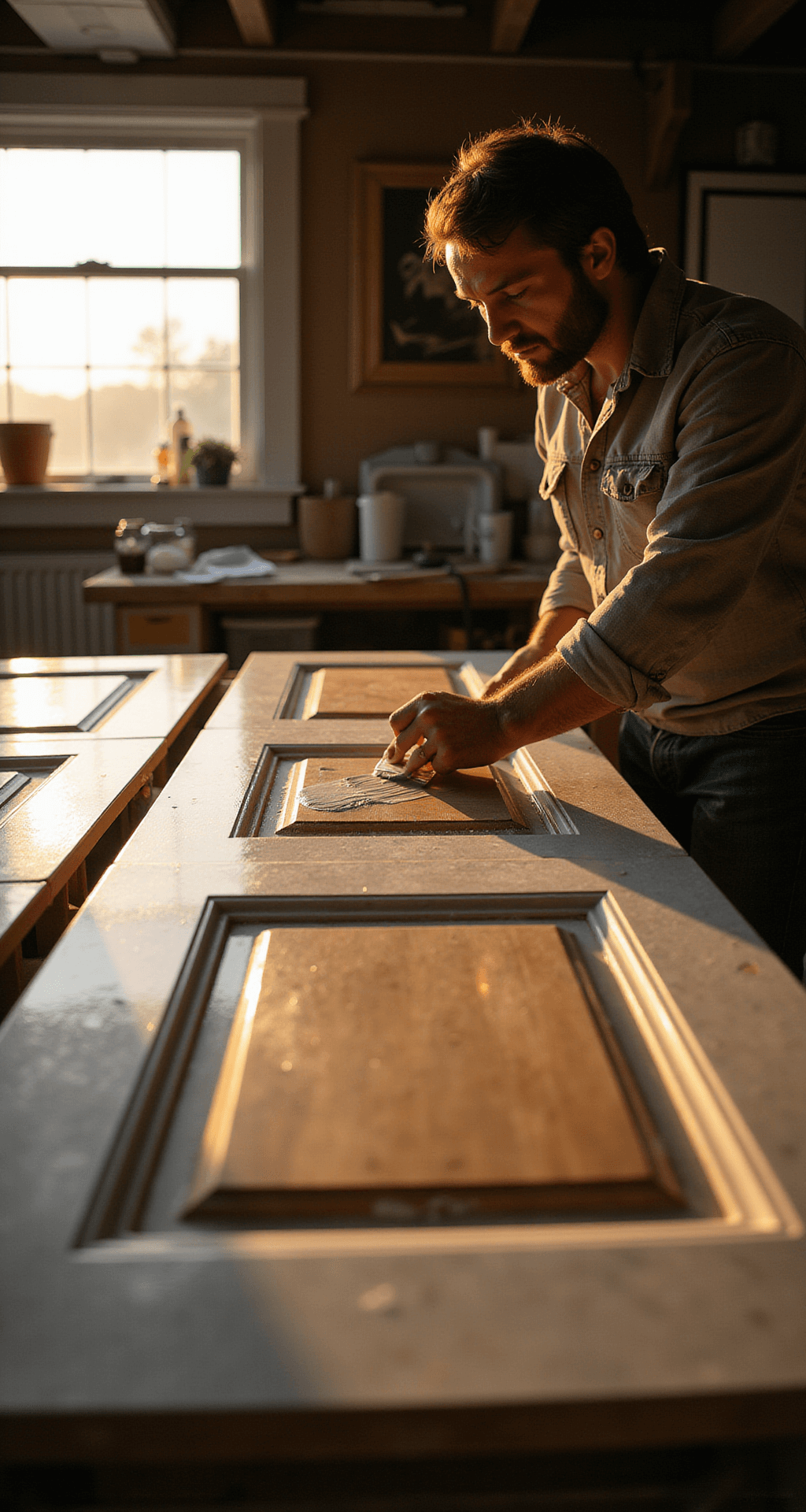
Priming: Your Paint’s Best Friend
- Choose a primer specific to your cabinet material
- Apply thin, even coats
- Let each coat dry completely
- Lightly sand between primer coats for ultimate smoothness
Painting: Where the Magic Happens
Technique is Key
- Use high-quality enamel paint designed for cabinets
- Apply multiple thin coats instead of one thick coat
- Use an angled brush for details, foam roller for flat surfaces
- Allow proper drying time between coats
Paint Finish Recommendations:
- Semi-gloss: Easy to clean, subtle shine
- Satin: Soft, modern look
- Avoid flat finishes – they’re a cleaning nightmare in kitchens
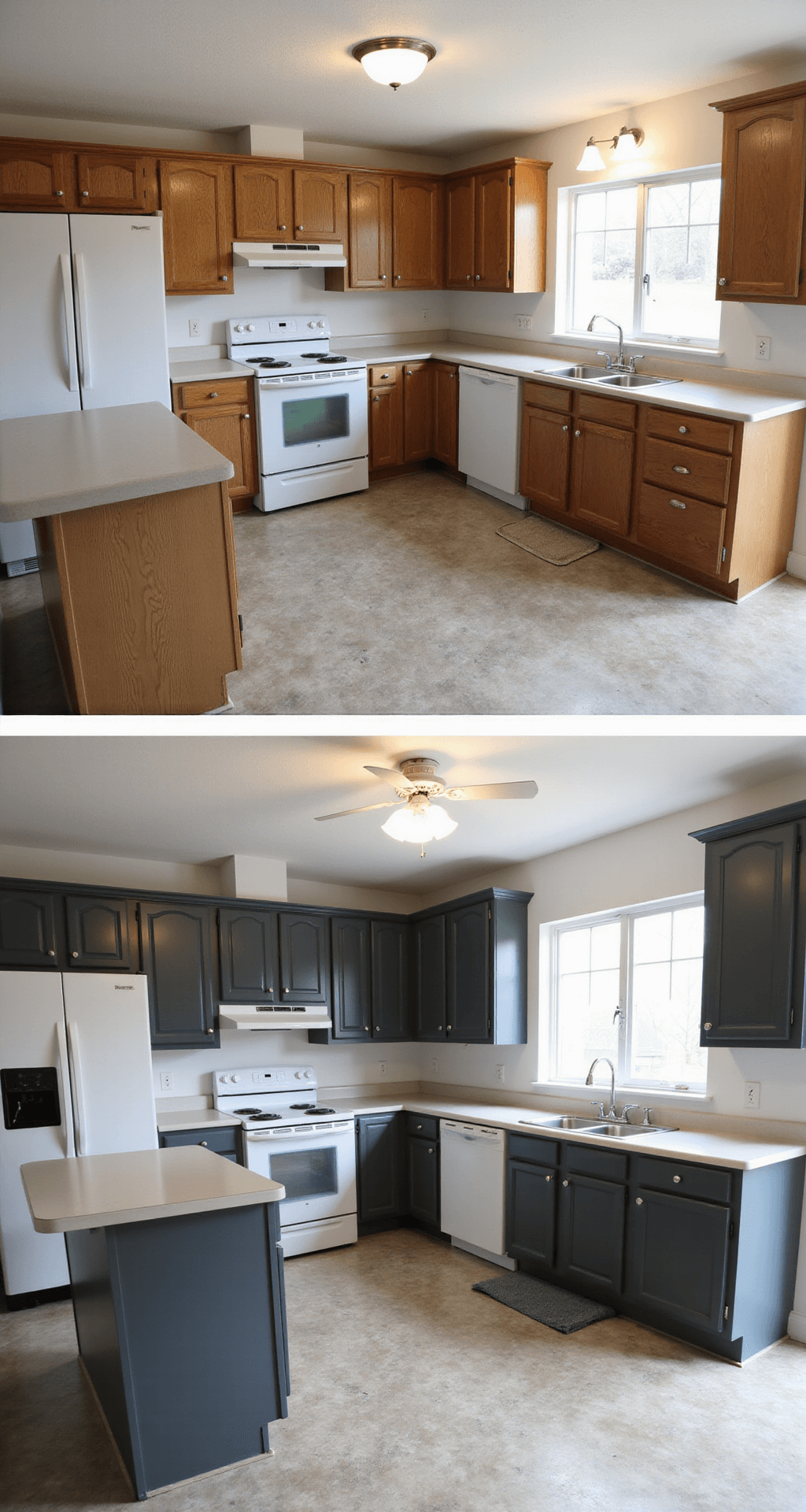
Final Touches
- Let paint fully cure (7-10 days)
- Reattach hardware carefully
- Step back and admire your work!
★ Steal This Look
- Paint Color: Behr Pro Classic Semi-Gloss CLASSIC WHITE 50
- Furniture: Kitchen cabinet doors and frames (wood or laminate construction)
- Lighting: Under-cabinet LED strip lighting for task visibility during prep and painting
- Materials: Wood grain cabinet substrate, semi-gloss enamel finish for durability and cleanability
Kitchen cabinet painting is the highest-ROI DIY project you can tackle—the prep work feels tedious but transforms a tired kitchen into something custom-designed without the custom price tag. Getting the degreasing and primer stages right separates a paint job that looks handmade from one that looks professionally refinished.
Save this article
Enter your email and we'll send it straight to your inbox.
Common Mistakes to Avoid
- 🚫 Don’t rush the process
- 🚫 Skip proper cleaning and sanding
- 🚫 Use cheap paint or tools
- 🚫 Forget to ventilate your workspace
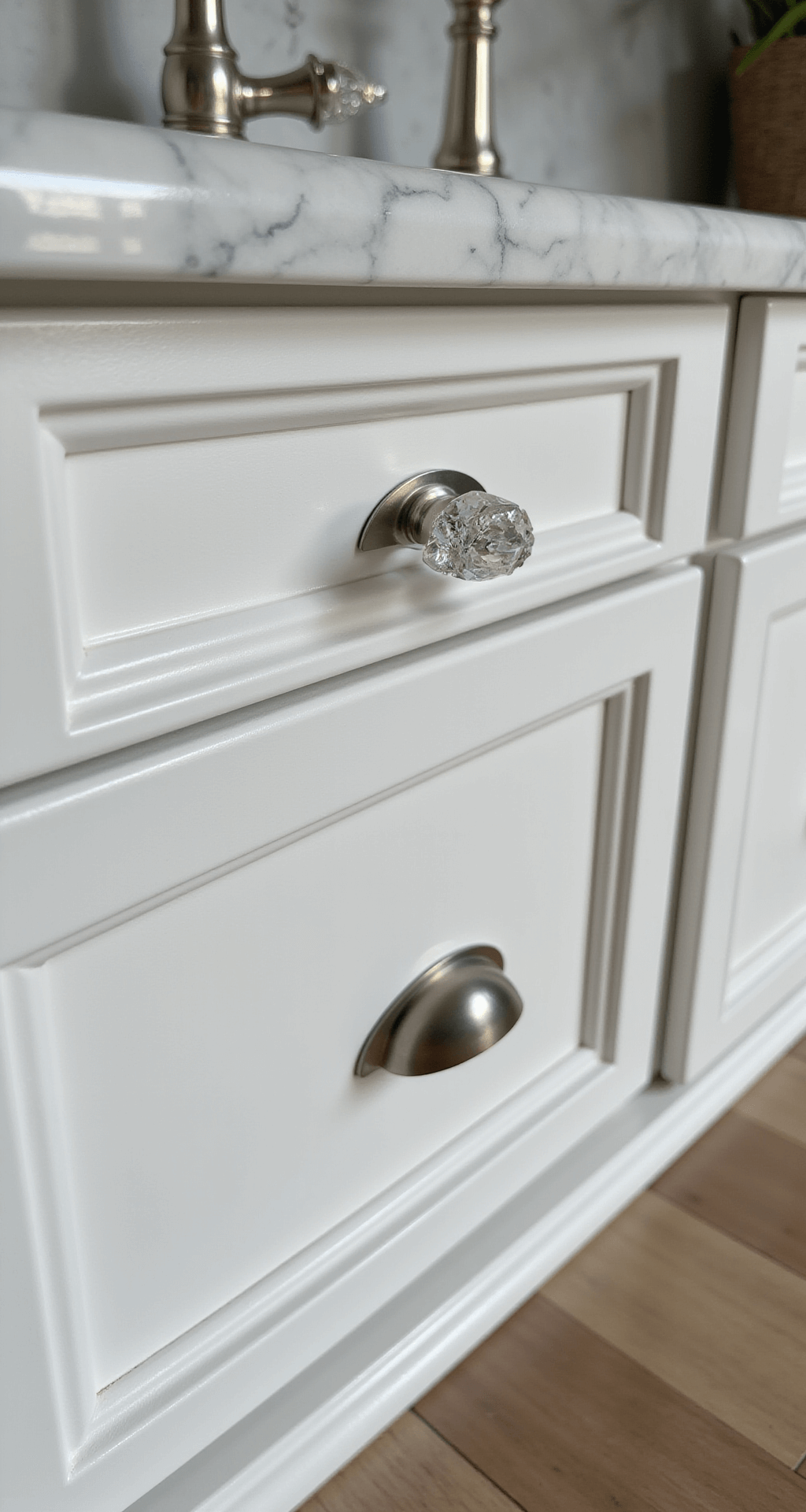
✎ Steal This Look
- Paint Color: Valspar Cabinet & Trim Paint #4006-2C (semi-gloss finish recommended for kitchen cabinets)
- Furniture: Kitchen cabinets (existing cabinetry being refinished)
- Lighting: Under-cabinet LED lighting to inspect work during painting process
- Materials: High-quality cabinet paint, sanded surfaces, primer, semi-gloss or satin finish
Cabinet painting is a marathon, not a sprint. Rushing leads to dust in wet paint, uneven strokes, and regret. Take your time with prep work—the actual painting is the easy part.
Cost Breakdown
Estimated Costs:
- Professional cabinet painting: $2,000 – $5,000
- DIY cabinet painting: $200 – $600
- Potential home value increase: 5-10%
Time Investment
- Preparation: 1-2 days
- Priming: 1 day
- Painting: 2-3 days
- Curing: 7-10 days
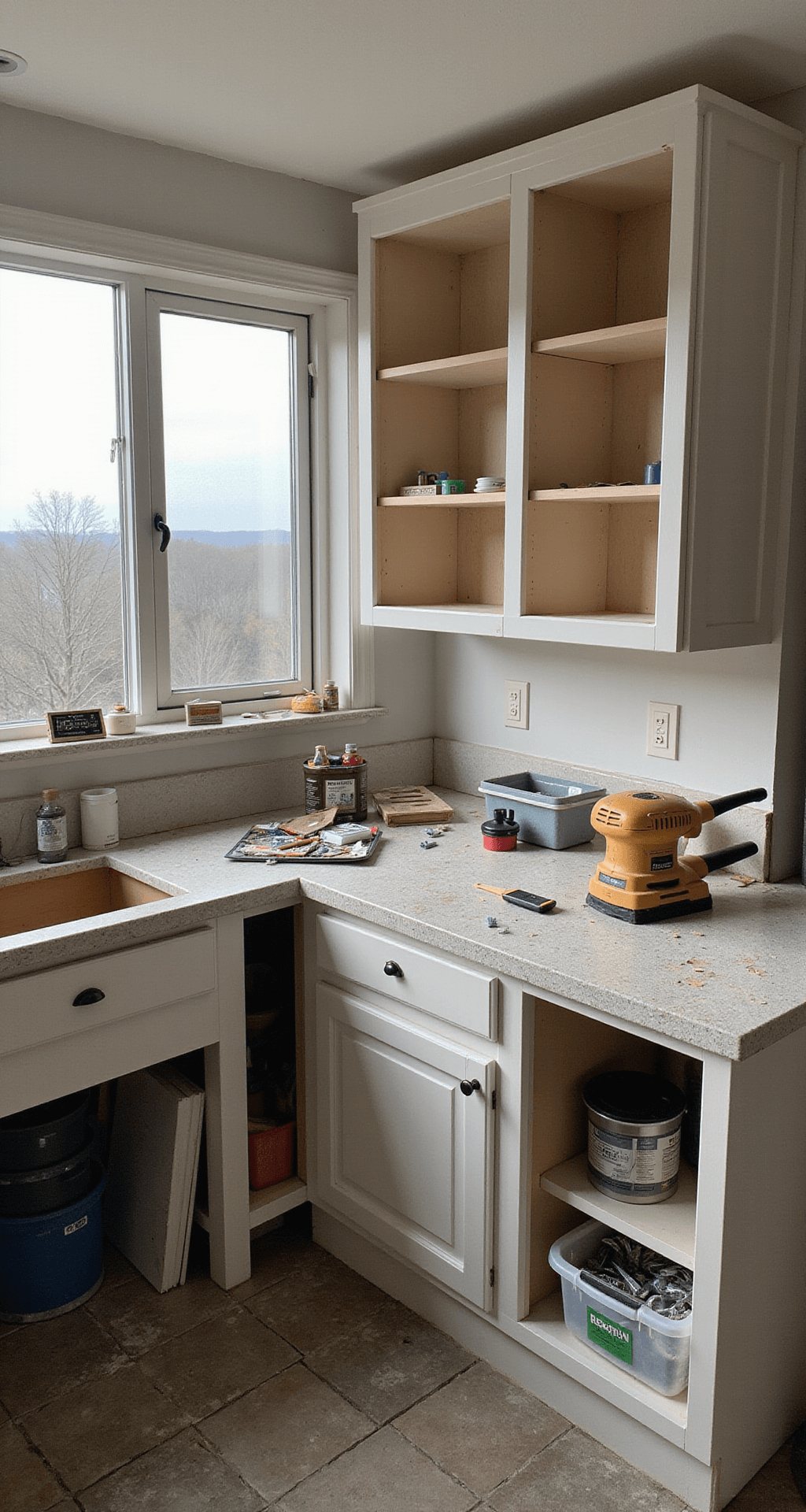
✎ Steal This Look
- Paint Color: Dunn-Edwards Eggshell finish for kitchen cabinets – provides durability and wipeable surface. Recommend DE6307 Swiss Coffee for classic neutral kitchen cabinetry or DE6321 Crisp Linen for fresh, clean aesthetic
- Furniture: Not applicable to cabinet painting project
- Lighting: Task lighting or under-cabinet LED strips to illuminate workspace during multi-day painting project
- Materials: Cabinet-grade primer, high-quality paintbrush set, paint tray liners, tack cloth, sandpaper (120-150 grit), drop cloths
Cabinet painting is deceptively time-intensive, but breaking it into manageable daily chunks makes it achievable for most DIYers. The waiting pays off—properly cured cabinets will last 5-7 years before needing touch-ups.
When to Call a Professional
Consider hiring a pro if:
- You have complex cabinet designs
- Limited time or DIY skills
- Cabinets require extensive repair
Painting kitchen cabinets isn’t just a home improvement project – it’s a transformation. With patience, the right tools, and attention to detail, you can achieve a magazine-worthy kitchen without the hefty price tag.
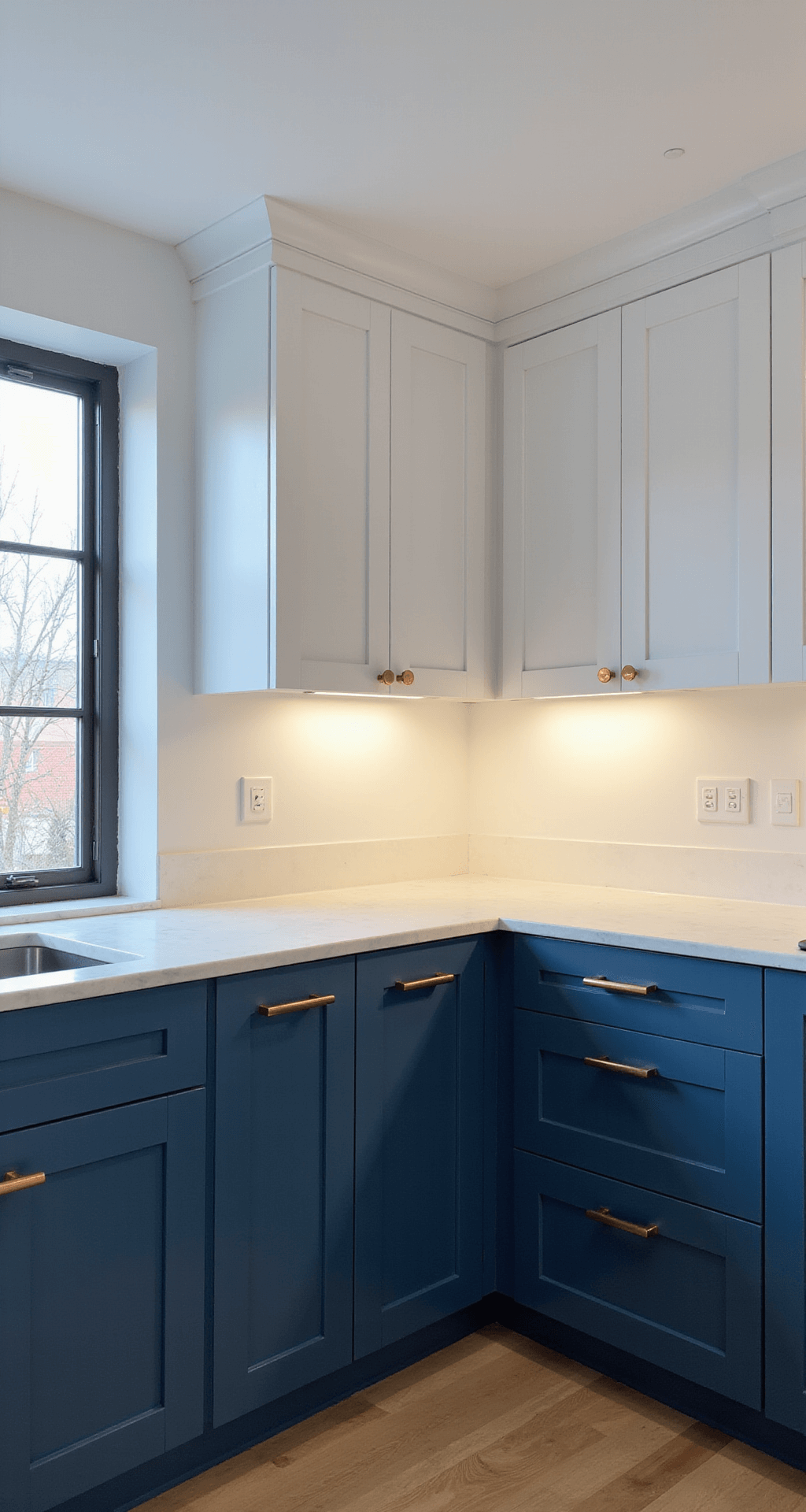
Remember: The difference between a DIY disaster and a professional-looking finish is in the preparation and technique.
Ready to breathe new life into your kitchen? Let’s do this!
Painting kitchen cabinets works when the prep is thorough and the paint is quality. Clean, sand, prime, and use a durable paint. The cabinets should look fresh and last.
Keep this one for later
We'll email you the link so you can come back to it.