This post may contain affiliate links. Please see my disclosure policy for details.
Common Weeds With Yellow Flowers: The Bright Invaders in Your Garden
Yellow flowers might look cheerful, but when they belong to weeds, they’re secretly plotting garden domination. Let me break down the yellow-flowered troublemakers you’ll encounter.
What Makes These Yellow Flowers Different?
These aren’t your typical garden beauties. These are aggressive plant invaders that:
- Spread faster than gossip at a neighborhood barbecue
- Choke out your carefully planted flowers
- Multiply like rabbits on a mission

💡 Steal This Look
- Paint Color: Benjamin Moore Dandelion 2155-40
- Furniture: a distressed farmhouse dining table with turned legs in weathered oak finish
- Lighting: vintage-inspired schoolhouse pendant with seeded glass shade in aged brass
- Materials: raw linen, reclaimed barn wood, matte ceramic, hand-forged iron accents
This kitchen-dining space celebrates the beautiful chaos of nature without surrendering to it—perfect for anyone who’s ever admired a field of buttercups while secretly plotting their removal from the lawn.
Top Yellow-Flowering Weed Culprits
1. Dandelion: The Lawn Terrorist
- Bright yellow flowers that transform into those magical wish-making puffballs
- Master of seed dispersal via wind
- Can regenerate from a tiny root fragment (garden nightmare, right?)

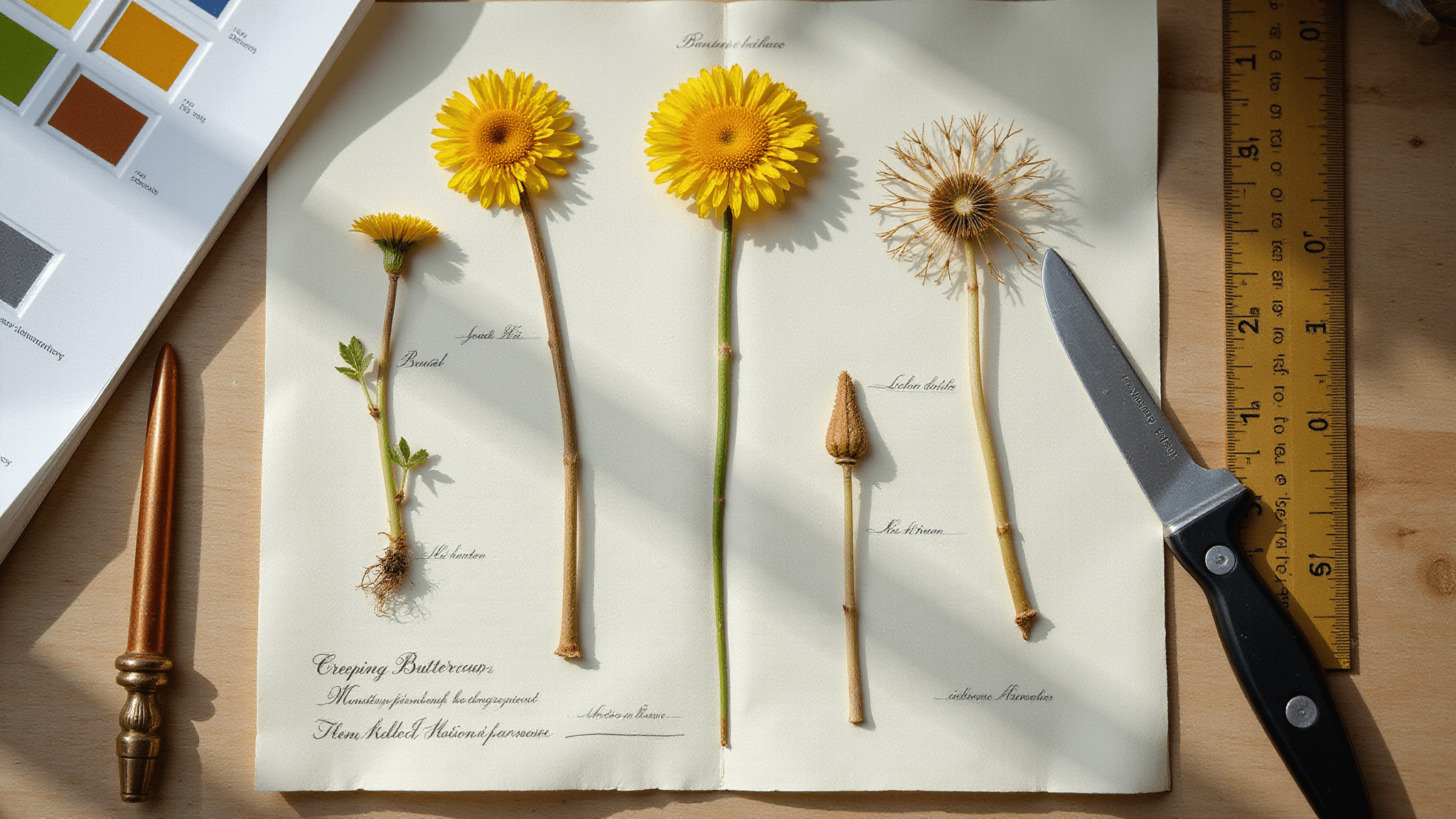
2. Creeping Buttercup: The Sneaky Spreader
- Shiny, cup-shaped yellow flowers
- Creeps through your lawn like a stealth ninja
- Thrives in moist, heavy soils
3. Wild Parsnip: The Dangerous Intruder
⚠️ Caution: This weed is not just invasive – it’s potentially harmful
- Tall plants with umbrella-like flower clusters
- Sap can cause severe skin burns when exposed to sunlight
- Wear protective clothing if you’re removing it

💡 Steal This Look
- Paint Color: Farrow & Ball Citron 74
- Furniture: vintage botanical print gallery wall with pressed wildflower specimens in brass floating frames, paired with a distressed whitewashed farmhouse console table for displaying foraged finds
- Lighting: antique brass pharmacy floor lamp with adjustable arm for task lighting over reading nooks
- Materials: raw linen upholstery, weathered oak, terracotta pottery, and handwoven jute textiles that echo meadow grasses
There’s something quietly rebellious about honoring these garden outlaws in your space—my own mudroom features a framed vintage dandelion print that always sparks conversation about the line between weed and wildflower.
Identification Survival Guide
Quick Identification Tips:
- Check leaf shape
- Observe growth pattern
- Note flower structure
- Take close-up photos for expert confirmation

🖼 Steal This Look
- Paint Color: Behr Goldenrod PPU6-08
- Furniture: vintage apothecary cabinet with small drawers for specimen storage
- Lighting: adjustable brass-arm architect’s desk lamp with magnifying glass attachment
- Materials: raw linen, aged oak, pressed botanical paper, matte black metal, cork board
There’s something deeply satisfying about knowing exactly what’s growing in your own patch of earth, and dedicating a small corner to that curiosity honors both the wildness outside and the intentionality within your home.
Save this article
Enter your email and we'll send it straight to your inbox.
Management Strategies
Physical Removal
- Pull weeds before they flower
- Dig out entire root system
- Use garden tools for precise extraction

Preventative Tactics
- Maintain a thick, healthy lawn
- Mulch garden beds
- Remove weeds when young
- Consider targeted herbicide treatments
✎ Steal This Look
- Paint Color: Valspar Garden Path 6004-2C
- Furniture: Potting bench with galvanized steel top and cedar base, wall-mounted garden tool organizer with labeled slots
- Lighting: Gooseneck barn sconce in matte black with clear glass shade for task lighting over work surface
- Materials: Weathered cedar shiplap, galvanized metal bins, slate floor tile, raw linen tool apron storage
This is the room where dirt meets discipline—a space that respects the ritual of tending without apologizing for the mess. I think of it as the gardener’s equivalent of a chef’s mise en place station.
Pro Gardener Secrets
🌿 Not all yellow-flowered plants are enemies. Some:
- Support local pollinators
- Indicate soil conditions
- Can be managed strategically

✎ Steal This Look
- Paint Color: PPG Clover Field PPG1125-6
- Furniture: vintage potting bench with zinc top, weathered teak garden stool, iron plant stand with scrollwork
- Lighting: galvanized barn pendant with seeded glass
- Materials: raw terracotta, aged zinc, reclaimed wood, hand-forged iron, unglazed ceramic
This is the room where your hands stay dirty and your instincts sharpen, where a little chaos means you’re actually paying attention to what grows.
Safety First
Weed Removal Protection:
- Wear thick gloves
- Use long-sleeved clothing
- Wash hands thoroughly after gardening
- Watch for skin irritation signs
When to Call for Backup
If weeds overwhelm you:
- Contact local extension office
- Use plant identification apps
- Consult professional landscapers

🏠 Steal This Look
- Paint Color: Clare Paint Fresh Kicks CW-01
- Furniture: weathered teak potting bench with galvanized steel top
- Lighting: gooseneck barn sconce in matte black finish
- Materials: raw cedar shiplap, zinc planters, jute rope, unglazed terracotta
This is the room where humility meets hustle; even the most confident home gardener needs a command center that acknowledges nature always wins, but style can too.
Final Thoughts
Yellow-flowered weeds aren’t just garden nuisances – they’re complex ecological players. Understanding them helps you manage your green space more effectively.
Remember: Every weed pulled is a small victory in your garden’s ongoing battle!
Keep this one for later
We'll email you the link so you can come back to it.