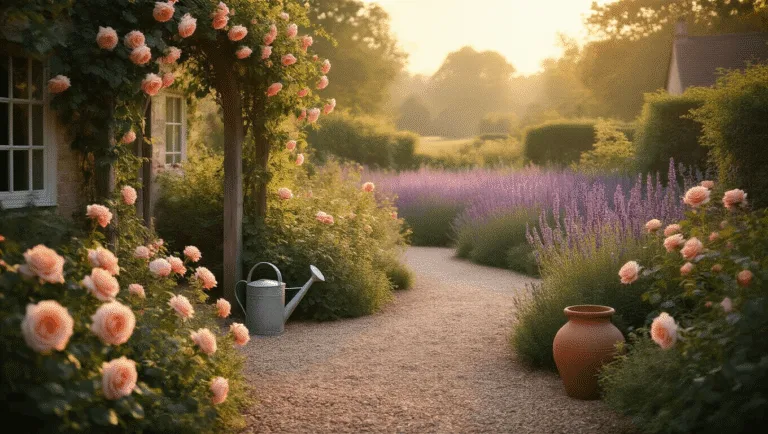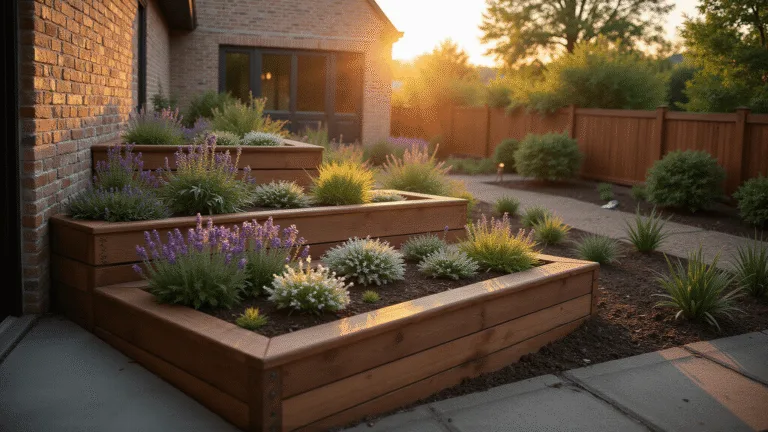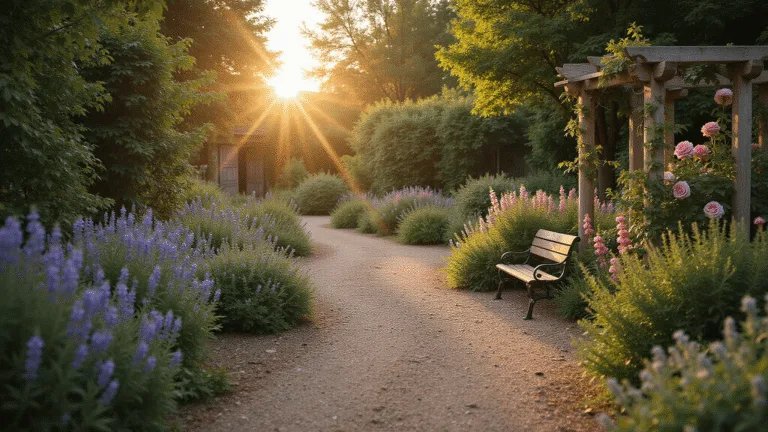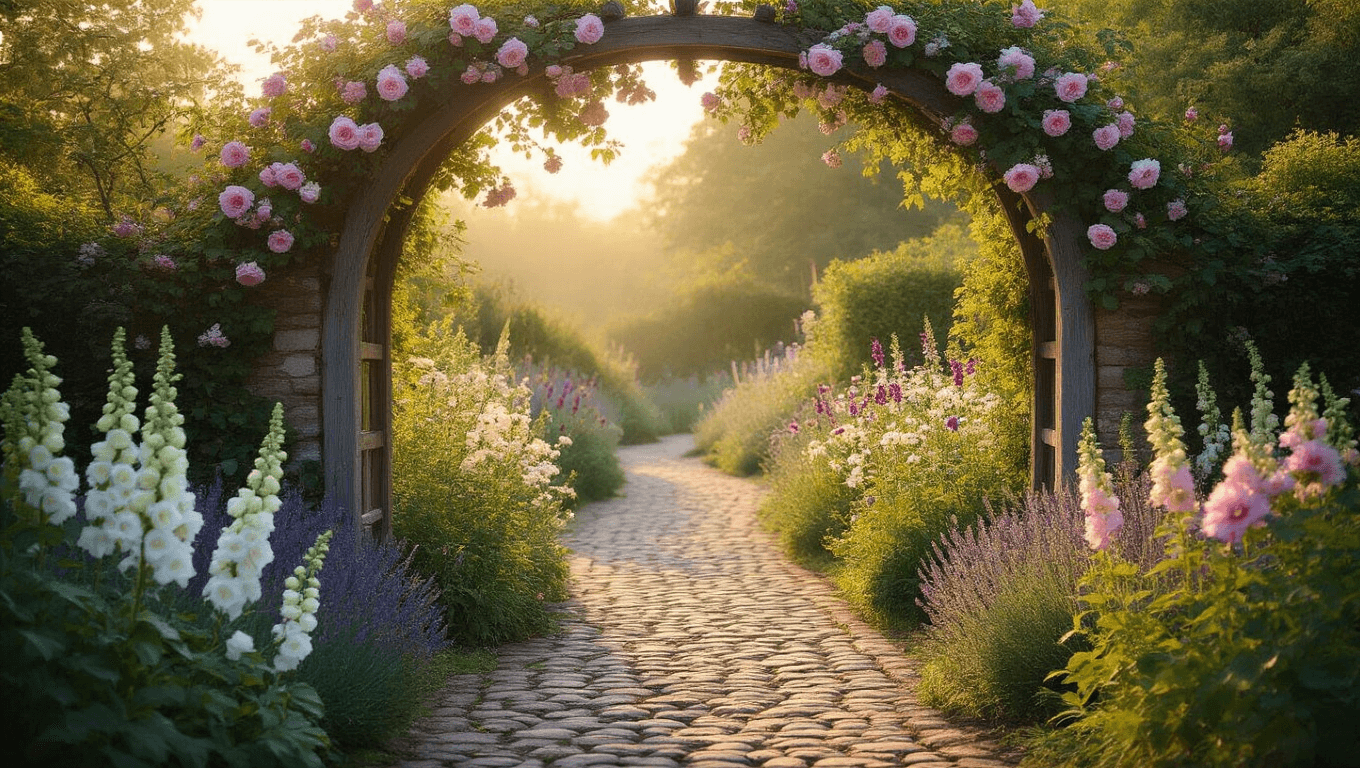
A winding cobblestone garden path at golden hour, shaded by climbing roses and wisteria, with a weathered wooden arch covered in pale pink David Austin roses. The foreground features tall foxgloves, white peonies, and silvery lavender, while classic cottage garden flowers bloom in the mid-ground. A vintage iron bench rests beneath an apple tree in the background, with morning dew on the path and a soft bokeh effect enhancing the magical atmosphere.

Create a Dreamy Country Cottage Garden: Your Ultimate Guide to Whimsical Landscape Design

This post may contain affiliate links. Please see my disclosure policy for details.

Create a Dreamy Country Cottage Garden: Your Ultimate Guide to Whimsical Landscape Design

Have you ever dreamed of stepping into a garden that looks like it’s straight out of a fairytale? A place where flowers burst with color, herbs dance in the breeze, and every corner tells a story?

Welcome to the magical world of country cottage gardens – where beauty meets functionality in the most enchanting way possible.
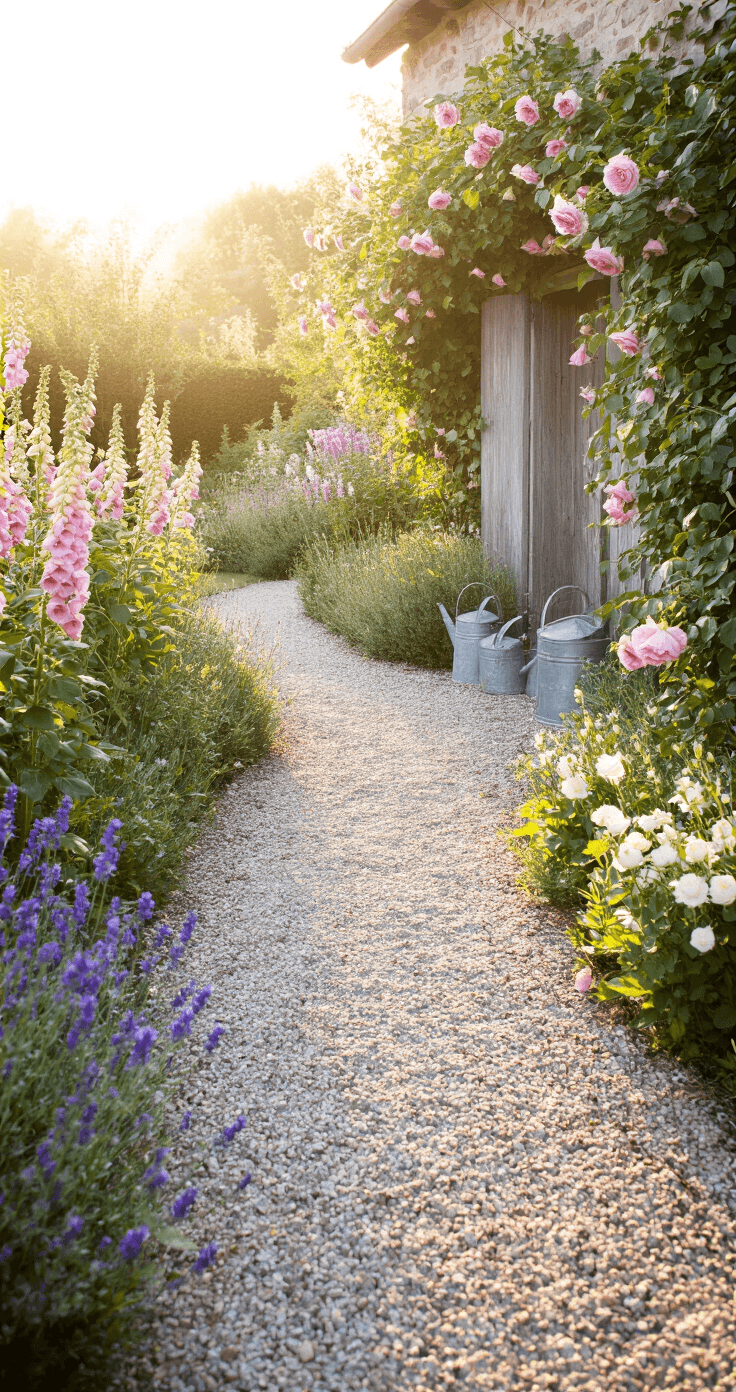
A sunlit cottage garden entrance at golden hour featuring a gravel pathway leading to a wooden door, surrounded by foxgloves, pink roses, lavender, and white peonies, with morning dew glistening on cobblestones and climbing clematis framing the scene.

What Makes a Cottage Garden So Special?

Imagine a garden that’s not just pretty, but alive with personality. That’s the essence of a cottage garden. It’s not about perfection – it’s about creating a lush, vibrant space that feels like it’s been lovingly tended for generations.

★ Pro Tip: Layer plants by height with tallest at the back of borders, placing self-seeding varieties like foxglove and hollyhock to create that ‘accidentally perfect’ cottage look that improves year after year.
⛔ Avoid This: Avoid rigid geometric patterns and perfectly spaced plantings that strip away the informal, gathered-over-time character that defines authentic cottage garden charm.

There’s something deeply satisfying about a garden that welcomes a few weeds and celebrates the wild energy of plants doing what they want—it’s permission to let go of control and embrace nature’s beautiful chaos.

Key Characteristics of a Perfect Cottage Garden

The Magic is in the Details:

  • Abundant, Dense Plantings: Think layers upon layers of flowers, herbs, and edible plants
  • Organic, Slightly Wild Look: Forget rigid lines and perfect symmetry
  • Mix of Beauty and Functionality: Every plant serves a purpose, whether it’s feeding pollinators or your dinner table
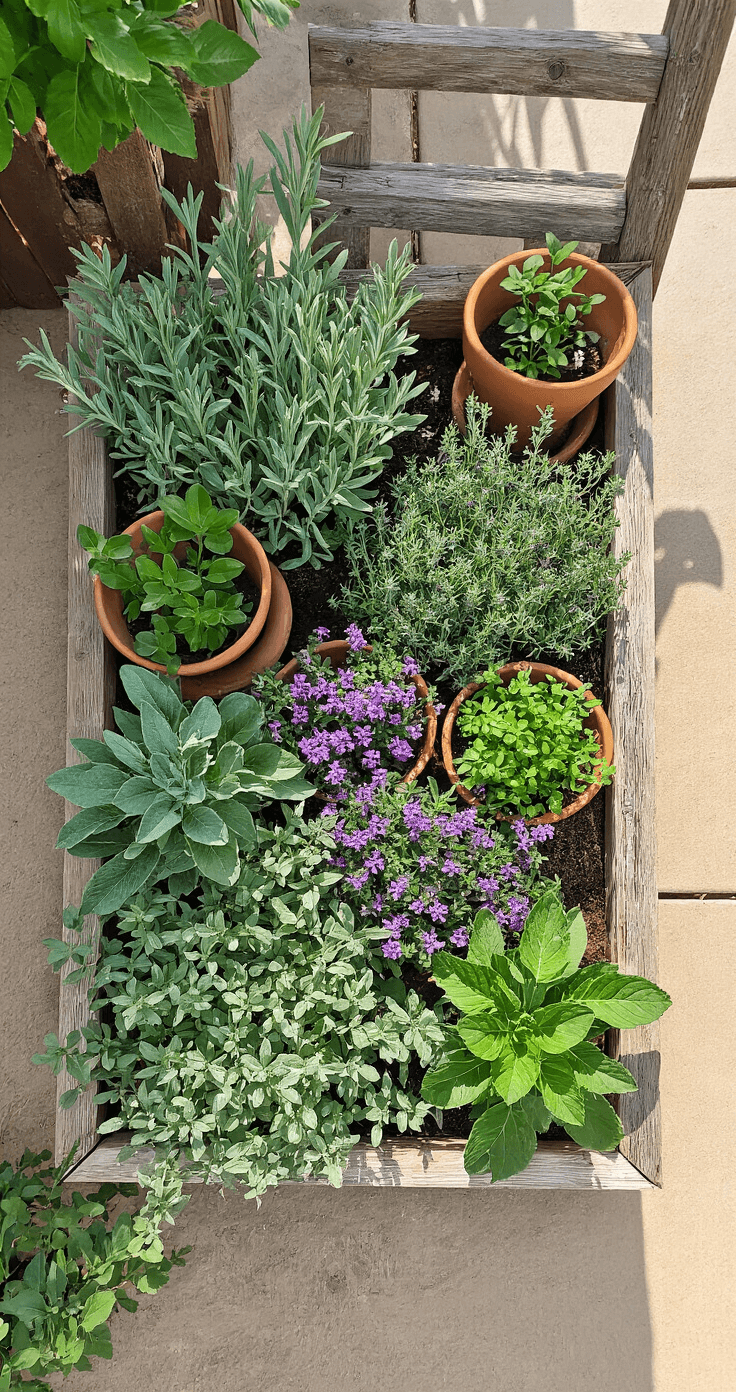
A bird's eye view of a cozy herb garden featuring a raised bed with weathered cedar borders filled with silver-green sage, purple thyme, and flowering oregano, surrounded by terracotta pots of various sizes. A rustic wooden ladder adds height, while afternoon sunlight casts intricate shadows over the textured herbs, highlighted by pops of purple and white flowers.

★ Pro Tip: Cluster containers in odd-numbered groupings at varying heights—place a tall rosemary topiary on your potting bench, trail nasturtiums from a weathered window box, and tuck a low bowl of thyme at ground level to create that essential layered, collected-over-time density.
❌ Avoid This: Avoid using matching sets of planters or arranging plants in straight, predictable rows; cottage gardens thrive on the visual tension of mismatched vessels and seemingly accidental placement.

There’s something deeply satisfying about a garden that doesn’t demand perfection—where a self-seeded poppy pushing through a gravel path is celebrated, not weeded out, and where your morning coffee tastes better sipped beside blooms you forgot you planted.

Design Your Dream Cottage Garden: Practical Tips

1. Start Small, Dream Big

Don’t overwhelm yourself. Begin with:

  • A small bed around your walkway
  • A few strategic trellises
  • A mix of native and classic cottage plants
2. Plant Like a Pro

Your Plant Palette Should Include:

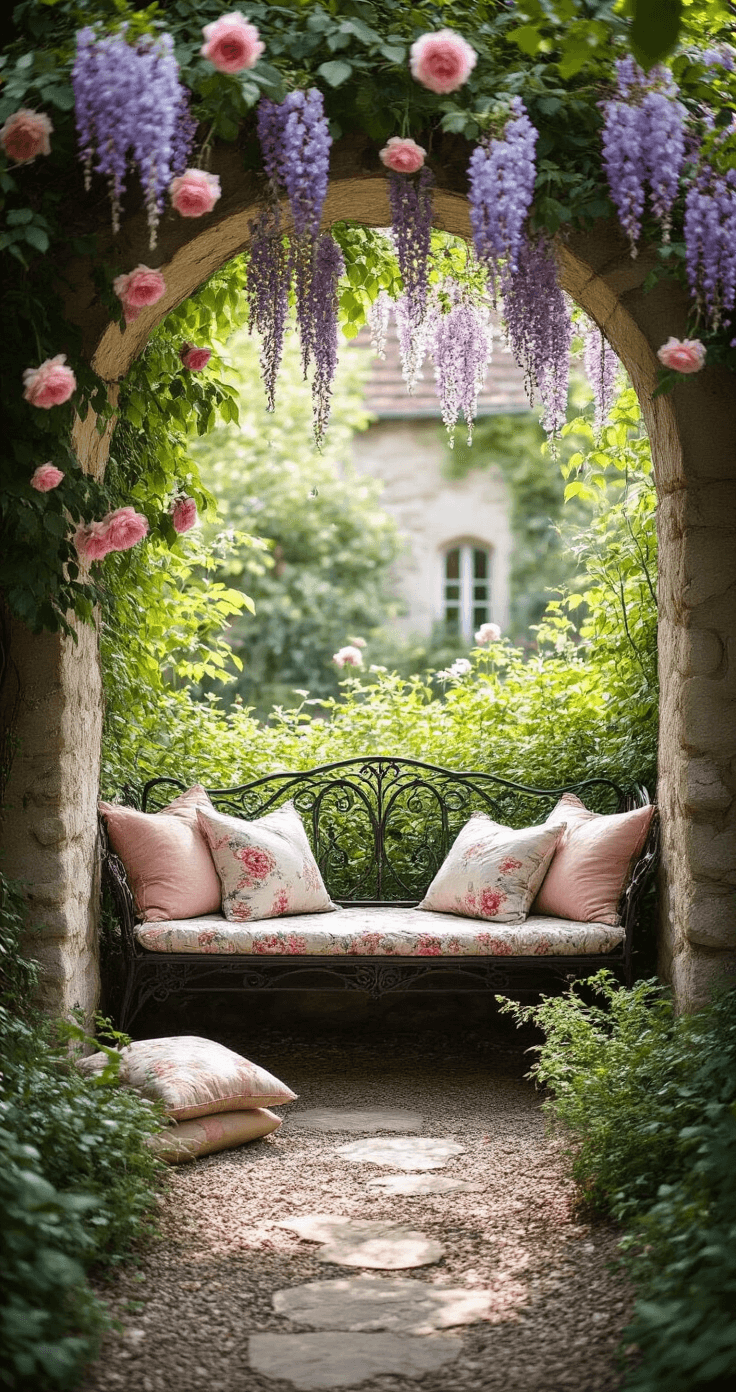
A cozy reading nook featuring a vintage iron bench in a lush garden alcove, surrounded by climbing antique pink roses and overhead wisteria, with scattered floral cushions and crystal wind chimes catching the light, set against a softly blurred backdrop of cottage architecture.

3. Create Magical Pathways

Cottage Garden Paths Are Never Straight:

  • Use curved, meandering paths
  • Mix materials like gravel, brick, or stone
  • Line paths with progressively taller plants
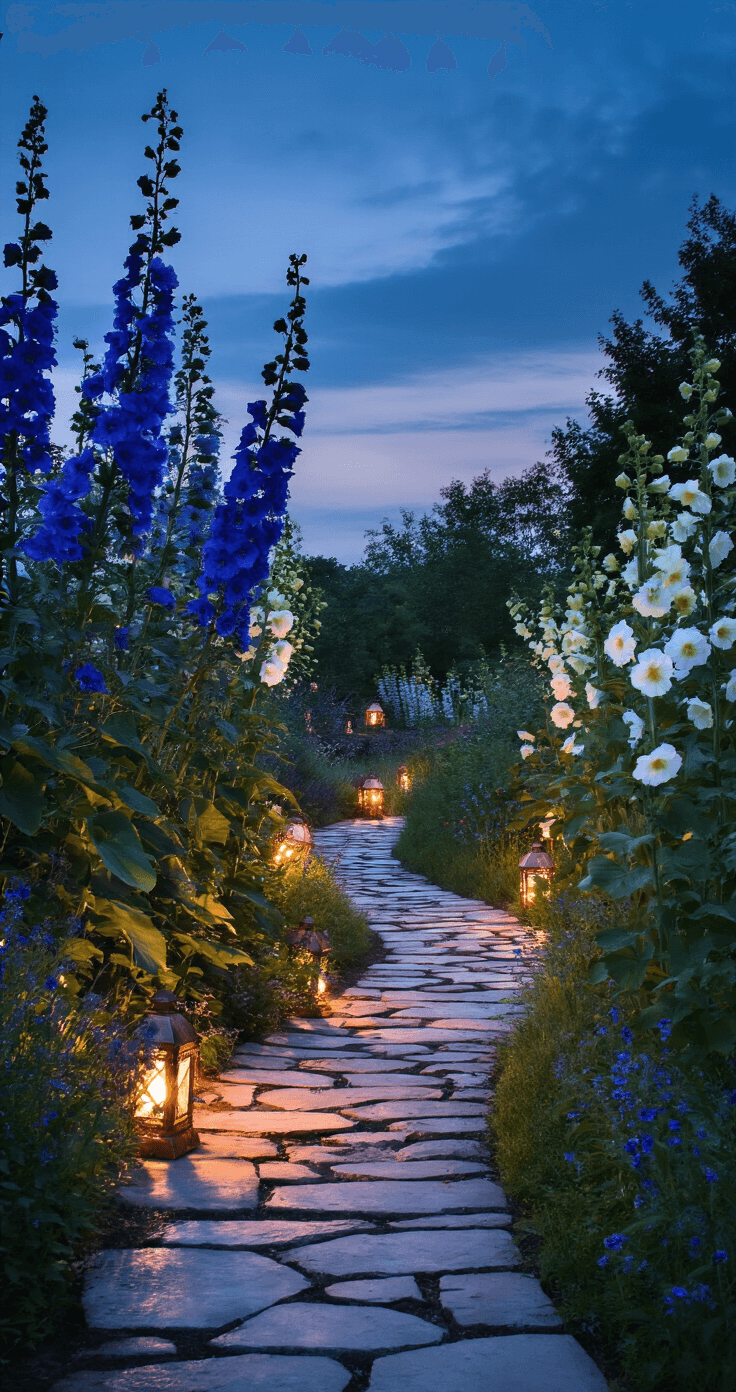
A low-angle view of a winding stone pathway illuminated by vintage copper lanterns and fairy lights, surrounded by tall delphiniums and hollyhocks casting dramatic silhouettes. White moonflowers bloom as dusk approaches, amidst a mixed border of gradient blues and purples, creating a moody evening atmosphere with warm lighting accents.

💡 Pro Tip: Layer your plantings in drifts of three to five of the same variety rather than dotting singles throughout—this creates the abundant, billowing effect that defines cottage garden romance while actually simplifying maintenance.
✋ Avoid This: Avoid rigid symmetry or perfectly straight lines; cottage gardens thrive on controlled chaos, so resist the urge to balance both sides of your path identically.

There’s something deeply satisfying about a garden that feels discovered rather than designed—like stumbling upon a secret place that’s been quietly growing for decades.

The Secret Sauce: Layering and Diversity

What to Plant Why It Matters
Pollinator-friendly flowers Supports local ecosystem
Herbs Practical and beautiful
Climbing plants Adds vertical interest
Mixed heights Creates visual depth

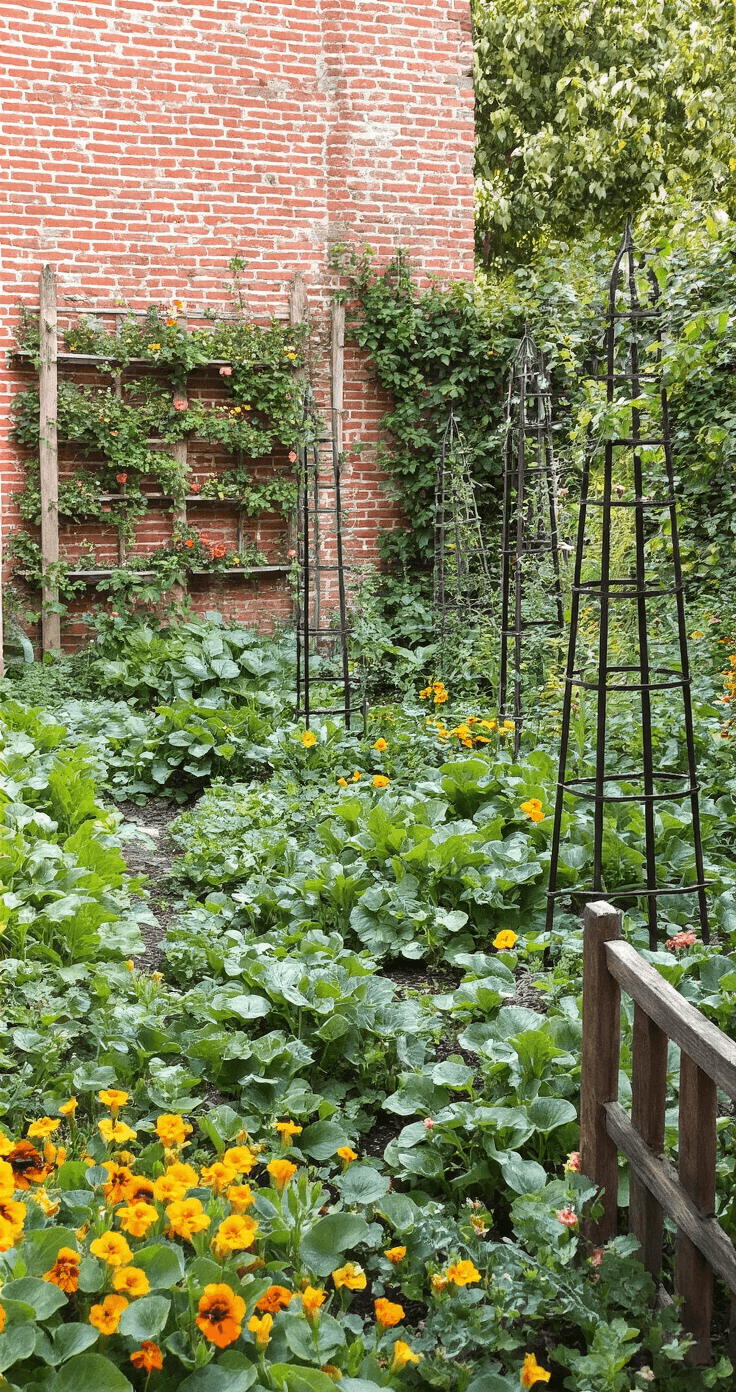
A vibrant morning kitchen garden featuring a 20x30 foot potager filled with vegetables and flowers, bordered by espaliered fruit trees along a weathered brick wall. Steel obelisks support climbing peas, while calendula and nasturtiums cover the ground. A wooden garden gate adorned with morning glory blooms is illuminated by soft morning light, highlighting the geometric layout of the garden.

✨ Pro Tip: Start with a structural backbone of evergreen shrubs at 30-40% of your planting, then layer in seasonal perennials at staggered heights—tall delphiniums and foxgloves at the back, mid-height catmint and salvia in the middle, and low-growing thyme and sedum spilling forward.
🚫 Avoid This: Avoid planting in rigid rows or blocks; cottage gardens thrive on the appearance of happy accident, so intersperse herbs among flowers and let self-seeders like nigella and calendula fill gaps naturally.

There’s something deeply satisfying about brushing past lavender and rosemary on your morning walk to the compost bin—these layered gardens engage every sense and reward the hands-on gardener with constant small discoveries.

👑 Get The Look

Pro Tips for That Perfect Cottage Garden Look

Make It Personal:

  • Add vintage containers
  • Include quirky seating areas
  • Use soft lighting like string lights
  • Incorporate birdbaths or small fountains
What to Avoid

Don’t:

  • Create too-perfect, rigid layouts
  • Overplan every single detail
  • Forget about seasonal interest

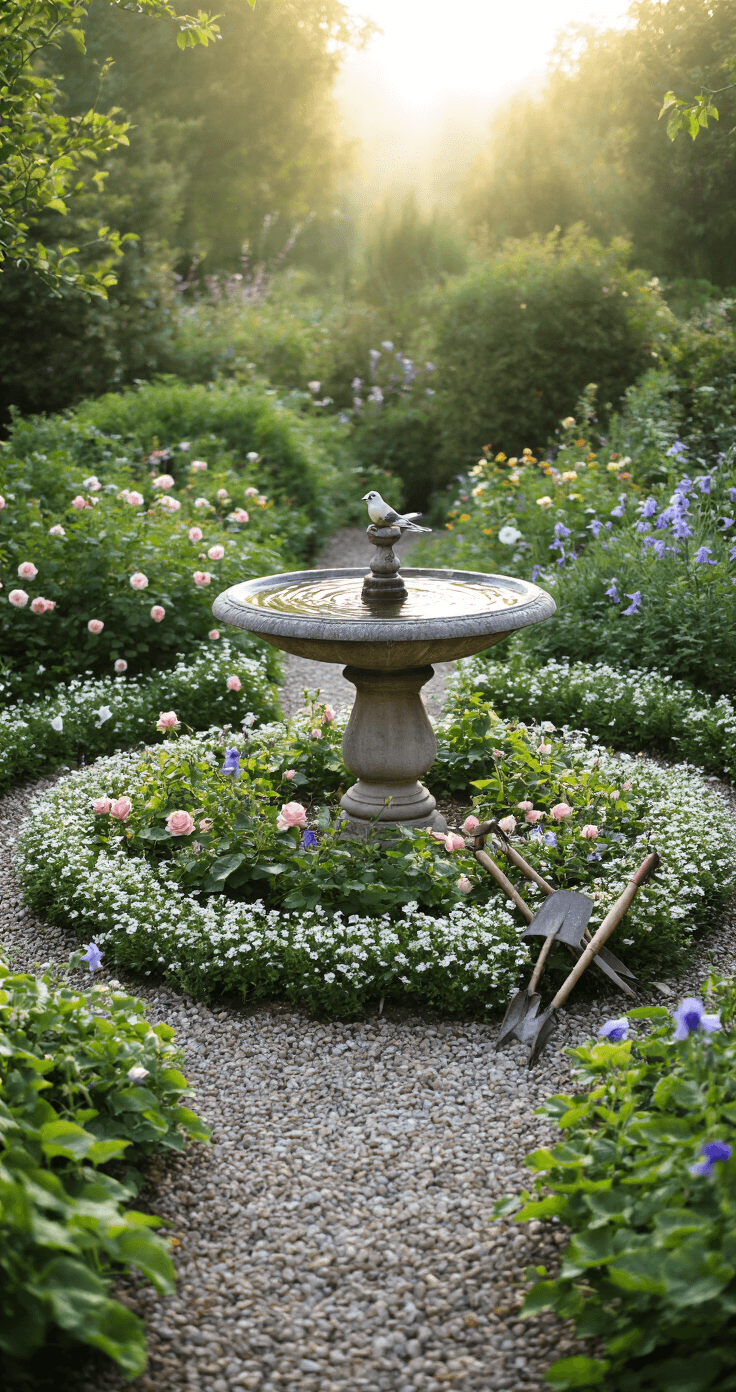
Aged stone birdbath surrounded by lush cascading roses, bellflowers, and lamb's ear in concentric circles, artfully arranged vintage garden tools nearby, illuminated by early morning backlight creating a soft glow on water droplets, captured in shallow depth of field.

✨ Pro Tip: Cluster vintage containers in odd-numbered groupings at varying heights—place a tall galvanized watering can inside a weathered wooden crate, then tuck a small cracked teacup with succulents at the base to create that collected-over-time story.
✋ Avoid This: Avoid symmetrical planting beds with rigid geometric edges; cottage gardens should feel like flowers spilled naturally from a dropped seed packet, not measured with a ruler.

This is the garden that forgives your brown thumb and celebrates the rambling rose that climbed where it wasn’t supposed to—it’s less about control and more about letting nature write its own love letter to your home.

Maintenance: Keep It Relaxed

The beauty of a cottage garden is its forgiving nature. You’re not aiming for a military-precise landscape, but a living, breathing ecosystem.

Quick Maintenance Tips:

  • Let some areas grow a bit wild
  • Embrace self-seeding plants
  • Minimal lawn maintenance
  • Focus on plant health, not perfection

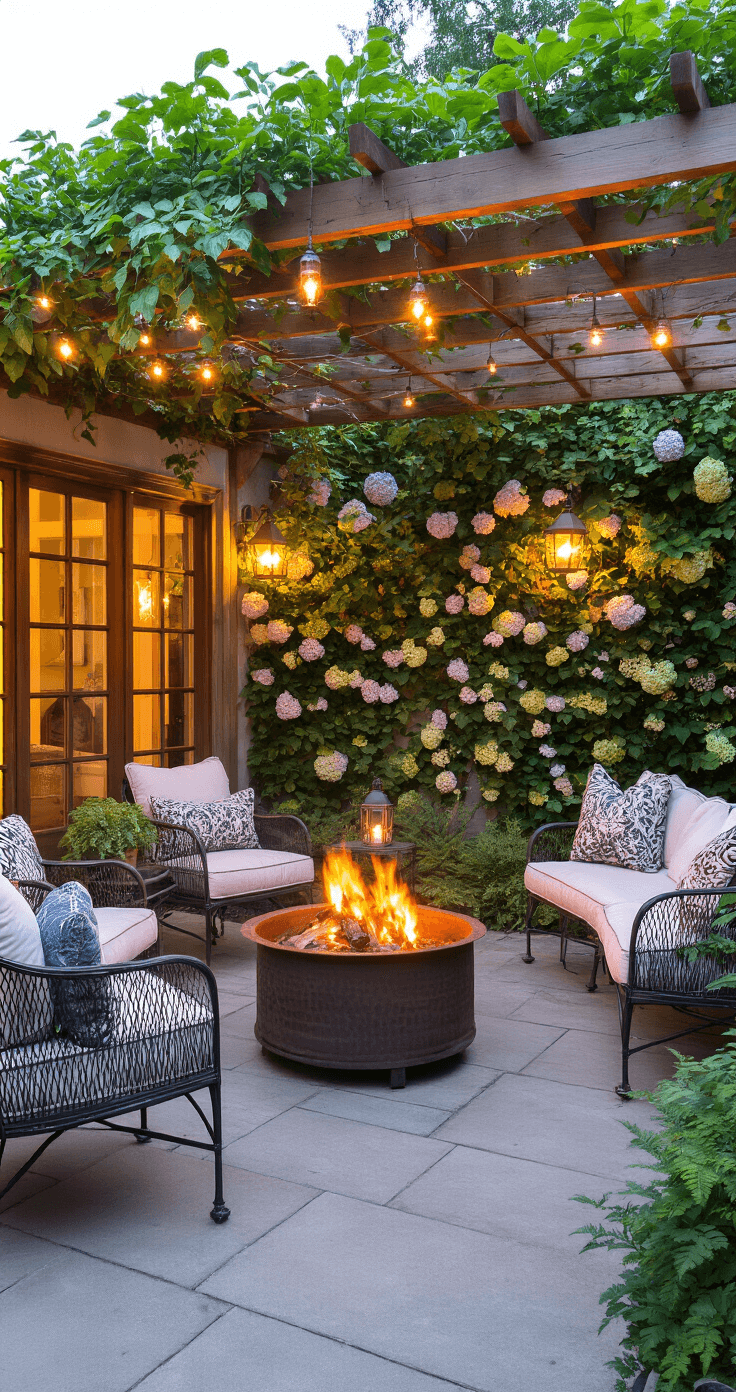
Evening garden room with a natural wooden pergola, surrounded by climbing hydrangea and jasmine, featuring mismatched vintage furniture around an iron fire pit, illuminated by copper string lights and lanterns, all captured in warm, soft evening light.

💡 Pro Tip: Plant in drifts of three to five of the same variety rather than singles—this creates that effortless, established look while actually making maintenance easier since you can tend to groups at once.
⛔ Avoid This: Avoid rigid geometric edging or perfectly sheared boxwood hedges that fight against the garden’s natural character and create hours of unnecessary upkeep.

This is where cottage gardening becomes liberating rather than overwhelming—once you accept that a few weeds and wandering seedlings are part of the charm, you’ll actually spend more time enjoying your morning coffee among the blooms than wrestling with them.

Your Garden, Your Story

A country cottage garden is more than just plants. It’s a canvas where you paint your gardening dreams, where nature and creativity dance together.

Remember: There are no strict rules. Your garden should reflect your personality, your climate, and your unique vision.

Ready to Start?

Grab your gardening gloves, a cup of tea, and let’s bring that cottage garden dream to life!

One comment

Leave a Reply

Your email address will not be published. Required fields are marked *