This post may contain affiliate links. Please see my disclosure policy for details.
Decking for Sloping Gardens: A Comprehensive Guide to Transforming Challenging Terrain
Have you ever looked at your sloped garden and thought, “This space is impossible to use”? Think again! Decking is the ultimate solution for turning tricky, uneven ground into a stunning outdoor living area.
🏠 Steal This Look
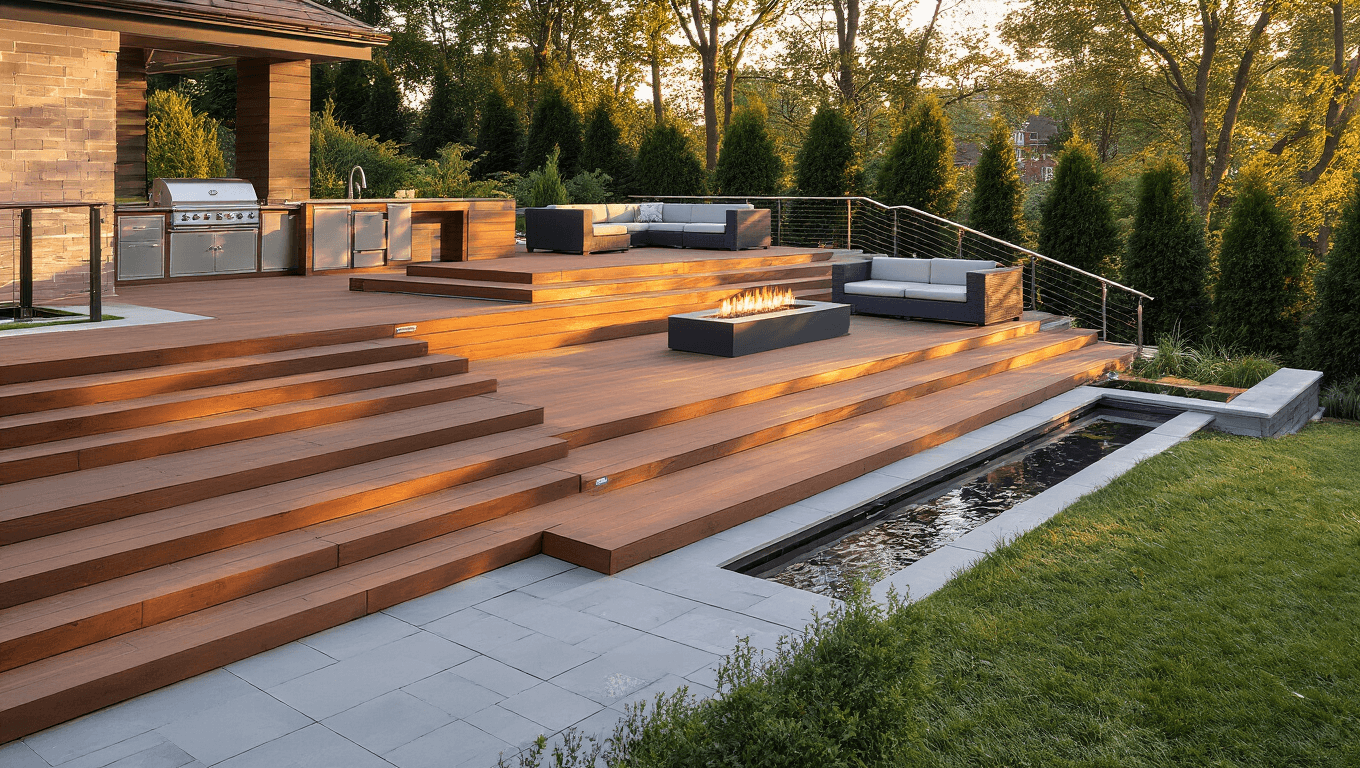
- Paint Color: Sherwin-Williams Cavern Clay SW 7701
- Furniture: weathered teak L-shaped sectional with rust-resistant aluminum frame, paired with a reclaimed wood fire pit coffee table
- Lighting: low-voltage LED recessed deck lights with bronze finish, spaced every 6 feet along stair risers and perimeter
- Materials: composite decking in warm walnut tone, galvanized steel cable railings, natural stone retaining walls, and drought-tolerant ornamental grasses
There’s something deeply satisfying about reclaiming a forgotten hillside—suddenly your morning coffee has a view, and your evening gatherings feel tucked into the landscape rather than perched on top of it.
Why Decking is a Game-Changer for Sloped Gardens
Sloped gardens can be a homeowner’s nightmare – unusable, dangerous, and frankly, just plain ugly. But decking changes everything. It’s like giving your garden a complete makeover that’s both practical and beautiful.
Key Advantages of Decking on Sloping Terrain
- Instant Usable Space: Transform unusable slopes into functional areas
- Increased Property Value: Add visual appeal and practical living space
- Improved Safety: Create level surfaces where steep ground once existed
- Versatile Design Options: Adapt to virtually any garden gradient

✎ Steal This Look
- Paint Color: Benjamin Moore Simply White OC-117
- Furniture: modular outdoor sectional with weather-resistant cushions in charcoal gray
- Lighting: low-voltage LED deck post cap lights with warm 2700K output
- Materials: pressure-treated cedar decking boards with hidden fasteners, composite riser boards, galvanized steel support posts with concrete footings
There’s something deeply satisfying about reclaiming a hillside that once defeated you—turning that awkward slope into your favorite morning coffee spot feels like winning a small battle against gravity itself.
Design Strategies for Sloping Gardens
Understanding Your Slope
Not all slopes are created equal. Your decking approach depends on:
- Gentle Slopes: Simple raised platforms
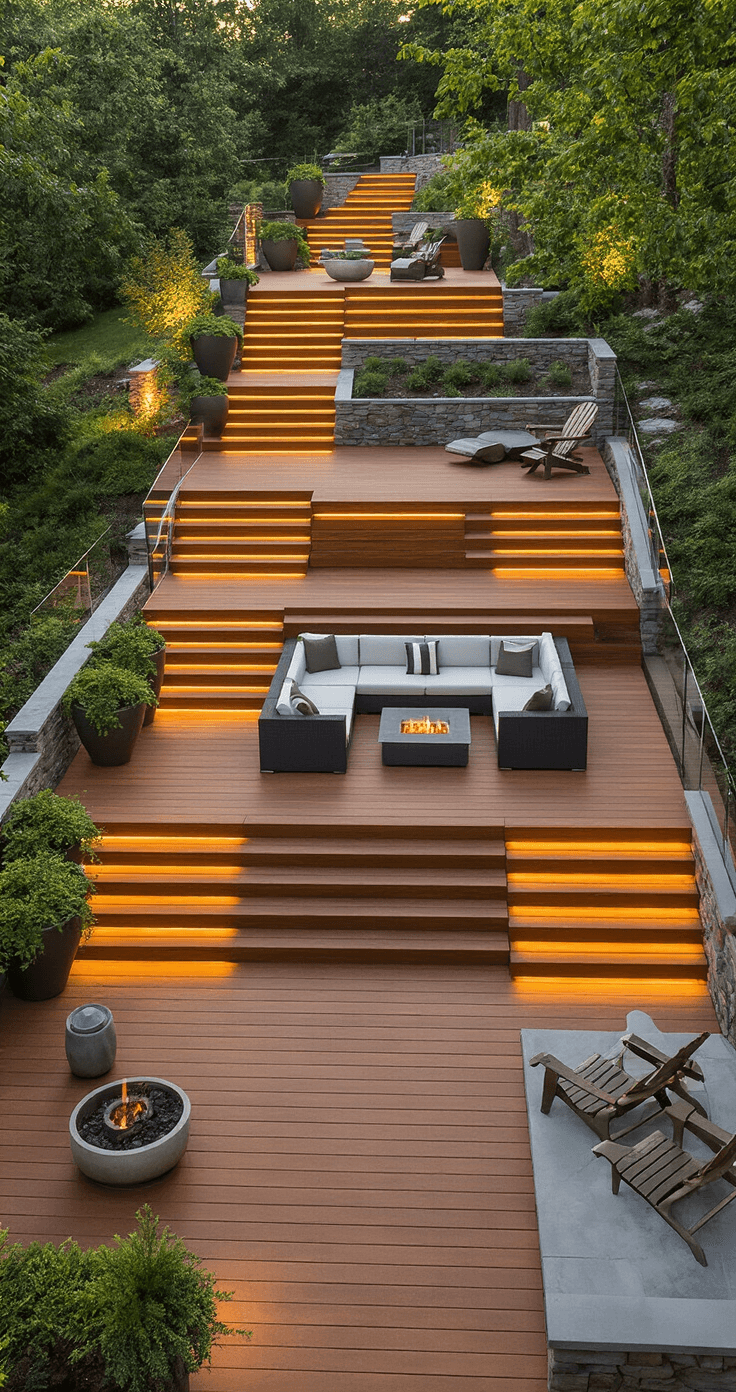
- Moderate Slopes: Tiered or multi-level designs
- Steep Slopes: Complex multi-platform solutions with integrated steps
Pro Tip: Structural Integrity is Everything
Critical Considerations:
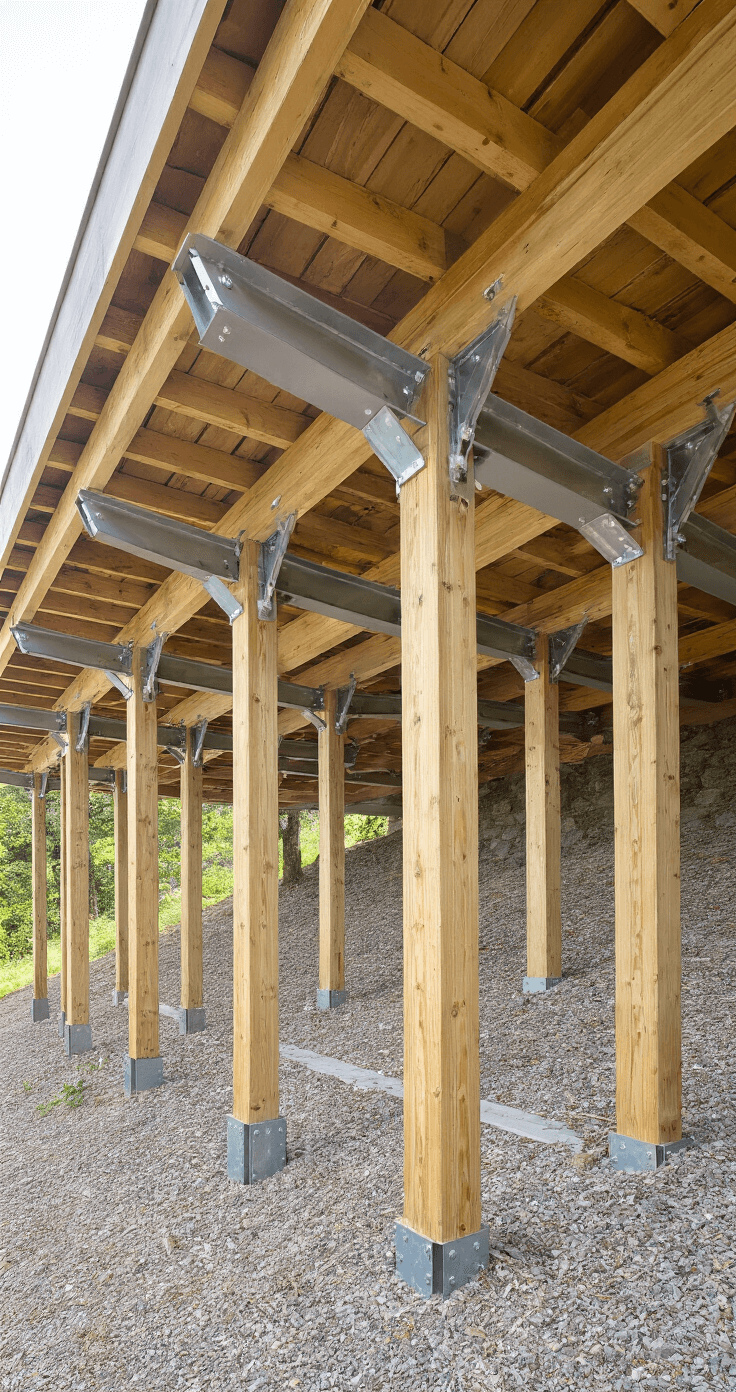
- Use robust support posts
- Ensure proper drainage
- Choose materials that can handle your specific terrain
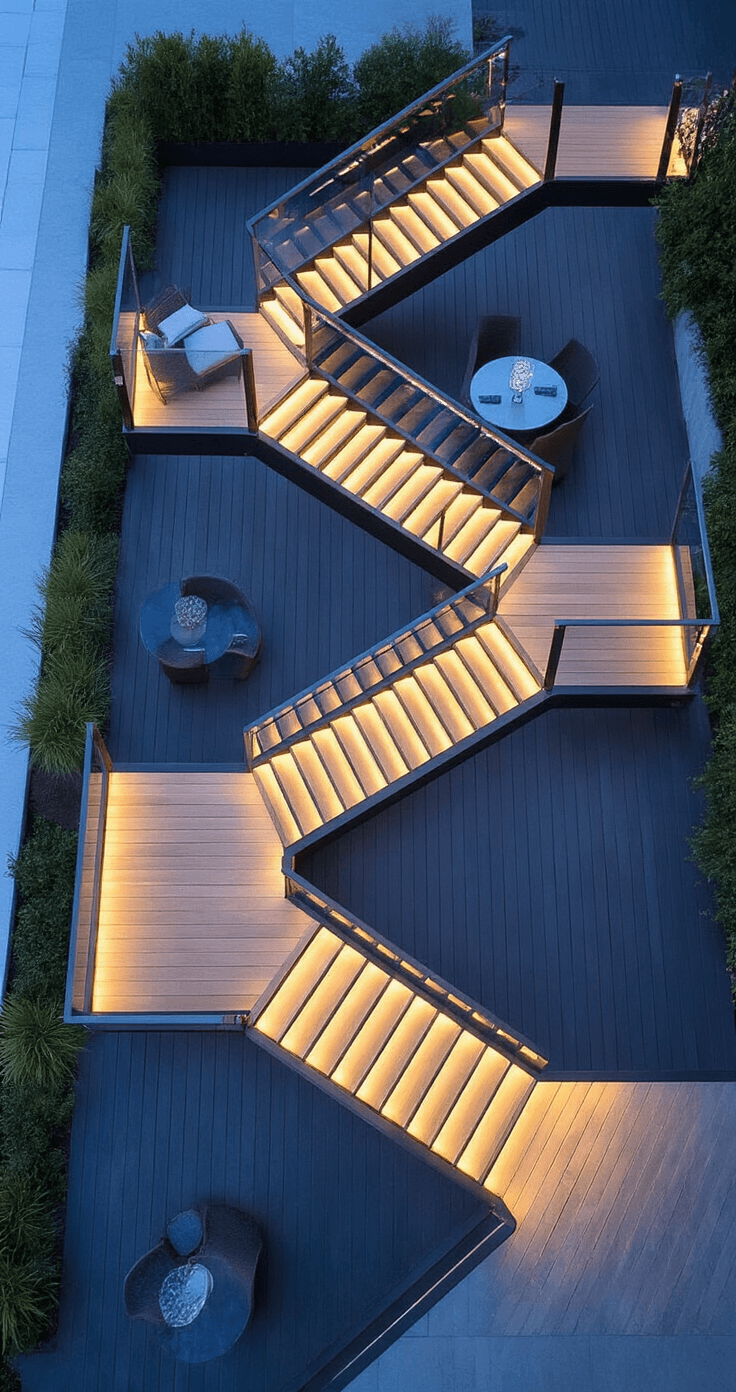
💡 Steal This Look
- Paint Color: Farrow & Ball Green Smoke 47
- Furniture: weathered teak L-shaped outdoor sectional with low profile
- Lighting: recessed LED deck lights in warm 2700K along step risers
- Materials: FSC-certified hardwood decking boards, galvanized steel support posts, gravel drainage layer, corten steel retaining edges
There’s something deeply satisfying about a deck that works with gravity rather than against it; each level becomes its own outdoor room with distinct light and views.
Practical Design Solutions
Single-Level Deck Options
- Elevated platform above ground
- Built-in storage underneath
- Seamless integration with landscape
Multi-Level Deck Designs
- Create distinct outdoor “rooms
- Follow natural garden contours
- Maximize usable space
Save this article
Enter your email and we'll send it straight to your inbox.
🏠 Steal This Look
- Paint Color: Behr DeckOver Slate Gray SC-131
- Furniture: weathered teak Adirondack chairs with built-in cup holders
- Lighting: solar-powered recessed deck lights with warm 2700K output
- Materials: composite decking boards with hidden fasteners, galvanized steel support posts, river rock drainage bed
Sloping gardens intimidate most homeowners, but they’re actually a gift—gravity does your drainage work for free, and elevation changes let you stage outdoor moments like scenes in a play.
Materials Matter: What to Choose
Top Decking Materials:
- Composite Decking
- Low maintenance
- Durability
- Weather-resistant
- Treated Timber
- Natural aesthetic
- Cost-effective
- Requires more maintenance
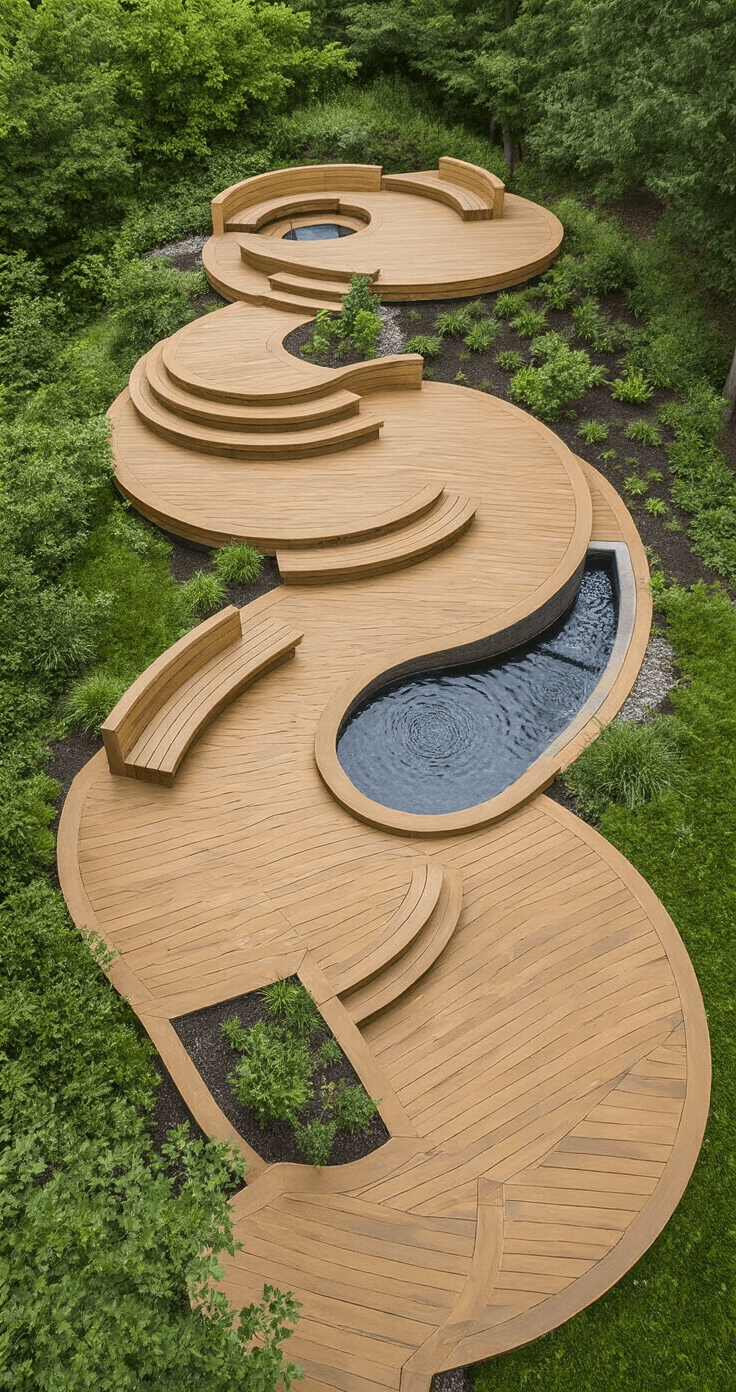
★ Steal This Look
- Paint Color: Valspar Garden Party 6008-10B
- Furniture: modular outdoor sectional with weather-resistant Sunbrella cushions in slate grey
- Lighting: solar-powered LED deck post cap lights with warm 2700K output
- Materials: capped composite decking in driftwood grey finish, black powder-coated aluminum railings, galvanized steel support posts with timber cladding, river rock drainage beds, cedar privacy screens
A sloping garden deck is where material choices become personal—composite lets you spend weekends actually using your outdoor space rather than staining and sealing, which matters enormously when your deck is the main route through your garden.
Step-by-Step Construction Guide
Planning Phase
- Measure slope precisely
- Create detailed design sketch
- Check local building regulations
Installation Process
- Prepare foundations
- Install support posts
- Create level framework
- Lay decking boards
- Add finishing touches (railings, steps)
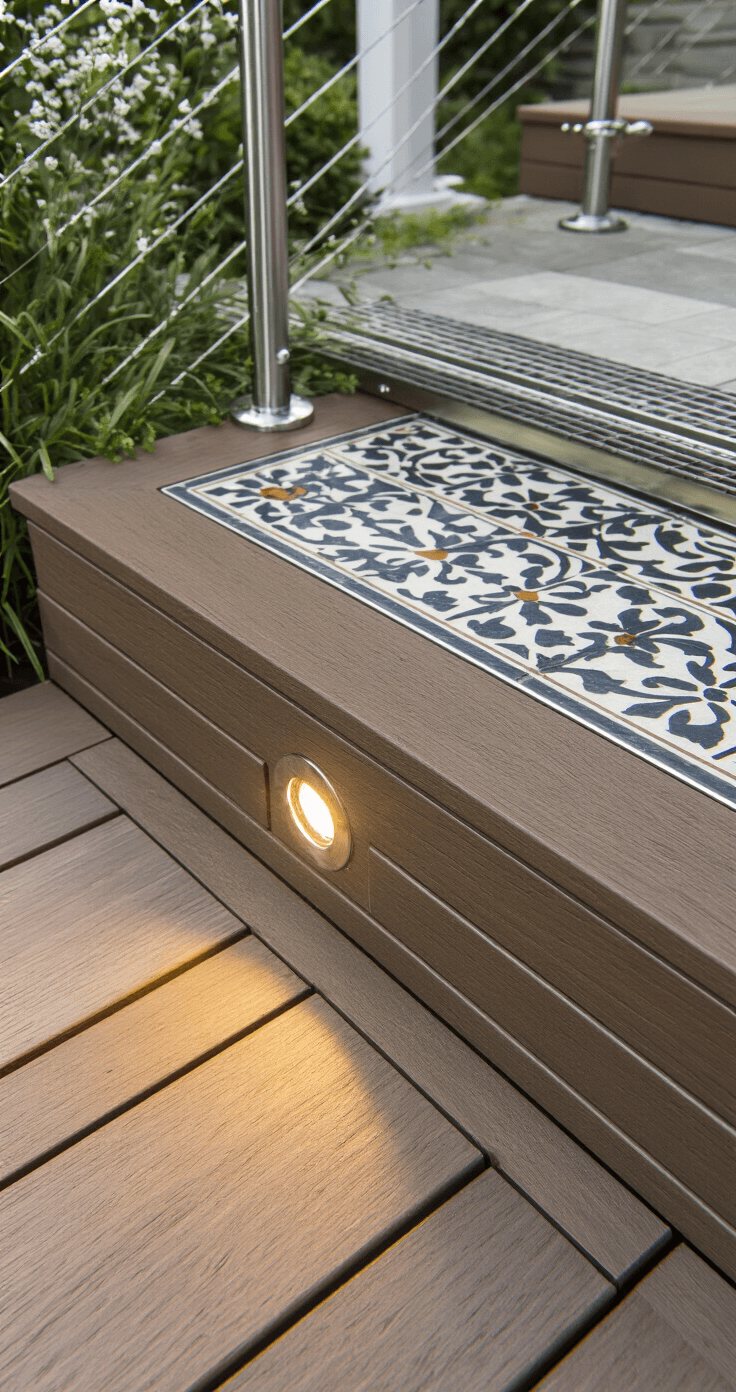
🎨 Steal This Look
- Paint Color: PPG Stonehenge Greige PPG1005-4
- Furniture: weather-resistant modular outdoor sofa with deep seating cushions
- Lighting: low-voltage LED deck post cap lights with warm 2700K output
- Materials: pressure-treated lumber framing with composite decking surface, galvanized steel post anchors, and natural stone retaining wall accents
This is the make-or-break phase where weekend warriors either build something that lasts decades or create a liability nightmare—taking two extra days to get your foundations and posts absolutely right will save you from the heartbreak of a sagging, twisting deck that makes your morning coffee feel precarious.
Common Pitfalls to Avoid
Warning Signs of Poor Decking:
- Inadequate structural support
- Improper drainage
- Ignoring local building codes
- Neglecting load-bearing considerations
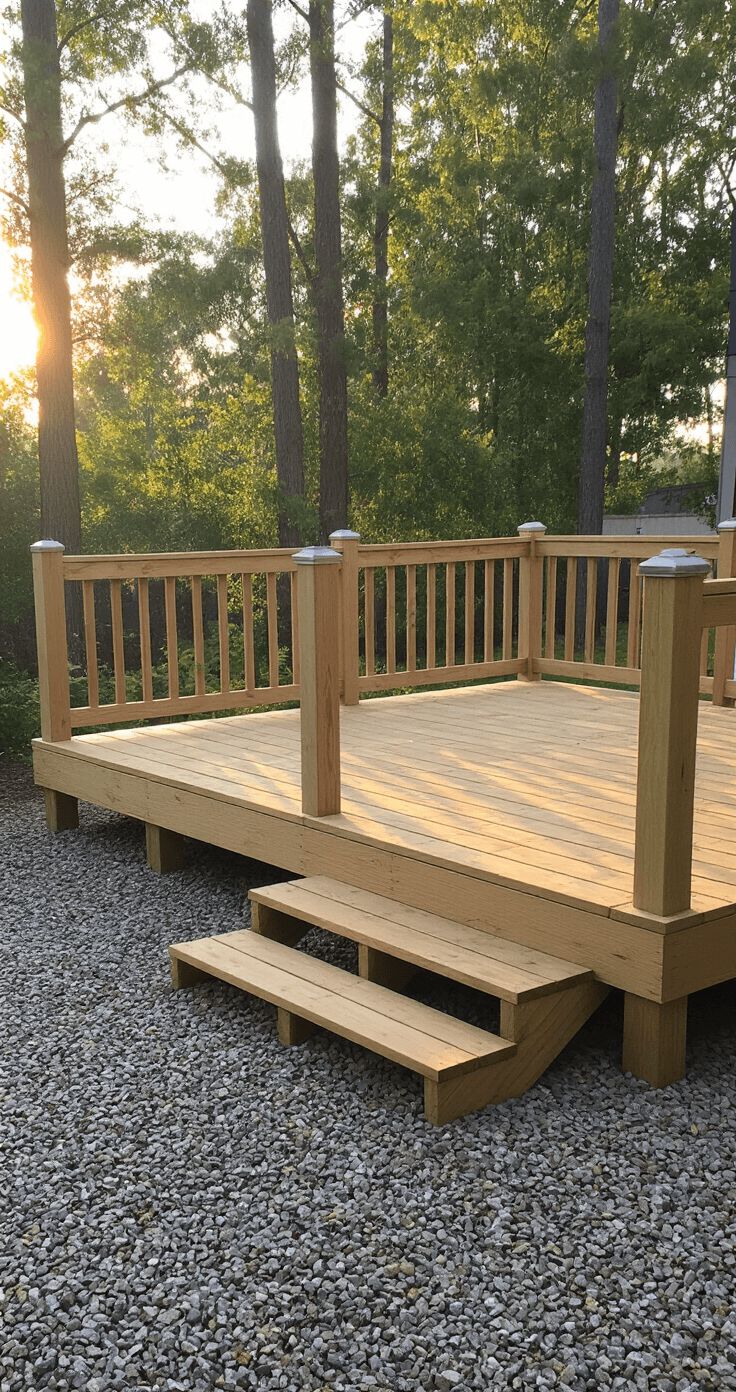
★ Steal This Look
- Paint Color: Dunn-Edwards Whisper DEW341
- Furniture: weather-resistant modular sectional with rust-proof aluminum frame and quick-dry foam cushions
- Lighting: hardwired LED step lights with IP65 rating for outdoor slope illumination
- Materials: pressure-treated lumber joists with galvanized steel brackets, composite decking boards with hidden fastening systems, geotextile fabric with crushed stone base layer
I’ve walked too many sloping gardens where beautiful decking became a liability because someone prioritized aesthetics over engineering—your future self will thank you for the boring groundwork now.
Budget-Friendly Tips
- Start with smaller sections
- Use cost-effective materials
- DIY where possible
- Plan for long-term maintenance
Final Thoughts
Transforming a sloping garden isn’t just possible – it’s an opportunity to create something extraordinary. With the right approach, your challenging terrain becomes a stunning outdoor living space.
Quick Checklist Before You Start
- ✓ Measure your slope
- ✓ Research local regulations
- ✓ Choose appropriate materials
- ✓ Plan your design carefully
- ✓ Consider professional consultation
Pro Tip: When in doubt, consult a professional landscaper who specializes in challenging terrain. They can provide invaluable insights specific to your garden’s unique characteristics.
Your sloping garden isn’t a problem – it’s a potential masterpiece waiting to be discovered!
Keep this one for later
We'll email you the link so you can come back to it.