
This post may contain affiliate links. Please see my disclosure policy for details.
Night-Blooming Flowers: A Magical Garden After Dark
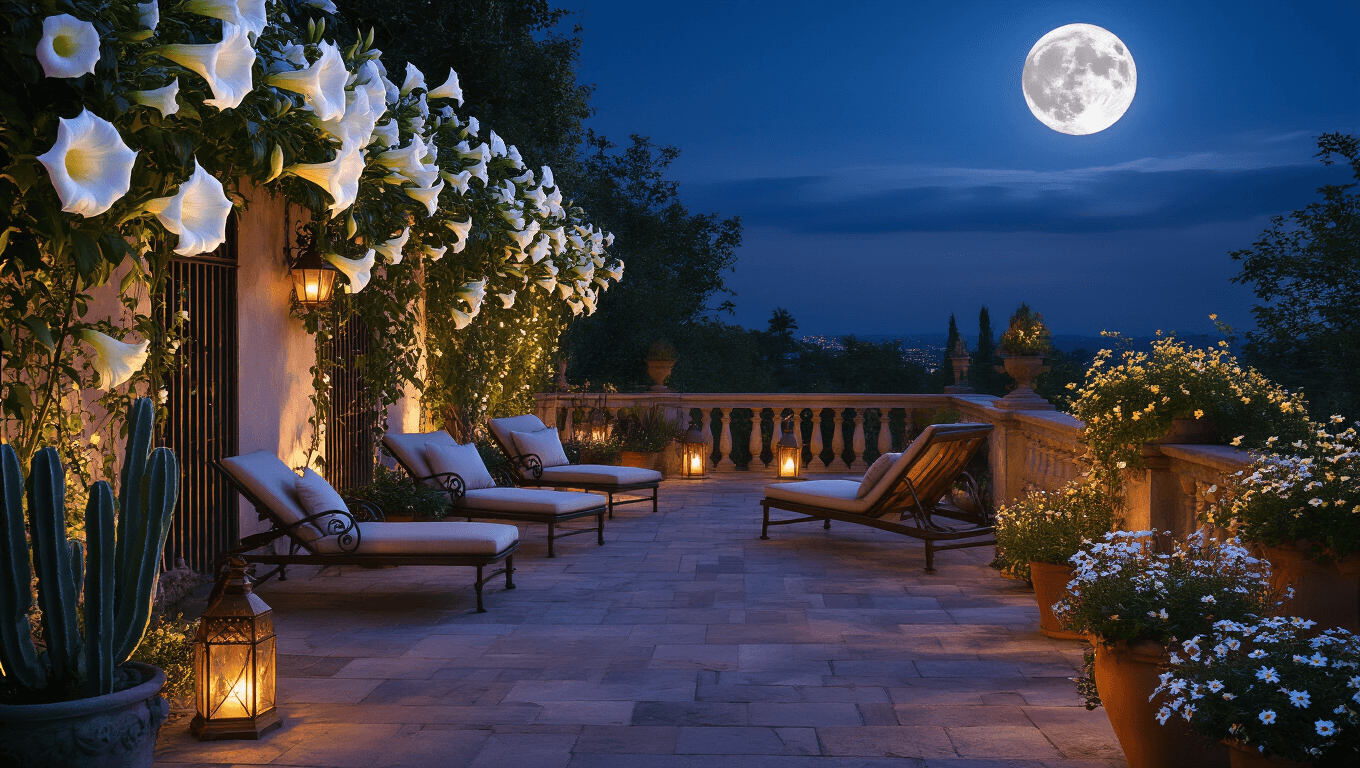
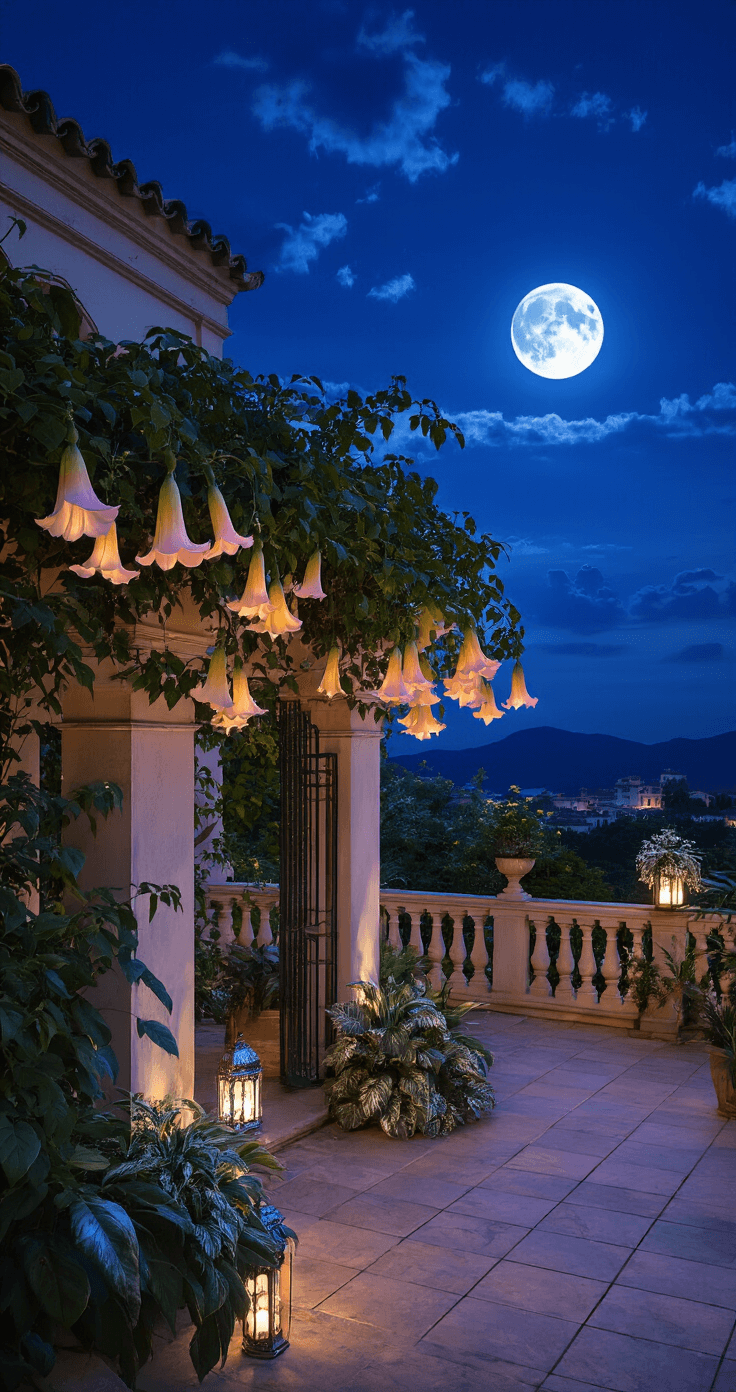
Imagine stepping into your garden as twilight descends, and suddenly, a symphony of fragrance and delicate blossoms unfolds before your eyes. Night-blooming flowers are nature’s secret performers, transforming your outdoor space into a mesmerizing nocturnal wonderland.
🎨 Steal This Look
- Paint Color: Sherwin-Williams Ripe Olive SW 6209
- Furniture: weathered teak Adirondack chairs with wide arms for holding evening drinks, positioned in a conversational cluster facing a central focal point
- Lighting: low-voltage LED path lights with warm 2700K output and adjustable glare shields, plus solar-powered mason jar string lights draped overhead on shepherd’s hooks
- Materials: raw cedar mulch pathways, river rock borders, galvanized steel planters, and untreated ipe wood decking that silvers naturally
There’s something almost meditative about a garden that only reveals itself when you slow down enough to step outside after dinner—these spaces reward the intentional night owl, not the casual passerby.
Why Night-Blooming Flowers Are Garden Magic
These special plants aren’t just beautiful—they’re brilliantly designed by nature. Most night-blooming flowers:
- Release intoxicating fragrances after sunset
- Attract unique nocturnal pollinators like moths and bats
- Create mystical visual experiences in low light
- Add unexpected drama to your garden landscape
✎ Steal This Look
- Paint Color: Benjamin Moore Hale Navy HC-154
- Furniture: a deep velvet settee in midnight blue with curved silhouette for moonlit garden viewing through French doors
- Lighting: lantern-style sconces with frosted glass and aged brass finish, dimmable to 10% for evening ambiance
- Materials: weathered teak, hand-forged iron, raw linen, and polished moonstone accents
There’s something quietly rebellious about a garden that refuses to perform on daylight’s schedule—it asks you to slow down, step outside after dinner, and witness beauty that most neighbors will never see.
Top Night-Blooming Flower Superstars
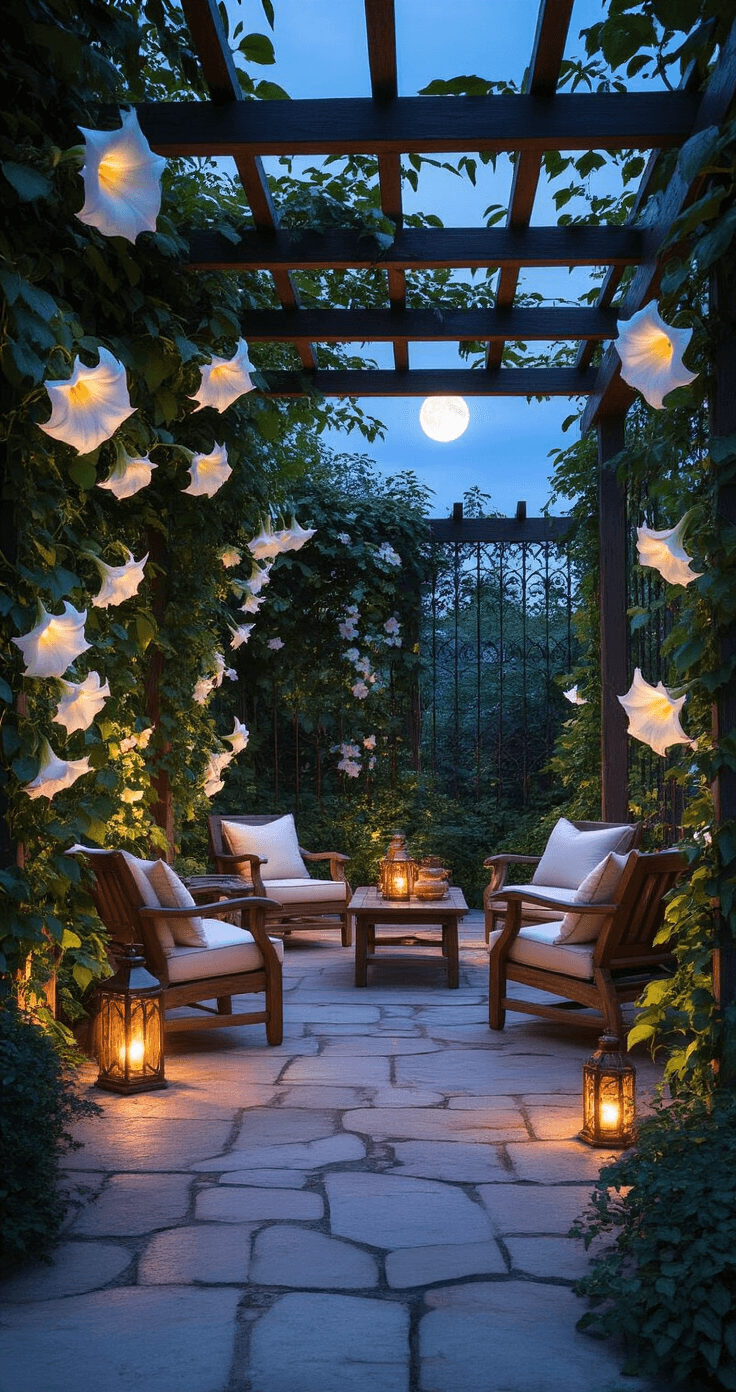
1. Moonflower: The Midnight Goddess
- Massive white saucer-shaped blossoms
- Glows eerily in moonlight
- Attracts night-flying moths
- Grows as a vigorous climbing vine
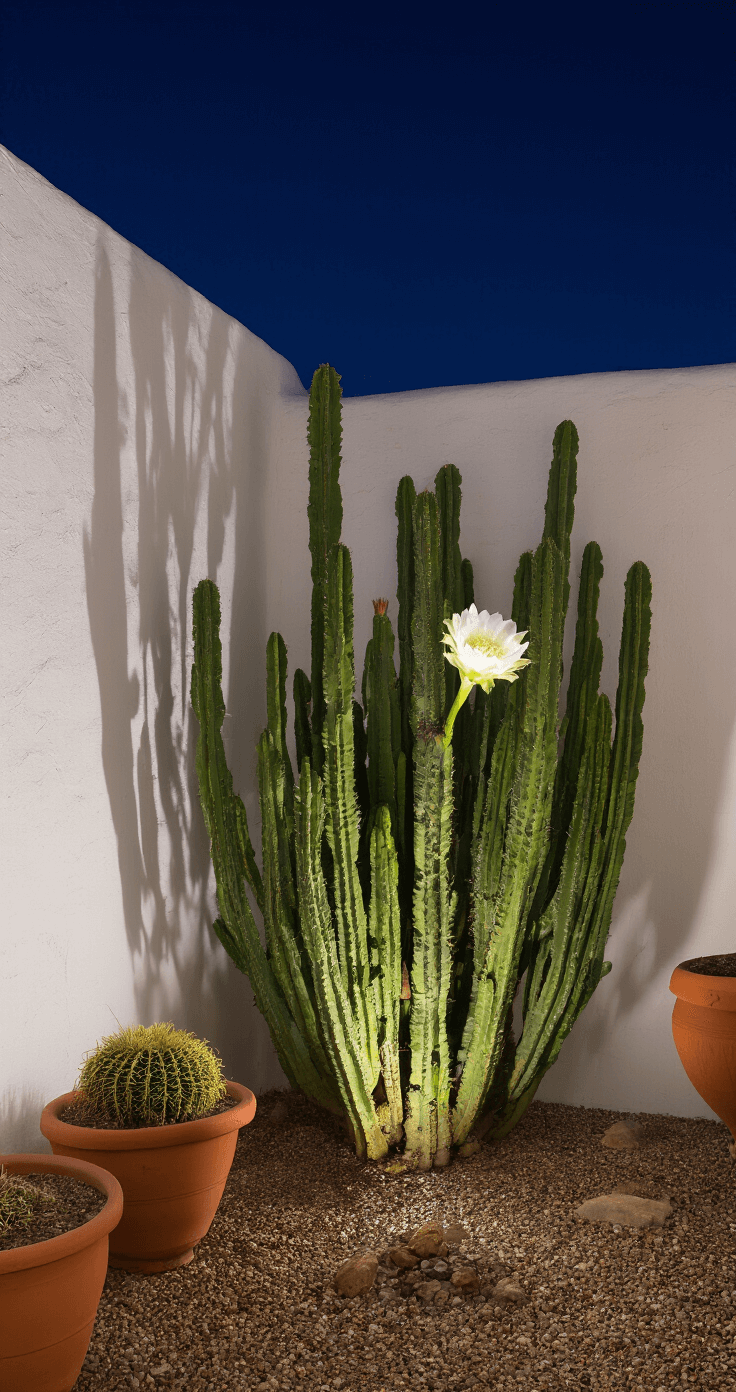
2. Queen of the Night: The Rare Performer
- Exotic cactus flower
- Blooms once yearly
- Enormous white trumpet flowers
- Breathtaking, ephemeral display lasting just hours
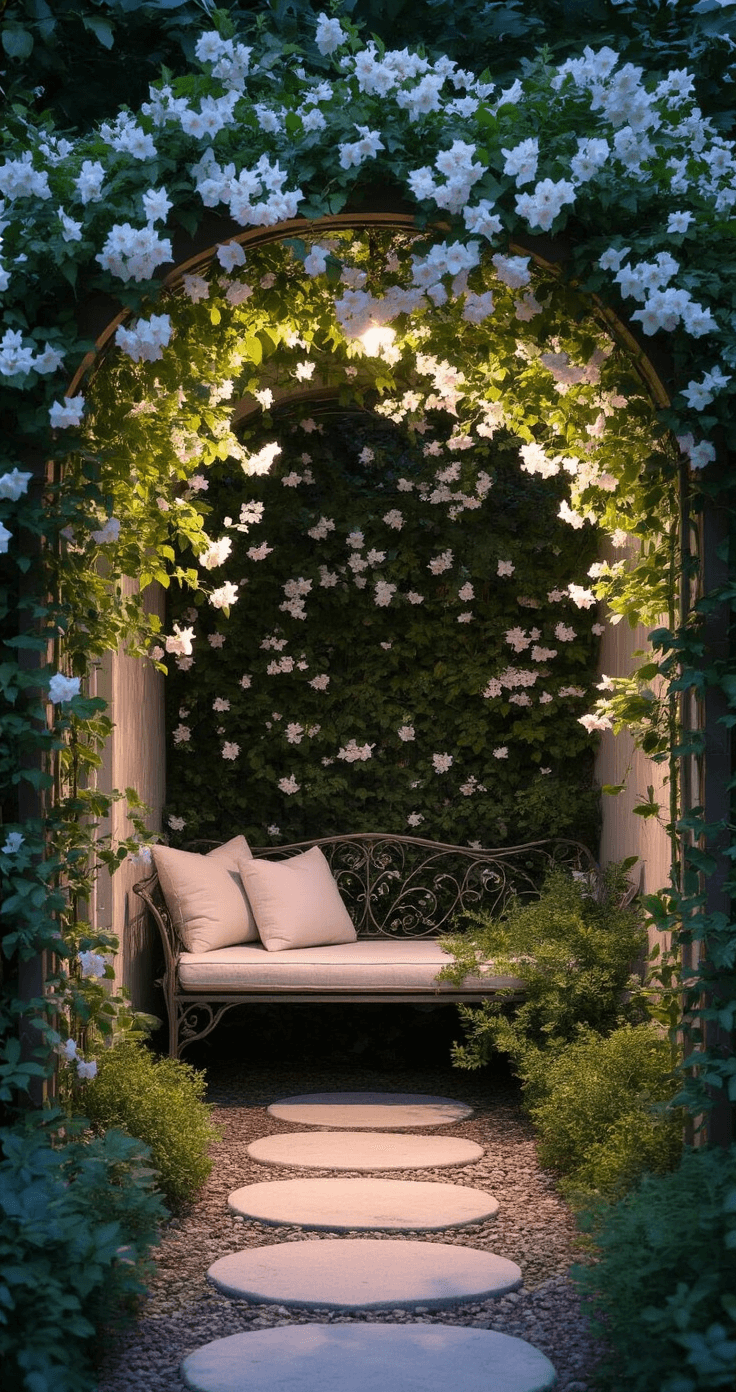
3. Night Jasmine: Evening’s Perfume
- Powerful, sweet fragrance
- Small white-green flowers
- Continuous blooming throughout summer nights
- Perfect for creating romantic garden atmospheres
🏠 Steal This Look
- Paint Color: Farrow & Ball De Nimes No.299
- Furniture: A low-slung linen slipcovered sofa in natural oatmeal, paired with a pair of vintage rattan peacock chairs flanking a reclaimed wood coffee table with live edge
- Lighting: A sculptural alabaster table lamp with dimmable LED and a cluster of three varying-height brass candle holders with LED taper candles for safe, flickering ambient glow
- Materials: Raw Belgian linen, unlacquered brass, hand-thrown ceramic vessels, weathered teak, and sheer silk organza drapery that catches and diffuses light
This is the room where you finally exhale around 9 PM, when the day dissolves and conversation slows to match the pace of something rare unfolding in darkness—it’s less about being seen and more about being present together.
Choosing Your Night-Blooming Garden Champions
Consider these factors when selecting night flowers:
- Your local climate zone
- Available garden space
- Desired fragrance intensity
- Aesthetic preferences
- Pollinator attraction goals
Save this article
Enter your email and we'll send it straight to your inbox.
🖼 Steal This Look
- Paint Color: Behr Black Mocha N450-7
- Furniture: weathered teak potting bench with brass hardware
- Lighting: solar-powered LED garden path lights with warm 2700K output
- Materials: raw terracotta, aged copper, river stone, untreated cedar
There’s something quietly magical about stepping outside after dinner to find your garden transformed—what was closed and ordinary at noon has become luminous and alive, as if the plants were waiting just for you.
Pro Gardener Tips
- Plant near seating areas to enjoy evening fragrances
- Mix different night-blooming varieties for continuous displays
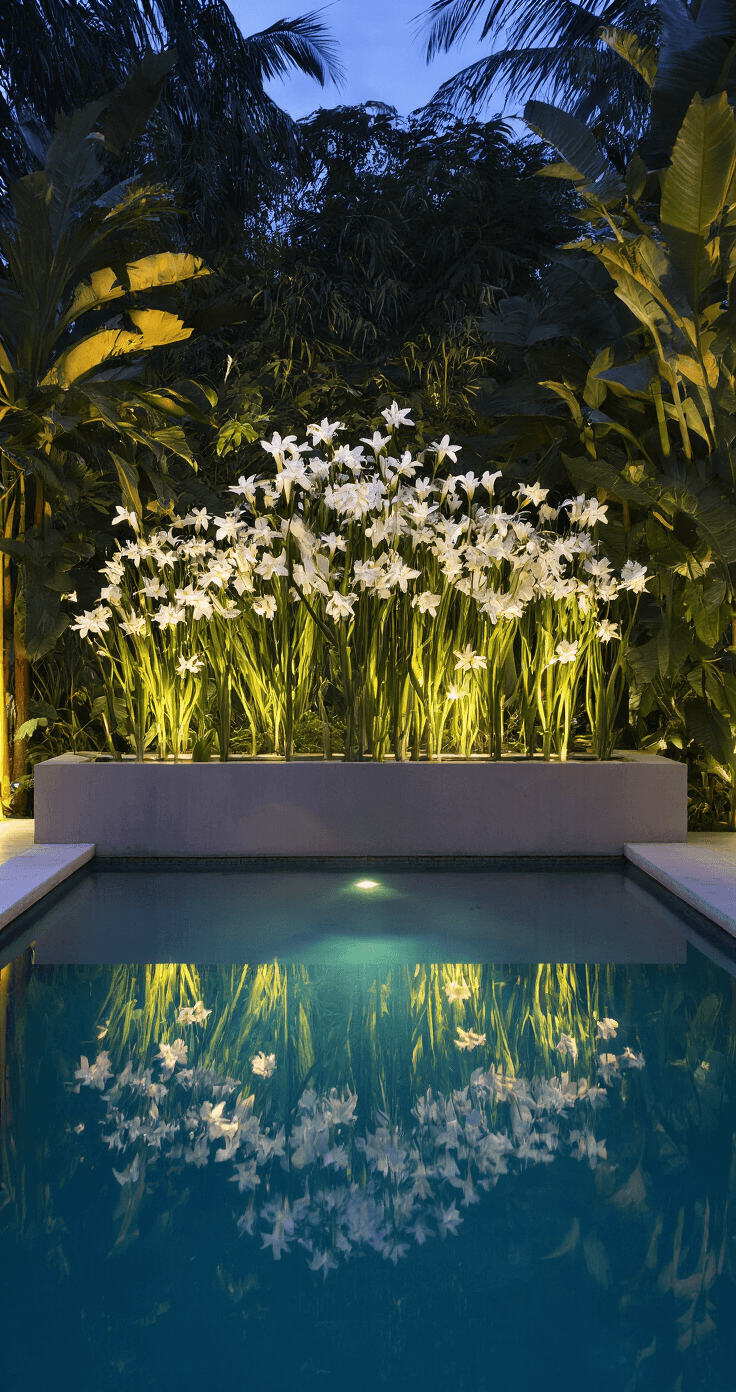
- Use white or pale-colored flowers for maximum nighttime visibility
- Create moon gardens with strategic lighting
🖼 Steal This Look
- Paint Color: Valspar Moonlit Snow 4008-1A
- Furniture: weathered teak Adirondack chairs with wide armrests for holding drinks and garden journals
- Lighting: solar-powered pathway lights with warm 2700K LED bulbs and frosted glass domes
- Materials: crushed white marble gravel, untreated cedar planters, and brushed bronze irrigation fixtures
There’s something quietly luxurious about having a dedicated outdoor spot that only comes alive when the day winds down—it’s like owning a secret garden that rewards you for staying up past bedtime.
Maintenance Recommendations
Most night bloomers prefer:
- Well-draining soil
- Partial to full sun exposure
- Regular but moderate watering
- Protection from harsh winds
★ Steal This Look
- Paint Color: use PPG brand. Match the ACTUAL wall color in the image. Format: PPG Night Watch PPG1145-7
- Furniture: teak potting bench with slatted shelving for air circulation around potted night bloomers
- Lighting: solar-powered LED grow light strips with dusk-to-dawn sensors
- Materials: unglazed terracotta, cedar mulch, perforated clay pebbles, weathered galvanized metal
There’s something quietly rewarding about tending plants that most people never see bloom—your evening watering ritual becomes a private meditation, and the garden rewards your attention when the rest of the world has gone to sleep.
Climate Compatibility Guide
| Climate Type | Recommended Flowers |
|---|---|
| Tropical | Angel’s Trumpet, Tuberose |
| Subtropical | Night Jasmine, Gardenia |
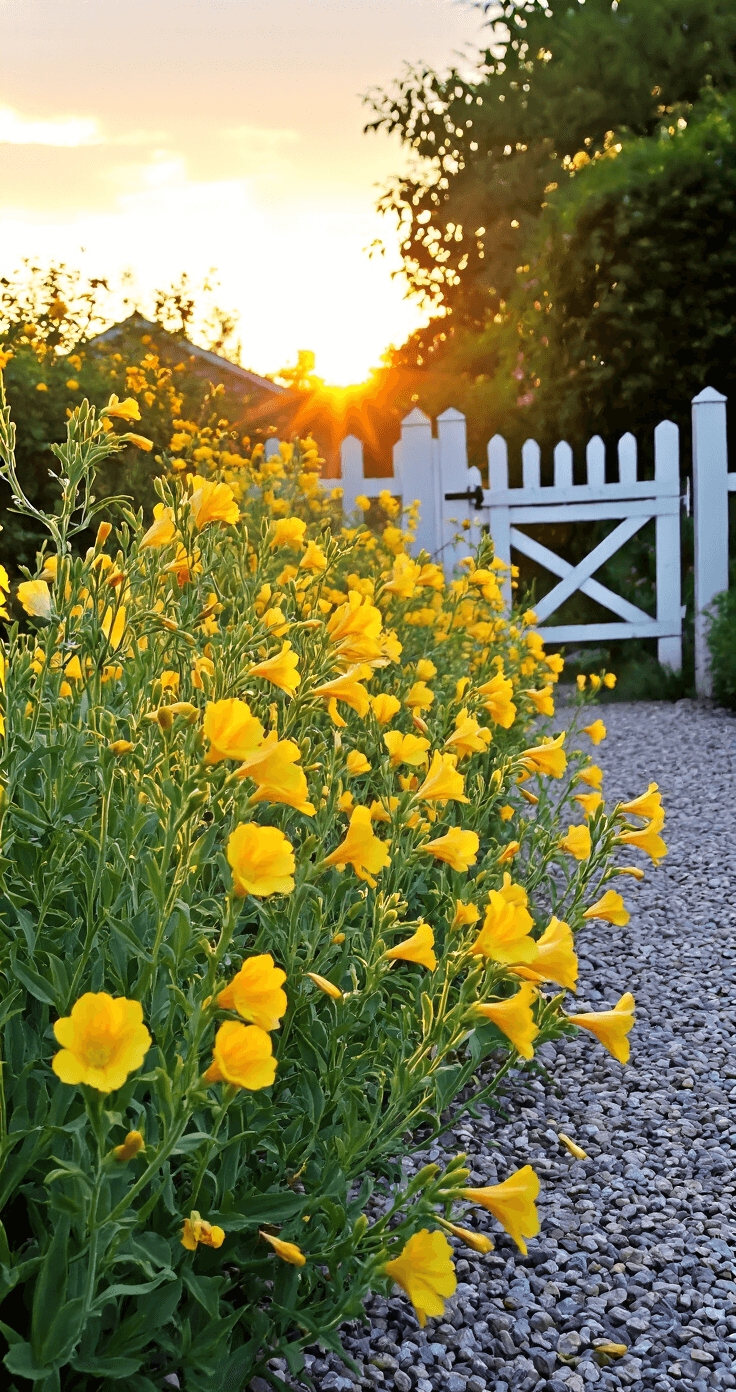
| Temperate | Evening Primrose, Four O’Clocks |
| Arid | Queen of the Night |

🌟 Steal This Look
- Paint Color: Dunn-Edwards Midnight Spruce DET544
- Furniture: teak outdoor console table with weathered gray finish for displaying potted night bloomers
- Lighting: solar-powered amber LED path lights with dusk-to-dawn sensors
- Materials: unsealed terracotta, woven seagrass baskets, powder-coated aluminum planters, and breathable linen cushion covers
There’s something quietly thrilling about stepping onto your patio at 10 PM and realizing you’ve engineered a space where flowers actually wait for you to come home. This guide helps you stop fighting your zip code and start partnering with it.
Final Bloom of Wisdom
Night-blooming flowers aren’t just plants—they’re living poetry. They transform ordinary gardens into extraordinary nocturnal experiences, inviting mystery, romance, and natural wonder into your outdoor spaces.
Embrace the magic of darkness. Let your garden come alive when the sun goes down.
Keep this one for later
We'll email you the link so you can come back to it.
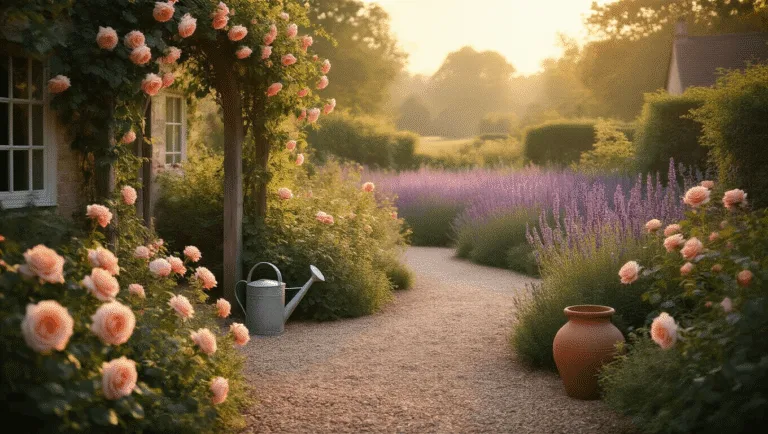
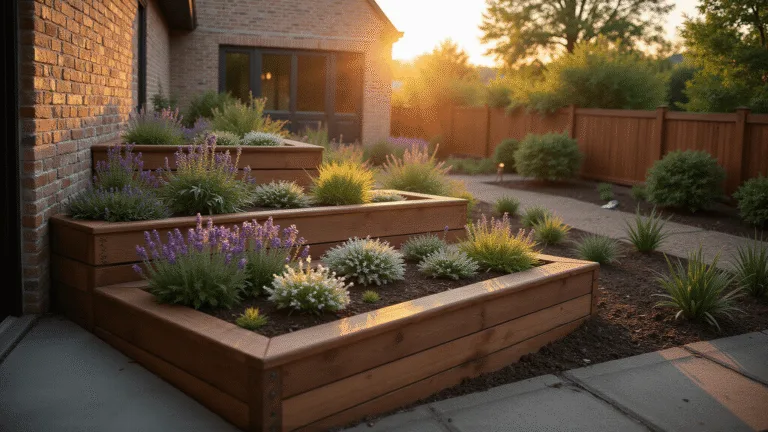



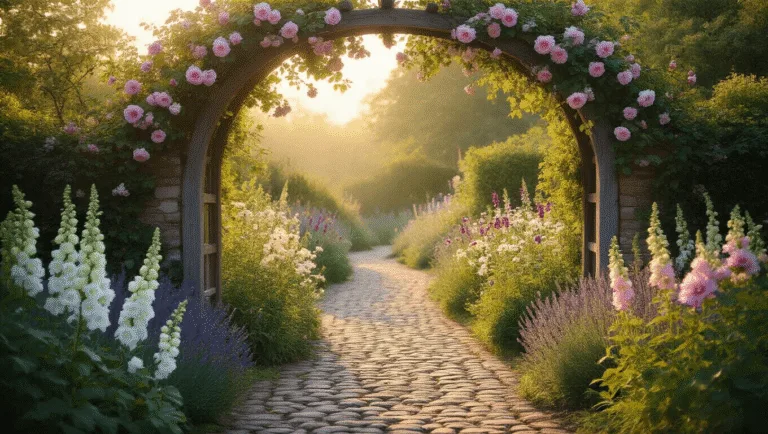
[…] Some popular night-blooming flowers include moonflowers and evening primroses. Moonflowers open up at dusk, releasing a sweet fragrance that attracts nighttime pollinators. Evening primroses, like those shown in the image, bloom in shades of pink and white, adding charm to any garden. If you want to learn more about these enchanting plants, check out this helpful guide. […]