

This post may contain affiliate links. Please see my disclosure policy for details.
Garden Bridges: Transforming Landscapes with Magical Crossings
Ever wondered how a simple bridge can turn an ordinary garden into an extraordinary sanctuary? Garden bridges aren’t just functional structures—they’re storytellers, mood creators, and landscape transformers.

🏠 Steal This Look
- Paint Color: Sherwin-Williams Rookwood Dark Green SW 2816
- Furniture: weathered teak garden bench with curved backrest positioned at bridge approach for contemplative seating
- Lighting: low-voltage brass path lights with warm 2700K LED bulbs lining bridge railings and nearby plantings
- Materials: aged cedar planks with hand-rubbed oil finish, hand-forged iron railings with verdigris patina, river rock and moss ground cover, reclaimed barn wood posts
There’s something deeply human about crossing water—even symbolically—that triggers an emotional shift; I always tell clients that the moment someone steps onto a garden bridge, they’re no longer just walking through their yard, they’re entering a more intentional, slower version of themselves.
Why Garden Bridges Matter
Garden bridges do more than connect land. They:
- Create visual drama
- Invite exploration
- Symbolize transition
- Add architectural interest
- Enhance garden design
Types of Garden Bridges: From Traditional to Creative
Japanese-Inspired Bridges
Red wooden bridges aren’t just decorative—they’re cultural symbols. These iconic crossings represent:
- Spiritual journeys
- Mindful movement
- Aesthetic harmony
Practical Home Garden Bridges
You don’t need a massive landscape to incorporate a bridge. Options include:
- Wooden plank bridges
- Metal arched crossings
- Stone path connectors
- Miniature decorative structures
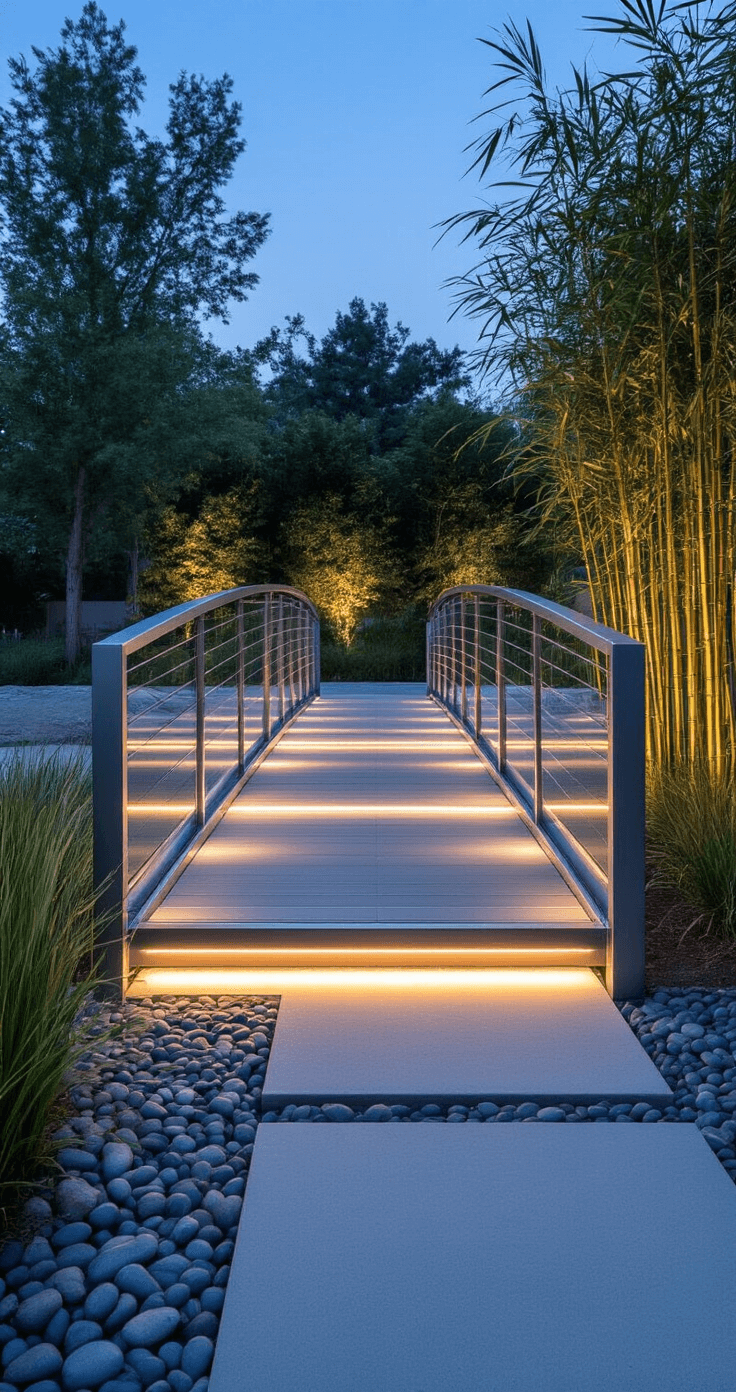
★ Steal This Look
- Paint Color: Farrow & Ball Green Smoke 47
- Furniture: weathered teak garden bench with curved silhouette
- Lighting: cast brass pagoda-style pathway lantern
- Materials: hand-split cedar shingles, oxidized copper flashing, crushed granite fines
There’s something quietly transformative about the ritual of crossing even a small span—it slows your pace and shifts your mindset before you’ve reached the other side.
Design Considerations for Garden Bridges
Material Selection
Choose bridges that complement your garden’s style:
- Wood: Rustic, natural feel
- Metal: Modern, sleek appearance
- Stone: Timeless, permanent installation
- Composite: Low-maintenance option
Placement Strategies
Bridge placement can dramatically transform your space:
- Over water features
- Crossing dry creek beds
- Connecting garden zones
- Creating visual focal points
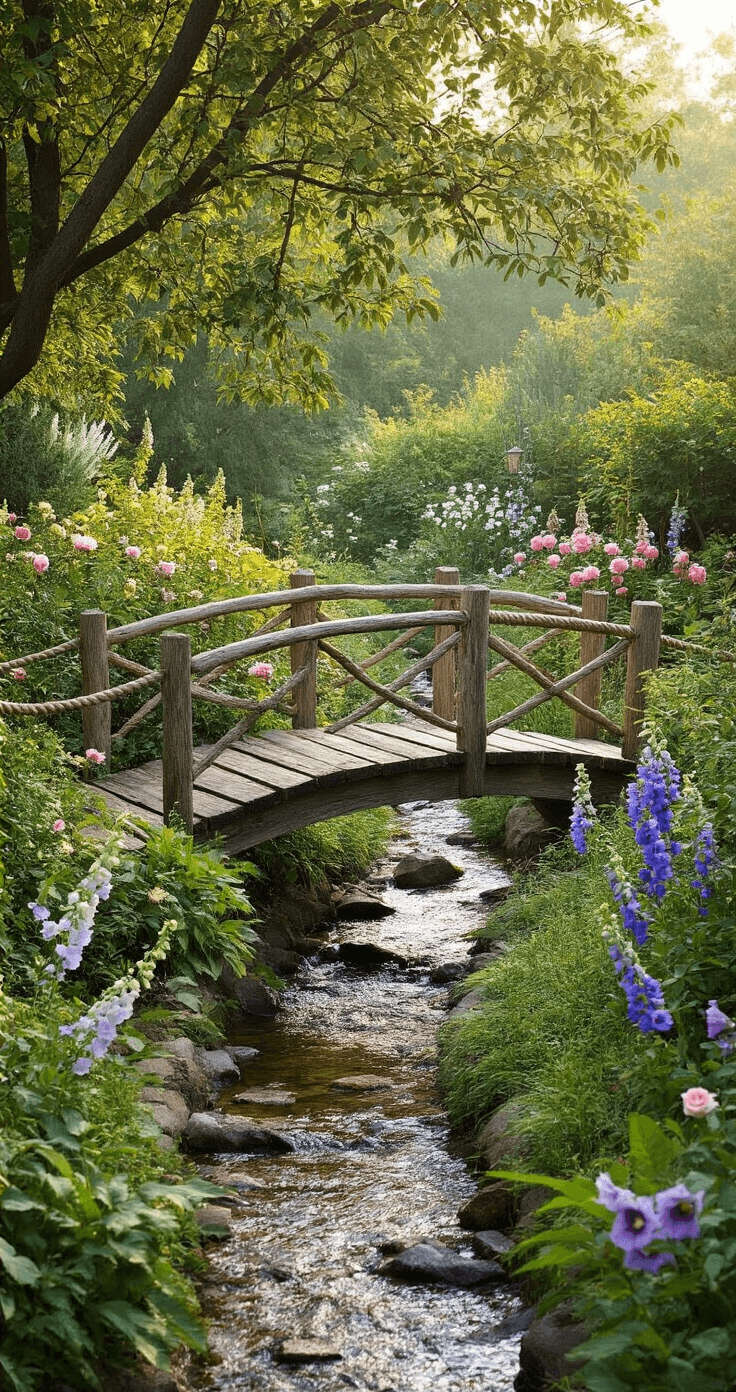
✎ Steal This Look
- Paint Color: Behr Garden Wall S340-4
- Furniture: weathered teak Adirondack chairs with olive green Sunbrella cushions positioned at bridge approach
- Lighting: low-voltage brass path lights with frosted glass globes flanking bridge entry points
- Materials: rough-hewn cedar planks, hand-forged iron railings, river rock edging, moss-covered boulders
There’s something deeply satisfying about a bridge that earns its keep in your garden—when every crossing feels like a small journey rather than a gimmick, you’ve found the sweet spot that transforms a simple walkway into the soul of your landscape.
Save this article
Enter your email and we'll send it straight to your inbox.
Top Gardens with Remarkable Bridges
- Duke Gardens, NC: Iconic red Meyer Bridge
- Chicago Botanic Garden: Multiple architectural bridges
- Lake Lure Flowering Bridge: Repurposed historic structure
DIY Bridge Installation Tips
Planning Your Bridge
- Measure your space carefully
- Consider load-bearing requirements
- Select appropriate materials
- Plan surrounding landscape integration
Budget-Friendly Options
- Reclaimed wood
- Simple construction techniques
- Modular bridge kits
- Local workshop resources
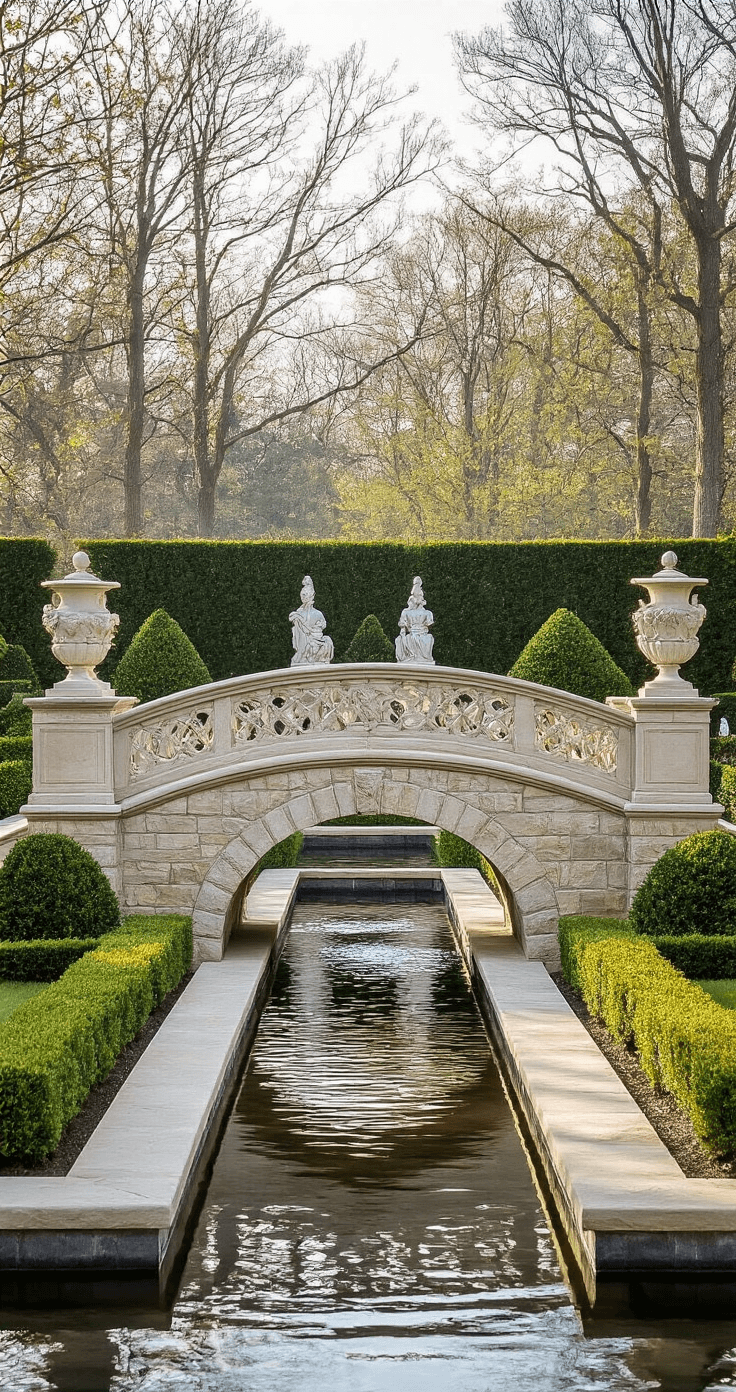
🌟 Steal This Look
- Paint Color: PPG Timeless Green PPG1132-5
- Furniture: weathered teak garden bench with curved backrest positioned as a viewing spot facing the bridge
- Lighting: solar-powered LED path lights with warm 2700K output lining bridge approach
- Materials: rough-sawn cedar planks, galvanized steel hardware, river rock edging, untreated pine posts for natural graying
There’s something deeply satisfying about crossing a bridge you built with your own hands—it transforms a simple garden walk into a small journey, and guests always linger longer when there’s a destination to reach.
🌊 Get The Look
Maintenance and Longevity
Protecting Your Garden Bridge
- Annual sealing for wooden bridges
- Rust prevention for metal structures
- Regular structural inspections
- Proper drainage considerations
Creative Bridge Inspiration
Beyond Traditional Designs
- Colorful painted bridges
- Sculptural, artistic crossings
- Minimalist contemporary styles
- Bridges with integrated seating
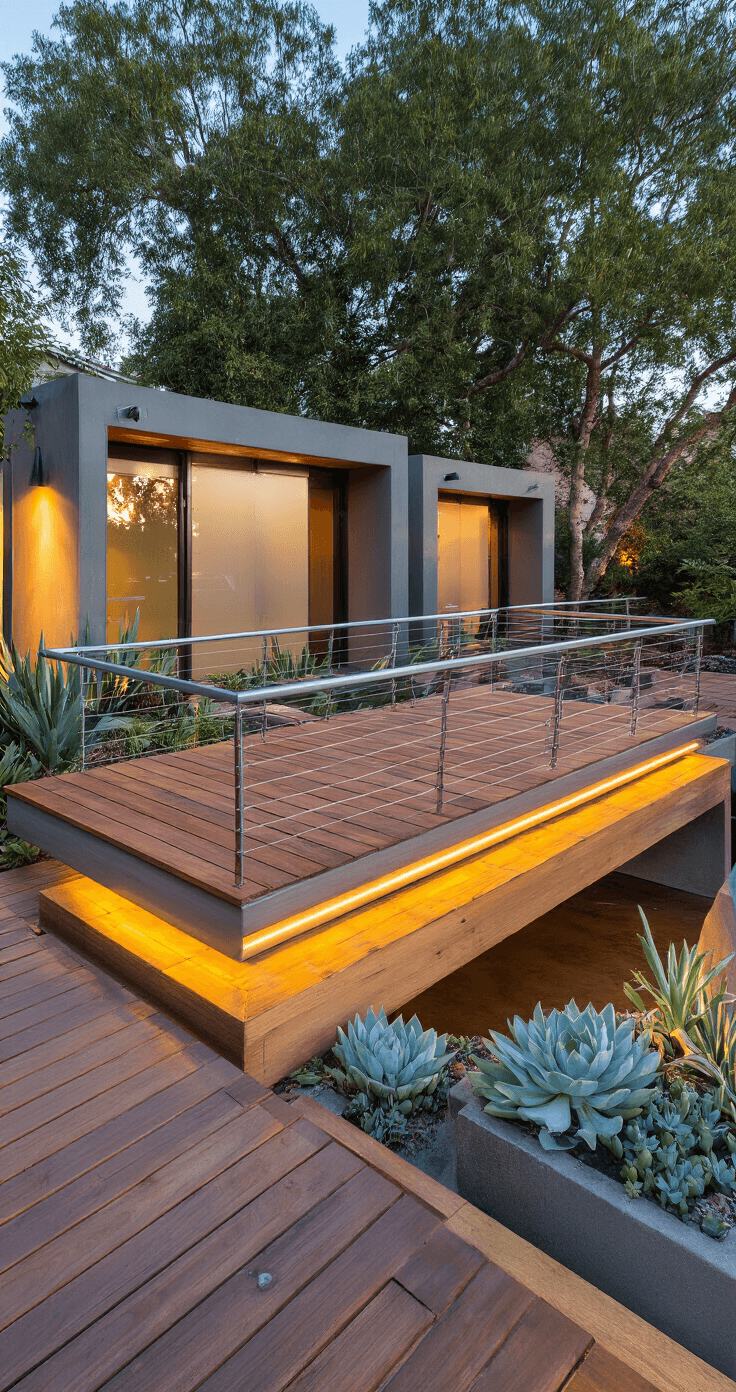
💡 Steal This Look
- Paint Color: use Clare Paint brand. Match the ACTUAL wall color in the image. Format: Clare Paint ColorName CODE
- Furniture: weathered teak garden bench with curved silhouette
- Lighting: solar-powered LED bollard lights with frosted glass diffusers
- Materials: powder-coated aluminum, marine-grade plywood, corten steel, hand-blown glass mosaic tiles
There’s something deeply satisfying about a bridge that stops visitors mid-step—not because they must cross, but because they want to linger and look.
Cost Considerations
Budget Ranges
- Simple DIY: $100-$500
- Mid-range kit: $500-$2,000
- Professional installation: $2,000-$10,000+
Environmental and Aesthetic Benefits
Garden bridges offer:
- Increased property value
- Enhanced landscape design
- Wildlife corridor creation
- Meditative garden spaces
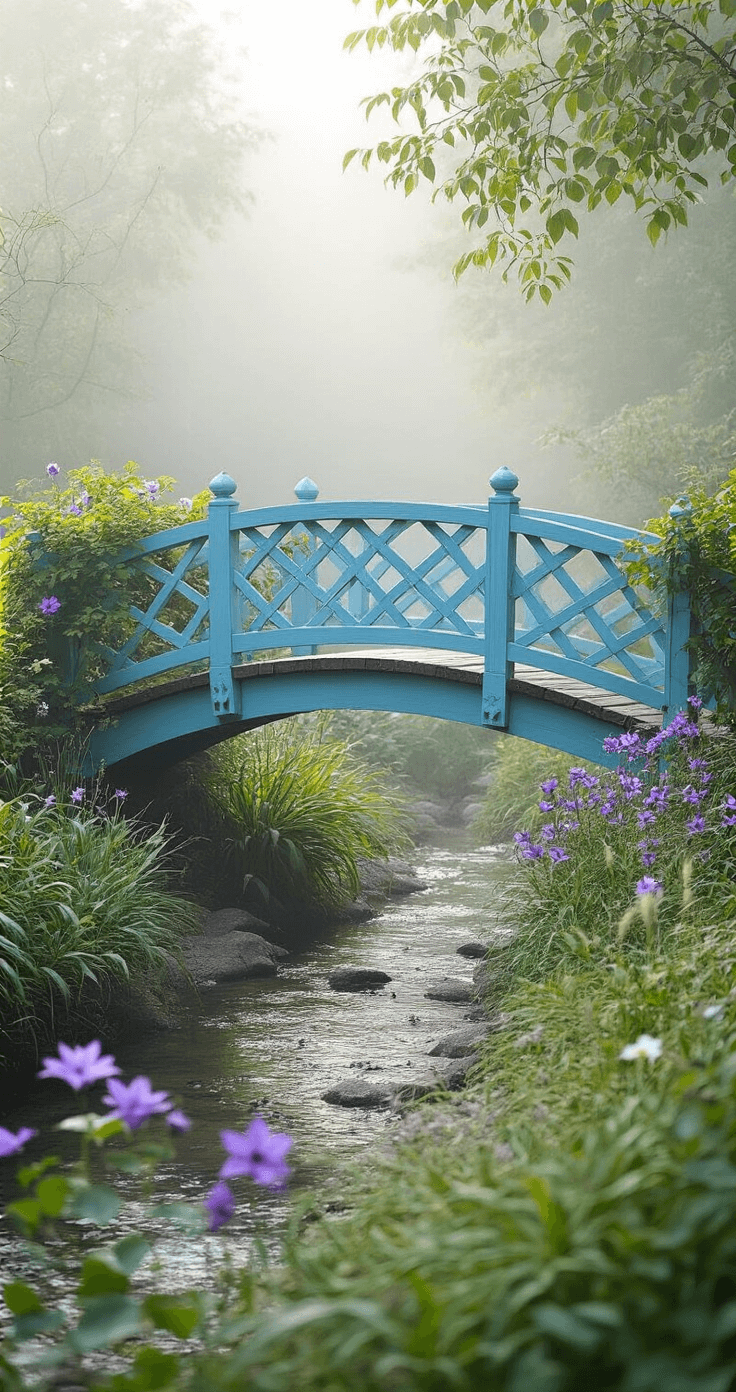
★ Steal This Look
- Paint Color: Backdrop Halcyon Green 460-3
- Furniture: weathered teak garden bench with curved backrest positioned at bridge approach
- Lighting: low-voltage brass path lights with frosted glass globes spaced along bridge railings
- Materials: rough-hewn cedar planks, moss-covered fieldstone, blackened steel cable railings, river rock bedding
There’s something deeply grounding about crossing a garden bridge—it transforms an ordinary walk into a small ritual, a moment of pause that reconnects us with the deliberate slowness of outdoor living.
Conclusion: Your Bridge to Garden Magic
A garden bridge is more than a crossing—it’s an invitation. Whether you’re creating a zen-like retreat or a vibrant landscape, the right bridge can transform your outdoor space into a personal paradise.
Quick Recommendations
- Start small
- Match bridge to garden style
- Consider long-term maintenance
- Have fun with design
Pro Tip: Always check local building codes and potential permit requirements before installation.

✎ Steal This Look
- Paint Color: Sherwin-Williams Garden Spot SW 6432
- Furniture: weathered teak garden bench with curved backrest positioned at bridge approach
- Lighting: low-voltage brass path lights with frosted glass domes flanking bridge railings
- Materials: cedar bridge decking with black powder-coated steel railings, river rock bed, moss-covered boulders
There’s something deeply satisfying about crossing your own garden bridge—it’s a small ritual that signals you’ve left the everyday behind and entered a space designed purely for restoration.
Keep this one for later
We'll email you the link so you can come back to it.



[…] to transform your garden? Start small, think big, and let bamboo work its […]
[…] courtyard gardens aren’t just landscapes. They’re philosophical statements about space, beauty, and harmony. Whether you have a tiny […]